Kim Mills: An aching back, a bad knee, a recurring headache. For many people this kind of pain is a daily fact of life. More than 20% of U.S. adults suffer from some form of chronic pain, and health economists have estimated that chronic pain costs the U.S. up to $633 billion per year in medical expenses and lost productivity.
For many chronic pain sufferers, effective treatment remains elusive, with doctor's visits, medications and even surgeries giving little in the way of relief. But in recent years, research by psychologists and other scientists has begun to suggest that for at least some people, the answer to chronic pain may come not from healing the body, but from treating the mind.
What does that mean? How does it work? What's the relationship between our thoughts, feelings, and beliefs about pain and the actual pain that we feel? What does pain look like in the brain? Why do placebos work? And how can we use what scientists are learning about the brain basis of pain to develop effective new treatments for it?
Welcome to Speaking of Psychology, the flagship podcast of the American Psychological Association, that examines the links between psychological science and everyday life I'm Kim Mills.
Our guest today is Dr. Tor Wager, the director of the Cognitive and Affective Neuroscience Laboratory at Dartmouth University. Broadly speaking, Dr. Wager studies how people's thoughts, beliefs, and expectations affect the brain and body. He has a particular interest in the experience of pain. He began his career studying the placebo effect, and today he uses brain imaging techniques to examine what pain looks like in the brain, and to try to understand why pain feels the way it feels to a particular person in a particular set of circumstances. He's also interested in using his findings to help develop new psychologically based treatments for pain.
Thank you for joining us today, Dr. Wager.
Tor Wager, PhD: It's a pleasure to be here, Kim.
Mills: Let's start with the big question: What is pain? Most laypeople think it's a signal that your body sends to your brain to let you know that something is wrong. You get hurt and your body sends up a flare to let you know that something is amiss. But your research has found that pain is more complicated than that. So what is pain if it's not just a simple signal from our body to our brain?
Wager: Pain is an experience that's constructed in the brain, and it depends partly on the signals coming from the body to the brain, but only partly so. It also depends on what your brain knows about the context that's surrounding pain. Is it threatened, or is it dangerous? What should the brain feel? So essentially pain as an experience is the result of a decision by the brain that a sensation from the body ought to be treated as threatening and dangerous.
Mills: So in a paper published in September in the journal JAMA Psychiatry, you and your colleagues described a new type of treatment called pain reprocessing therapy. How does this treatment work and how is it related to the definition of pain that you just gave us?
Wager: Well, Kim, I'd like to start by going back to some of the things that we've learned from neuroscience. There's wealth of really exciting studies that have been coming out in the neuroscience from animals and from humans over the past years. And what it's taught us is that it's not a one-way street from the body to the brain, that when you have the conception of threat, and signals that are coming from the body to the brain that create pain, or nociceptive signals, become sensitized. So the signals in the spinal cord become sensitized. The signals in the thalamus, which relay signals to the cortex, become sensitized. And you get signals in the amygdala and the prefrontal cortex circuits that are associated with fear, threat, and avoidance.
So pain isn't simply processed in one center in the brain, it triggers all of these things. And what triggers these sensitization processes and what deescalates them, or unwinds them, has been a mystery. And that's one of the things that we can understand better by studying treatments like pain reprocessing therapy.
So what is pain reprocessing therapy? Well, it's one of a family of psychological and behavioral treatments that are intended to recognize that the brain sensitizes and constructs pain experience in part, it's not all about the body, and that attempts to unwind a cycle of fear and avoidance and increased pain. And this happens in two ways. The first part is conceptual. It's natural to think of, let's say you injure your back, that's a frightening experience. And you don't know what it means for your future. Does it mean that you're going to be in pain for a long time? Is it a sign of damage? It's natural to think that it is, but when that happens, then that pain becomes threatening. And when pain is threatening, it becomes attended. And when it's attended, it becomes amplified.
And over time then, pain gives rise to threat signals in the brain, which give rise to more pain. And over time, your brain is learning that this is the most important thing that's happening, and the thing that you should be amplifying and attending to. So there's a feedback cycle where pain is ramped up over time. And that's what we think underlies this sensitization process. So part of the antidote to that is simply realizing that pain is not a sign of damage.
Now, this is tricky because acute pain often is. So you sprain your ankle, which I did a few weeks ago. And, yes, it's a sign of tissue damage, it's a dangerous signal that says stay off of that ankle. But for many people, once pain becomes chronic, there's been this transition process where the body has healed and what's driving the pain and what's causing it is, in fact, this sensitization in neural circuits. And so in that case, realizing that it's just pain, it doesn't signal injury, is the first step to unwinding that process and reducing the fear and threat, and then reducing the pain.
Mills: And so, in a sense, the anticipation of future pain, it's like an endless feedback loop. Is that what you're saying?
Wager: It's a feedback loop. That's right. And I think that the feedback loop is grounded in what you believe pain means, what is the signal value of pain? So if pain, for example, you injure your back and every time you get a twinge in your back, you believe that's injuring your tissue, that's causing further damage, then pain is scary and it makes sense is to amplify it.
But if that pain is a residual, one of my colleagues, Vania Apkarian calls it a memory of pain, it's embedded in your brain circuits and your back is actually okay, and your brain circuits are going haywire and firing like crazy. And that's a memory. And so you say, hey, that's not damaged, that means that's just pain, it's safe. And so what PRT does really first and foremost is help people to realize that the pain is actually safe, it's not a danger signal, it's a false alarm.
And that sets the stage for other processes that can help unwind the cycle of fear and avoidance and pain. A second principle is if the pain is in fact just pain and it's not dangerous, then it's okay to experience pain, it's okay to move in ways that are painful. So instead of avoiding bending or twisting or lifting, it's okay, it's just pain. And so you can actually engage in those feared movements and even painful movements in a safe setting, with support and the realization that it's actually safe. And for me, when I think of what this treatment is doing, it's this one-two punch where first there's the support for understanding that it's not a sign of tissue damage, it's just pain. And then putting that into practice and engaging in painful and feared movements, which then normalizes the pain over time and helps you realize in an embodied way that this is really true for you.
Mills: Some of our listeners may have heard of other psychological treatments for pain, like cognitive behavioral therapy, that is pretty widely in use. But how does pain reprocessing therapy compare with CBT, what's different about it?
Wager: PRT shares a lot of principles with CBT and with ACT, acceptance and commitment therapy, and other techniques, pain education, pain neuroscience, education, and principles that many gifted pain specialists have discovered and rediscovered. So a common theme is this realization that pain is just pain, it's not damage. And different types of therapies start to diverge on where they go from there. So the standard line in CBT and ACT is often to say, well, we don't know what's actually causing the pain, and we don't know if you'll ever get better. Your neurosurgeon said, you're always going to be in pain. Well, we don't know. Maybe you will. And so don't do anything that hurts. We're going to help you learn to manage it, cope with it, live with it.
PRT takes a much more definitive position. What it says is, after having been examined and your spinal images looked at, available evidence to rule out a physical or structural cause of ongoing pain, it says, we are pretty sure that this pain is caused by central sensitization in your brain circuits. And therefore it is okay to move with pain. And furthermore, you don't have to live with pain the rest of your life, there's actually a cure, you can get better. So, that's pretty different than what standard CBT does. Now, there are CBT practitioners out there who will do exactly what I'm telling you now. So, CBT is different in different people's hands, it's practiced differently. But this idea that you're providing really a definitive positive explanation for what's causing the pain. And I think for most people in chronic back pain, for example, it's the right explanation, that can really make a big difference.
A second difference is in the exposure part. So one of the oldest principles in psychology is that if you're exposed to something that's feared in a safe context, that's one of the best ways to unlearn or extinguish that fear. So for example, if you're getting treatment for a spider phobia, the exact thing you want to do is be exposed to spiders, and you start by just maybe imagining spiders, and then there's maybe one in the room with you and it gets a little closer and closer. And you gradually desensitize, or extinguish that threat response. Well, in the course of these studies we've been doing, I started thinking about chronic pain much like a fear disorder.
So you actually have to expose yourself in order to realize and teach your brain essentially that those sensations are normal, they are actually okay, and they're safe, and you have to unwind that over time. Now that's something that's practiced fairly widely in Europe. So pain exposure therapy is a big deal. It's practiced in various pockets throughout the United States as well, but it's much less prevalent. And so I think that this realization, that that exposure piece is really important is part of the package of what makes PRT work.
Mills: So it's kind of embrace the pain, don't fear it. And so particularly if you have something like chronic back pain, which I've had, and I know a lot of people have had, that the more you fear it, it's a self-fulfilling prophecy then, you will always have the pain unless you work through it. Is that what you're saying?
Wager: That's right, Kim, but there's some subtlety here as well. So I think one of the places that people start from that doesn't work is this idea that you can just push through it, you just say, oh, I'm a tough person, I'm not going to let this bother me. And it's funny that, that actually often isn't very effective. And what might be happening is that you're essentially trying to ignore the pain, but without the scaffolding, or structure for what actually is going on. And so underneath that toughness and that push through it and superperson mentality is this idea that, hey, this is really unusual and it actually really hurts, and it's scary. And so maybe not having the narrative for what's happening to you and trying to override that and push through it often isn't that helpful. So I think changing how we conceptualize pain in the first place is a key part of this.
Mills: Much of your work in recent years has focused on finding brain biomarkers for pain, looking for ways to actually identify pain in the brain. Are you able to do that now? In other words, can you look at a functional MRI image of a person's brain and tell whether they're experiencing pain?
Wager: Yes and no. So we started doing this work on brain biomarkers because—not to recapitulate pain reports, never because we don't believe people in pain. We do. If you say you're in pain, I believe you, it's pain. But the real question is, what exactly is causing that in your brain? And are the factors in your brain that are giving rise to your pain the same as my pain? Is it the same if you hit your thumb with a hammer versus experience chronic ongoing neck pain? Those are the things that we don't know much about. So what other processes to give rise to it? What are the mechanisms, and therefore, how do we intervene? So that's why we started looking for brain biomarkers of pain.
And what we've been able to find over the last, about a decade of work, is that if we're measuring an immediate evoked pain sensation, we can do a pretty good job at predicting from your brain, how painful that's going to be for you. So, that means that people look pretty similar when they're experiencing immediate ongoing pain. So I can take a bunch of people's brains and figure out what is it, what combination of things that we can measure in a functional MRI scan that predict that. And then I can do a pretty good job at applying that model to your brain and predicting when you're going to feel more pain versus last pain. We've tested that across probably about 50 different published cohorts of people from across the world with a wonderful group of collaborators. So we have people from Europe, Asia, North America, South America, and it works well. And we've also found that it works well across different types of evoked pain. So if it's heat, or pressure, or a laser, or an electrical shock, or even a visceral stimulus, which is actually a rectal balloon that's inflated that some of my collaborators are doing this kind of work in gastroenterology, that there's a common core set of brain features that are shared across all of these types of pains.
Now, what we don't know is when it comes to chronic pain, the picture is a lot more complicated, because now we're not studying an immediate experience only that we can track over time. Oh, certainly that's a huge part of it. We're also studying the characteristics of the people who have pain. And it looks like there is an element, of course, of this somatosensory nociceptive pain circuit that may be preserved in chronic pain, and it's important in some aspects, but it looks like the “chronic pain brain” is much more—and what comes out that's special to chronic pain seems to be the involvement of systems for threat avoidance and fear.
So if you think about it, these are systems in the brain that, they're not registering immediate sensation necessarily, they're taking that sensation and making a decision, do I avoid this, or do I pursue it again? I went on a roller coaster, I felt disoriented, I'm moving around. I saw these sensations. Well, is that good thing or bad thing? Some people say, never going to do a roller coaster again. So, that's the avoidance circuit. And that's the circuit that seems to be quite important for chronic pain patients.
Mills: So these kinds of brain signatures you're talking about, will this help with the problem of quantifying pain? I know most doctors will use a numerical pain scale, or smiley frowny faces when they ask patients to describe their pain. But it's hard, if not impossible, to know if my five on a pain scale of one to 10 is the same as your five. Could there be a more standard, or reliable way to quantify pain?
Wager: A lot of people hope so. And when you think about a pain biomarker, that's maybe one of the first things you think of. Is it pain or not, and how strong is it? And that's certainly what we're targeting when we look at these brain measures. But I don't envision a world where patients get scanned to find out how much pain you're really in. I don't think that's the right way to think about it. I think about these brain measures being used in a different way. I think about them being used to say, okay, you're in pain, I just am going to ask you, if you say it's a level seven, it's a level seven. If you say it's an 11 out of 10, that's okay too. I don't need to know if, I shouldn't be giving you a procedure or not based on whether you say 11 or seven or four. But what I should be doing is saying, okay, you're in a lot of pain, where is that pain coming from?
And you can think about two different cases. Let's say I have pain in my lower back. Now that might be because there truly is a pinched nerve in my back and I'm getting constant nociceptive input. So that the right thing to do is to feel pain, because I'm just getting that signal all the time. The other possibility, or another possibility, is that the signals coming up from my back are actually normal and my amygdala, let's say, is hyper reactive to that sensation. Now, the first person you should explore more, maybe you do an invasive diagnostic test, maybe you do surgery, but the second person, the surgery is never going to work for them, it can only make them worse, because the problem isn't in their local tissue in their back, the problem is their amygdala, so to speak.
So what a biomarker can do is help determine what's the locus of that pain, what's really driving it, and how consistent is that with what's coming up from the body versus something that's constructed in the brain itself, where we need different kinds of treatments. And let me add to that, that the stakes are really high here, this is important, because thousands of people get surgery in the United States each day, and a substantial fraction of those surgeries are not necessary. And not only is that expensive in cost and recovery time and cost and long-term cognitive impairment after people come out of surgery, but many of those people end up worse than before. So, think of back surgery, you're taking, and some back surgeries are wonderful, I have friends who have benefited from multiple back surgeries. My dad's had multiple back surgeries, my mom's had back surgeries, I might one day too.
But if you think about the spinal cord it’s this amazingly intricate, complex bit of neural machinery. It can learn to walk on its own. It can avoid obstacles and dangers on its own. So it's part of our brain. And if you open up the back and you start doing stuff there that affects the nervous system and affects the inflammatory milieu around that, you're rolling the dice, and some surgeries are pretty highly effective and pretty safe, and others are really not. And so, many, many surgeries are done that are not safe. And in fact, failed back surgery syndrome is estimated at between 20 and 40% of back surgery patients in some studies. So that's a lot of people, if you didn't need that, and that ends up ruining your life, that's a lot of people who are being affected.
Mills: Well, that brings to mind the concept of placebo, and the effects that placebos can have. And I know you began your career studying the placebo effect. So what do we know about how and why it works, and are there times and situations when it works better than other times and situations?
Wager: Yeah. The reason that we started developing pain biomarkers in the first place was really so that we could study the placebo effect. So there have been many decades of research showing that if you change the psychological context surrounding pain, and also surrounding people's experiences of emotional rejection, romantic rejection, and things that create depression, and other experiences as well, that there really are large effects on how people report feeling. And the big question, one of the big questions, has been, well, is this just people fooling themselves? Is it a bias in their decision making that they think they're feeling better, but they're actually not? Or is there a real change that's happening?
And so we did some of the first brain imaging studies of placebo effects and pain. And when we give people a sham treatment in these first studies, it was a cream on the skin that we told people was an effective analgesic. And it's really great, it's going to relieve your pain. We're studying how this works in your brain. And then they get a hot probe, it's like holding a hot cup of coffee that you want to put down, but you can't put down just yet. So we deliver this evoked pain. And when people get the placebo cream, their pain is reduced fairly substantially. And along the way then there are changes in the brain. So you activate the prefrontal cortex and you deactivate some of the centers in the brain that seem important for creating that experience of pain and the fear and suffering around the pain as well. Another thing that we found is when you get that sham treatment, you release endogenous opioids in the brain, which are the brain's natural painkillers.
So there's an active process that's happening in the brain. And by the way, the reason that morphine and other opioids work to block pain, to the extent that they do, is because your brain has natural receptors and natural chemicals that it produces that bind to those receptors. So, that's the reason for being of the opioid system, in part. So, there really is this endogenous response in a person's brain that can relieve pain when you just think that you have something that's going to really help you.
Mills: Is the placebo effect universal? Can all of us be tricked into feeling better by placebos, or is it more like hypnosis, say, where some people are more susceptible than others?
Wager: There's a tremendous amount of variability in placebo effects, including what are the factors that give rise to it and who is susceptible? And so at this point, with these decades of wonderful studies, we know that it depends on a lot of things. There's not one placebo effect, but many placebo effects. So sometimes these effects are created by people's expectations. So if you have positive expectations about treatment, that might cause you to evaluate the significance of a stimulus differently, whether it's pain, or itch, or cough, or any other experience that you're having. And when you evaluate the significance differently, then that changes. So, that's one branch of it. Another branch is emotional states. Let's say you become really anxious about being disabled by pain. And you realize that there's actually help, that changes your emotional state.
And a third branch, preconceptual associations. I mentioned before that your spinal cord can learn to walk on its own. Well, your brainstem alone separated from the rest of the brain can learn to connect threatening stimuli in the body with painful shocks. So it's predicting what's coming next and it can be conditioned to respond. So those kinds of associations are formed by neural circuits wiring together throughout your brain, in your spinal cord, in your brain stem, and really in various ways throughout the rest of your brain. And so these preconceptual associations mean that the context like you got a treatment in a particular place setting, hospital context before, and when you enter that same context again, those cues trigger our response. Or if I give you an injection of a drug like morphine on several days in a row, that injection itself, the feeling of it, the look of it, is a context that will then trigger a morphine-like response by itself after that conditioning process.
Mills: So whether or not there's morphine involved in the injection, you'll have a reaction to it?
Wager: That's right, even without. So you do injection with morphine on day one, day two, day three, and then injection alone with no morphine. And Fabrizio Benedetti and Amanzio demonstrated this in some really wonderful studies in the late nineties, that you get an endogenous opioid response. And if you give the opioid blocker, Naloxone, you can block that response. So it's conditioned—so I can go on, I won't go on too long, but conditioned immunosuppression is another one that's really surprising, because it's really a physiological response. So you pair cues like a strawberry flavored drink, for example, a novel flavor with an immunosuppressive drug. And then, and Manfred Schedlowski has done a lot of this work recently over the past decade or so, then you pair the taste and the drug for over several days and you give the drink alone and you can measure an immunosuppressive response.
And we're learning about what creates that. Well, what creates that are descending pathways from the brain, in particular, the insula down through the splenic nerve and down into the body, that trigger changes in immune behavior, the immune cells. So, that's really stunning, because the insula is a center in the brain that's really important for placebo effects. When you get a fake drug, you think that pain's going to be better versus worse. You activate the insula differently. That then and can trigger many processes that happen and even real physiological processes in the body.
Okay. So just to wrap this up, you asked before about who's susceptible to placebo effects and who's not? And I gave you this long-winded answer, lots of factors, it's complex. And that's right. And the thing is, who's going to respond to a placebo effect? Predicting that has been a million-dollar question and it's going to depend on lots of factors.
It's going to depend on your prior experiences, it's going to depend on your mindset and how receptive you are to certain kinds of information. But at the end of the day, we think a lot of it boils down to what your brain thinks is happening to you, and is this threatening or safe? And that decision is partly unconscious, but that's going to shape how your brain and how your body respond. There's various ways of getting at that, that core decision by the brain. So for example, if you are buying an expensive pain killer versus a cheap one, and you know it's expensive, that seems to trigger a stronger analgesic response.
Mills: It's like wine.
Wager: That's right. Yep. In fact some of the same brain circuitry seems to be involved. There's, and Christian Büchel and people in his lab have showed this over a whole series of studies that are really beautiful. There's an area of the brain, the ventromedial prefrontal cortex, that is the area that is activated when you're drinking wine that you think is expensive and great wine and you like the wine more and you're VMPFC is activated. Well, the same thing, if you get a placebo that you think is an expensive great placebo for pain, a great drug for pain, you activate your ventromedial prefrontal cortex. And that triggers a pathway from your prefrontal cortex, to your brain stem, to your spinal cord, that can modulate those early sensations.
Mills: Given that some 20% of Americans experience chronic pain, we probably have some listeners among that number. Do you have any advice for them, where should they start, if they're looking to explore whether psychological based treatments could help them?
Wager: There are many places to start. I think one of those as places is a series of books, and there's a number of authors who have written books about their chronic pain experience. Just off the top of my head right now, Howard Schubiner has a book called Unlearn Your Pain, which encapsulates a lot of the principles that we've been discussing. Alan Gordon just wrote a book called The Way Out, which is about PRT specifically. David Hanscom has written a lot, he was a former surgeon who realized that a lot of surgeries were actually harmful. And he's been exploring the psychology of back pain and other kinds of pain ever since. I think his book's called Back in Control. And so there's these ideas from books, pain psychology is real, it is possibly the best and most effective way to adjust how the brain's responding to pain in a fine tuned way.
To think about taking a drug for pain, Gabapentin or SSRI, this is a blunt instrument that frankly has, it may work for some people and that's wonderful, but it's just having lots of effects of all kinds of systems in your brain and body and lots of side effects. So it's not targeted, whereas psychological therapies can really target the core beliefs that give rise to this cycle of perpetuating pain and try to work with those beliefs. So even if there's real pain from a real injury and real physical process is happening, psychology can be helpful. And so I think a lot of major medical centers have pain psychologists. So getting to see a pain specialist can be really helpful, especially one who's been trained in pain psychology as well. And I think there's some of those in academic medical centers all over the country. Alan Gordon runs a pain psychology center in LA. And so they all do telehealth consultations as well.
Mills: But you can start on your own by reading a couple of these books and then see if you need more help. That's basically what you're saying.
Wager: That's right. It won't hurt you to read the book, I don't think. And I have to say too that I know people now and people in my family and my friends who have been exposed to these ideas and what happens is, and it's not for everybody, some people say, nope, that's not me, but some people, I've seen this happen with people where say, wow, that's me, this process is me, and they read a book, or they go to a course and they get better. So my student, the student who did this was the first author of this JAMA Psychiatry paper that we just published. And he led the study and organized it and did, he was really wonderful, he really took this on as his own. And he started this as his PhD dissertation project.
And the reason he took this on, and we decided on this together, was that he was looking for a project and he came to me one day and said, I've had chronic back pain for several years. I didn't tell you this, but I went to this training program with Howard Truman and Alan Gordon, and it worked for me. My back pain is gone. I want to study this. I had somebody in my lab tell me they've had shoulder pain for several years. And they went to a lab meeting and were exposed these ideas and they thought “that's me” and their shoulder pain resolved. It can work.
Mills: Yeah. That's amazing. And I think that's very helpful. I really appreciate that advice. And I want to thank you for joining me today to talk about your research. I think this is really fascinating. I'm going to go take a placebo right now and I'm sure I'll feel much better at the end of the day. So thank you for joining us, Dr. Wager.
Wager: Thank you, Kim. It's been a pleasure.
Mills: You can find previous episodes of Speaking of Psychology on our website at www.speakingofpsychology.org, or on Apple, Stitcher, or wherever you get your podcasts. If you have comments or ideas for future podcasts, you can email us at speakingofpsychology@apa.org. That's speakingofpsychology, all one word, @apa.org. Speaking of Psychology is produced by Lea Winerman. Our sound editor is Chris Condayan.
Thank you for listening. For the American Psychological Association, I'm Kim Mills.


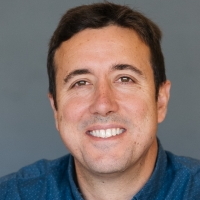 Tor Wager, PhD, is the Diana L. Taylor Distinguished Professor in Neuroscience at Dartmouth College. He received his PhD from the University of Michigan in cognitive psychology in 2003, and served as an assistant (2004-08) and associate professor (2009) at Columbia University, and as associate (2010-14) and full professor (2014-19) at the University of Colorado, Boulder. Since 2004, he has directed the Cognitive and Affective Neuroscience Laboratory, a research lab devoted to work on the neurophysiology of affective processes—pain, emotion, stress, and empathy—and how they are shaped by cognitive and social influences. Wager and his lab are also dedicated to developing analysis methods for functional neuroimaging and sharing ideas, tools, and scientific data with the scientific community and public.

