Kim Mills: For centuries, people have used music to soothe and to heal, but it’s only in recent decades that scientists have begun to study and understand how music affects our minds and our bodies. Armed with new research tools, scientists have been learning more about how our brains process music and exploring how music can be used to improve health and wellbeing in areas as diverse as chronic pain, Parkinson’s disease and stroke recovery.
Today we’re going to talk about the latest research in the field with a world renowned musician who has become a leading proponent of research on the connection between music, the arts and health, and a scientist who studies the cognition and evolutionary origins of music. Some of the questions we hope to tackle are: Did humans evolve to be an inherently musical species? How can understanding the evolutionary origins of music help us develop more effective music therapies? What are some of the music therapies being used today? What are the biggest challenges remaining in the field? And what is the most promising research direction for the future?
Welcome to Speaking of Psychology, the flagship podcast of the American Psychological Association that examines the links between psychological science and everyday life. I’m Kim Mills.
As I said, we have two guests today. The first will need no introduction for music lovers. Soprano Renée Fleming is one of the most celebrated musicians of our time, sometimes called the “People’s Diva.” She’s performed on the world’s leading opera stages and concert halls and appeared with all the major orchestras of Europe and North America. Among her many awards are the National Medal of the Arts and five Grammys. In recent years, she’s become a leading advocate for research on the science of music and how the arts can be used in health and healing. As artistic advisor to the John F. Kennedy Center for the Performing Arts, she leads the Sound Health Initiative in partnership with the National Institutes of Health and the National Endowment for the Arts. She’s given presentations with scientists and practitioners around the world and is editor of a new book called Music and Mind: Harnessing the Arts for Health and Wellness, which includes contributions from eminent scientists, musicians, and other artists on the intersection of science, health, music, and arts.
My second guest is one of the contributors to this book. Dr. Aniruddh Patel is a professor of psychology at Tufts University, where he researches the cognitive, neural and evolutionary foundations of musicality. Most recently, he’s been studying how other animals process music as a window into how human musicality evolved. He’s the author of the 2008 book, Music, Language and the Brain, which won the AASCAP Deems Taylor Award, and is working on a new book about the evolution of human musicality, to be published by Princeton University Press.
Thank you both for joining me.
Aniruddh Patel, PhD: Thank you.
Renée Fleming: Thank you.
Mills: Now, Renée, if I may call you by your first name.
Fleming: Yes, please.
Mills: Let’s start with you. How did you first become interested in the connection between music and health in the brain? What led you to do this work and put this book together?
Fleming: Well, I had performing anxiety that manifested in unusual ways, and one of them was pain. So pain was a distraction from the performance, anxiety from the pressure of performance. I was not an innate or natural performer at all. I love music and I loved studying music and being in a practice room, but I was not a kind of a gregarious, outgoing kid, and so in trying to figure that out, I did a lot of reading on the mind-body connection, and along the way I discovered that researchers were studying music. And when I met Dr. Francis Collins at a dinner party in 2015, I asked him why. And because I had just been appointed advisor to the Kennedy Center, I said, Do you think the NIH and the Kennedy Center could work together to provide a platform for science with the public? Because I think the public would be as interested as I am in the work that’s happening at this intersection of health and art. And he said yes, and we’ve been passionately sharing this information ever since.
Mills: Dr. Patel, is it okay if I call you Ani?
Patel: Please.
Mills: Your chapter of the book is called "Are We an Inherently Musical Species?" Can you talk about what it means to be an inherently musical species and why this is an important question to ask?
Patel: So this is one of the big questions about human nature that’s unresolved and where there major thinkers taking opposite viewpoints. So Charles Darwin, in his book on human evolution about 150 years ago, argued that we are inherently musical. We are musical today because our ancestors evolved musical behavior, which had some functional value for our ancestors, and that laid the foundation for our musicality. William James, his contemporary, very much disagreed. And he loved music. He loved Darwin, but he thought music was a purely cultural invention, something that we were fortunate to figure out how to do and enriches human life, but not something we specifically evolved to do.
And perhaps I can give you an analogy to help clarify the difference. Neuroscientists today completely agree that we evolved to speak and use language. Our brains have specialized circuits for that ability that is part of our human nature. We have to learn it. Babies have to learn how to speak, but we have predisposed to learn that skill by evolutionary biology. They also agree that we didn’t evolve to read and write. Reading and writing is a purely cultural invention, takes advantage of the fact that we have language, so we have good visual perception and good attention and good motor control, and we put all those things together to create written language, which is a hugely important part of our life. Nobody would dispute that language writing is enormously valuable to our society and our culture. And so it’s not a question about the value of music. If music is a purely cultural invention like writing, it could still be very valuable for health, for culture, for social reasons, but not something we specifically evolved to do. So I think it’s an important question because it’s unresolved and also because we’re finally at a turning point where after 150 years we might be able to start to answer this question with science using data from fields like brain imaging, genetics, studies of other species, studies of child development, cross-cultural studies and so forth. And so it’s exciting time to be studying this question
Mills: To follow up, your recent research has tried to answer the question about musicality by looking at musicality and other species, including dogs and parrots. What can we learn about music and humans by studying other animals?
Patel: One thing we can learn is to some extent—we don’t have a time machine. We can’t go back and figure out how music began in our species. So what comparative biologists do, evolutionary biologists, we look at other species to get clues. For example, take beat, our sense of beat in music, which is something we see all over the world. Every culture has some form of music with a beat. Often people use it for dancing and so forth. And children learn how to move to a beat and synchronize movements to a beat without any special instruction. They pick it up from watching others and socializing and so forth. And for many people, this is the most primal aspect of music. And they think, okay, if there’s one aspect of music that we might share with other animals, it’s going to be beat and our sense of beat and our ability to move to the beat.
Well, actually it turns out that our closest living relatives, apes and monkeys, don’t seem to have a sense of beat like we do. They don’t seem to synchronize to beat spontaneously when they hear beat-based rhythms. When you try to train them, monkeys do it very differently. A fundamental aspect of how we deal with beat is we predict the beat. When you perceive a beat, you automatically start to predict when the next beat is coming very accurately, and that’s how you can clap right on time or dance right on time with a beat. If you try to train a monkey to tap to a beat, they wait for the beat and then they react. They don’t predict, and it takes a lot of special training to get them to predict. So their brains just deal with beat in a very different way.
So why do we have this ability that seems so simple and yet is not shared with our close living relatives? Usually biological things that are simple are shared like the way a kidney works or—I’m not saying the kidney is simple, but things that—there’s a lot of shared biology between us and our close cousins and shared things like visual perception abilities. I theorized at one point that maybe there’s something about only certain kinds of animal brains can acquire this ability spontaneously to move to a beat. And those are brains that have the ability to learn complex sounds to what’s called a complex vocal learning. Listening and imitating sounds is how you acquire your sound repertoire, and that’s a rare ability. We’re the only primate with that ability. Dogs don’t have it, cats don’t have it. The vast majority of animals don’t have it, but there’s a group of animals, three groups of birds that have it, songbirds, hummingbirds and parrots. And we showed that. So I hypothesized that maybe this ability helped lay the foundation for beat synchronization.
And then we showed that actually a parrot could actually spontaneously move to the beat of music and keep the beat at different tempi, and that was replicated by another group. And so now it looks like they’re the only other species besides humans that do this spontaneously, which gives us some clues about the origin of this ability. In our own evolution, it seems like perhaps the ability to imitate complex sounds was one of the foundations from which beat synchronization emerged. So it’s kind of a way of going back in time and thinking about what were the precursors to this ability in our own evolution, without having a time machine.
Mills: I want to talk more about animals at some point, but right now, Renée, I want to ask you—many chapters of the book are by practitioners and researchers looking at different music and creative arts interventions for the purposes of treating various mental and physical health issues. What are some of the well-supported music interventions that people are using today?
Fleming: I would say the strongest areas of research have supported what we call melodic intonation therapy, which takes advantage of the plasticity of the brain to transfer speech from Broca’s area to the singing area of the brain, which is on the other side of the brain, the opposite side of the brain. But it’s also, frankly, musical activities are in every known mapped area of the brain. It’s why it’s so complex, it’s why hearing, but especially engaging with music, playing an instrument, et cetera, singing as well, because using language and you’re finding pitches. So by hearing, so these are all so complex that this particular intervention enables people who have suffered a stroke or traumatic brain injury to speak again, sometimes after one session with the music therapist, by singing. So singing enables them to recapture the words that they were trying to communicate. So that’s one area.
Movement disorders are the other hugely strong area of research that’s been supported, and that’s for MS, for people who have difficulty moving and again, taking advantage of the plasticity of the brain to stop the freezing and the shuffling and enable people to move more fluidly and gracefully. And in fact, a recent study, actually we found this in December, discovered that even just imagining a song, imagining the beat of a song like When the Saints Go Marching In, can enable somebody who’s having those difficulties to walk fluidly across the street and feel safe. I’ve been using it to exercise because it keeps my tempo up and I can even carry on a conversation and hear something in the background in my mind’s ear.
And then there are some other—certainly, memory is powerful for Alzheimer’s. That memory, music memory is the last memory to go in a patient with dementia in many cases. And so scientists are studying that like crazy to try and figure out where it comes from. And I’m sure Ani knows more about all of these things than I do, but I find it just so fascinating. Pain is another powerful area of study. I mean, I had a friend who had a brain bleed recently and just terrible. She was in excruciating pain, she couldn’t look at screens, she couldn’t do activities, dark room, all of that. And I said, you could listen to music. And she discovered by chance that only Jimi Hendrix as loud as she could play it would offer any relief to her. And the minute the volume went down or the music turned off to the pain came flooding back. So for obvious reasons, our opioid epidemic especially, this is a strong area of research.
Mills: Ani, anything you would add to that? Any other areas?
Patel: Yes. So there’s also music in stroke recovery. I was just at the neurosciences and music conference in Finland. There’s now a conference dedicated to this field since going about every three years, since about 2000. And there’s some wonderful work being done there on actual randomized controlled trials comparing music, listening to audiobooks, listening to no additional therapy with patients that have had all the standards post-stroke therapies to look at cognitive and neural recovery. And they’re finding benefits of music, listening, self-selected music, listening on both cognition and emotion recovery from stroke. And the neat thing about this group is they’re also doing brain imaging to look at the underlying mechanisms. And this is what’s neat, I think, and Renée can certainly speak to this is where this exciting time, where the clinical work is beginning to dovetail with the basic science work and understanding what’s going on in the brain, who it works for, who it doesn’t work for as well, and why. And that’s really an amazing step forward.
Fleming: That’s amazing. That’s very exciting about stroke. I do know that stroke choirs are phenomenal for people.
Patel: Yes, yes, that’s right. And both for social reasons, because a lot of what happens with neurological damage is isolation, like the dance for Parkinson’s that was started by the Mark Morris Group and David Leventhal, who has a wonderful chapter in your book, Renée. There’s a fantastic film about it called Capturing Grace. And they show it’s not just the music and what it does for movement, it’s bringing people together and breaking that isolation that is so powerful for neurological patients.
Mills: So is music more therapeutic if you create it, participate in it, or if you merely listen to it? Do we know? Is there a difference?
Fleming: Well, engaging with music is certainly very powerful. It utilizes so many more skills. For childhood development, there’s been wonderful studies. That’s another strong area of research showing that there are lasting changes in the brain after just 2 years of studying the musical instrument. And this same group at USC has just started now to study singers. So choir singing for children. And so I’m very anxiously awaiting the results of that study. But go ahead, Ani, I’m sure you have other responses as well.
Patel: Oh, no, I think that’s right. And I think listening and actively singing or playing can both be beneficial. It depends on the circumstances. So for example, for pain management, there’s exciting work happening with music, and Renée touched on how it can help with pain. And Joke Bradt who has a chapter in the book has been doing interesting research on that. I think she’s in Philadelphia. And there music listening can be quite effective, like Renée’s story with the Jimi Hendrix. But in other cases, especially if you’re looking at how musical engagement can change and improve brain function in other areas like speech—there, it looks like active participation, singing, playing an instrument, is important for making those plastic changes that are lasting and benefiting other cognitive functions.
Mills: So given what we already know about music’s effect on our health and wellbeing, what are the prospects for music therapy to become a standard healthcare practice? I mean, do you foresee insurers covering it beyond what they’re doing right now? And, Renée, I want to ask, is this something that you’re actively working toward?
Fleming: Yeah, there are 12 states that now have licensure for music therapists. We need all of the states to bring this into view. Texas is working on it right now. It is a total bipartisan effort because everybody cares about healthcare and they also care about health and wellness. We have a mental health care, health crisis that’s around the world. I’m also a ambassador to the World Health Organization, and Dr. Tedros Ghebreyesus said he’s incredibly concerned that depression is up by 30% around the world. So that’s another wonderful statistic from a study is that 45 minutes of engagement with any kind of art activity and especially listening to music, can reduce anxiety by 25%, just a brief amount of time. And it makes sense, but you have to have the science that supports it.
So I’m working hard to create a stronger pipeline for research. I have investigator awards. We just offered our first seven and we’ll double them next year. And I’m working with the Aspen Institute and the Arts Blueprint on this, but it’s taking a postdoc student who has access to a lab who was working with an artist or is an artist, and the panel who chose the winners is incredibly highly esteemed scientific panel and academic panel. And then the NIH is following up with fellowships. So they’re working on that now, which we’ll hope to have them this year. So I’m hoping that we can get at least get 10 fellowships around the country. So we need support for that, that needs financial support. It’s a public private partnership. And then I would love our Care to Succeed, which would be allowing people to connect to arts and health initiatives in their areas where they live, because I know personally that most performing arts venues offer all kinds of initiatives for children with special needs, for caregivers, and the people that they take care of and et cetera.
Even the Musikverein Vienna, the hallowed hall of the Vienna Philharmonic, now has a caregivers initiative. And that news went around the world because the fact that all of the performing arts are saying, Hey, we have something to offer you that can improve your health and wellbeing and take care of those of you who are more fragile.
So I have a lot of hope, but now we need policy changes as well. We really need, ultimately the goal is to have art embedded in healthcare altogether. It’s low cost, it’s nonpharmaceutical, and it’s not invasive. Every children’s hospital should already have this, just a creative art studio. It helps reducing pain medication and it makes everybody much more comfortable. So we’re working towards it, but it’s baby steps. It’s all just be beginning. The fact that the NIH has spent $40 million funding research is a huge validation for the work that people anyway, and they’re going to keep spending. Everybody understands how important it’s now. So I think we’ll get there.
Mills: Let’s talk for a minute about music education. Again, given what we know about music affects brain development and can improve learning in other areas, should music be a requirement in all schools? Why isn’t it?
Fleming: So the arts should be in our schools altogether. I mean for so many different reasons. I mean, I was at Chicago Lyric Opera as an advisor before this, and we put the arts back in elementary schools there in the city through volunteers, teacher volunteers, and superintendents actually quickly realized how beneficial it was and they started paying for it. So for one thing, and even in later-age students, they discovered—I talked to somebody who was the president of the Board of Education there who said truancy is one of the biggest problems we have in the country right now. I know in DC it’s a huge problem and it’s contributing to teen violence and all manner of mental health issues. And to have young people engage in something they love, it gives them a sense of themselves. It’s important. Bessel Van der Kolk’s book, The Body Keeps the Score, which has been on the bestseller list for a couple of years now. I was really stunned when I read his chapter about things that work and how theater—being involved in theater saved his son. He feels so, there’s no question that the art should be in schools. I’ve been trying to encourage Los Angeles and California to use some of the money that they have now for arts education to add creative arts therapists alongside arts educators, because on both fronts throughout the country, we don’t have enough teachers anymore who teach the arts. And they certainly don’t have enough creative arts therapists around the country. So this is an area that I’m encouraging young artists to think about.
Patel: That’s wonderful. In fact, I’ll just add something, in Renée’s book, Music and Mind, there’s a wonderful chapter about state-of-the-art national statistics on music in America’s schools. That is by Kenneth Elpus, which lays out just how we need more music in schools, and it’s very uneven, which schools have it in which don’t, or arts in general. And then there’s several chapters about stories about, Renée was talking about how arts basically saved somebody from dropping out and brought them into the school and made them passionate about learning through the arts and then kept them there. And things like truancy is so interesting because you wouldn’t think that that wouldn’t be the first thing I would think of as why we need arts in the schools. But I think it makes a lot of sense. You need reasons for people to want to be in school, and the arts are potentially a huge draw for people that otherwise feel sort of alienated.
Mills: So the book is incredibly wide ranging, with contributions from scientists, musicians like Roseanne Cash, even novelist Anne Patchett, playwright Anna Deveare Smith. Renée, how did you get all of these people to contribute?
Fleming: Well, I started, of course, with everybody that I know from the science side of things, from the research side of things and the institutions really to have—I didn’t know anything about the NIH. I knew nothing. So when I walked in that day to listen to scientists present, including Ani and some music therapists as well, I was stunned. And so I tried to kind of help the public who probably doesn’t know anything either know more about it. So this was kind of an idea of a snapshot of the field as it is right now. In fact, Susan Magsamen, who wrote Your Brain on Art that was a bestseller last year, said, it’s not—we’re trying to grow a field. But she said, it’s actually a movement. These people are very excited about this. There’s a whole grassroots understanding and desire on the part of normal people to bring the arts into their own lives—just to do whatever it is that you enjoy. I’m a poster child, this year I knew it’s a rough time in our history, and I said, I have to get off the newsfeed. And so I’m outside in nature and I’m reading one novel after another, and I’m going to concerts and I do something every single day, and I cannot tell you how much happier—I highly recommend it.
Mills: Now, Renée, you’ve subjected yourself to some of this research as well. I mean, can you talk about your experience of singing in an MRI, the machine itself?
Fleming: Yes, yes. It’s so funny because I came up with a good joke, which is people are afraid of the MRI. It terrifies them. And I said, well, have you ever flown economy? Because it’s very similar and you at least get to lay down. So it was an experiment that was devised by a team at the NIH that had me singing, speaking, and imagining singing. And they were very surprised by the outcome because imagining singing was by far the most powerful. It had a much stronger effect on my brain than the other two. And after the fact, they said, Well, you’re a singer, so singing is easy for you and second nature. I said, That’s true. Whereas imagining singing had me tuning out the noise and it required a different level of focus, et cetera. So yeah, I got to be a guinea pig in an experiment and understand a little bit about how this whole research field works.
Mills: I want to go back to talking about animals again, if that’s okay, Ani. I’m just wondering, a lot of animals make noise, but we don’t call it music, for example, some people say the noise that whales make is singing. So the bigger question is, I mean, you talked about beat as being intrinsic. Is that the only thing? I mean, how do we define music? How do we know it when we hear it?
Patel: Oh my gosh, that is a thorny question because music as a cultural product just keeps changing. I mean, you think of Arnold Schoenberg’s music when it was first premiered. There were people saying, That’s not music, and now it’s part of the canon, right? So music is an evolving cultural product. So what biologists study is what we call musicality, which is not the informal sense of just being good at music or having a lot of training in music. It’s the really, the building blocks of musical behavior, like the ability to keep time to a beat with your body or by singing the ability to very simple things like the ability to hear a melody and be able to sing it back or to recognize it when it’s shifted up or down in pitch. Things that seem so trivial and basic to us, it’s only when we look at other species, we realize that’s not so trivial.
And also in the brain. So one example, songbirds who sing and people consider quite musical, they can learn to recognize a human melody perfectly well. You can take them in a lab and show that they will recognize when you play this melody. However, if you transpose that melody up or down, they just don’t know what it is anymore. They don’t recognize it. Whereas babies do that effortlessly all over the world. It’s just part of how our brain works. And when you look in the brain, it turns out it’s not simple what’s happening when we recognize it, transpose melody. It’s not just the hearing centers of the brain, it’s the hearing centers collaborating with distant other regions, including regions in the parietal cortex that are normally involved in visual-spatial perception. So somehow our evolution has wired up our brains to make this seemingly trivial aspect of music come very easily to us.
It’s only when we look at other species when we realize it’s not that trivial. It’s actually a sophisticated piece of cognition. So what we study in biology is musicality and also affect—the ability to derive pleasure from music is a big area. And Robert Zatorre, who’s a big expert in that, has a chapter in Renée’s book about all the brain circuitry that goes into this feeling of pleasure we get when we listen to music. And it’s very complex. It’s interesting from an evolutionary standpoint, why all this complexity for this aspect of communication that we have, is it there? We evolved it because humans evolved to be musical—
Fleming: Ani, did you find that dogs howling dogs can transpose or not yet?
Patel: Yes. We actually are just analyzing that data now, and it looks like we’ve done a study to see if dogs change the average pitch of their howling when the music that they like to howl too is transposed up or down and the results are in, and it looks like the ancient breed—we focus on dogs that are more closely related to wolves because wolves are thought to shift their pitches when they howl with other wolves. They actually detune from each other to sound like a larger pack. So it seems like wolves evolved this ability for a functional reason to listen to what’s happening with other voices and adjust their voice.
And that’s fundamental to human singing. But how did it evolve? And so we decided to see if dogs, which are related to wolves can do this kind of tuning, and it looks like ancient breed dogs actually do this. So it’s kind of neat because it suggests this ability to change your voice pitch in relation to other voices may have emerged very early in human evolution, long before we had the ability to imitate complex sounds. Because dogs and wolves are not complex vocal learners. They don’t learn complex sounds by listening and imitating the way birds do, but they may have this ability to shift pitch. And maybe that was one of the first steps towards learning how to imitate sounds and becoming a singing species.
Fleming: That’s fascinating. So by the way, Ani gave me a way into all of this because even when I sat there and listened to the research on that first day in 2015, I still didn’t understand why music was a point of reference or worth studying. And it was really when he presented on evolution that I got it. The bell went off. So that’s why his chapter is so early in the book, because I really wanted people to hear from him. He’s also an amazingly articulate writer and speaker.
Mills: So, Renée, what are your hopes for the future of the field? Where would you like to see the study of music in mind in the next 10 or 15 years?
Fleming: Well, I just had this conversation with Francis Collins, and the first order is to strengthen research and to continue to build on what’s there. There are neurosurgeons who can perform, especially if they’re doing complex seizure testing for epilepsy patients, that they can kind of test for other things while they’re waiting and if patients agree. And so they’re learning a lot about circuitry, about the predictive power of pitch. And all this basic science requires real brain research. So it’s not easy and it will take a long time. But in the meantime, Dan Levitin suggests that there is a lot that works right now, and we should be doing it right now.
In fact, Julie Gerberding, the new head of the foundation for the NIH, sat through a day and a half of lectures in December when we had another convening, our second convening. And she in her off-the-cuff comments said we have a moral imperative to be doing this right now because there’s so much that already works. And when you think about PTSD and trauma and pain and so many things that people are suffering from—chronic pain in particular—if there are things that work, then we need to kind of add them to the toolbox of what it is that people do. In the meantime, we’re building the research so that we can actually make a case for embedding this financially in healthcare. But right now it’s mostly philanthropically supportive.
Mills: And, Ani, from your end, what are you working on? What are the next big questions that you hope to answer through your research?
Patel: Yeah, so I’ll tell you a couple. Before I started working on animals and music, my primary research was on the relationship between music and language in the brain. That’s what my book was about. And I’m still very interested in that, and particularly in the question of how musical training can improve speech and language processing and potentially children with certain developmental language disorders. So I’ve worked on hypotheses about why musical training would benefit speech processing in the brain. I have a hypothesis called the OPERA hypothesis, which resonates so nicely with Renée’s career, but I named it before I met you, Renée. But I’m glad it worked out that way—
Fleming: It’s my favorite.
Patel: About why musical training would benefit speech processing. And so I’m doing work along those lines and also on the animal front. So we’ve moved from studying just the fact that birds can move to beat to looking at in the lab birds in their brain circuitry as they perceive rhythms, because we think they might be a good animal model for this fundamental aspect of beat processing, which is when we perceive beat, even if we’re not moving or intending to move, brain imaging shows there’s strong activations in motor planning regions of our brain, parts of our brain that normally plan movement. And we think those areas are actually involved in predicting the timing of beats through simulated movement in the brain. But it’s hard to study that at the level of circuits and cells. But if birds do something like this, when they hear rhythms, even if they’re not moving to the beat, if they’re predicting the beat with their motor system, that would give us an animal model for how this works in the brain.
And we could actually start to study this crosstalk between the auditory and motor system and rhythm perception, which is really fundamental to why rhythm helps people with Parkinson’s disease or other disorders. So I’m collaborating with a wonderful songbird neurobiologist at Tufts, Mimi Kao, Dr. Mimi Kao in the biology department, and through NIH-supported work. We’re looking at small songbirds and how they perceive rhythm as a way to look at the brain circuitry involved in how you predict the next beat and how the motor system is involved in that, hopefully illuminating things that will be of use for human clinical functions.
Fleming: Can you tell us about hummingbirds? I had no idea that hummingbirds also had rhythmic capabilities.
Patel: Well, we don’t know much about their rhythmic capabilities. The work that’s been done on the rhythm and moving to the beats is with parrots. Hummingbirds are vocal learners. They’re one of the three groups of birds that learn to produce complex sounds. And most people don’t know that because they sing these squeaky little high songs that we can barely hear. If you slow them down and bring them into the human range, they’re quite wonderful. And so hummingbirds are vocal learners. There’s only three groups of birds that listen and imitate, and that’s how they acquire their songs, parrots, hummingbirds, and songbirds.
Mills: So, Renée, what’s next for you? How are you keeping this issue in the minds of the public?
Fleming: I work also at LA Opera. We have LA County Arts and Health Week every year. And so we’re moving policy forward in the state, I hope, and definitely kind of bringing people together. There’s a lot of networking that’s important. So lemme talk about the Sound Health Network, which is based at UCSF because there seemed to be a need, something that we talked about early in this process for a resource center that people could go to both the public and scientists and people doing research to see what everyone else is doing. And so they’re not repeating. There was a lot of repetition. Everybody was siloed. The quality of the research wasn’t necessarily high enough to be acceptable, certainly to an institution like the NIH. And then I created with the NIHA toolkit for research. So people are supposed to go to the IH, especially if they’re applying for NIH funding and see how to submit a grant that has a chance of being acceptable.
So that’s been really important. So all of these initiatives will become stronger. Now, the Arts Blueprint, I would suggest that people go to that website. They have a resource center that will open in September that is global. And as I said, it’s much broader than just music. It’s every aesthetic experience. And they’re fascinating initiatives. I mean, there was a woman who presented with me in Savannah, Georgia, who said she’s using VR in elder care facilities and invoking awe and transcendence, and imagine that you’re stuck in a wheelchair and you’re stuck in a not very attractive space, and you have that opportunity to get outside of yourself. Of course, it would invoke tremendous joy. So I said, so what are you showing them? What is in the VR? What’s the content? She said, you’re swimming with dolphins. I said, I would sign up for that. So all of these initiatives have really had the chance of improving the quality of people’s lives, I think, and it’s coming together and it’s growing.
Mills: Well, this has been a lovely conversation. I want to thank you both for joining me. It’s been a real privilege to be able to talk to you both.
Fleming: Thank you. Real pleasure. Thanks so much. Thanks for having
Patel: Us.
Mills: You can find previous episodes of Speaking of Psychology on our website at www.speakingofpsychology.org or on Apple, Spotify, YouTube, or wherever you get your podcasts. And if you like what you’ve heard, please leave us a review. If you have comments or ideas for future podcasts, you can email us at speakingofpsychology@apa.org. Speaking of Psychology is produced by Lea Weinman.
Thank you for listening to the American Psychological Association. I’m Kim Mills.


 Soprano Renée Fleming is one of the most celebrated musicians of our time. Sometimes called the “People's Diva,” she's performed on the world's leading opera stages and concert halls. Among her many awards are the National Medal of the Arts and five Grammys. In recent years, she's become a leading advocate for research on the science of music and how the arts can be used in health and healing. As artistic advisor to the John F. Kennedy Center for the Performing Arts, she leads the Sound Health Initiative in partnership with the National Institutes of Health and the National Endowment for the Arts. She’s the editor of a new book called Music and Mind: Harnessing the Arts for Health and Wellness, which includes contributions from scientists, musicians, and other artists on the intersection of science, health, music and arts.
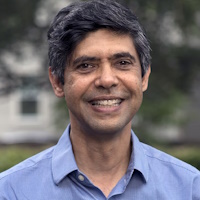 Aniruddh (Ani) Patel is a professor of psychology at Tufts University, where he researches the cognitive, neural, and evolutionary foundations of musicality. His book Music, Language, and the Brain won the ASCAP Deems Taylor Award, and he wrote and presented Music and the Brain, a set of 18 lectures produced by The Great Courses for a general audience. He is writing a book on the evolution of human musicality to be published by Princeton University Press. He has served as President of the Society for Music Perception and Cognition, and his evolutionary research has been supported by fellowships from the Radcliffe Institute for Advanced Study, the Guggenheim Foundation, and the Canadian Institute for Advanced Research.

