Kim Mills: Hello, and welcome to Speaking of Psychology, the flagship podcast of the American Psychological Association that examines the links between psychological science and everyday life. I’m Kim Mills.
This week, we’re doing something a little bit different from our usual conversation with a psychologist about his or her thought-provoking research. Today, I will be talking with a journalist and podcast host who has spent more than two decades bringing psychological and behavioral research to the public. Many of you probably know his work, especially if you subscribe to other science podcasts and if you listen regularly to National Public Radio. I’m talking about Shankar Vedantam, the host and executive editor of Hidden Brain, one of the most popular science podcasts in the US, which receives millions of downloads every week. Hidden Brain is also broadcast on more than 400 public radio stations across the country. Its mission is to explore the unconscious patterns that drive human behavior. Recent episodes have covered the psychology of money, the rise of rudeness, and resilience and coping with grief, to name just a few topics.
Shankar Vedantam has been reporting on human behavior and social science research for more than 25 years. He was National Public Radio’s social science correspondent from 2011 until 2020. Before that he spent 10 years as a reporter and columnist at The Washington Post. He is the author of two nonfiction books, Useful Delusions: The Power and Paradox of the Self-Deceiving Brain, published in 2021; and The Hidden Brain: How Our Unconscious Minds Elect Presidents, Control Markets, Wage Wars, and Save Our Lives, published in 2010. He has also written plays and a collection of short stories. And in the interest of full disclosure, I will tell you, APA has worked with Shankar over the years, occasionally referring him to expert psychologists as part of his reporting.
Thank you for joining us today, Shankar.
Shankar Vedantam: It’s a pleasure, Kim. Thank you so much for having me today.
Mills: Let’s start with a little bit more about your story. One item from your CV that I didn’t mention a moment ago is that you have an undergraduate degree in electronics engineering and a master’s degree in journalism. How did you find your way to reporting on behavioral science and what has made you stick with it all these years?
Vedantam: My background as an engineer helped me in some ways enter science journalism, Kim. It allowed me the ability to understand how scientific papers were being written. Many journalists are highly phobic of anything to do with mathematics. I found myself a little less so, and so I gravitated to science journalism almost from the start of my career. I was actually working at The Philadelphia Inquirer, at the time, my first newspaper job. And I realized over as I was working at the Inquirer that some of the most fascinating questions in science had to do with the brain and the mind and human behavior.
And so really over a period of years, my interest gradually narrowed from covering all of science journalism to focusing predominantly on the mind and mental health. For about 10 years when I was working at The Washington Post, I focused a lot on mental health issues and psychiatry and covered the questions related to mental disorders and the treatment of mental disorders. And I would say subsequent to that, largely as a result of a column that I started writing in The Washington Post called Department of Human Behavior, I became increasingly interested in the world of the social psychology world, the worlds in which psychology speaks, not just to disorder or illness, but the way in which psychology can address everyday problems that everyday people are having throughout their lives.
Mills: So you started Hidden Brain at NPR, but a few years ago, you decided to open your own production company, Hidden Brain Media. Why did you decide to go out on your own and what can you do now as the boss and an entrepreneur that you couldn’t do in your prior jobs?
Vedantam: That’s a great question, Kim. I wrote the Hidden Brain book in 2009, 2010. It was published, I believe in 2010. And I joined NPR in 2011. And so in some ways NPR had seen the book that I had written about the hidden brain and they were interested in my coming to NPR to explore those issues. So in some ways, the story of Hidden Brain really begins from before I joined NPR.
For many years, while I was working at NPR, I would do short stories usually on Morning Edition, often in conversation with Steve Inskeep or David Greene, talking about interesting pieces of social science research, often psychology, but sometimes economics and political science and sociology. And then in 2015, partly because those short stories, those short segments proved to be very popular with listeners, we decided to try and launch a longer form version of those short stories, and that became the Hidden Brain podcast.
The Hidden Brain had a wonderful run at NPR. The Hidden Brain radio show launched at NPR and continues to be distributed by NPR. But a couple of years ago, I decided that it would be helpful to in some ways, explore the possibilities of what Hidden Brain could become outside the confines of a large media organization. And there were several reasons for that, but I would say chief among them was that the story of Hidden Brain really was not a story of the podcast. My interest in Hidden Brain, I would say really began when I was working at The Washington Post in 2007 through 2009 when I was writing a weekly newspaper column. So I would argue that Hidden Brain’s genesis was really as a newspaper column. And then it became a book. And then it became short articles on the radio. And then it became a podcast.
But to my mind, the interest that I have in Hidden Brain is not limited just to audio. I’m interested in the ways in which it can reach people in all kinds of different forums and different media, and becoming an independent organization is opening up all kinds of possibilities to make that happen, including, for example, exploring possibilities in television. We are actively considering what a Hidden Brain television show could look like. We’re actually actively thinking about what an events practice could look like, where we’re actually saying there are people who want the three-minute version of the story. There are people who want the 45-minute version of the story, but there are people who might want the three-week version of the story. People who have a deep interest in a subject, and how can we actually serve these different audiences?
Being an entrepreneur has been a real learning experience. I like to say that I have sort of collected my street MBA, as it’s sometimes called, over the last couple of years, but it’s also been wonderful, not just in teaching me how to run a business and to employ people and to make sure that we can keep the lights on. All of those have been sort of interesting experiences. It’s also taught me a lot about myself and my own abilities and capacities in ways that it’s been quite revealing.
Mills: The term “hidden brain” is one that you coined, and it has a particular meaning, which some of our listeners might not fully understand. Can you explain what the term means and how you came up with it?
Vedantam: Sure. As I said, the genesis of the Hidden Brain book was this newspaper column I was writing at The Washington Post called Department of Human Behavior. It was a weekly column where I would try and link together things that were happening in the news, whether that was the war in Iraq or the presidential election or whatever was happening in the news with interesting social science research. It was a fascinating experiment because each week I had to find interesting connections between things happening in the news and things that were in the world of academic psychology or the social sciences. But one of the things that I started to notice of course, was that a lot of interesting work was being published that suggested that people did not really fully understand their own behavior and motivations. And as someone who thinks of himself as being a very rational, deliberate, intentional person, I found this very surprising because I felt, “Well, other people might not know their minds, but surely I know my mind, and I know why I do the things that I do. I’m a very logical person.”
But over the course of writing this newspaper column at The Washington Post, I realized my intuition was in fact wrong. That in fact there was a vast amount of my own mind that was actually hidden from me. And some elements of what I eventually came to call the hidden brain are hidden by design. In other words, even if I try my best to access some parts of my brain, they’re basically permanently sealed off from introspection, but there are other aspects of the hidden brain that are just simply out of sight. I’m not paying attention to them. Even though if I tried and I made an effort to pay attention to them, I would be able to do so.
So the hidden brain was really my term to pull together this range of things that were happening outside of my own conscious awareness that was in fact influencing my behavior, my judgment, my decisions. And I found that world fascinating. And to be honest, I still find that idea fascinating. I think it’s one of the most revolutionary ideas I’ve come by in my own life. The idea that even though we feel as if we have a complete and full understanding of our own minds, our understanding is in fact fleeting. And probably is not even the vast majority of our minds. In fact, the vast majority of our minds are probably hidden from us at any given time.
Mills: Well, let’s talk for a minute about where you get the ideas for your show. You’ve got a team of eight people right now working with you. Are you all reading scientific journals every day to generate ideas? Are listeners sending you ideas? What are you looking for and what makes for a great episode?
Vedantam: Yeah, it’s a great question. I have a wonderful team of people who’ve been working with me. Some of them have been working with me for many years. Some of them are new, incredibly talented people. Many of them are very, very skilled audio producers. As you probably gathered and putting together this podcast, Kim, audio production turns out to be more complex than many people realize. It actually has many interesting elements to it, many nuances to it and doing it well is not easy. So many people on my team are focused on audio production and thinking through the nuances of audio production.
We do indeed have people working on the team who are also thinking about research and research insights. I, myself, over the past 15 years, I would say, have made a daily practice of trying to read academic journals on a very regular basis. And in many ways, I think I read more voraciously than many people who are in the academy because I don’t limit myself to an individual field. So I’m reading journals in psychology and sociology and economics and anthropology. I read very, very voraciously, and I also try and keep track of interesting articles that I come by.
So for the past, I would say 15 years or so, every time I come by an interesting article, I save the article and then I have an internal sort of archiving system that allows me to go back and retrieve the article with a bunch of keywords that I have set up. So I’m able to find those articles, even if something came up 5, 6, 7, 8, 10 years ago. And it’s interesting, Kim, that I have a really terrible memory when it comes to almost everything. I have a very bad memory for faces and names. I forget what I did yesterday. If you ask me what I ate for lunch yesterday, I have absolutely no recollection of it. But for some reason I have an excellent memory for research studies that were published many years ago. And this has stood us in good stead because I’m often able to see patterns that come up.
Just a couple of weeks ago, for example, I was mentioning to a colleague that I’ve come by the work of a researcher in Chicago, and I’ve come by his work multiple times in the past 18 months or so. And once I start to see that, that tells me there’s something interesting happening here. This person is publishing, he’s really prolific in this area. Let me pay attention to it. I start thinking about ways in which that work can become a Hidden Brain episode.
As you say, multiple times, listeners often reach out to us with interesting questions or stories. Team members come up with things that are happening in the zeitgeist. Someone’s watching the Johnny Depp, the Amber Heard trial, and we are asking ourselves, “Is there a story that we can do at Hidden Brain that speaks to those issues?” A lot of it is in some ways, allowing these different trends and ideas to come to us. Questions, ideas from the academy, ideas from the published literature, ideas from listeners, ideas from our own team members about what’s happening in the news. And the art I think is trying to figure out how to sort of meld these together to create Hidden Brain episodes.
I wish I could tell you exactly how it was done. I have to say that in fact, that’s probably a Hidden Brain episode in and off itself, because I feel like people who do things actually are not really expert in telling you how they do the things that they do. Sometimes they think they’re experts. If you had Michael Jordan on your podcast or LeBron James, or Steph Curry, and you ask them, “What do you do on the basketball court?” I’m not entirely sure they can actually tell you exactly what they’re doing. So part of the ability of doing something involves skills that are, I think, often hidden from the person who’s actually doing it. At least those skills are not conscious at a level of saying, “Here are the specifics five steps that I’m following.” All I can tell you is that we are voracious readers and listeners and observers, and we’re constantly thinking of ways in which these different strands can produce interesting episodes for our listeners.
Mills: Well, speaking of interesting episodes, are there any that stand out in your memory? And are they the ones that the listeners love too? Or do you find that some of the stories that you think are terrific weren’t as big a hit with your audience?
Vedantam: Yeah. This is actually something that I’ve been meaning to explore as a Hidden Brain episode at some point, because again, I actually think that that’s a really fascinating and interesting question because you would think that creators would be very good at predicting what it is that their audiences like. And I think in general, that is simply not true. If it was true, we wouldn’t have as many duds as we have in the publishing industry or in the movies. The people who are skilled at making things, if they truly understood what audiences want, why would they go out and make failures? Why would they make movies that land with a thud?
And the interesting thing of course, is that when you are sitting in a theater watching a movie—I don’t know if this has happened to you, Kim, but it’s happened to be multiple times. I can sit and watch a movie, and I know three minutes into the movie that this movie is not going to work. I know three minutes into the movie, this movie is a failure, the characters are too wooden, the plot doesn’t work. It’s a bunch of stereotypes and cliches. And I have to ask myself then how is it that I’m able to sit in a theater within three minutes and know something isn’t going to work? And there’s been a whole team of people who’ve worked on this movie for like five years and they’ve spent 20 million doing it. Why couldn’t they see the same thing? And in some ways I think the question answers itself, which is that I think when you’re very close to something, you genuinely lose the ability to see what actually is working and not working.
And this is why someone who is an amateur can come into something and say, “Well, why don’t we do it this way? This would make much more sense.” And all the professionals say, “Well, of course we can’t do it that way, that wouldn’t work at all.” But I think amateurs are often able to see things because they’re able to see with fresh eyes. Sometimes this is called the curse of knowledge, of course, which is that the more knowledge you have, the harder it becomes for you to actually see which end is up, because you’re so flooded with information and ideas and thoughts that you sort of lose the ability to see something as a novice.
So the short answer to your question is I think quite regularly, people have surprised us in terms of the episodes that they have liked compared to the episodes that we have liked. But in general, I will say that when I think about the episodes, my favorite Hidden Brain episodes, the answer to that question is always very simple. When people ask me what’s my favorite Hidden Brain episode, I always tell them that my favorite episode is the one that we’re doing next week.
Mills: Of course.
Vedantam: I only mean that partly—officiously, I actually think that’s actually genuinely true. I’m someone personally who sort of lives almost entirely in the future. So the future is more clear to me than the present and the past. And I’m always invariably excited by what we have coming down the pike. So invariably, I’m more excited by those episodes and the episodes we’ve published already.
Mills: Can you give us a hint as to what you’re working on now? When I was talking with your executive producer a couple weeks ago, Tara Boyle, she mentioned a piece that you’re working on having to do with some dreams that a man had years ago, one of which came true, and one of which he is afraid will come true.
Vedantam: Yeah. I won’t get into all of the details because I want listeners to listen to this episode. This is an episode that in fact we’ve been working on for, I would say, almost two years at this point. And that’s the other interesting thing about Hidden Brain episodes, which is some of them come together in three weeks and some of them take months or even years to put together. But this is sort of a really unusual story about a man who had two dreams. And of course the dreams were just strange dreams, like all dreams are, and he dismissed them except that one of the dreams purported to tell him how long he was going to live. And he had these dreams when he was a teenager. And then he put the dreams out of his mind.
And then what happened is some years later, the first dream that he’d had that night, which was also a bizarre dream, came true in almost every way, shape and form. And it made him start to ask himself, “Is it possible that I was told something that night about my future? And is it possible that the second dream, which purported to tell me how long I was going to live, is also going to come true?” And he reached out to Hidden Brain shortly before the birthday where his dream had forecast that he was going to die, asking us how to think about these dreams. And of course it’s a fascinating story from a psychological point of view, because it raises really interesting questions about how we think about our own mortality, how we think about predictions, how we think about prognostications, how we think about patterns in terms of the things that occur to us. The brain is a pattern recognition machine as many listeners of your show, I’m sure are aware of, but how does this affect us in terms of our daily behavior? Do we share these fears with other people? Do we keep them to ourselves?
So I feel like this is an episode that explores so many interesting themes of human behavior, because it has so many different ramifications of how we think about ourselves and our lives. And it’s an episode that I’ve—I really love this episode and I can’t wait for it to come out in a few weeks.
Mills: I am looking forward to it as well. Let’s just switch gears for a minute and talk about your most recent book, which is called Useful Delusions: The Power and Paradox of the Self-Deceiving Brain. I would wager that most people at first blush would say self-delusion is a bad thing. What kinds of delusions are you talking about when you talk about useful delusions?
Vedantam: I think you’re going to pick up a pattern here, Kim. One of the things that interests me is when I find paradoxes in my own behavior, I often follow them because I say this is interesting. And so, one of the interesting pieces of research that I’ve come by in the last, I would say five, 10 years is ideas that sometimes behaving rationally doesn’t produce the outcomes that you think it’s going to produce. And I feel like I run into this all the time in my own life, because I’m a very, very rational person. And I find myself befuddled and bewildered when rationality doesn’t produce the outcomes that you expect. Let me give you the simplest of examples.
The controversy we’ve had in the United States about the efficacy of vaccinations against COVID-19. To my mind, it seems so self-evidently, blindingly obvious that if vaccines have been developed that are safe and effective and you have a deadly virus that’s raging, a virus that can kill you, of course people are going to want to take those vaccinations. It’s like you’re drowning and someone’s throwing you a life raft. And of course, you’re going to grab it because you would want to save yourself. And of course, what we’ve seen in the last 18 months of the pandemic unfolding is that people in fact are not behaving rationally. And for rationalists, such as myself, this has often been, deeply dispiriting and befuddling and bewildering. And so I’ve increasingly been drawn to research that purports to ask the question, well, why is that? Why is it that people in fact do not follow what is the most rational course of action? Is it possible that—
One explanation is that people don’t follow the most rational course of action, just because they’re silly or they’re foolish or they’re misguided. And that’s possible, but of course our minds are machines that have been constructed over millions of years of evolution. They’re very, very skilled at doing certain things. And the brains that we have, handed down to us from evolution, are in fact very skilled at solving problems of survival. You would think that if there’s one thing the brain is really, really good at doing, given that we’ve been produced by a process of natural selection. The one thing the brain should be really good at doing is surviving because of course, all of us come from a long line of survivors. The fact that you and I exist today is because our ancestors learned to survive. They had brains that allowed them to survive.
And so when you look at the brain, it’s in some ways facile to basically say there’s something wrong with the brain that causes us not to be able to survive, because you would think the one thing again, natural selection would design into the brain is a deep capacity for survival. And so when I think about this, I start to ask myself, well, then what are the mechanisms in the brain that prompt us towards non-rationality or irrationality? And is it possible, at least in our evolutionary history, that these brain mechanisms played a useful role? Is it possible that they actually served us in some kind of useful way in our prior history? And even though it might not be functional today, that might explain then why it is we have those algorithms of the brain today.
So the simplest example to give would be at multiple points in human history, but also in the history of other species from whom we had descended, animals faced huge survival problems when it came to famine, when it came to acquiring enough calories to stay alive. And so unsurprisingly, our brains are designed to pay very, very close attention to any caloric restrictions that we have because in our ancestral past famine was a way that we often died. And so even though today, many of us live in a sea of plenty when it comes to calories and we’re surrounded by junk food and soda and potato chips and all of those things, our brains still carry the imprint of what our ancestral brains had, which is a deep fear of famine, a deep fear of not having enough calories to live on. And so our brains in some ways are designed to make us eat, even though we might not actually need to eat, even though in fact eating might not serve us well.
And so it’s an example of how we might have ancient algorithms in our mind that served our ancestors very well, but because the human world in which we live in has changed so dramatically right now, the ancestral algorithms no longer work. And in fact, might not only no longer work, they might actually counterproductive. When you think about the epidemics we have around hypertension or strokes and heart disease, some of that has to do with our lifestyle choices in terms of eating and exercise. And that’s driven in some ways by these algorithms in the brain.
So similarly, when you think about the ways in which our minds operate, there are many, many domains in which in fact, our minds are designed to have delusions. And you could argue that some of those delusions might in fact be useful. They’re actually productive today. And I think the simplest and clearest example of this is in the realm of parenting and parenthood. Because I know when my own daughter was born many years ago, the day she was born, it was sort of the most special day of my own life. But when she was born, I had a firm conviction that not only was she the most special child in the world, I had the sense that she was the most special child in the history of the world, that she was the most wonderful and important thing that had ever happened in the history of the universe.
Now, clearly, when I thought about that rationally, that has to be a delusion. That cannot possibly be true that my one daughter, when she was born, she was the most special thing that happened in the history of the universe. And of course, when you look around and you find that other parents have exactly the same delusions about their own children, you start to say, “Okay, this has to be a delusion. It can’t possibly be the case that all these children are the most special thing that happened in the history of the world.”
And then you ask yourself, “Well, why is it that we have this delusion?” And the answer is, as I have discovered through 16 years of parenting, parenting is really, really difficult. It’s expensive, it’s time consuming, it’s stressful, it’s challenging. For our ancestors, it often involved incredible risks that often put their own lives at risk to make sure that their offspring survived. And the delusion that we have that our children are extraordinary and special, is in fact a very useful delusion to have, because it allows us to commit the time and the resources and the effort that are needed to successfully raise children to adulthood.
Now, can parents go too far with this? Can you basically believe in the extraordinariness of your children to the point where you actually are encouraging them to do things that are harmful or malevolent? There are examples of that where children do terrible things and their parents stand by them because they can’t bear to think that their children are bad people. But in general, this is a very useful delusion to have, because of course, if we didn’t have this delusion, many of us, we thought very rationally in a cost benefit way, “Do I really want to invest this much time and effort in the care of somebody else?” Many of us might rationally conclude that we don’t wish to do those things. And of course that would not be good for the survival of the species and for the continuation of our genes. And so that would be a simple example of a useful delusion at work, but it turns out that’s one of many kinds of delusions that in fact might be irrational or non-rational, but in fact might have a profoundly solitary role for us and our species.
Mills: I am sure your daughter is the most extraordinary person on the planet.
Vedantam: You’re exactly right.
Mills: I’m often amazed by the way that you get scientists to tell their personal stories and weave together their work and their lives. How do you get them to open up and reflect in this way? And a challenge, I think we both share, which is to get them to speak in plain English.
Vedantam: Yeah. It is the case that I think we talked about this actually a little while earlier, which is, I think when you spend a lot of time learning something and studying something, you’re so attuned to the small nuances of what you’re studying, the details of what you’re studying, that sometimes it becomes hard, I think, for you to see your own work as a novice would, as an amateur would. For example, I’m often amazed that the researchers and scientists that I speak with do not have a good understanding of what it is about their work that actually would interest the general public. What is it about your work that actually would speak to the general public?
I think many researchers genuinely find it hard to actually answer that question. And they find it hard precisely because they know so much, precisely because in fact, they’re so smart and so knowledgeable. This is in fact, the curse of knowledge at work, that if you’re used to talking to other people who are fellow academics, who are also deeply immersed and enmeshed in the field in which you’re working, it’s difficult to step out of that and speak in a way that is accessible or comprehensible to a general audience.
In many ways, I think of Hidden Brain as being a bridge between the academy and the public square. I sort of think about the work that we are doing as a service role, that we are trying to translate important and interesting ideas from the academy and make them accessible and relevant to people’s lives, to the lives of people who are outside of the academy. And I think this work is really important to do because of course, it’s not just the creation of knowledge that is vital in our world, it’s the dissemination of knowledge that is vital. And the public plays a really important role in maintaining and supporting science. So taxpayer dollars go to fund universities, they go to fund research institutions. It’s really important for ordinary people to feel science is not just some abstruse thing that’s happening in some ivory tower. The work that’s been done in the academy actually has relevance to my life. It actually can make my own life better. And so there’s a really important, I think, function in playing this bridge role between the academy and the public square.
Now, how do you get scientists to talk? How do you get them to focus on stuff that is of relevance to the general public? I think some of this comes down to the trust that I think Hidden Brain has earned within the academy. We are seen as being a serious show. We are seen as a show that deeply cares about science and takes scientists very seriously. I think I genuinely have a deep affection and a regard for the science and the scientists that we profile on Hidden Brain. I am someone who reads academic publications for pleasure. I can think of spending time on a weekend reading academic papers and I think of this as being just as enjoyable as watching Netflix.
I think when I speak with scientists or when we reach out to scientists, they know they’re speaking with an interlocutor who genuinely understands and gets them. And actually one who is sort of enthusiastic about the worlds in which they operate. So I think scientists have come to trust us in some ways, in being able to tell their stories in a way that actually reaches people well. But it is the case that putting together a Hidden Brain episode and putting together an interview with a scientist often involves extraordinary amounts of background preparation and work. And many of my team members play a very active role in thinking through very carefully, “What is the arc of this person’s research? How can we best profile it so that it lands in the best possible light so the ideas become the most accessible? How do we connect this with people’s lives in a way that makes people feel like these ideas speak to me?”
One research study that has really spoken to me was conducted some time ago by a researcher, I believe at Columbia University, Xiaodong Lin-Siegler. She was presenting research to students about science. In this research experiment, some students were told about Albert Einstein and were told Einstein was one of the smartest people who ever lived. His ideas were so brilliant. Even though he was working a century ago, his ideas were so smart that we are still struggling to understand his ideas today. That very, very few people truly understand Albert Einstein’s insights. That’s one group of people.
And there’s another group of people who are told about the missteps and foibles and mistakes that Einstein made. The times in his life, for example, when he couldn’t solve a problem, when he found that he didn’t have the mathematical skills to solve a particular challenge. He had to turn to other people for help in order to be able to solve those challenges. And then what Xiaodong Lin-Siegler did was a very simple question. She basically said, “If you tell these two versions of the stories of Einstein to students, who ends up being more engaged in science? Who ends up thinking that science is for them?” And perhaps the way I’m presenting this makes the answer obvious, but when you present Einstein as a genius beyond all geniuses, whose ideas are incomprehensible to us even a hundred years later, many students are perfectly happy to say, okay, Albert Einstein was a super smart guy, but they don’t think that they can become the next Albert Einstein because they say, “I’m still having trouble with my algebra class. I still am having trouble with trigonometry. How can I possibly aspire to be Albert Einstein?”
On the other hand, when you sort of describe the limitations and challenges that Albert Einstein had, he becomes much more relatable as a character. And now you sort of say, “Well, I can relate to who this person is. And yes, some of his ideas are really difficult to understand, but like me, he struggled, and like me, he had setbacks, and like me, he had failures.” And I feel like this is a really important insight in science communication that I think many scientists forget, which is it’s important not just to tell people about the insight you have when you’ve reached the top of the mountain.
It’s really important to communicate to people the struggle it takes to get to the top of the mountain, because it’s the struggle to get to the top of the mountain that in fact is where everybody else is who’s listening to that episode. Everybody else who says, “I have an insight, but I don’t quite know if it’s a scientific insight. I don’t know how to actually take the steps to turn this insight into a rigorous, scientific conclusion.” They want to hear about the struggle involved in getting to the mountaintop.
When you think about every good science movie that you’ve seen, when you think about movies about great scientists, what you’ll find of course is exactly the same pattern. The movie doesn’t start with the moment of blinding scientific insight and the rest of the movie is just as this hagiographic look at someone’s brilliant ideas. It always starts with the story of what were the challenges you faced? What were the setbacks you faced? What is the story that allows you to basically see, I can understand that this insight was hard one, this insight involved significant challenge, it involved a journey? I mean, think of any adventure story that you’ve watched or read or liked. You don’t start the movie by basically saying the end has been reached. The victory has been accomplished. The movie always has to start with laying out what the challenges are. And what you’re doing with laying out the challenges is really engaging people in the problem, not just engaging people in the solution.
I think this is a really important insight that a lot of people in science communication forget. The central challenge is not engaging people in the solution. The central challenge is engaging people in the problem. Because once you’ve engaged people in the problem, and then you give them the solution, they’re receptive to the solution, they basically say, “Uh huh, I understand now why the solution is relevant to my life,” because you’ve actually taken the time to connect them, connect their lives, their problems with the problem of discovery itself.
Mills: You have a really unique view as someone outside the field who is very knowledgeable about behavioral science research, and you’ve explained your attraction to it. You’ve been paying attention to it for years and years. So given that, and given all of the string that you save over time looking for patterns, can you talk about what you think are the big topics and trends that we might be seeing in the near or the distant future?
Vedantam: I have to confess, I’m probably not very good at predicting the future. In some ways there’s I think a robust psychological science that basically says very few people are good at predicting the future. So if you were to ask me where are this field’s going to go in five years’ time or 10 years’ time, I have to confess, I don’t know the answers to those questions. I don’t quite know. To tell me, what are going to be the hot areas in psychology five years from now, 10 years from now? I think I’ve learned enough to know that I am not going to be very good at predicting what those things are. In some ways I have, let’s say a more modest approach to thinking about my work. And that is to basically pay attention to a lot of different things that are happening and asking myself what’s interesting about these lots of different things that are happening.
And some of those things are more modest. They’re not sort of sweeping changes that would transform an entire field, but it’s an interesting body of research that basically says, “Let’s look at this interesting idea and see where we can go from here.” So I think I have lots of interests in lots of different things, but if you were to ask me big questions, how is economics going to be transformed in the next 10 years? How is social psychology going to be transformed in the next 15 years? I have to confess, I am probably not the right person to ask here.
Mills: Okay, well, let me throw this at you to close things out here today. Given that we live in what I believe is a fairly anti-science, anti-intellectual society right now, how do you count for the popularity of a show like Hidden Brain?
Vedantam: That’s a good question. I have to say that if I was being perfectly candid, I would have to say that I’m somewhat surprised, as you seem to be, because I do think that what we are doing in many ways is very serious and it’s a very sober show. We’re focused on complex ideas, and we’re trying to present complex ideas before people. And like you, I think maybe 10 years ago if you’d asked me how successful would a show like this be, I would say it would be modestly successful because the audience for complexity and nuance is not very big. I have to say that I’ve been surprised, pleasantly surprised at how popular a show like Hidden Brain is.
I think there are some things that we are doing that in fact are helpful, which is that we are constantly trying to connect the world of science with the world of storytelling and trying to make stories as accessible and as interesting as possible. I think we are genuinely interested and curious about the worlds in which we are covering. And I think that enthusiasm comes through in the work that we’re doing. I hope it comes through in just the conversation we are having right now. I hope people are hearing my own enthusiasm and passion for the fields that we cover.
But also I think podcasting in general has turned out to be this extraordinary gift because podcasting of course, is fundamentally a business of niches. It’s basically are there enough people in this niche who are fascinated by what you’re doing that they’re willing to actually listen to you? And it turns out there in fact is a sizeable number of people who are interested in thoughtful conversations, who are interested in nuance, who are interested in what their own minds are doing, who are interested in how they can modify and change how their thinking and how they should be responding to the world to have better relationships or perform better or function better at work or in their lives. That audience turns out not to be trivial. It turns out to be substantial. So I would say the short answer to your question, Kim, is the short answer really to how anyone gets successful, which is they work very hard and most of it is luck.
Mills: Well, Shankar Vedantam, thank you so much for speaking with me today. This has been a great pleasure. Very happy to have some time with you.
Vedantam: Thank you, Kim. I’m a huge fan of everything that psychologists and the APA does, and I’m hugely grateful to the many scientists and researchers who share their time and insights with us. We wouldn’t have a show without them.
Mills: You can find previous episodes of Speaking of Psychology on our website at www.speakingofpsychology.org, or on Apple, Stitcher, or wherever you get your podcasts. If you have comments or ideas for future podcasts, you can email us at speakingofpsychology@apa.org. Speaking of Psychology is produced by Lea Winerman. Our sound editor is Chris Condayan.
Thank you for listening. For the American Psychological Association, I’m Kim Mills.


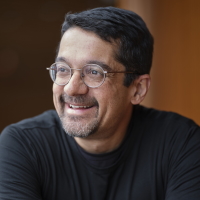 Shankar Vedantam founded Hidden Brain Media in 2019 and is the host and executive editor of the Hidden Brain podcast and radio show. From 2011 to 2020, he was a social science correspondent with NPR. Before that, he was a national correspondent at The Washington Post. Between 2007 and 2009, he authored the weekly Department of Human Behavior column in The Washington Post. His book Useful Delusions: The Power and Paradox of the Self-Deceiving Brain was published in 2021. In 2010, he published The Hidden Brain: How Our Unconscious Minds Elect Presidents, Control Markets, Wage Wars, and Save Our Lives. Vedantam is the winner of several journalism awards and was a 2009–10 Nieman Fellow at Harvard University.