Kaitlin Luna: Hello and welcome to Speaking of Psychology, a bi-weekly podcast from the American Psychological Association. The crisis of the U.S. southern border shows no signs of stopping, and the American system designed to serve immigrants and refugees is overwhelmed and ill prepared to handle the hundreds of thousands of people who have been apprehended since October 2018. Many immigrants are fleeing their home countries to escape violence, poverty and oppression, and are seeking protection in the U.S. Psychologists all around the country have been moved to help with this humanitarian crisis by providing mental health services, forensic psychological evaluations and advocacy services to these vulnerable people.
One such psychologist is Dr. Claudette Antuña, a volunteer forensic psychological evaluator at the Northwest Immigrant Rights Project. She provides pro bono evaluations to this nonprofit agency in the state of Washington that have helped hundreds of immigrants attain asylum or other forms of legal relief available to undocumented immigrants so they can stay in the U.S. She's also involved with The Refugee Mental Health Resource Network, an APA initiative led by our division on trauma psychology and she's a member of our immigration working group. Welcome Dr. Antuña its wonderful to have you here to talk about this very important topic.
Claudette Antuña: Thank you very much for asking me.
Kaitlin Luna: I imagine most of our listeners haven't met or been in close contact with a person who's made this long and treacherous journey from their home country to the U.S. border to then be apprehended by immigration officials possibly separated from their children or other family members. To bring the images we've seen in the news to life for our listeners, can you describe the mental and physical conditions of the people you work with?
Claudette Antuña: Most of the people that I work with have gone through an arduous journey to get here. By the time they actually cross the border they're exhausted. They've been through deserts, they've been through swamps, they've been through water rain a vegetation that grown them and many different forms of transportation. Many times they walk, many times they get a bus sometimes they get on the train where they have seen other people get injured because the train goes very fast and people going on the roof of the train and falling off. So they have seen all kinds of situations and they've been used and mistreated by some, and then occasionally helped by others all of a sudden grateful hand will be extended by someone who offers them some food and some water. And many times now they're coming with their small children so this arduous journey for an adult is hard, bringing children with them is excruciatingly difficult. So by the time they get here, they're exhausted mentally and physically.
Kaitlin Luna: Close to you in Tacoma, Wash. is a large immigration and customs enforcement detention center in Tacoma, Wash. Can you describe what it's like there?
Claudette Antuña: It's a huge warehouse in the Port of Seattle. It looks like any other warehouse. It gets kind of hidden among all different kinds of different kind of warehouses they have. They have no programs for people. They have a library which is obsolete, and they have pods where adult men and women are housed. That's how they are they're just actually housed. They have a small little patio where they can occasionally go out to play some, shoot some baskets but that is about all. They're not, it's fenced in, the entire perimeter, and they're constantly watched by the officers that are in charge of taking care of them. But they actually have no relief but boredom is one of the most difficult things that they have to deal with. Some of them choose to work for a dollar a day, either cleaning toilets, cleaning floors and some of them are fortunate enough to work in the kitchen. I think that is a plus, people try to get to work in the kitchen because they can get some additional food. Other that they're just housed. So it's 1,500 people or more plus could be there at any time. So we're the third largest detention center in the United States.
Kaitlin Luna: Can you explain what a forensic evaluator does?
Claudette Antuña: So the forensic evaluator is usually contacted by an immigration attorney to respond to the type of legal relief that is being offered and whether or not that individual fits into the category. So it is a neutral document, an objective document, of how that person fits in response to the questions that are being asked in terms of their eligibility and criteria for any of the legal forms of relief that are available. So it's a psychosocial evaluation, trauma informed. objective and neutral document. It is not an advocacy we're not trying to point out why they should stay here. We're just saying this person fits the criteria and this is why. So it is our job to make sure that we can respond to the question.
Kaitlin Luna: What services do you provide as part of The Refugee Mental Health Resource Network?
Claudette Antuña: Okay, so the original reason for having the refugee network is because of the scarcity of the resources for individuals who know how to do the psychological evaluation that accompanies the application for legal relief. So because it was the attorneys, usually immigration attorneys, were seeking individuals it was a response to being able to provide individuals who do this kind of work. Who can either provide it for a fee or for no fee depending on the community and what was being asked. And the other thing is that the refugee network now it also has webinars where we try to talk about the different ways in which we do the evaluation, but also the different, consultation with one another, a mentoring service. So it's an it's an attempt to address the issue of scarce resources to provide something that we definitely need to be able to do.
Kaitlin Luna: You touched on something called trauma-informed care, so can you talk a little bit more about that and its importance in working with immigrants and refugees?
Claudette Antuña: Well for the most part individuals who taken a long journey who first made a choice in their own country that whatever they were dealing with it was no longer acceptable, sustainable and they made the decision to come. That's the first piece of trauma that individuals have to deal with. Their roles in life are going to change, they're separating from other family, extended family members from perhaps some property they may have. So their way of life their customs their community and that's the first part of leaving their country. And then they have to make this arduous trip full of obstacles. So an individual who is assessing that level of trauma needs to go back and take a look at what these individuals have lost as a result of what they've experienced in their own countries, the trajectory of getting here and what life and assimilation will be like in this country. So it's, the trauma that people have sustained is expressed in many different ways depending on your culture. So some individuals who do not have access to an attorney might have to face a judge who doesn't speak their language and they may not be able to express and tell their story. So we need to be able to address that issue. We're kind of, we're telling the story of this individual and why they're here.
Kaitlin Luna: Can you talk about how important it is to build trust with these vulnerable populations? I imagine today's political climate might make people afraid to trust the very systems that are designed to help them.
Claudette Antuña: The willingness to listen to their story is extremely important and to not think of it as something that's time consumed and you need to have it out with them and just talk to somebody for half an hour and see what you can get. You have to really be able to listen to the story that they're willing to tell and recognize when they're not able to articulate what has truly happened to them. I mean we have 12-, 14-, 16-year-old girls who are told before they leave that they need to take precautions to not get pregnant because they will probably be raped. So they're given pills and sent off on the trip and hoping that nothing will happen to them. So there's a lot that goes in to being able to pull out that story about what it was like to make that decision to come and to then face the trip and recognize what they have gone through. So we need to be able to listen to the story and be able to tell the judge that's what we call the trier of fact, so they can make a decision as to whether or not someone is eligible to stay in this country or not.
Kaitlin Luna: Can you explain what cultural competency is and how critical it is in this type of work?
Claudette Antuña: It's more than just being able to speak the language. It's being able to understand what they have dealt with in terms of their own community. Where they come from, the kinds of objectives and values that they have. And we need to set aside what we know about ourselves and be able to take a look at somebody else's story and understand it from their perspective and not try to impose a particular bias that we might have towards that culture or toward their practices or to their way of life. So really being able to put that aside. Understanding that we have our own biases, making sure that we understand what they are so that we can look at individuals from their perspective when they're telling us their story and not making assumptions about what has happened to them. So cultural competence is this, cultural competence, cultural empathy it's really being able to put yourself in somebody else's shoes and it seems trite and it seems like we should be able to do that. It's actually not that easy, because we are so full of biases and ways of seeing the world in our own way that it's difficult for us sometimes to be able to understand somebody else's and where they're coming from and particularly when they don't speak the language.
So I can give you an example of one, and I wrote a little piece about, that cultural competence is extremely important and just making recommendations about an individual's life, and to understand that there may be three different kinds of an indigenous language. And when we get an interpreter for one particular type of indigenous language we may not be really addressing all of their concerns. So that is another skill that one has to develop to make sure that you when you have to use interpreters as we often have to, I speak English and Spanish but I don't speak two hundred and twenty different native indigenous languages from South America, and to be able to grasp that piece that they're trying to tell us and to listen really carefully to what they're not saying so that we can really be able to tell their story.
Kaitlin Luna: You were interviewed by our magazine for members called Monitor on Psychology in fall of 2018, and in the story you describe how you helped three women who were forcibly separated from their children. Can you explain what happened to them and what the outcome was?
Claudette Antuña: You know I don't always know what the outcome is. In those particular cases I do, but as a forensic psychologist I am really supposed to stay very neutral and we may never know what the outcome is of a particular evaluation unless the attorney wishes to share that with us. But that first wave of parents and mothers being separated, we were, there were several hundred mothers who were sent to a, through what we call a SeaTac detention facility, but it's actually a, it's very different than a detention facility for immigrants, and their immigration facility. And they were, they were in a state of shock. They could not believe they had never heard of children being separated, young children being separated from them. And they did not expect that to happen. And all their attempts to try and find out what had happened to their children were dismissed as if they shouldn't care they should just only care about themselves and not care about where their kids are. As a mother and a grandmother there is, that would be very difficult for me to put aside just my own interest and not know what happened to my children. So these women were expressing tremendous amounts of pain, they were in shock, they were constantly anxious trying to figure out how to connect with someone who could give them some information. Eventually, they were able to be heard in a court, they had a hearing and so they were able to be eventually reunited with their children but it took months. And in the meantime they only had each other to console, there was no one else who really cared about what they were going through. So they supported one another through this very difficult process.
Kaitlin Luna: APA has come out quite strongly against the policy of separating families at the border, citing the psychological harm that comes from it including toxic stress, post-traumatic stress disorder, sleep disturbances, substance abuse, social withdrawal, can you describe what you've seen with your work?
Claudette Antuña: I would say I've seen most of what's on the DSM-5. People express what they have gone through in many different ways. Some people just shut down. Other people are, one day are okay the next day they're not. So is this really who they are, they always portray, or is this just situational, so we need to kind of understand what that is like. So we see people with all different types of anxiety, adjustment disorders, PTSD of course, but some of them are depressed and some of them may not be as depressed. Some of them spend hours just being paranoid about and what is going to happen to them, if they're being forced to go to return to their country what that would be like. So there's a gamut of emotional expression and psychological injury that occurs to both adults, adolescents and children. And it's, and that is what the, if you could say the educational piece of immigration psychology is just looking at the variety of responses that people have to what they've gone through.
Kaitlin Luna: Detention centers at the border have been described as dirty, crowded, lacking adequate food and communicable diseases are spread easily. What is the psychological impact of being held in those conditions especially for children, and are those conditions what you see what at the SeaTac location you mentioned?
Claudette Antuña: No the SeaTac location is actually for adults as well. We do not have in the state of Washington we do not have a child, where children have been detained. We have a facility where adolescents are being held that are usually unaccompanied, and I have seen many of those children. Many of those young folks have not had a good educational foundation, and so they, when they try to test their intellectual development there's a lot of concern about, you know, what kind of educational exposure we can place these young people at. So I'm already seeing them when they have been detained in a facility, a group home facility, for some time and I don't see the young children. But I am aware because I have colleagues who have contacted me and seeking resources about how to go about evaluating children who are non-responsive, some who can't stop crying some who are screaming and hollering for their parents. So each situation and each child responds to their situation very differently and we have to be able to understand where they are developmentally and where that fits in to the trajectory of their response to distress which may be very different from what we would expect children who have grown up in different kinds of environments.
Kaitlin Luna: So for many people who are released into the country temporarily while they await their time in court, deportation is a constant threat for them and many other immigrants and refugees. People in those situations are dealing with this chronic uncertainty, can you describe the psychological toll that takes on a person?
Claudette Antuña: I see it manifested a lot in extreme anxiety. So for instance many individuals who are still waiting for their day in court, and this is, this is not just a couple of months this is sometimes years that they're waiting in limbo, and they don't know what is going to happen to them. So they're constantly fearful you know if they can go and seek assistance from anybody. They're no longer going to the kinds of activities that they used to go to. Frequently, there have been several articles about the toxic stress that people are experiencing and that they won't go to a doctor's appointment, they won't take their child to a doctor because they're concerned that somebody in the office might report them to immigration even though that their child might be a U.S. citizen. They won't seek assistance, they won't they won't go to church, they don't go to soccer games or any kind of activity that they used to enjoy with their children because they have concerns that they may be picked up and their child would be abandoned.
They're used to, there are in some cities, teachers who will pick up the kids because the parents don't want to take the children to school because they're afraid that could be picked up. So they have, teachers have volunteered to pick up these children from different schools, from different homes and bring them to school so the parents don't have to make the arduous trip. So it's changing the way in which they're living in their lives, it's frightening, it toxic, it's distressing. They just can't do the same things that they used to do.
Kaitlin Luna: Our country is deeply divided about what to do about the influx of immigrants coming to the border, as you know. What do you want to say to people who believe that immigrants should be immediately turned away or that families should continue to be separated, I mean you're obviously sharing these very these very stories about people who are experiencing a lot of stress and anxiety and traumatic situations, so what do you have to say to those who are on the opposite end of the spectrum?
Claudette Antuña: Well I do have to say that I am biased because I am an immigrant. I am from Peru, but my father was invited to this country and went to school at Cornell. And I returned to Peru where I was born and then later on decided to come back to the United States at the invitation of the U.S. government. And so it did not understand and appreciate the value immigrants have too of this overall culture. We are, we are a land of immigrants. I strongly believe the sayings that are on the Statue of Liberty. My great-grandparents were from Poland and they escaped the war, so there, unless you're Native American, your family is from somewhere. And I think we have contributed to the fabric of the society and it is something that we need to be able to be very cognizant of. If all of the immigrants, the undocumented immigrants left, we would have a food shortage. People who work in restaurants, people who work in high tech, I mean we come from all over the world and I think we, I think we have a value and I don't see what this struggle is and continues to be to not allow them to participate and create an even better America than the one we're living in now.
Kaitlin Luna: What are some incorrect assumptions you think people have about immigrants and refugees to go along with the question I just asked?
Claudette Antuña: Yeah, well that's an interesting one because there have been, there have been several myth destroyers that have been around that I'm aware of. Melba Vasquez had come up with a couple of them. And like one of them was the myth about them not wanting to learn English, I think that that's not founded. We have literature to prove that most immigrants who come to this country wanted learning, but they don't want to leave their culture or their language behind. They want to be bilingual and sometimes trilingual, so that is a myth that they don't want to learn the language. Now some people can't really do two language or three, they have a real difficult time, but that doesn't mean that they don't want to it just means that they have a harder time being able to achieve biculturalism.
The other one is about taking jobs that other Americans that are already here have. And that also doesn't prove itself out. We know for a fact that many immigrants will take two and three jobs just so they can make it through, so they can pay their bills and not and not suffer. So that laziness, crime-ridden immigrant, that, that's really a myth. And when people really take a look at the research and the statistics that are on that, it's been proven to be very incorrect. Crime is not any higher in the immigrant population than in the established communities. So I could go on I mean there's a whole bunch of them, a whole bunch of myths that just keep on repeating themselves without any foundation and the reality is we do have the research and the knowledge and the statistics to prove that immigrants are a contributing force to this country.
Kaitlin Luna: And you've seen a whole lot in your work, so from your perspective what needs to change about our immigration system?
Claudette Antuña: There's quite a lot. What, at this point is you know they're trying to put in more people to detain immigrants, but we're not doing anything about getting more judges to hear the cases. This languishing of two to three years to get a court hearing is absurd. It really destabilizes a family and an individual when they can't get their day in court. Now we know that undocumented immigrants are not entitled to an attorney so, but they are entitled to their day in court. So even if they have to represent themselves, we should give them the opportunity to do so. And not having the judges available to do so is, it doesn't work it just makes our system not work smoothly.
We also need to train more psychologists to do this kind of work to provide a psychological evaluation to the immigration attorneys so that they can present their case. We do have studies that say that 90% of cases that have a forensic psychological evaluation attached to it are usually found for the client. So we do know that it helps. It helps the judges and it helps the client to be able to tell their story as to why they're here. People don't necessarily leave their countries by choice, I mean it takes a lot to make that final decision to leave what you know and come to another country where you sometimes don't even speak the language, are totally unfamiliar with the culture and have no idea what they're coming to. It is it is an incredible ordeal and an incredible decision to make.
We need better ways of understanding the credible fear interview that is done by the different parts of USCIS so when they do an interview, it's an individual who may not have much training in mental health to make a decision of whether they believe a client is telling their story correctly. So that process needs to be taken a look at a little better. I do know that in some communities mental health clinicians have been asked to participate in the credible fear interviews. I have not conducted any nor am i necessarily advocating that we do it, but it's a, the training of the individuals who do that needs to be more trauma-informed, if you will.
Kaitlin Luna: And along that same vein, in what areas do you think more psychologists are needed?
Claudette Antuña: Well I certainly would like to see more psychologists be trained in immigration psychology so they can do the forensic evaluation. As well as when they're finally here and given an opportunity to stay in this country that we can also address the issues of trauma and anxiety and depression that they are dealing with in a clinical format. So we don't have enough people who understand what they've gone through to get here so that they can treat them and be able to help them lead a successful life in the United States. A great acculturation and really understand how you do that is really an important process for our learning curve in addressing immigrants.
Kaitlin Luna: We've spoken a lot during this conversation about trauma, and I want to turn to the subject of resilience. So you're involved in a report with APA's immigration working group. You published a paper called “Vulnerable but Not Broken,” and that was about the psychosocial challenges and resilience among company unaccompanied minors from Central America. So in an interview you did with the Monitor article for the September 2019 issue you explained how important it is to publish this report because it will benefit mental health professionals, teachers, lawyers, doctors to help ensure that they are properly treating these vulnerable populations. Can you elaborate on that a bit more?
Claudette Antuña: Sure. So these are usually young people, I mean we're talking about 10-, 12-, 14-year-old youngsters. Preteens as well as teenagers that have escaped from usually very abusive homes that can no longer tolerate what they're experiencing in their own country and have made the trajectory to come to United States. So they are, they are so grateful when they come and when people treat them nicely and provide them with at least a listening ear. So that contributes to developing a sense of that you're a person of worth, that somebody cares, that somebody will give you the time of day and they're thereby building someone's, a child's resilience to deal with what is coming next. Because what they've left is so usually so disturbing, so ugly and so, well if they've experienced that many of them have experienced all kinds of things, things that we would not have expected children to have experienced, seeing their mother killed, seeing their parents led away kidnapped and disappeared, and maybe they've had other family members who have sexually assaulted them. So they have gone through everything and coming to this country is a beacon of hope, and when they find that there are individuals who really care and give a damn then they're able to respond and say okay I have a place to grow from here. So trying to work on building their resilience and their hope is an incredible job that needs to be done, and we don't need to be, there are many times they're placed in foster homes or group homes and detained in facilities like I mentioned before that houses, warehouses adolescents. So that's where we help them build resilience. Because they're not necessarily, these are not criminals, these are just kids who have gone through a lot.
Kaitlin Luna: And there is a high potential for resilience in children and teens right? I mean even those, despite these challenges, there is a high potential correct?
Claudette Antuña: Yes there is absolutely. Yeah although they've gone through and seen a lot they can still have the capacity to put that aside and move forward.
Kaitlin Luna: Is that the same for adults who've also gone through these experiences?
Claudette Antuña: Sometimes. I don't know that this is necessarily true for everybody. But when they, when they come, when they're listened to, when the court chooses to hear them and understand their stories, and then there's hope that's built in and they have the potential to recover. But they can't necessarily do it alone. So that is where we need to have the expertise to deal with people who come from all over the world. This agency the Northwest Immigrant Rights Project this sees people from over 174 different countries. I mean this is not just a Central American issue. We see people from, I've seen people from Congo, from Vietnam, from places and cultures I had never understood or heard about before. And it's, for the psychologists, it's an incredible experience to be able to learn about these different cultures and the way in which people can harm each other and the way in which they can build each other up. So that's a true testament to what is happening.
Kaitlin Luna: Can you talk about your best or proudest moment you've had with it, with the Northwest Immigrant Rights Project, or with the Refugee Mental Health Resource Network?
Claudette Antuña: I think the recognition that this work is important. So I've been at NWIRP, which is the Northwest Immigrant Rights Project, for over 15 years doing this work. And I have tried to introduce this topic for many years, and nobody really was paying much attention that this was going to be a problem. I certainly didn't expect it to reach the, where it's at at this point. But just the recognition of the value of this work from immigration attorneys who understand now the value of the psychological evaluation has been an incredible experience.
On the other side the worst experiences are usually the ones in which we, you feel like shaking a judge and saying but you need to understand what this individual went through before you make a ruling that sends him back to a country that will kill him, him or her. And so that's a very frustrating time, to not be able to be able to help them understand. Because the first level often when something is presented to the USCIS and they return it and say well we might need more information, sometimes the kind of information that they're looking for is just a lack of understanding of what psychological issues are in an individual, how they present themselves. Which is really frustrating because those individuals don't have any mental health background so it's like they're just shooting in the air and asking for questions and it makes you wonder that it's, I can explain it to you in many different ways, but not choosing to listen is really difficult.
Kaitlin Luna: For any psychologists we have listening, can you explain how they can get involved in helping immigrants and refugees during these challenging experiences they have as they get into the country?
Claudette Antuña: There's a lot of, there's a lot of psychological, local psychological associations state-wide that are beginning to have programs to train psychologists to do this kind of work. A very good example would be California. I'm aware of other ones around the country, New York I think has that as well. But there are different state chapters that have done a lot of work in trying to get more and more psychologists to be involved. The Physicians for Human Rights is another agency that trains psychologists, licensed mental health clinicians to do these kind of, this kind of work. So it is, you do have to search for it it's not like it's gonna pop up everywhere. There aren't enough trainings that go around the country to provide for everybody who wants it but it's available. So I've had individuals contact me and say where can I get trained and it may be that the only offering I can say would be to contact Physicians for Human Rights and see if they are able to, if you can get into the training.
The refugee network that we have also aims at training individuals who perhaps may have put a foot into the, into immigration but were not quite secure in what they know so they need the constant reassurance that we can provide through the network in our webinars and being able to train people to look for different kinds of situations that they may not have confronted. And individuals like myself are open to mentoring at all times. I take calls from anyone who's interested in doing this work and will guide you through the process. And the one thing that seems to hold psychologists back and other mental health professionals is the fact that you may be asked to testify in court. So what I say to people is if you're willing to put your, sign your name to a report and put your license on the line, then you should be able to testify in court to what your documents says. But it's still that fear of oh my goodness I don't want to go to court type of thing so that that's a reluctance that many psychologists have, but we can, we can work with that and that's something that we can teach people to do.
Kaitlin Luna: For listeners who aren't psychologists but want to help somehow, can they do anything, do you have any advice?
Claudette Antuña: Yes they can. If they live near a detention center, there are many organizations that go visit, who have may have a program for a visitation program where they go and visit an individual maybe once a month, that's all it takes. We're not asking people to spend any more time than that. Just visit someone who's detained who's been there for months who has not seen a family member and has no one to talk to. So that, that's usually available where detention centers are. There are other ways of helping in different communities and different churches have organizations within their churches where they can, where they have provided housing for immigrants that may be in transition waiting for their interview or just struggling with trying to understand American culture and getting acculturated.
So yes there are many different ways in which we can respond to the needs of immigrants and in each community there are those agencies that do that. We have at the Northwest Detention Center the AID Northwest is an agency that has a little trailer outside of the detention center where we can provide clothing for people who are coming out of the detention center that don't have anything. You know they may have been picked up in Mississippi and brought to Washington in the cold or in the wintertime and so have inadequate clothing. We may help them get to the nearest airport so they can come, go back to their where their family may be, connecting family members with others who got separated. So there's different agencies that do that kind of work and that doesn't require a psychologist necessarily, just an interest.
Kaitlin Luna: So it's amazing to think that you can just go to a detention center and say you want to visit with someone. Are there any things people need to know about how to do that?
Claudette Antuña: Well for example, I can and I know there's the one program in Chicago I'm aware of and the program that we have here, we do a training, I used to be on the board of the AID Northwest, and so one of the things that we, they, did was train visitors to what kind of things to expect and what kind of things to talk about and what they can, how they can facilitate that process. So there is a tremendous need to assist these individuals when they come to this country and that's one of the ways in which we can do that. But visiting people is really important, always required is just spend a half an hour 45 minutes with someone who has lost their entire, they've been separated from their families, they may have lost their community and they don't know anything about the United States and have never even looked at the outside of what U.S. looks like. You know they may have been processed right from the border straight to Washington and they know nothing about nothing. So it's that being able to be a person to understand that we're just human beings trying to connect with one another.
Kaitlin Luna: Thank you so much for joining us Dr. Antuña in this topic that's incredibly important right now and incredibly relevant in our country and for sharing your insights in your work, we really appreciate it.
Claudette Antuña: You're quite welcome, anytime.
Kaitlin Luna: Dr. Antuña's interview in the Monitor on Psychology, APA's magazine for members that covers science, education, psychology practice and more is now online. You can find a link in our show notes and at SpeakingofPsychology.org. Before we go, just a reminder that we want to hear from you. You can email your comments and ideas to speakingofpsychology@apa.org and please consider giving us a rating on iTunes we'd really appreciate it. Speaking of Psychology is part of the APA podcast network, which includes other great podcasts such as APA Journals Dialogue about new psychological research and Progress Notes about the practice of psychology. You can find all of our podcasts on iTunes, Stitcher or wherever you get your podcasts. You can also go to our website SpeakingofPsychology.org to listen to more episodes. I'm Kaitlin Luna at the American Psychological Association.


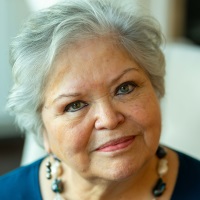 Since 2006, Claudette Antuña, PsyD, has been conducting forensic psychological evaluations for a variety of immigration-related forensic issues and is considered an expert at immigration court in Seattle and Tacoma, Washington. A native Spanish speaker, she was APA’s diversity delegate for the state of Washington in 2017, a member of the APA’s Immigration Task Force, chair of the Immigration Task Force for Div. 52 and a member of the diversity group for Div. 56. She recently served as professional development coordinator for the National Latinx Psychological Association. Antuña was a charter member of the Critical Incident Stress Management team for the state of Washington and a volunteer manager for Disaster Mental Health Services with the American Red Cross. She has received several awards for her work with undocumented immigrants.