Kim Mills: Speaking of Psychology is taking a summer break, so we’re rerunning one of our favorite episodes from the past. In July 2021, I talked to psychologists Lisa Orbe-Austin and Kevin Cokley about imposter phenomenon—what it is and how people can overcome it. We hope you enjoy this episode from the archives. Speaking of Psychology will be back with new episodes next week. Thank you for listening.
Do you ever feel like a fake? Like you’re not really qualified for the job you’re doing, despite your achievements and credentials? Or like you’ve just lucked your way into whatever professional or academic success you enjoy, but you’re just one mistake away from being found out for the fraud you really are? If so, you’re not alone. Those are signs of impostor phenomenon, also called impostor syndrome. While estimates vary, some research suggests that up to 70% or more of people experience impostor feelings at some point in their lives.
Where do these feelings come from? Who is most likely to experience impostor phenomenon? What repercussions can it have in people’s personal and professional lives? If you’re troubled by impostor feelings, what can you do to address them and keep them from holding you back?
Welcome to Speaking of Psychology, the flagship podcast of the American Psychological Association, that examines the links between psychological science and everyday life. I’m Kim Mills.
We have two guests today. First is Dr. Lisa Orbé-Austin, a counseling psychologist and career coach in New York City, where she focuses on helping clients with career advancement, career transitions, and leadership development. Her book, “Own Your Greatness: Overcome Impostor Syndrome, Beat Self-Doubt, and Succeed in Life,” offers readers advice based on decades of research, as well as her own experience helping clients recognize and overcome impostor phenomenon.
Our second guest is Dr. Kevin Cokley, a professor of educational psychology at the University of Texas at Austin. Dr. Cokley studies African American psychology, and he is particularly interested in understanding the psychological and environmental factors that affect African American student achievement. As part of that work, he has explored the impostor phenomenon and its relationship to mental health and academic outcomes among ethnic minority students. Thank you both for joining me today.
Kevin Cokley, PhD: Thank you.
Lisa Orbé-Austin, PhD: Thank you for having us in.
Mills: Let’s start briefly by talking about the words we’re going to use. In the introduction a moment ago, I used the term “impostor phenomenon,” but many of our listeners may be more familiar with the term “impostor syndrome.” Are these just two different names for the same thing?
Cokley: In my own language, I use the language of the impostor phenomenon, which of course is the language that was used by Pauline Clance and Suzanne Imes when they introduced the terminology to the literature. We see in popular discourse, now, the words the impostor syndrome, which is more popular than the phrase impostor phenomenon. I tend to stay away from the impostor syndrome because the word syndrome itself has such a clinical orientation and innuendo. Again, it is not a syndrome in the classic sense of something that is diagnosable the way that we think about diagnoses as a psychologist. So, I tend to use the word impostor phenomenon, but I recognize that in terms of popular discourse, the phrase impostor syndrome is much more known.
Orbé-Austin: Yeah, and I agree with Kevin that in essence, in the book, I talk about the fact that it is initially coined as impostor phenomenon. Drs. Clance and Imes, the originators of the concept, were very clear in never using the word syndrome and not wanting it to go in that direction because of the medicalized and pathologizing connotation to it. However, in my work, I often use syndrome, because that’s how people in popular culture identify it, and don’t identify it with phenomenon. So, it’s easier for people to search, and find, and connect to the idea of it, in terms of—it is fairly interchangeable, but I completely agree with Kevin around the concept.
Mills: As you said, there’s no official diagnosis of impostor phenomenon. It’s not in the Diagnostic and Statistical Manual. It’s not in the ICD, the International Classifications of Diseases. Do either of you believe that it should be a formal diagnosis? If so, would that be helpful or harmful?
Cokley: Again, I don’t think that there should be a formal diagnosis. I agree with Dr. Orbé-Austin that that in some ways medicalizes and pathologizes a term that is really rooted, in many ways, in reactions to external, social stimuli. I think that to suggest that it be a formal diagnosis is really—is misplaced and does a disservice to not recognizing the external environments and the other stimuli that really are imposing upon people that help exacerbate their feelings of impostorism.
Orbé-Austin: Yeah, I agree. I think there are many correlates of impostor syndrome to mental health issues. People often have higher levels of anxiety or depression. There are other really diagnostic conditions that do result from the experience, but the experience, I think, of it, in and of itself probably doesn’t require that.
I think if you think about diagnostic conditions, and this idea that it’s impacting your social, relational, or academic functioning, a lot of people with impostor syndrome are actually doing quite well. So, yes, there are internal potential correlates, but not for everyone. It varies. So, I think it doesn’t necessarily have to be a diagnostic condition to receive intervention, support, other things, be able to see it as a valid experience.
Mills: Given the amount of coverage that this phenomenon has had in the mainstream media, I think many people’s general impression is that impostor phenomenon is a bigger problem for women. Does the research bear that out, Dr. Orbé-Austin? Could you answer that? Who is most likely to experience impostor feelings?
Orbé-Austin: Well, I think, I’ll also ask Kevin for his opinion, Dr. Cokley for his opinion, but in my understanding of the research, I feel like there hasn’t been a conclusive point on whether or not one gender experiences it more than another. There isn’t conclusive research to suggest, yes, women experience it more than others. I think because it was initially studied with women, I think people then feel like this is a women’s issue. I think some of the research shows that men experience it somewhat differently. There’s a lot of room for discussion around gender diversity and gender expression. We don’t have a lot of research around that, itself, but I think it’s really important to note that sometimes men experience this in what looks like a different way. So, I think it oftentimes then goes a little bit underreported, in terms of their experience of it.
Mills: Is sexism a factor here? I mean, is it just the fact that women often feel like we have to perform so much better than men? Fred Astaire, he was phenomenal, but his partner danced backwards in high heels. I mean, we always have to be a little bit better than…Ginger Rogers. I lost her name for a minute. Is that part of why women may feel it more acutely? Even, Dr. Cokley, ethnic minorities, I mean, the same thing. You have to, because you study that area, you have to perform at that much higher a level in order to be taken seriously in many situations.
Cokley: Yeah, no, I would agree with what Dr. Orbé-Austin said, that in the original context, the focus was on women, and women who were very successful. I think that Dr. Clance and Dr. Imes perhaps thought that it was more salient with women, but the research itself has been equivocal. In my own research, I have conducted studies where some studies, women have reported higher impostor feelings, but in other studies, there’s not been any significant sex difference at all.
That’s the case with other studies that have reported on impostor phenomenon findings. The findings are equivocal. What I will say, and I agree, again, with Dr. Orbé-Austin, that you do see that the way that impostor feelings manifest themselves takes on a very gendered approach.
For example, I have found in one of my studies looking at academic outcomes that impostor feelings were much more salient for women concerning GPA compared to men. There was no significant mean difference. They both reported similar levels of impostorism, but its implications for academic outcomes, in this case GPA, was definitely gendered. That’s the way that I think it’s best to think about any sort of potential gender differences involving impostor feelings.
Then, regarding ethnic minorities, absolutely. I became interested in the area because of my own research on the psychosocial experiences of African American students and other BIPOC students. When I came across the impostorism literature, I was fascinated, because there had been relatively little work done on students of color. So, I saw where it would be immediately applicable to the work that I was doing. It turns out that I was right, because many, many BIPOC students report feelings of impostorism in predominantly White educational spaces. So, I think that there is definitely a very strong connection there.
Orbé-Austin: Yeah, and I think that I’ll add to that, in the sense that we talk about this in our work, in our trainings, about the double impact of impostor syndrome for women, for people of color, of this experience of having these internal feelings, like, I might be a fraud. I don’t know if I belong here. I might be incompetent, and then this external communication happening from the world being like, well, maybe you don’t belong here. Maybe you got here because of a diversity program. Maybe you’re not good enough.
As you’re working on it, and trying to believe in your competence and skills, you’re getting these external messages that are reinforcing the impostor syndrome, which I think makes it more difficult to overcome, because you’re getting these additional signals, like, hey, maybe you are. I think, as a result of systems of oppression and other things, they benefit from you maintaining your impostor syndrome. So, I think it’s really important to recognize that it can be experienced very different in different populations.
Mills: Well, let’s talk for a minute about how impostor feelings affect people’s lives. Dr. Orbé-Austin, how do you see it affecting your clients, in terms of their career paths and the career choices that they make?
Orbé-Austin: Well, I mean, I think it’s interesting, because I think many of them, I deal with mostly, I work a lot with women, and I think many of them, what the literature finds around women and some of the ways in which they deal with it is that they’re counterphobic, and so they actually face the thing that they’re afraid of. I don’t see them not achieving. I do see them struggling to advocate for themselves, in terms of salary, to sometimes feel like they could find other opportunities elsewhere, feeling like maybe this is the only place that will really appreciate me, and getting stuck in places.
I find that they often struggle with advocating for promotion and other things. Also, too, I think also in management, struggle with delegation, and micromanagement, feeling like their direct reports are a direct reflection on them, and they don’t want to be exposed. I do see it come up in these different ways.
Mills: Dr. Cokley, how does it affect achievement and mental health in the students you’ve studied?
Cokley: Well, it’s interesting, because with students of color, I see them really sometimes struggling with acknowledging to other people that they have these feelings. What ends up happening is, is that BIPOC students in predominantly White spaces are well aware of the perception by some that they don’t belong there, that they’re simply there because of affirmative action. So, they want to prove to others and to themselves that, no, I belong here because of my achievements and because I am meritorious. Yet, they still have this little voice that says, “Maybe you really were just simply a product of affirmative action.” In addition to all the other stressors that all college students experience, this added, what I call this racialized expression of impostorism, is an additional burden and stress on students of color, which ends up taking a toll on them, emotionally, and their well-being.
Now, I will say this, that it’s interesting, because when you look at, and there’s not a lot of empirical data right now to support this, but when you look at the effect on the actual achievement, you’ll see that in some cases, and this is perhaps more anecdotal than supported by data, but it seems that individuals who have impostor feelings are also performing, in some cases, at even higher levels. In other words, they worked so hard to try to counter any sort of perceptions that they belong there that they might end up doing relatively well, but suffer from mental health challenges. Certainly, I see with students of color them also overachieving, overperforming, trying to counter what they believe to be perceptions about their worthiness of being there, so they might, on the one hand, look pretty good on paper, in terms of their academic achievements, but they may be suffering from mental health decline.
Mills: You’ve both written about your personal experiences with impostor phenomenon. Can you talk about those a little bit, how those experiences have informed the work that you do?
Orbé-Austin: I mean, for me, it’s what drew me to the work, actually, is my own personal experience with impostor syndrome. I probably had a very different research path, early on, and I think, writing path. I think that having experienced it very, very, pretty impactfully, I mean, I talk about it in a TEDx talk. I was in a particularly bad job after I graduated from my PhD program. I was working for a pretty oppressive boss and felt stuck. I felt stuck in a way I couldn’t apply for other jobs, I couldn’t talk to people. I was really, really stuck in this job where he was really just making sure that I didn’t go anywhere else. He wasn’t necessarily ever complimenting me or ever saying I did a good job, but making sure that I felt really under water.
It wasn’t until I was in a meeting, and I share this often, that I was in a meeting. It was an all-female senior staff. There was music playing in the background. Someone said, “What is this music that’s playing?” He said, “It’s music to soothe the savage breast.” In that one moment, I woke up. I was like, what am I doing to myself? Why am I here? Why am I putting up with this?
It was all the impostor stuff. I didn’t feel good enough. I didn’t feel worthy. I didn’t feel like I deserved anything. I just really decided I didn’t want to live like that anymore, and I actually quit the job on that Monday, and left, and started my practice soon after, and finally took my licensing exam, did all the things that I was actually not executing on that were related to my dreams, and my goals, and my wishes.
For me, the way it connects for me is that I feel a very distinct passion for making other people aware of how it operates in their lives, and helping them be free of it, so that they can feel like they can live in their dreams, and not feel the oppression of it. I think, like Kevin was mentioning, I think from an external level, I don’t think anyone would be looking at my career going, God, that’s a disaster, but for me, it felt like that’s what was happening, and I wasn’t living in the things that I wanted to be doing for myself. So, that’s how it connects for me.
Mills: Dr. Cokley, what about you?
Cokley: Well, it’s interesting. When I give talks to students about my own path to where I’ve gotten, professionally, I always share with them the stories of some of my struggles as an undergraduate student, and how I had an academic scholarship. I was immediately placed on academic probation after my first semester in college. I talked about how I struggled, as a student, academically. Then, when students see where I am now, and professionally, they’re always amazed.
Where it is relevant for me even today is that in spite of all of the accolades and things that I’ve been able to accomplish in my career, I still harbor vestiges of impostorism. It may seem crazy, because I’ve done fairly well as an academic. Yet, I still sometimes look at myself and think, are you really all that your accolades would suggest that you are? I mean, it’s crazy. I honestly still struggle with that, at times.
Orbé-Austin: It’s so not crazy, Kevin. I mean, I was having impostor feelings last night, because I was going to be on this podcast with you, and I was like, oh my god, what do I know about impostor syndrome? It’s Dr. Cokley.
Cokley: Yeah, no, it’s real. It is very real.
Mills: Well, so, that raises a question of whether impostor phenomenon can ever have any positive effects. I mean, does it spur people to excel? I think you talked about that a little bit.
Cokley: Yeah, no, it does. I think that, for example, when I describe what has been documented as the impostor cycle, you’ll see that people take these two paths. There’s one of overpreparation and one of procrastination. For me, it’s the path of overpreparation. When I’m, for example, giving a talk on the impostor feelings, I prepare as though I’ve never given a talk before, like as though I haven’t given dozens, and dozens, and dozens of the talks, so much so that my partner says to me, “Kevin, why are you spending so much time preparing? You know this like the back of your hand.” Yes, I do, but I never want people to hear me and think, he does not know what he’s talking about, so I really overprepare.
I think what happens with people who experience impostorism is that they will go the extra mile. They will work extra hard to try to do well, whatever the task is. I think in that sense, it can have a positive effect, but again, I want to make sure that you understand that oftentimes it’s coupled with the negative impact that it has on one’s well-being.
Orbé-Austin: Yeah. I mean, I think it’s a great point. As I’m in recovery of my own impostor syndrome, I’m always working to check myself around the overwork and overfunctioning that has done me well. I went to an Ivy League…I did all those things, but I think that it has had such negative other aspects that I’ve come to recognize that I can be successful without thinking that everyone’s going to think I’m a fraud, and that those skills still exist within me, whether I think I’m a fraud or not, and that I think it’s so much better if I just proceed forward as if I’m not a fraud, because I think it’ll be better for me, long-term.
This reminds me of something my husband said to me when I was trying to break out of my impostor syndrome. He said, “If you work as hard for yourself as you do for others, you’re going to be unstoppable.” Part of my work was around really learning how to work in that effort for myself, as opposed for proving myself, as opposed for making people like me, and all this other stuff. I did it because of things I was invested in, I was interested in, that I wanted to do. I think it was a much better investment of my energy in that direction, but it’s a constant battle.
Mills: How is this different from just being an overachiever? Because it sounds like that’s what you’re describing, except that maybe you feel like there’s somebody at your back who’s chasing you or criticizing you.
Cokley: Well, I mean, I think there’s certainly a lot of overlap. I mean, being an overachiever, and in effect, what you’ll see, for example, one of the studies that I conducted, perfectionism has been oftentimes linked to feelings of impostorism. That’s absolutely the case, that individuals who have impostor feelings oftentimes will find themselves to be perfectionists. Of course, we know with perfectionism that perfectionism can be both adaptive and maladaptive. It’s the maladaptive forms of perfectionism that will result in feelings of impostorism being particularly harmful. Certainly, there’s a strong connection between perfectionism and these feelings that we sometimes struggle with of impostorism.
Orbé-Austin: I think it’s such an interesting point, because I think the other thing can happen, which is true, too, which is I see underachievement, as well, because of the perfectionism. It’s like, if I can’t do it perfectly, I’m not going to do it at all, because then it will expose me. I think you can see both the overachievement, and you can see underachievement. Sometimes they’re in different domains or in other areas, but I think it’s such an important piece around the perfectionism and how it does underlie it. It can make you a great success, and it can make a great failure. I think it’s really how it operates in your particular experience.
Mills: It sounds like you both have techniques for dealing with this within yourselves. What kind of advice do you give to people who are experiencing impostor phenomenon that might be holding them back? Are there techniques that they can use? I’ve read, for example, that group therapy is one thing that might be helpful. What else can people do if they’re having this experience?
Cokley: Well, I mean, I’ll offer one that I talk about. Part of what happens with individuals who experience impostorism is that they tend to discount the really positive things that they have achieved, all of their accomplishments. It’s helpful if you ask people to really make a concerted effort to attend to and to document all of those things that they actually have done well.
For example, if you say, look, consider keeping a weekly or biweekly diary. Every time that you’ve done something well where you’ve been acknowledged, where you’ve done a very good job, acknowledge it. Just document it. Then, come back and review that, because what ends up happening is you will see, you know what? I actually have done a very good job on fill in the blank, on this test, on this task, on this project. Because when you’re suffering from impostorism, it becomes very easy to minimize or to discount all those things. You just don’t even acknowledge, or sometimes you just forget. Attending to those things, and making a concerted effort to document them, and to revisit them periodically to see, hey, you know what? I have actually done better than what I give myself credit for.
Orbé-Austin: Yeah, and I think my book is all the interventions that have been in the literature, and then, also, things that I’ve seen work in my practice. I think the other—I would definitely agree with Dr. Cokley on that. I think, in addition, too, dealing with your automatic negative thoughts. Learning that certain thoughts are triggered by the impostor syndrome, and how do you combat the automatic negative thought, and don’t just believe it, and fall into the cycle of overworking or procrastinating? Working on your self-care.
Oftentimes, when we have impostor syndrome, we put ourselves at the bottom of the list of who we care about, or who we take care of, who we spend time on. Really learning how to prioritize that, because one of the biggest outcomes from impostor syndrome is burnout. How do you help avoid chronic burnout? How do you deal with it? How do you recognize and structure self-care?
I think oftentimes, also, we’re caught up in very rigid roles around our impostor syndrome. We know how to be the helper. We know how to be the go-to person. We know how to be certain things, but we don’t know how to expand outside of those roles. How do we learn how to ask for help? How do we learn how to widen our role sets?
Also, building community around this. We often struggle with this alone. How do you build community around you that can support you as you recover from this experience? I think those are some of them that I would also add.
Mills: Is impostorism something that tends to affect younger people, college students, especially, or is that just because that’s the research that’s out there right now? By the time people are more established in their careers, does it taper off? I mean, do you just grow and become more confident, or do you really have to keep working on it for your whole life?
Orbé-Austin: I mean, I think that there are ways to minimize it and to get—I always say, is it going to go away? Probably not. But can you turn the dial down on it so quietly that you can’t even hear it or barely hear it? Yes.
I mean, it depends on your trigger and when you’re getting triggered, but I would say, some of the early, there’s some data out there that suggests that it does not get better with time. There was a study by KPMG in 2020 that showed that female executives had a rate of 75% impostor syndrome. That’s a higher number than we generally see, so I think part of the understanding of that is, as we become more visible, have more responsibility, have more on the line, it can sometimes make our impostor syndrome worse, because there’s just greater stakes at hand. If we lose this, it’s a bigger deal.
It can be exacerbated over time, depending on responsibility, but I don’t know if there are cohort effects. I definitely, I’m very interested in more research in the field of impostor syndrome, but…
Cokley: Yeah, no, I would agree with what Dr. Orbé-Austin said. I’m not aware of any research that has examined cohort effects, but as I shared, anecdotally, I’m a 50 year old man who’s reasonably successful in my profession and still have had experiences where I struggle with impostorism. I would just say that there’s probably not a lot of data that would suggest that there are these profound age differences, although there may be. Just, I’m not aware of any research. I would agree with Dr. Orbé-Austin that I think that people can certainly learn to dial down those impostor feelings with age, and experience, and maturity. At least, we hope that that’s the case.
Mills: What is the relationship between impostor phenomenon and other mental health challenges that you mentioned earlier, like anxiety or depression?
Cokley: Well, I mean, the relationship is, is that there has been a consistent finding that impostor feelings are associated with increased feelings of anxiety or symptoms of anxiety and depression. I mean, every study that I’ve ever conducted, and every study that I’ve ever seen reported, shows this association. Yeah. I mean, I think we’re pretty confident in saying that if you are experiencing impostorism, you are likely going to be also experiencing feelings of, symptoms of anxiety, and some depression.
Mills: If you treat those symptoms, then, does that help the impostor phenomenon?
Orbé-Austin: Not necessarily, because they can be different. I think one of the things that I’ve seen, though, is people who have treated their anxiety with CBT skills can use some of the similar CBT skills around their impostor syndrome, so I think the skills that you’re learning are transferable, but I think you have to tackle the specific experiences of impostor syndrome around this experience of being a fraud and being competent.
One of the things that I think is really important, for me in my work, has been to help people to identify the early experiences that were the foundation for why this impostor syndrome became what it became, whether it was rigid roles in childhood or whether it was family dynamics that were common. I think that has been really helpful for people, because I think they start to realize, this thing didn’t come from nowhere. The reason why I’m triggered by particular things today has a history. That makes sense to me, as opposed to, this thing came out of nowhere, and now I don’t know where to stop it. I think it gives people agency and a sense of like, I get it now. This didn’t come from absolutely nowhere.
Cokley: Yeah, no, if I could build on that, I mean, when you read some of the early work by Clance and Imes, they talk about both having internal factors and the external environment sort of factors, in terms of contributing to how the impostor phenomenon was created. For example, regarding the internal factors, what they noticed amongst the women that they were working with was the women reported receiving messages about being competent in all these different areas. You’re so skilled interpersonally, I mean, in all these other areas, but not anything related to their intelligence, so they started to at some point think, well, I’m good in these other ways that are more socially related, but no one is ever telling me that I’m naturally intelligent or that I am intelligent, so they started to internalize those messages.
Then, in terms of the external environment, being told, for example, that they, in fact, were really smart, very competent, superior, even, but then finding that even though I’m being told this, I’m struggling to meet these expectations. I’m trying to live up to what people are saying that I am, but not being able to, or feeling like they’re not being able to. Both those internal factors and the external environment were reported by Clance and Imes as contributing to the creation of impostor feelings.
Mills: What is the role of institutions and leaders, like professors or managers, to address impostor syndrome? We’ve been talking a fair amount about what individuals can do themselves, but is there something that institutions, companies can do to recognize and help people address it?
Orbé-Austin: Where do I get started on this? I think companies benefit from this, right? Because if you are overfunctioning, and overworking, and overperforming, they’re benefiting. They’re in essence sometimes getting two or three people for the price of one. So, I do think there is a lot inside the system that encourages this level of impostorism.
I actually was doing a training recently, and someone was saying, “Look, I’m working on trying to have more balance in my life. I want to do an adequate job. I asked my manager, ‘Can I just do an adequate job, and not do exceeds expectations?’” Then, there’s ties to their comp and their bonus structure that if they don’t exceed, they don’t get anything. So, if you just do a good enough job at your job, which we’re always telling people who have perfectionism, like, focus on the good enough. If you just do good enough, you don’t get additional compensation, so you have to constantly be exceeding to be able to reach certain comp norms.
I do think there’s a lot in our systems that really have to change so that we don’t reinforce this. Don’t burn people out, and use them for what they have, and then discard them. We have to be more thoughtful about the workers in our system, and how we take care of them, and how we create longevity for their careers. I think there’s a lot we can do around management and organizations to change these systems that are reinforcing it, ordinarily.
Cokley: Yeah, no, absolutely. The other suggestion that I would make, and this is a more difficult one, because it really speaks to culture, is creating an environment where it’s okay to acknowledge that one has made a mistake, to acknowledge that one is not perfect. This should come from the leaders, from the managers. This is a bit—Imagine what it would be like for an employee to have a manager to say, “You know what? I messed up. I dropped the ball here. I made a mistake, and it’s okay. We’re human.” Imagine the impact that that would have on employees, when their managers acknowledge that sometimes, they make mistakes as well. Now…
Orbé-Austin: Yeah. I’ll take it one step further, which is like, and then do a postmortem on the mistake so everyone can learn from it.
Cokley: Yeah, exactly.
Orbé-Austin: You know?
Cokley: Exactly.
Orbé-Austin: Have more of a growth mindset perspective, as opposed to a fixed mindset perspective about people’s capacities and capabilities.
Cokley: Now, that, exactly. Now, we all know that changing culture is easier said than done. Culture tends to be among the most difficult things to try to change, but if that could happen, it could go such a long ways. I mean, if companies are really serious about being responsive to the needs of their employees, this is one of the things that they absolutely should do.
Orbé-Austin: Yeah, the well-being of their employees. A lot of talk about well-being and mental health. There are correlates to impostor syndrome to mental health outcomes, burnout, depression, anxiety. If you want to reduce that in your staff, reduce some of the ways in which you are organized to encourage them to do this.
Mills: Well, this has been really interesting. I think you’ve offered some good advice to people who may be experiencing the phenomenon, and certainly, it doesn’t appear that it has held you two back in any way in life. I think you’ve been quite successful, and I’ve enjoyed spending some time with you, so thank you.
Cokley: Thank you, likewise.
Orbé-Austin: I’ve enjoyed it, too. It’s been lovely.
Mills: For our listeners, you can read more about impostor phenomenon in the June issue of APA’s magazine, Monitor on Psychology. Go to www.apa.org/monitor or look for a link in our show notes. You can find previous episodes of Speaking of Psychology at speakingofpsychology.org, or on Apple, Stitcher, or wherever you get your podcasts. If you’re so inclined, please leave us a review.
If you have comments or ideas for future podcasts, email us at speakingofpsychology@apa.org. That’s speakingofpsychology, all one word, @apa.org. Speaking of Psychology is produced by Lea Winerman. Our sound editor is Chris Condayan. Thank you for listening. For the American Psychological Association, I’m Kim Mills.


 Kevin Cokley, PhD, is a professor in the department of educational psychology and the African and African diaspora studies department at the University of Texas at Austin, where he is also director of the Institute for Urban Policy Research and Analysis. His research can be broadly categorized in the area of African American psychology, with a focus on racial and ethnic identity development, academic motivation, and academic achievement. As part of that research, he has explored the impostor phenomenon and its relationship to mental health and academic outcomes among ethnic minority students.
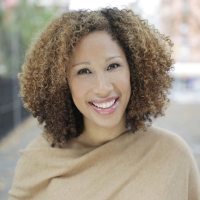 Lisa Orbé-Austin, PhD, is a counseling psychologist and career coach in New York City. She is a cofounder and partner of Dynamic Transitions Psychological Consulting, where she works with clients on career advancement, career transitions, and leadership development. Her book “Own Your Greatness: Overcome Impostor Syndrome, Beat Self-Doubt, and Succeed in Life,” coauthored with her partner, Richard Orbé-Austin, PhD, was released in April 2020. It offers readers advice based on decades of research as well as her experiences helping clients recognize and overcome impostor phenomenon.