Kim Mills: The last few years have seen an explosion of digital technologies that promise to help people achieve their health and fitness goals. There are apps to track your diet and weight, count your steps, and customize your exercise routine. One 2022 market research report found that the global health and fitness app market is now worth $1.3 billion and predicted it would be worth more than $4 billion by 2030.
These apps may be a commercial success, but are they a useful public health tool? As the world confronts what public health organizations have called an obesity epidemic, what role might digital interventions play in combating it? Do these apps work? Do they help people adopt healthier habits or conversely, might they contribute to the mental health toll that weight stigma can take in a culture that's obsessed with thinness? If you want to try using health and fitness apps, how can you find ones that are effective, helpful, and backed by research?
Welcome to Speaking of Psychology, the flagship podcast of the American Psychological Association that examines the links between psychological science and everyday life. I'm Kim Mills.
Our guest today is Dr. Gary Bennett. Dr. Bennett is a clinical health psychologist and professor of psychology and neuroscience, global health and medicine at Duke University, where he is also vice provost for undergraduate education. He is the founding director of the Duke Global Digital Health Science Center, where his research focuses on designing, testing, and disseminating digital treatments for obesity and other chronic health conditions, particularly for medically vulnerable patients. Dr. Bennett is a past president of the Society of Behavioral Medicine, and has authored more than 150 scientific papers. His research has been featured in The New York Times, NPR, Time, and many other media outlets. He has also founded three digital health startups and advises digital health and consumer electronic organizations on the science of health behavior change.
Thank you for joining us today, Dr. Bennett.
Gary Bennett, PhD: The pleasure's mine. Thanks so much for the invitation.
Mills: Lets start with a definition, as we often do on this podcast. Many of us are familiar with some commercial health and fitness apps. We've probably seen ads for Noom or downloaded things like MyFitnessPal. Is that what you're looking at when you study digital health interventions? How broad is the category, and what do you consider a real digital health intervention?
Bennett: Indeed, and we've all been inundated with advertisements of all types for these digital apps. That is what we study. So we're very interested in the effectiveness of the digital apps, that again, so many of us are using to manage our weight and improve our physical activity, to help with our sleep. We are trying to create these in a laboratory setting in a way that we hope will make them maximally effective. The apps that we create in the scientific community will look and feel and behave a little bit differently than what you see in the commercial realm. I hope we can get to a conversation about that. They're a little bit different, but fundamentally, we are just trying to help people improve their health in an easy accessible way, using the tools that they tend to use all day, every day, anyway.
Mills: So much of your research is focused on digital interventions for obesity. How well do these work, and what makes them effective?
Bennett: There are two answers to that question. Let’s for a moment just focus on what we know about the kinds of apps that so many people are downloading onto their phones. These are the apps that you can go to the app store of various types and download and use today. The ones that are in the commercial space. The short answer is we know very little about whether and how they work, how well they work. We especially know very little about how well they work relative to one another, and how well they work relative to established treatments that we know work very well.
If you were to go to your doctor or go to a weight loss group, perhaps in your local community, that's based on strong weight loss science, we have a good sense of how well they work. Particularly over the long time horizon that is necessary for people to have durable and kind of persistent weight losses. We don't really know how well apps work relative to those kinds of treatments. In fact, much of what we've learned thus far suggests that they work minimally, and not as well as we might like. Certainly not as well as do those very established treatments.
Then, there's the second answer to that question is how well do the apps work that we're testing in the research world? For me and my colleagues who do digital health science, we're creating apps all the time, and broad digital treatments that incorporate lots of different components. They look and feel quite a lot like what you could download in the app store, but generally speaking, you can't download them in the app store. These are things that we're testing in the lab. Those treatments, they work pretty well. Generally speaking, we see that people can lose somewhere between, call it seven, eight pounds of weight at about six months. Which for us is a pretty good outcome.
That's really the ceiling, though. There's a lot of that. That's about the most amount of weight you're going to lose with one of these digital apps. There's a lot of variability in how much weight people lose. So one of the things that's really important in this conversation is that those of us who do the science of obesity treatment think very differently about weight loss than do many folks in the public. We're fundamentally interested in producing weight losses that will help people improve their health generally. And then more specifically help to improve things like blood pressure, glucose, lipids, your cholesterol, those kinds of things. Frankly, you don't need to lose a whole lot of weight to see major improvements in those kinds of outcomes in your blood pressure, in your glucose, in your cholesterol, your triglycerides. We're not generally as interested in the large amount of weight loss that so many people want in order to kind of go on the beach and the summer, or get ready for a wedding or those kinds of things. What we know, generally speaking, is that most apps that you can download today don't deliver those kinds of weight losses.
Mills: What makes an app work for people? Why do the ones that you're using in the lab work more effectively than something that I might just arbitrarily go buy in the app store?
Bennett: Well, one of the reasons is that we're basing the apps in the scientific community on literally a generation or two of research about what contributes to successful weight loss. Generally speaking, what makes an app work in the scientific world are the kinds of components that you should be looking for in the apps that you download commercially. Those components would be things like self-monitoring or tracking. If an app isn't asking you to track what you're eating or what you're drinking, or really something, something you can stick with. We've done a lot of work in tracking one's weight. Then it's not going to work. One of the things we know the most about is that you have to track something, and we can talk a bit more if you're interested about why this works, but you have to track something.
The second thing is the app has to teach you skills. It has to teach you how to manage your calorie consumption, your food consumption, what you're drinking, your physical activity. Particularly during times when you're stressed or when you're around other people, it has to teach you how to engage with your food in a way that helps you to be able to maximize your weight loss. There's a whole realm of skills that we know work, and the app has to teach you that. The third thing that we know really works well is support, and this is one of the most counterintuitive things about the digital space. Almost all apps that work very well for weight loss include some type of support. That support is often delivered by a human counselor. Sometimes it's via chat. Sometimes it's via phone. Sometimes it's in person. But apps that don't include support of some type, generally have much smaller outcomes than apps do that include support.
You have to modify something. You have to eat less, move more. We can have lots of debates about the specific diets that apps recommend. Generally speaking, I'm not a fan of any particular diet. Science pretty strongly suggests you should just do something you can stick with. But if you download an app that says you don't have to track something, you don't have to change what you're eating and drinking, then you're not going to see weight losses. It's actually not more complicated than that, so in the scientific community, our apps do all of those things. When you're looking for an app that you can download from your app store, you want to also be looking for those things.
Mills: So an app that sends electronic messages of encouragement or reminders, that's not the same as human intervention. Does that matter? And my other question is, are people more motivated if they're actually paying for an app?
Bennett: On the first point, yes. Getting reminders, getting a little bit of support, a little reinforcement, a little pat on the back, those are tremendous, and you absolutely should be looking for that in your app. That's a little different than the kind of support I'm talking about, though. The support that really works well is support that's of the type that helps you to problem solve. When you're having a difficult time, when you're going out with colleagues or with friends, and you're trying to figure out how you're going to approach eating that evening, having someone to talk to and talk through that. When you've had a slip or slide, you've consumed more than you wanted to on the weekend, like the big plate of nachos I had last weekend, you want somebody to try to talk to help manage that, those kinds of situations.
That kind of support is really the kind of gold standard support that leads to the largest weight losses. The second question you're asking about if you're paying for an app, you stick with it longer. The answer is yes. That gets to a really fundamental challenge for those of us who are designing these kinds of apps. At the end of the day, what really matters for long term weight loss, is not what you're doing today or tomorrow in the app. It's what you're doing six months, seven months down the road with the app. Weight loss is a long term game. We're often thinking about, as psychologists, is how do we motivate you to stay involved, to stay engaged with these kinds of digital treatments for the long time horizon that it takes to be able to lose weight and keep it off.
Anything that we can do to keep you engaged is really critical, and paying for apps seems to be helpful in keeping you engaged. It works by through that engagement function that's just so important. But at the end of the day, what we find in all the studies that have looked at this question, is whether you're paying for the app or you're not paying for the app, whether you're using a science based app or one that comes off the app store, is that people have declining engagement. Over time, it just gets harder and harder to stick with these apps. That's the really important scientific question that so many of us are struggling with right now.
Mills: What about the apps that make you put in a goal, a weight loss goal. Maybe you weigh 150 pounds, and you put in that you want to weigh 110. Is that crazy? Does that help people? Or is that more discouraging than anything else?
Bennett: It's critically important to have a weight loss goal. That's the first answer. Second part of that is, though, it's critically important to have an achievable weight loss goal. Sometimes with some of these apps that don't give you feedback about your weight loss goal, I get a little bit concerned. You're 150 pounds and you put in 100 pounds, you want to lose 100 pounds in three months. That's not possible, or—it's possible but certainly not smart. You don't want to do that, I can promise.
We generally think that a safe amount of weight loss is somewhere between 5-10% of your body weight today. Generally, the other way to think about this is it's safe to lose about a pound to two a week. If you lose much more rapidly than that, you can put yourself in an unsafe situation. But you can also put yourself in an unsustainable situation. People who lose massive amounts of weight rapidly have a tendency to gain it back. It's a kind of slow and steady amount of weight loss is what we're going after. And yeah, absolutely. If you use an app that doesn't allow you to put a weight loss goal, or doesn't give you a weight loss goal, you should look for one that has that feature.
Mills: Weight and obesity are complicated topics. They're a health issue, but there's a lot more than health wrapped up in how people think about weight. In recent years, there's been a lot of discussion about the toll that weight stigma can take in a culture that's obsessed with thinness as ours is. Are you concerned that some of these weight loss apps are actually adding to the problem by contributing to a focus on weight that could be harmful to people's mental and physical health?
Bennett: Yeah, I am. I'll say I'm more concerned about the societal challenge of weight stigma, and it's a pervasive public health challenge. And I really do think it is a public health challenge for us, especially given the high rates of obesity that we have in this country. The fact that weight stigma is so normalized and so frequently experienced by people, is a major concern. I have a student right now in my lab, Christina Hopkins, who's doing some really important groundbreaking work, I think, on this question. What she finds is that experiencing weight stigma makes it harder for sure to lose weight. There's no question about that, but it exacts a significant emotional toll. It can affect your cardiovascular system. It can raise your blood pressure in the same way that we know other types of discriminatory stress can affect the body.
It's a major challenge. I am concerned that the ease of accessing treatments via app can for some people lead to some challenging outcomes. But again, I think the societal challenge of weight stigma is really the bigger problem, and it's the thing that we need to contend with.
When I talk about obesity, and when most of us in the business talk about obesity, we really think of this as a health condition, as a root cause of so many chronic illnesses, cardiovascular disease, diabetes, cancer. It is a risk factor that if we can address, we can really do a lot to improve people's health. And really over the last five years, I would say all of us are struggling with how to talk about obesity and weight loss in a way that maximizes our attention to its health challenges associated with it, and minimizes the kind of stigma that we might be placing on our patients.
Mills: You've been studying digital interventions for other chronic health conditions in addition to obesity, and you just mentioned a few of them. What other health conditions can apps effectively address? And are these things that people can do on their own? How do you track your own cholesterol, for example?
Bennett: Yeah, there's good evidence that we can help people to manage their blood pressure using apps. Particularly for folks who have hypertension, there was change made in the definition of hypertension, in the guidelines for hypertension treatment a couple of years ago. And overnight, literally millions of Americans developed a hypertension diagnosis, because the hypertension guidelines were reset a little bit lower. The first line treatment for a new hypertension diagnosis at a very low level is changing your diet and your physical activity. These are things that we know work. A lot of the existing weight loss apps that help you to change your diet and physical activity can also be useful for these chronic conditions, and particularly hypertension and diabetes. We know that one of the best strategies to prevent the transition from what we used to call pre-diabetes, very, very low levels of diabetes, to full-blown type 2 diabetes, is actually changing your diet, your physical activity, and losing about 7% of your body weight.
There's a way in which just focusing on changing your diet, improving your physical activity can have a range of benefits. There are definitely bespoke apps for managing your cholesterol and managing your blood pressure, managing your A1C. But for the most part, I'd say a lot of the weight loss apps actually do a really good job of modifying, helping us to modify the risk factors for those conditions and helping a lot of patients to self-manage their conditions.
Mills: You just mentioned self-management, but how do digital interventions fit into the larger healthcare picture? Are they something that people should be using in consultation with their physician? Or use on their own? Or a little of both?
Bennett: My answer to this question has shifted a lot over the last couple of years, particularly for obesity treatment. For a long time, we suggested that patients talk to their doctor about their obesity, but the evidence was pretty clear that a lot of patients with obesity weren't receiving treatment for their obesity, or counseling about their weight in the primary care setting. And there's good reasons for that. It's a very time intensive and expertise intensive kind of undertaking that most physicians weren't trained to do, or don't feel comfortable doing, or weren't reimbursed to do, didn't have the time to do. For a long time, I thought—in fact, one of the reasons I started doing a lot of this work was to help to provide an additional treatment strategy that might help physicians to offload the obesity treatment to the app, so it's something that they didn't have to do in the course of their treatment.
But in the last couple of years, what we've realized, including some studies that have come out of our group, shows pretty clearly that when your physician knows about the treatment, the app that you're using to manage your weight, and when that physician gives you reinforcement, guidance, validation, pat on the back for using those apps, you actually lose more weight. It's a pretty straightforward story. A lot of us feel very accountable to our physicians. A lot of us check in with our physicians to make sure we're doing the right thing, and when that physician feels like the app is the right thing for you to use, and it's giving you good guidance and good validation, we tend to do a little bit better. We tend to be a bit more motivated and a little bit more adhered and engaged with those apps. My strong suggestion these days is that if you're trying to use to lose weight using an app, let your physician know, let them know what app you're using, let them know how you're using the app and get them involved in that process. I suspect it may have some benefits. It certainly can't hurt.
Mills: For some of our listeners who maybe want to try some of these apps, how do they find the ones that are effective? Or maybe they even want to use the apps that you are developing. Are there studies that you're doing right now that people could enroll in?
Bennett: Yes. I'd say in the commercial space, the thing to do is—many of the apps that are widely available right now, don't have a strong evidentiary basis, meaning there's not a lot of research trials that show that they work. Again, I think you want to look for those things. Self-monitoring, support, skills training, those kinds of issues. Download an app that you can stick with. One of the most important things in all of obesity treatment, whether you're talking about the specific diet that you're adopting, or the app that you're using, it's all about being consistently engaged over an extended period of time. There are just some apps I like. I just like the way they look better. I like the colors. I like the little things that pop up. They're easier to use.
Get the app that you can stick with for a long-term time, for the long time horizon. Ideally, you would pick an app that has a little bit of evidence behind it. I think a lot of companies in this space are getting better about sharing that evidence as it becomes available. I would make sure that you're picking apps that have a strong evidence basis. We are absolutely doing trials all the time, and I can—maybe we can put our website in the notes, and anybody out there who's interested in our work is welcome to contact us and get involved.
Mills: Okay. We will definitely do that. People who are using these apps have to give up a fair amount of personal information, and privacy is a concern in tech right now, as well it should be. What can people do if they want to try these apps, but they're worried about giving up too much sensitive information?
Bennett: Yeah. This is sort just a pernicious challenge. We just haven't been able to nail this over the twentyish years I've been doing this work. It's gotten increasingly more challenging at the patient level or user level to help navigate all the various terms of service and terms and conditions and privacy challenges here. I'd say my general rule of thumb on this is that it's totally reasonable to download an app and use and invent a persona in order to evaluate whether or not that app works for you. This is what I do. Every time there's a brand new app that comes on the scene, I download it, I use it, and I have no shortage of variations on my name that allow me to try to hide a little bit. There's only so much you can do in that space.
I think, as I noted before, the apps that work the best are those that have support involved. There are some very strong apps that have great user communities, where someone can get a lot of support from talking to other users or talking to coaches and counselors that may be engaged in that apps. I often recommend that people use fake names and things when you're using that as well. Getting involved actually does lead to better outcomes. It's an important thing to do, but I rarely do that using my real name. The area where I think this gets trickiest is in device integration. We're starting to see a whole range of devices come on the scene that purport to help you with your weight loss, but also can be linked with so many of these apps.
Obviously we've had physical activity monitoring devices for a long time, but now they're monitoring GPS. We have weight monitoring scales that are doing a whole lot more than just monitoring your weight sometimes. And of course, we're seeing continuous glucose monitors and that are that some folks are using and connecting with their weight loss apps as well. That's really where I think things get a little trickier. My rule of thumb there with respect to device integration is to be judicious about—if you're concerned about privacy, and not everyone is, but if you're concerned about privacy, be judicious about whether you really need full integration of your devices with those apps. I find that often you get a little feedback from the device itself, and that's good enough for me, so I often don't connect the devices with the apps, just to ensure that at least there's some firewalling of my data into different silos. But again, I recognize not everybody's concerned about those things, and at this point, unfortunately, the challenge that you we're doing a lot of confederation here to try to help you manage some of those privacy implications.
Mills: Your research center is called the Global Digital Health Science Center. Let’s talk about the global part of that. What role do you see digital interventions playing in healthcare outside the U.S.? And how much work are you doing in other countries?
Bennett: Yeah, it's actually the same answer I would give to the utility of digital to help us reach disadvantaged communities in this country. We think about digital as one of the best strategies. In the early days, I used to say it was one of the best strategies. Now, I think it is the very best strategy to help us reach populations that have difficulty accessing high quality healthcare. I think there's very little question about that right now. In the early days, a lot of us were very concerned about the digital divide, but now both in the U.S. and in populations around the world, many low-income populations, folks that are medically vulnerable, geographically distant, they are connected through their mobile devices in a very significant way. In some ways, sometimes in some places, including in the U.S., they're more connected than our more advantaged populations, via their mobile devices.
It just allows us a really tremendous opportunity to reach people we haven't been able to easily reach before, and to deliver high quality care through, through these digital means. We've done work in China and collaboratively in Africa. We're very interested in how these tools might help us to traverse these. There was often the real and perceived distance between high quality care and patients in more disadvantaged communities. The good news, I think at least in our early experience, is that a lot of our tools work a little better in these global circumstances than they do in the U.S. They work a little better in lower income populations than they do in higher income populations, in many cases, I know that feels confounding in some respects, but the evidence I think is pretty promising in that regard. I see massive potential for growth globally over the next 10 years, for sure.
Mills: Is that just because Americans don't like to be told what to do? What's the reason for that? Do you know?
Bennett: Oh, no comment on that one. But I will say that one of the things, one of the phenomena that you see a lot in these, when you're studying digital health devices, is that people tend to churn their apps very, very frequently. They'll play with an app for a little while, and they'll download the next one. They'll download the next one. They'll download the next one. We don't see that quite as commonly when we're doing global work. People tend to stick—
Mills: So we're not loyal?
Bennett: We're a little bit less loyal. This is one of the reasons why for a long, long time people, people, if I'm, if I'm on an airplane, somebody asks what I do. And I say, “I'm a professor.” They say, “What do you profess?” And then I say—we laugh. And then I say, “I do digital health research.” And then they say, “Oh, so obviously this stuff doesn't work in older folks.” I usually chuckle a bit because that too is quite counterintuitive. Almost nothing, almost none of these digital approaches work among young people and among young adults. There is very, very little evidence that we can produce health changes using apps in folks who are 20 to 40. Give me somebody who is north of 50, 55 any day in any of my trials, and they're going to do a lot better. A lot of it has to do with this. When you're a digital native, you're just used to churning. You try something for a little while, and then you try you throw it away and try the next thing. As I mentioned before, so much of the promise of digital health depends on people being engaged with the app, actually using the thing. What we find for folks who are a little bit older is they try it, they like it, they stick with it.
Mills: Now this isn't something that you research directly, but I'm curious to hear your thoughts on mental health apps, since that's an area that's also received a lot of attention. Do you see a role for digital mental health interventions in addressing what some people are calling a mental health crisis?
Bennett: It is indeed a crisis, particularly among our young people. It's a pandemic on the order of others that we've experienced. It is the thing that literally in my administrative role at Duke, would keep me and my colleagues up at night prior to the pandemic, and the thing that I'm most concerned about as we come out of the pandemic. The surgeon general has spoken very eloquently about this in recent years. The truth is that we don't have great solutions right now. The mental health challenges, again, particularly facing young folks, but as is evidenced by the recent loss of—extends throughout our population at all ages. It's just something we have a massive challenge with. We're unbelievably under-optimized in the number of mental health care providers in this country relative to the size of the challenge.
For that reason, I am quite bullish on the potential of apps to help us meet the need of the broad swath of the American population who are dealing with lower levels of anxiety, depression, burnout, stress, feelings of sadness. For those kinds of what we might call subclinical, or just the kind of overarching feelings of sadness and burnout, stress, those kinds of things, I think app based approaches can be very, very useful as a first line offering. As to kind of help give people a little bit of the skills and a little bit of the support to help them self-manage their way through some of those challenges.
As people get into more serious levels of depression and anxiety, the kinds of clinical diagnoses that so many of us psychologists are treating, I think we have less evidence in that space, that apps that the apps can work very well on their own to help people to manage their emotions. But I can tell you as a person who thinks about the mental health challenges facing a large number of young people in a university, I think apps absolutely have a role to play in helping us ensure that we can deliver the kind of skills training and support that would be just too difficult for us to do. Because frankly, none of us have enough counselors to be able to do that work well.
Mills: Have you seen an uptick in interest over the past couple of years in your research? Particularly because we have found from our polling during the COVID-19 pandemic, is that a lot of us are gaining or losing weight that we didn't intend to.
Bennett: Both are true. Goodness. Yeah. Well, people around here have often been telling me about their pandemic weight or their lockdown gains, and these things. We have a little bit of evidence that that's true. The studies that have been tracking weight during the pandemic definitely show that people have been gaining. We've seen a retreat in the amount of physical activity that people are getting, other types of problematic health behaviors. Yeah, we're seeing a lot of interest in digital health approaches in our trials, and a lot of interest in signing up. A lot of us have just gotten more comfortable using technology during the pandemic to manage all manner of aspects of our lives, and I think this is, this is just another one of them.
I'll tell you the other thing that's happened in that regard that's been really useful, is that the policy environment has changed a great deal during the pandemic. My vision for what digital health could represent as part of the healthcare system has changed a lot in the last two years. I now really think that we have the ability to very widely implement digital strategies as part of our health system. To date, a lot of the digital health apps have really been part of consumer health, consumer electronics companies. It been things that you download from companies that aren't necessarily associated with where you go to get your healthcare. That's changing very, very rapidly, and if there's any silver lining in the pandemic, I think that's one.
Mills: Are you seeing big healthcare providers then trying to develop or partner with people like you who are developing evidence based apps? Could I go to Kaiser Permanente where I have my insurance and get some apps? I haven't seen anything other than, I think they've made Calm available.
Bennett: Yeah. It's a very good point you make there, Kim, because I'm seeing two things happen. One is whenever a big health system decides it wants to do something new, they have this build versus buy challenge. Are we going to make it ourselves? Or are we going to go out and do a deal where we can help to purchase it from somebody who's already doing it? What I'm seeing are the health systems are doing both of those things at the same time. We've been inundated with contacts from health systems that are interested in understanding more about what it would take to build their own apps and services. And we're definitely seeing deals between most major health systems and existing providers to make these types of apps available to their patients. But they're rightfully struggling with the same thing that I mentioned at the beginning, which is health systems, the first thing that they want to know is do these things work? And how well do they work? It's the right question to ask.
In my view, we're in a very good time, because for the health systems that are not getting the answers they want from commercial app providers, my hope is that those commercial app providers will do more research trials and find ways to improve the effectiveness of their apps. My hope is that a lot of the big health systems will choose to work with folks who already have things sitting on the shelf that work pretty well. So I'm hoping that the landscape for high quality apps improves over the next couple of years.
Mills: What's next for you? What are you working on in your research lab?
Bennett: Well, two things. One is we're really interested in cracking what we call this engagement dot, which is—what we say around the lab a lot is if you, generally speaking, if you use more, you lose more. The real challenge in weight loss treatment isn't the diet, it isn't the physical activity, prescription. It isn't how you're going to self monitor. It's not which skills to teach. It's how to keep people engaged over a long period of time in a way that keeps them motivated, enhances their motivation, doesn't make them feel stigma or shame. It really helps them to—it has a kind of whole person feel to it. We're spending a lot of time now thinking what keeps people engaged in these kinds of treatments, and how can we optimize our apps to help make it easier for people to stay engaged?
Then the other thing we're working a lot on, and this is a little bit of a kind of a pointy headed academic answer, but I'm professor, so here you go. Is that for me, as I said before, the fundamental contradiction of all this stuff, is that almost all health apps work better when a human is involved. I've been programming from a very, very early age. I am not very good at it, but I still play around. I was a nerdy kid who was sitting around with my computer. I've been programming for a long, long time. When I decided to step into the digital health space, I did so because I was trying to find a way to make the computers replicate the best of what I and other people do clinically.
I was trying to get the humans out of the business. My thinking was that if you can design really high quality apps and take them to scale, then you can address large populations and not need a ton of—it was an easier, more effective way to get care, much less expensive. But the fact is that almost every study that we and my colleagues have ever done, shows that the way that people use apps every day, we call it standalone. So if just using the app doesn't have any human involvement, it just doesn't work as well as having a human involved. It's such a problem, or such an issue, that I often tell our clinical teams that apps and digital approaches tend to make humans do a better job in their care delivery. If I can offload the more rote kind of parts of treatment to the app, then the humans can really do what humans do a great job at. That is helping you to problem solve, really making sure we're tailoring the treatment to you, giving you exactly what you need, and not having to do all the other stuff that can be more easily deployed onto the app.
What we're trying to do right now is think about can we actually design apps that can be used by themselves with no humans involved? And can we do it in a way that actually makes them work? Because right now, they don't work so well. That's the thing we're spending a lot of time thinking about.
Mills: That's really interesting. Well, Dr. Bennett, thank you so much for joining me today. This has been really interesting.
Bennett: Oh, the pleasure's mine, Kim. Thank you again.
Mills: You can find previous episodes of Speaking of Psychology on our website at www.speakingofpsychology.org or on Apple, Stitcher, or wherever you get your podcasts. And if you like what you hear, please leave us a review. If you have comments or ideas for future podcasts, you can email us at speakingofpsychology@apa.org. Speaking of Psychology is produced by Lea Winerman. Our sound editor is Chris Condayan.
Thank you for listening. For the American Psychological Association, I'm Kim Mills.


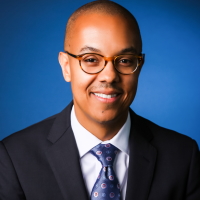 Gary G. Bennett, PhD, is vice provost for undergraduate education and professor of psychology & neuroscience, global health, and medicine at Duke University. He directs the Duke Global Digital Health Science Center. Bennett’s research program designs, tests, and disseminates digital obesity treatments. He is the founding director of the Duke Digital Health Science Center and past president of the Society of Behavioral Medicine, the nation's largest organization of behavioral change scientists.


