Kim Mills: Would you eat meat grown in a lab? The U.S. Food and Drug Administration and the Department of Agriculture have given the go ahead for cultured meat to be sold in the U.S., although it’s not yet available in stores. Advocates of cultured meat say that it could help address the environmental and animal welfare concerns that come with meeting the public’s desire for chicken, burgers, and steak. But not everyone is convinced. In March, Mississippi became the third state to outlaw the sale of cultured meat, joining Florida and Alabama. And beyond the legal threats, researchers have found that a significant portion of consumers say they would just be reluctant to try it.
Today we’re going to talk to two psychologists about why that is. What are the psychological factors at play when people consider eating lab grown meat or meat in general? How do moral values, disgust and other psychological factors contribute to people’s dietary choices? And could lab grown meat become a viable part of most consumers’ diet in the future?
Welcome to Speaking of Psychology, the flagship podcast of the American Psychological Association that examines the links between psychological science and everyday life. I’m Kim Mills.
I have two guests today. First is Dr. Matti Wilks, a lecturer in psychology at the University of Edinburgh. She has studied people’s attitudes toward cultured meat and what’s called the natural-is-better bias. More broadly, she’s interested in people’s moral motivations and choices, including children’s moral development, people’s concern for animals and unusually altruistic people. Dr. Wilks’s work has been covered by Scientific American, New Scientist, and other publications.
Also with us today is Dr. Daniel Rosenfeld, a postdoctoral scholar at the University of California Los Angeles. His research centers on eating behavior with a particular focus on the psychology of vegetarianism as well as attitudes toward cultured meat. He’s published dozens of scientific articles, and his work has been covered by media outlets including NPR, The Wall Street Journal, and WebMD,
Dr. Wilks, Dr. Rosenfeld, thank you for joining me today.
Matti Wilks, PhD: Thank you very much for having me.
Daniel Rosenfeld, PhD: Happy to be here.
Mills: Let’s start by explaining what cultured meat is. How is it different from conventional meat and plant-based meat substitutes?
Rosenfeld: So conventional meat is the most prototypical kind of meat, when you think about meat, that’s when you raise an animal and at a certain point you slaughter it and you consume its flesh as meat. Plant-based meats are using plants, so that could be vegetables or beans or lentils or grains or tofu, and essentially creating a product that mirrors the taste and texture of meat to some degree. It’s using plants to create a meatlike product or a meat analog, and that’s a typical veggie burger or something like the impossible burger or beyond burger. Then cultured meat or cultivated meat is its own category. It’s different than the other two where you are taking a part of an animal cell, so say a biopsy from an animal, living animal, and you grow the animal cells or tissues into a more advanced form of what that cell could grow into. So you create meat from that cell, you make the cell grow and grow and grow until it is a literal animal tissue there that mirrors real animal flesh. So you’re creating real meat, meat that is from an animal, from a sampling of the animal’s tissue, rather than slaughtering the entire animal to get that meat from them.
Mills: Not to get too deep into the weeds here, but does it matter from which part of the animal you take the cells? So if you’re looking for filet mignon or a rump steak, does it matter where on the animal take the cells from?
Wilks: To my understanding, all cultured meats primarily developed through stem cells, but I couldn’t tell you about the specifics of whether yeah, whether you need certain elements of that to create certain parts of certain kinds of meat. That’s a really interesting question.
Mills: To establish your bonafides. I would like to know for certain you have both eaten cultured meat, right?
Wilks: I have not. I really want to, and it’s not been available to me yet. It’s very sad.
Rosenfeld: And I have a different answer to that. I have not eaten cultured meat, and if it were available to me, I personally would not eat it, but I hope that other people do.
Mills: That’s interesting. So I guess it’s hard for you to answer the question then as to whether it tastes like conventionally produced meat. Does it look like it? I mean, I’m sure you’ve seen images.
Wilks: From what I’ve seen, which is mostly on media and online because I haven’t seen it in real life, or I would’ve tried it. Yeah, it seems exactly the same. It tends to be at the moment sort of chicken nuggets and more processed type meat products rather than things like steaks, although there are some companies that are producing, for example, a cultured steak. But yeah, it looks the same to me. I’ve spoken to people who have tried it and they’ve said it tastes the same to them.
Mills: Dr. Rosenfeld?
Rosenfeld: Yes, from what I have read online and heard talking to people, it seems that it really mirrors the taste and texture of conventional meat very well. And as Dr. Wilks said, I know that there are differences in the kinds of meat that are easier versus harder to make and are available. So more ground up meat, like chicken nuggets, ground beef seem to be more feasible, whereas things like steak just have really complex tissues and mirroring an actual bone and how the fibrous meat attaches to the bone and has the marbleized fat, and it’s just a more complex thing to make. So that would be a little later on into the mass market.
Mills: Now you’ve both done research on consumers’ attitudes toward cultured meat. Broadly, what have you found? Do many consumers say that they’d be willing to try it or is there a lot of hesitation?
Wilks: The first study I conducted on cultured meat, which was a long, long time ago, we got around 65% of the sample, so about two thirds of the sample saying that they would try cultured meat, but then about a third saying that they would eat it regularly. So there was enthusiasm, people were interested, but people felt a bit reluctant to commit more heavily. Now, my work has roughly replicated that, and I’m pretty sure that’s roughly on track with what other people find. But I know Daniel recently published a paper looking at the psychology of cultured meat, or Trends in Cognitive Science paper looking at the psychology of cultured meat. And I don’t know, is that what came out in your review, Daniel?
Rosenfeld: Yeah, it seems that the majority of people are at least interested in trying cultured meat, and as Matti just referenced there, there’s a difference between being willing to try it versus intending to make it a regular staple of your diet. So a lot of people would say something like, I’m open to trying it, tasting it, but probably after that they’ll just maybe go back to eating their regular conventional meat, whereas other people might say, I do want to try it and I do want to adopt it into my diet and replace conventional meat with it. That seems to be, I would sense some more split of and even split the people who’re willing to really go full on adopt it versus just taste it as a sort of novelty product.
So there are different motivations why somebody might want to just try it, and I believe there is work showing that people who seek novelty, are open to new experiences, and really enjoy being a foodie, might want to try cultured meat because it’s an exciting, new, innovative, cool product just like eating at the new restaurant down the street. Other people have different motivations wanting to try it. People who appreciate the value of it as being something that could reduce animal suffering or help the environment, they’re the ones who are more willing to say, integrate it into their diet longer term.
Wilks: We also find just very briefly, there are a group of, there also tend to be a small sample or small subset of samples that feel very negatively towards it as well. So I have research for example, where we find that 20% or so of some samples will say things like cultured meat would be wrong no matter how small the risk and how great the benefits. So it’s this very strong absolute almost moral opposition to cultured meat as well, which tends to be much smaller portion of the population, but not nobody.
Mills: It’s interesting that there would be a moral objection because we already know how meat is currently produced and it’s not pretty. Whereas if we were to make meat in a lab, I mean nobody has to die for this to happen. So where’s the disconnect psychologically in people’s brains? Why don’t they see this?
Wilks: That’s a really big question. So generally people can see the environmental and animal welfare benefits of cultured meat over and above the way that factory farmed meat is produced. But there’s sort of another element to the moral judgment that I think people are making which ties into this notion of unnaturalness. And so often when you ask people, what do you think about cultured meat? The negative things that come up, there’s a whole range, but one that’s very common is the idea that cultured meat is unnatural or disgusting, and these two things kind of play in together. And I think that for some people that moralization comes from that belief that cultured meat is unnatural. So in qualitative type interviews, you hear people saying things like, we shouldn’t be playing God, we shouldn’t be creating Franken meat. And so it feels like a violation of nature to create meat without an animal. And I think that’s the moralized view.
Mills: Dr. Rosenfeld, you hear the same things?
Rosenfeld: Yes. Yeah, I think that the moralized part is really largely due to that perception that it’s a violation of moral purity and just the natural order. I think a lot of that also can tie into religiosity and views about the nature-ness that God would prescribe to humans to follow a set of sacred principles and not violate the natural order. I also think that some of the moral part, maybe to a lesser degree because this is less of a moral instinct and more of a higher level of moral reasoning, is the concerns about cultured meats and an industry around it displacing traditional agricultural workers and industries. And so economically, if cultured meat were to become very mainstream, there would be a change in the labor force of what jobs people are working in the agricultural sector. And so I’m not an economist, I don’t know exactly how that would play out, but I know that consumers as just—people have concerns about economically how that would play out perhaps especially consumers who live in more rural conservative areas where the economies and people that they know and care about have livelihoods attached to traditional meat production.
Mills: And I’m not an economist either, but I think we’ve seen this happen many times. The fact that we don’t have corner bookshops anymore because of Amazon or that taxi cab drivers have been displaced by Lyft and Uber, the marketplace does change, but that’s not to make a judgment here.
We recently did an episode with Dr. Paul Rozin from the University of Pennsylvania who is one of the foremost experts on disgust and meat is one of those things that many people just generally find disgusting. And is that an overarching theme as you are talking to people about cultivated meat? Is it just a general feeling of disgust toward meat that drives people to say, I don’t want to try it?
Wilks: First of all, I loved the interview with Pol Rozin and it was wonderful. I don’t think that we have a solid answer to that question. So my sense is that there might be kind of the concept of disgust is quite complicated. So you have things like your physical disgust, so something is spoiled or the physical side of disgust that we have in reaction to feces, to bad meat, things like that. But then there’s also this element of moral disgust and moral disgust is sort of more something that you kind of see with outrage where people have done something that you think of is morally wrong and you report feeling morally disgusted by them. I don’t know if we have a good sense of whether cultured, attitudes towards cultured meat that are around disgust would fall into the physical disgust or of the more moral disgust, but perhaps, I just don’t know the work. Daniel, is there anything out there that I’m missing?
Rosenfeld: Yeah, so what Matti says is a great point, and there with disgust, it’s such a complicated emotion, especially to study and measure because of the way we use the word, we use words to describe emotions and feelings, and there can be a disconnect between the semantics, the labeling versus the actual embodiment inner psychological phenomenon. So there is work that I’ve done that can speak to this question indirectly where I found in some work that if you look at whether people are vegetarian versus meat eaters, interestingly vegetarians are a lot more averse to trying cultured meat. You would think vegetarians might be like, this is great, this aligns with my values and maybe you think that they miss meat and they want an alternative that’s not made from animals. What I found was that vegetarians are a lot less interested in trying cultured meat compared to meat eaters.
And in my work I found that this is really due presumably to vegetarians being more disgusted by cultured meat. So vegetarians are a lot more grossed out by cultured meat than meat eaters. And that to me speaks a lot to more of the physical disgust explanation because vegetarians would have moral opposition to meat and that would lead to moral disgust. Meat eaters don’t really have physical disgust at meat because they enjoy it and they like it and they eat it a lot. Vegetarians have—a lot of them—a strong physical disgust toward meat, and that seems to be really lining up with this finding that they’re not interested in trying it. I think it’s just because vegetarians, whether they’re really motivated by animal rights and in their mind the idea of just meat is this part of an animal and they can’t get that out of their head or just that they haven’t eaten meat in many years and they lose the taste for it and in their mind it’s no longer a food object for whatever reason. It seems to have that same meaning whether it’s conventional meat or cultured meat—to a lot of vegetarians, meat is just meat and they don’t want to eat it.
Mills: What is keeping cultured meat from being sold to consumers in the U.S. other than the handful of state laws that I mentioned earlier that are prohibiting it? Is it that the producers are realizing that the public sentiment is not in their favor or is it something else?
Wilks: So my understanding of this is relatively limited, but having, from what I do understand, there is a bit of an issue with scalability. So producing cultured meat is expensive. It’s a very specific process that needs to be under the right condition. So I’ve heard about several different plants that were there to being built basically to produce cultured meat at scale. And a couple of times we’ve had claims from different companies that cultured meat will be on the shelves by next year, I think like 2021 for example. And although there are some places I think in restaurants in the states where you can buy it, it doesn’t seem like that’s really being delivered. And so my understanding is there are some issues with scalability and also price at the moment, it’s very expensive to produce, and so you’re going to be selling at a loss, which – I’m not an economist either, but it seems like not a very economically viable model. So that’s my understanding from my sense there’s not really a lot of concern about consumer attitudes that would prevent it from being produced because there is also a lot of support out there. And I think the people producing this really do care about the product and the benefits that it can bring to the world. So I don’t think that consumer attitudes are what’s getting in the way.
Mills: Let’s talk about those benefits. What are the upsides to cultured meat?
Rosenfeld: I think the biggest upside to cultured meat, because all of the upsides have opposing viewpoints you could debate, and a lot of those are just philosophical and other ones can be answered with a lot of data and estimation. But one that I think is the clearest is just reducing animal suffering. So conventional meat takes a lot of animal slaughter to create, and cultured meat does not take a lot of animal slaughter. In fact, it wouldn’t really take any animal slaughter. And so I would say the biggest benefit is reducing animal suffering and reducing animal slaughter.
The other benefits I do believe can be quite debated as far as how it will be produced in nuances. So one benefit is a better environmental impact, and conventional meat takes just so much water, land and greenhouse gas emissions to create, and it’s very damaging for the environment, the way we produce it. Theoretically, cultured meat is incredibly more sustainable. It takes a lot fewer resources to produce. Now, I’m not an expert in the environmental science of it, but I have heard that especially before scaling up production, it can be quite energy intensive to create smaller batch. And so I’m not sure of the details of what exact energy is used in that, but I do know that it’s not a surefire claim yet to say it’s incredibly more environmentally friendly. I think that it will be at a certain point and it has the incredible potential to be a lot more environmentally friendly. It’s a matter of scaling that up in a thoughtful way and knowing how to execute that.
And then the third benefit could be that it could be healthier. So it is still meat. So whatever health benefits or detriments conventional meat comes with, cultured meat pretty much mirror those. It’s the same chemically and physically for you, but a big difference is that it could be cleaner than conventional meat. So conventional meat, you need a lot of antibiotics and pollutants that get into the environment that animals for months, years of their life, just like humans are exposed to a lot of toxins and antibiotics and disease and accumulate this in their body and then we consume that. Cultured meat can be created in a much more sanitary controlled environment. And so you could prevent the meat from being exposed to a lot of these pollutants and that could on a grand scale have a big health benefit. And then another issue is that raising animals for livestock and for meat is a threat to pandemics and to creating these diseases that spread between animal to animal, animal to human and vice versa. So when we have billions of farmed animals just existing and breathing and interacting with each other and us, we are increasing the risk of future pandemics like Covid. And so cultured meat could be a good way to reduce that risk as well to have zoonotic diseases go on the dip.
Mills: Right. And of course we’re dealing with a bird flu problem right now, so cultured meat could help obviate that kind of a problem.
Well, Dr. Wilks, I want to talk to you a little bit more about the moral values and people’s attitudes. Do these attitudes vary by country or culture? Has research looked into that question?
Wilks: So there has been some cross-cultural work. I actually recently reviewed this and if you look at, there was a scoping review done and most of this work is still U.S., U.K., Netherlands based. And so we can’t make very strong claims in my view about cross-cultural attitudes. But there’s been a few studies that have compared across countries. And for example, one study that I think included 10 different countries around Europe found that people in France tended to have more negative—some work has found, for example, that participants in China have more positive attitudes, but then other work has found more negative attitudes. So it seems to be variable, but because we’ve got so many different kinds of questions being asked in different contexts for the surveys, I don’t think we can make a strong claim about which countries are pro or against cultured meat at this point.
Mills: Given what we know about the psychological factors at play, what are some of the ways that consumers might be encouraged to try cultured meat?
Wilks: One thing that comes up for me a lot is if you think about the benefits. So Daniel mentioned the benefits of cultured meat before, and when you survey people, that’s what consumers see as well. So they see that it’s good for the environment, it’s good for animals, it’s good from a zoonosis standpoint, but a lot of these benefits that people see are kind of distal to them, so it’s not something that’s going to affect them day to day. Whereas the things that are very relevant to them are things like how much it costs, how it tastes, whether it’s healthy, whether it’s safe. And so I think that we need to meet consumers where their values are. So while everybody does care about animal suffering and the environment to some degree, the thing that people are thinking about when they’re in the supermarket is how much does this cost? What does this taste like? Is this going to be something that I can cook and I feel familiar with? And so if we can try to appeal to people at their level or in line with their own values or moral beliefs about cultured meat, I think that’s going to be a more compelling way to get people on board than trying to just tell them, Well, it’s good for the environment, it’s good for animals for you should care about this.
Rosenfeld: That’s right. You raised some really good points there. And I think an analogy that came to mind was like, why do people, at least in the US eat so much fast food like McDonald’s and Burger King? It’s not because they’re concerned about the ethics or the environment or the health, it’s just price, taste and convenience. And so I think that cultured meat, if it has a good price point and taste the same as conventional meat, those are two fundamentals that are non-negotiables for consumers.
And then in addition to that, I think two other really big factors are is it convenient and is it socially normal? So people don’t want to go out of their way to prepare food that’s difficult or not readily available down the street, and it has to be convenient, it has to fit within their schedule and not take any extra work to get it into their diet compared to any other fast food or meal they might eat in a given day. Then it has to be socially normal in that people are really swayed by the desire to conform and to do what their friends and family and coworkers do.
And they really don’t want to stand out from the crowd, especially with food. People really want to just do what other people do on a subconscious level because when something is socially normal, especially a kind of food you consume, what it’s saying to our mind on a very basic level is that this food is safe, trustworthy, probably tastes good, probably won’t kill me or give me any disease in the coming decades at least. And I’ll also gain some degree of acceptance and respect from my friends and family who see me eating it like them. It’s just a way to fit in with the group. And it’s a good heuristic to know that this food’s all right to eat, so it’s got to make its way into society and not be seen as this different thing.
Mills: There’s a lot of debate going on right now about highly processed foods and people becoming more aware of how much processed food we do eat today is cultured meat. Would it be considered a highly processed food in the same sense that most of us think of that term?
Wilks: So my understanding is that this is a big narrative that’s being pushed by people who are opposing cultured meat. So there’s been quite a bit of pushback on the cultured and plant-based meat industry about this being something that is ultra processed. And to my knowledge, I’m not an expert on what classify something as ultra processed, but cultured meat doesn’t meet that standard. So I don’t think so though whether or not people believe that it is ultra processed is a different question of course.
Mills: How did you both become interested in studying this topic? I think you both came to it from somewhat different research backgrounds.
Dr. Rosenfeld, maybe you want to take that one first.
Rosenfeld: I originally got into studying psychology just cause I’ve both been very interested in just how people think and behave and feel as humans. And that’s naturally what drew me to studying psychology at a basic level. And then separately from that, I’ve always been very interested in food and nutrition and health. And so about 10 years ago, I decided personally while I was studying in my early stages of studying psychology, I decided to go vegan. And at first I did not think this was a big deal. It was like what I eat is what I eat and who else cares besides me? It just affects me and my body. And so I went vegan and I was like to friends, Yeah, by the way, I’m vegan now, family, by the way, I’m vegan. I thought the conversation would go something like, Hey, I’m vegan. Oh cool Dan, that’s good for you. Alright, let’s go out and hang out. And it was something more like, why are you vegan? What the heck? And it was this massive deal and I suddenly had to defend why I eat the way I do. And it was really forced upon me to become this defining thing of who I was. It was like he is the vegan now.
And I had no intention of making this a part of my life at all, but society and the culture just told me every day, you are now different and this is some significant thing about who you are that says something about your masculinity, your moral beliefs, probably your political beliefs and what kind of car you might drive. And so many other stereotypes and stigmas that came with that. And so I was interested in taking my interest in psychology and my experiences of being vegan to say, what is going on here with the way people think about veganism and vegetarianism and just meat as this thing that has such significance for who you are and what you believe in terms of whether you eat it or not. So that’s how I got interested in studying the psychology of veganism and meat and then ultimately cultured meat and doing this kind of work.
Mills: Dr. Wilks, what about you?
Wilks: Slightly different path. So I was actually raised vegetarian, so my parents are vegetarian. I grew up as a vegetarian and they gave me the choice when I was about 10 to continue to be or not, and I chose to be. And then it kind of wasn’t a major part of my life, it was just something that had always been, but I’d always been very upset about the impact of factory farming. It was something I’d always really cared about in a completely separate part of my life. I’d started studying psychology and I was actually working on social learning in children and chimpanzees, so I was working on human and animal cognition, how do humans differ from other animals? And then I went into a PhD starting to work on children’s moral judgment. So it was sort of a slow progress. I was interested in morality and human animal interactions and things like that.
And around about a year or so before I started my PhD, I remember reading about cultured meat being unveiled in London. It was this big thing and I thought to myself, wow, this is the first thing I can see, which actually could help everybody to give up factory farmed meat because I had kind of come to the conclusion that you probably weren’t going to convince everybody to stop eating meat. And so I thought this was extremely cool, and I spent about two or three years asking everybody I knew, would you eat cultured meat? And just being quite obnoxious about it really. And then during my PhD it occurred to me I’m a scientist and I’m a psychologist. I can actually do research on this. And so I just sat out and was like, I’m going to try and do some work. And there was no psychological research on it at the time, so it was quite a scary undertaking, but I’m really glad I did.
Mills: I’m just wondering, I know Dr. Rosenfeld, you’ve looked at gender differences in meat consumptions as you’ve looked at attitudes toward eating. I’m just wondering what you have found.
Rosenfeld: So there’s a long history of gender and being related to just our agricultural system and the foods that we eat. And I think of all the foods, meat might be the most gendered of all the foods. And what I’ve found there basically is a couple of findings that just summarize the work. One is that men just seem to like meat more than women. And the idea of giving up meat is a lot scarier and more daunting to men than women. And men eat more meat, they eat more frequently and they eat larger servings of meat. And this holds true for all kinds of meat. It holds true for beef, for pork, for chicken, for fish. So across the board, men just like meat more than women.
There’s also a attitude that men hold toward meat that really aligned with this is that men don’t think meat is as bad for the environment as women do. Men think meat is healthier than women. And also if you ask men and women, they will say that they do associate meat with masculinity and manhood. And the idea of a man not eating meat seems to just irritate people. It’s more of a gender role violation from what you expect. It seems to just irritate people more than the idea of a woman not eating meat. And so those are the main findings I found here. Just this link between meat and masculinity that trickles down into people’s behaviors and thoughts and desires and concerns and fears.
Mills: So what’s next for you both?
Dr. Wilks, what are you working on? Are you still deep in the whole cultured meat research?
Wilks: Yeah, so I’m still doing a bit of work on cultured meat. My most recent work has been looking at things like the moral foundations that underpin people’s attitudes. So we did some work where we found that. So if you look at the narrative around cultured meat, it’s all about harm reduction, which is what we were talking about before. It’s good for the environment, good for animals, things like that. So we expected that people who cared more about harm would have more positive attitudes to cultured meat. And people who cared more about purity would have more negative attitudes. And we found evidence to support the second thing. So people who have high purity concerns are more likely to oppose cultured meat, but we found no link between people’s attitudes towards harm and how they feel about cultured meat, which was really surprising. And we’ve done this across a couple of samples.
So I’m interested in trying to extend that a little bit further, understand more about the kind of moral values that underpin people’s attitudes. But I also do, so as you mentioned, I work across a whole range of topics. So I’m really interested in this idea of the moral circle. So that is a way to describe who we do and don’t think of as worthy of moral concern. Beings that are closer to the center of your moral circle are granted more moral concern, and those are closer to the edges are granted less. And this concept has been around in philosophy for a long time, but more recently we’ve seen a lot of psychological work trying to describe and understand our moral circles. And I’m really interested in understanding individual variability here. So why some people care really widely about a whole range of different beings, and some people care in a more contracted way, so they focus their energy on their friends and family.
And I’m particularly interested in the moral concern that we feel for distant beings. So why do some people care about animals or people in other countries who live far away or potentially nature and the environment, things like that. So understanding what drives people to care about these distant others is something that I’m really excited to explore. And I’m also doing a little bit of work trying to understand what we actually mean when we talk about moral concern. So it’s easy to say, do you feel moral concern for a person or a pig or all these different categories, but what do we actually mean when we’re talking about moral concern? What sentiment are we capturing there?
Mills: Dr. Rosenfeld, what’s up for you?
Rosenfeld: So at its heart, I like food psychology and thinking about people’s eating behaviors. And so I am interested in how people think about cultured meat compared to other comparable novelty or outlier foods, categories that also have benefits, whether it’s for health or the environment or animals. So one analogy would be things like eating at a farmer’s market or eating local or eating organic or avoiding GMO. There are just a lot of other examples throughout history and now where we’ve seen these movements evolve and become more normalized or not. And just understanding what are the parallels between culture, meat and these other movements, but then also what are the differences.
Mills: Dr. Wilks, Dr. Rosenfeld, thank you for joining me today.
Wilks: Thank you for having me.
Mills: You can find previous episodes of Speaking of Psychology on our website at speakingofpsychology.org or on Apple, Spotify, YouTube, or wherever you get your podcasts. And if you like what you’ve heard, please subscribe and leave us a review. If you have comments or ideas for future podcasts, you can email us at speakingofpsychology@apa.org. Speaking of Psychology is produced by Lea Winerman.
Thank you for listening. For the American Psychological Association, I’m Kim Mills.


 Matti Wilks, PhD, is a lecturer (assistant professor) at the University of Edinburgh. She studies the moral circle and moral development, with a particular focus on moral concern for distant others (distant people, animals, AI) and the motivations of unusually altruistic individuals. She also conducts research into attitudes towards cultured meat, and the natural-is-better bias.
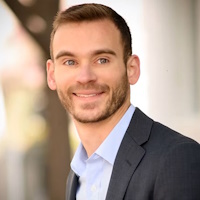 Daniel Rosenfeld, PhD, is a postdoctoral scholar in the department of psychology at UCLA. His research centers on eating behavior, with a particular focus on the psychology of vegetarianism and attitudes toward cultured meat.