Kim Mills: Picking up a new skill as an adult can seem daunting. Whether it’s learning to play the guitar, attempting to retile your bathroom, or learning a new language, you may feel like you just don’t master new skills as fast as you did when you were a kid. And it can be hard to overcome the voice in your head saying that you can’t teach an old dog new tricks.
But some psychologists’ research suggests that continuing to learn new things throughout adulthood may be key to keeping your cognitive skills sharp as you age, and that in fact, middle-aged and older adults may be just as good at learning as younger people.
So why does it seem so much harder to learn as we get older? What lessons can adults take from how children learn that can improve their own learning? Are all types of learning equally good for your brain health? Does it matter whether you do crossword puzzles, learn home improvement skills, or audit college courses? And if you want to learn something new, what’s the best way to get started and persevere?
Welcome to Speaking of Psychology, the flagship podcast of the American Psychological Association that examines the links between psychological science and everyday life. I’m Kim Mills.
My guest today is Dr. Rachel Wu, an associate professor of psychology at the University of California, Riverside, where she runs the Cognitive Agility Across the Lifespan Lab. Her research focuses on understanding cognitive development and decline across the human lifespan from infancy to older adulthood in order to help learners maximize their learning potential at any age. She’s authored dozens of academic studies and her research has been covered by NPR, NBC News and other media outlets. She’s also a lifelong learner, having taken up painting, singing, and other new pursuits in adulthood.
Dr. Wu, thank you for joining me today.
Rachel Wu, PhD: Thank you so much for having me. It’s great to be here.
Mills: Let’s start with the broad question I just asked in the introduction. Why does it seem so much harder to learn new skills as we get older?
Wu: It’s difficult because we have so many other things we need to do. We have to pay bills. We have full-time jobs. We have a lot of things that can get in the way. And on top of that, we also have to take care of children, maybe, and do other things in society. And we also don’t let ourselves learn as well. So we might say, oh, I’ll give myself 10 minutes to learn this, and if I don’t learn it, I can’t ever learn it. And so we give ourselves unrealistic goals, I think, to learn something. So if you think about learning a language, for example, we give babies at least a year to come up with their first word, and we give ourselves as adults maybe 10 minutes to learn our first word in a new language. And so it’s a completely different approach that we take when we think about learning as adults.
Mills: So what lessons can adults take from how children learn? And what’s the difference between how kids learn and how adults learn other than they have a lot of time to learn?
Wu: So there’s several things. One is children don’t typically say, this is not relevant to me, I’m not going to learn it. So typically when they see something, they are curious, they just want to learn whatever comes their way. And so as adults, we can also try to have more of that kind of attitude as well. So don’t dismiss things as irrelevant and just take in what you can. So I call this input driven learning.
And then also children have a lot of help. So they have what I call individualized scaffolding. So they have parents, teachers, caregivers, anybody around, neighbors even, who want to help them learn something, and they’re always at the ready to help them learn anything they need to learn.
So as adults though, it’s really hard to find somebody teach you something. So if you want to learn—let’s go back to the language example. If you want to learn another language, you have to pay somebody or maybe try to—even if you’re trying to learn how to use a new online banking platform, it’s really difficult to find somebody to teach you how to do something. So that’s the second thing.
And we also have a very fixed mindset as adults. So if we don’t know how to do something, it may be impossible for us to ever learn it, ever. And so whereas kids, they don’t often have this mindset when they’re really young, and in fact people around them don’t put this mindset on them. They encourage them to learn. So if babies learning how to walk, we don’t say to babies, oh, I don’t think you’re going to ever walk, so I’m just not going to bother teaching you. It’s not something that crosses our minds as parents and caregivers. So that’s the third thing.
And the fourth thing is there’s a very forgiving environment. So if mistakes are made, kids are not thought of as senile or something, and these kinds of environments that allow mistakes to happen and you’re not defining yourselves based on what—and things like that. And then also it’s a very serious commitment that kids have when they’re learning. So when they’re in school and they’re learning subjects and things, they’re sticking to things for years, at least for months. Whereas adults, if they try to learn something, it could be just for minutes or at most a few weeks.
And then finally, kids learn a lot of things simultaneously. So as adults, we might be learning things here and there once in a while and maybe sequentially or something, but the amount of learning that happens with kids is so much more. So they can define themselves as learners as opposed to adults who have a particular job and then learn on the side or something like that.
Mills: And does this encompass the definitions that you’ve come up with where kids practice broad learning and adults mostly do specialized learning? That’s what we’re talking about, right?
Wu: That’s right, yeah. And the idea is that you get paid to basically be productive in society. And so it’s very hard to find a job that will pay you to explore and engage in broad learning the way that kids do. And that’s why we don’t pay kids to be in school—because they’re not very productive. And so you get to a certain point in your life and you’re told, okay, you have to be productive now. You have to start making money. And so the way that works is, well, you can then have more specialized training if the job even allows extra training sometimes. A lot of times you’re just hired based on what you already know.
Mills: Now, you did a study recently where you asked older adults to learn a lot of new things at once, basically to take on the equivalent of a college course load. Can you talk about what you did and what you found? And how did that intensive learning experience affect the older adults?
Wu: In the study, we brought in people that were 58 to about 86 years of age, and we asked them to take three courses over one quarter, so a 10-week, 12-week session. And we asked them—so this is essentially a undergraduate quarter, and the classes that they had to take were Spanish, photography, drawing, music composition, things like that. And they had to take three of the classes that we assigned to them, and we assigned them based on how little they knew about the classes. And then we said, if you want to, you have the option to take up to the five classes that we were offering. And so some of the people wanted to take the additional two classes because let’s say they were really interested in drawing, but then we didn’t assign them to drawing because they had some drawing experience or something. So then they could still sit in the drawing class if they took the other classes.
So after 3 months of taking these classes, they increased their cognitive abilities to—levels that were initially similar to other older adults that didn’t take the classes to more middle-aged adults who were taking the test for the first time. And so this was a 30-year difference in terms of age. And then what was really astounding was after 1 year, after the end of the intervention, after the end of the classes, they ended up increasing their cognitive abilities, continuing to increase their cognitive abilities all the way up to levels that were similar to undergraduates. So like 20-year-olds, 50 years younger, who took the test for the first time.
Mills: Yeah, that’s pretty amazing. So how can people put findings like this into practice in the real world? I mean, what can you do if you don’t have access to college classes or the time to take them?
Wu: So if you don’t have the time to take classes or time to learn a lot of new things, I can tell you that we may actually be quite efficient at learning as adults compared to children. So it might take us only 10 minutes to figure something out that would take a kid maybe 5 hours to figure out on their own. And so learning might not take us long as you think. And so if you have a full-time job, you can try to fit things in on the weekends. And maybe if you’re trying to learn piano, I was learning piano while having a full-time job. I could practice maybe 10 minutes a day and then just cram everything I needed to practice that day into those 10 minutes and then have a 1-hour lesson once a week. And so it might not have to take as long as you think.
If you don’t have access to community colleges or classes that you could take, there are also classes online and other things that might be more accessible. There are more and more opportunities, especially low cost or free opportunities that are kind of popping up because of the pandemic that are available nationwide.
Mills: We’ve all heard that at least some aspects of our cognitive abilities decline and our memory gets worse as we age. What does the research say about this? How do cognition and memory change for most people as they get older? And how do those findings square with the work you are doing on learning at any age?
Wu: There are lot of studies that do show that as we get older, especially from midlife on, we do see declines in our cognitive abilities, especially attention and memory. But my research is trying to question, well, how much of that is under our control and how much of that is predestined biological issues that are more out of our control? And so what we’ve been finding is that there actually can be quite a bit of movement in terms of your cognitive abilities if you’re learning a lot of new skills. And so what if a lot of the decline that we see is premature or self-imposed in a way that we can increase cognitive abilities over time?
Mills: So it’s kind of a self-fulfilling prophecy that if you believe you can’t learn, if you believe you’re losing your memory, you will.
Wu: And what I typically tell people is, if you think about it, children who—if you pull children out of school and you give them the life of watching TV all day, not learning a lot of new things, they also would be declining too. So it’s not so much an age issue, it’s a lifespan issue for me. So I ask people, as people will ask me, well, what should I do? How should I live my life? I dunno. But what I typically ask them is, if you have grandchildren or you see children around, if you’re happy with them living the kind of life that you live, then continue that way. So if you’re learning a lot of new skills and they’re learning a lot of new skills, then that’s great. But if you think that doing crossword puzzles is enough to maintain your cognitive abilities and that is the life that you think children should live too, then there’s some disconnect there.
So children don’t come out of school—get pulled out of school just to learn how to do crossword puzzles, and then we expect their cognitive abilities to be maintained. And also the other thing is maintenance should not be the goal. So when you keep a kid in first grade, when they should actually be increasing and advancing to second grade, third grade, fourth grade—maintenance is actually the last resort that we typically have with children. So we shouldn’t think about maintenance as something that is the end goal in adulthood. We can bring ourselves to new levels to experience new things to get to where we eventually want to be.
Mills: You mentioned crossword puzzles a minute ago, and I don’t want to malign crossword puzzles. I’m sure a lot of our listeners love them, and I do the Spelling Bee in The New York Times every day. But does that count as learning and does it have any impact on cognition and learning, or is it just kind of a fun thing to do?
Wu: Well, so it depends on how good you are at it. If you are terrible at it, if you’re very good at it—
Mills: I’m good.
Wu: Chances are you’ve probably plateaued to a point where there’s probably some level of challenge, especially The New York Times one, but it’s not going to be as challenging as learning a new skill that you have zero idea how to do. So do you know how to play the trumpet, for example?
Mills: I don’t.
Wu: Okay. So learning how to play the trumpet versus the Spelling Bee or the crossword puzzle, the level of challenge is just unparalleled. So it’s just completely different in terms of how you’re engaging different systems in your brain. So the more you’re doing things that you know how to do, the more you’re engaging habit systems and the less you’re engaging systems that overall decline with age.
Mills: So then as an adult, if I’m watching YouTube videos to figure out how to fix a toilet for the first time, or maybe switching from an Android to an iPhone, I’m really learning something—because it’s new and different.
Wu: And the other thing I want to emphasize here is that at some point, everybody probably has to be learning something new to stay independent, or you pay somebody to do something for you, and then you become dependent on that person. And so what is actually more important than the cognitive abilities that we’re talking about here is the ability to stay independent over time. And so if you’re learning new things, a lot of new things, you have the confidence also then to tackle whatever new things you have to be learning to stay independent.
And so for example, from the study that we conducted, we had participants during the pandemic say to us, I learned how to fix my toilet. I learned how to do my own nails. Because they had gone through this huge learning study with us. They learned three new things at the same time, and so they were not afraid to learn anything new that came their way because of the pandemic. So I think that’s a really important thing to emphasize because especially with new technology and new things that might be more daunting for older learners, people think, I can’t do it. It’s impossible to learn or too old to learn or something. And as soon as you start learning the second, the fourth, the fifth thing you learn is going to be much easier than the very first thing you learn in a long time.
Mills: What’s the difference between memorizing and learning? Does memorizing have the same benefits as learning?
Wu: It depends on what you’re memorizing. So if you’re memorizing new things for the thing that—you’re talking more about learning new skills, and so they’re kind of procedural and manual things maybe that you’re doing, but also kind of knowledge, like content knowledge as well. And so if you’re memorizing and not actually putting things to use, then it’s not going to be as helpful probably for your everyday life. So memorizing a phone number for example, but then if you’re not calling that person, probably not that useful. And so we have the same issue with kids. We were trying to switch over from rote learning things that were more about memorizing facts with kids to now more about critical thinking in education. So I think that is also a really important link that we can draw across the lifespan too.
Mills: How important is feedback to learning and how do you get feedback when you’re trying to learn new things on your own?
Wu: It’s very, very important. It’s one of the critical pieces of learning because it will tell you how to improve in whatever skill you’re trying to learn. And so one thing that is hard about feedback is that it tells you where you’ve made mistakes. And so as an older learner, you might think, well, I’m making a ton of mistakes and I can’t learn. So that all of these kinds of thoughts might occur while you’re learning and getting feedback. So getting feedback is an excellent tool to help you improve your learning. So I hope that all learners don’t forget that feedback is very important and to get feedback when you’re learning on your own. That’s one of the key problems with adult learning. Children get feedback all the time when they’re learning because they’re typically learning with other people, even peers in classrooms. And so adults when they’re learning, if we’re learning on our own, it’s very difficult to get feedback.
So if you’re learning from a YouTube video, there isn’t going to be a lot of feedback, a one-way system. And so that’s why I would encourage people to be in a setting with at least some peers and a knowledgeable teacher or something like that to help guide them. There are some skills that you can learn on your own that maybe if you’re observant enough, then you can give yourself feedback, but you’re limited by your own skills in terms of how much feedback you can get for yourself. But if you have somebody else there, my piano teacher would catch things that I would not even hear because she has the expertise that I just don’t have because I’m not at that level.
Mills: What about just testing yourself? Is that the same as feedback?
Wu: Testing yourself is good, except that you’re only as good as your current skill level is. So how do you get to the next level of what you’re supposed to be? How can you test yourself if you don’t know what you’re supposed to be testing yourself on sometimes? And so we don’t expect kids to test themselves when they’re learning a new subject in school or something like that. So some subjects you are able to do that with, but it’s just very difficult to do that when it’s something that it might be a skill that would take years to master, like learning a new language.
Mills: How important is failure in learning, especially for adults?
Wu: Failure is really important, but it can also be kind of demoralizing. You can feel like, I can’t do this, depending on how big the failure is, I suppose. And so it’s something that a really good teacher can help contain. So if you have a really good teacher, they can maybe turn the failure into something to show you that there was some success, even if some things failed. And to show you how little by little you’re getting better over time, even if it feels like you’re failing a lot. I also think that failure feels more final than it actually is. So some people might say, oh, I failed at that thing and then you quit and I’m never going to return to, and then I quit. And so that’s the role of a really good teacher. If a kid says, oh, I failed at riding my bike for the first time, then somebody usually tells them, well, let’s try again. And if you put your feet this way and you turn the wheels this way, then it might make it a little easier. And then the kid little by little then sees a bit more success over time.
Mills: Now you’ve put your research into practice in your own life through learning new skills such as painting and singing. And you mentioned piano, and I know you were studying German. Which came first? Were you always this kind of a learner and then you got into the research, or did you start the research and you said, I have to do this myself?
Wu: I got into learning first, and then I experienced the kinds of comments that adult learners typically get, like, you’re too old to learn this. So I first started with painting and drawing and sculpting, and people would say, you have no artistic bone in your body. You can barely draw stick figures. Why are you wasting your time? Just finish up your PhD and get a job. Don’t quit your day job kind of thing. And so it got me thinking because I was studying babies at the time, and you don’t hear these kinds of comments with babies at all. And so it got me thinking about, well, why do we limit what adults have to learn over time? And then I thought maybe it was a fluke that—it was, maybe I don’t have an artistic bone in my body, whatever.
So I stuck with it and then I got better. And then over time, people would say, oh, you’re so talented. You had this artistic gene this entire time that you uncovered, right? So they attributed all this time I spent at the easel, all the time I spent with my sculpting teachers, to talent—to something that was innate. And so then really got me thinking, well, maybe there’s something there that’s kind of more of a mindset shift over time as we age, and maybe that’s preventing people from learning new things. And then it got me thinking, well, what kinds of benefits can you get from learning new things as we get older?
Mills: Now, what are the issues that you’re working on at the moment? What are some of the big questions that have yet to be answered in your area?
Wu: So it’s really interesting that you asked that because before the pandemic, we were asking should older adults be learning new things to increase cognitive abilities to increase their independence and things like that. And then during the pandemic, I realized that was actually the completely wrong question. The question is, given that we have to be learning new things throughout our lifespan, what is the best way to encourage learning over time?
And so it turns out people have different barriers to learning. So some have a lot of motivation and very few resources. Some have a lot of resources and very little motivation. Some people have a lot of motivation, a lot of resources, and relatively low cognitive abilities to be able to pick up what they want to learn. And so I think identifying the individual differences and what the barriers are is really important. And so what we’re doing now is targeting different groups that have different barriers to learning and then seeing if we can help lower those barriers to then get them to be able to learn new things that they want to learn.
Mills: Well, Dr. Wu, I want to thank you for joining me. I think this has been very encouraging.
Wu: Thank you for having me.
Mills: You can find previous episodes of Speaking of Psychology on our website at www.speakingofpsychology.org or on Apple, Spotify, YouTube, or wherever you get podcasts. And if you like what you’ve heard, please subscribe and leave us a review. If you have comments or ideas for future podcasts, you can email us at speakingofpsychology@apa.org. Speaking of Psychology is produced by Lea Winerman. Our sound editor is Chris Condayan.
Thank you for listening. For the American Psychological Association, I’m Kim Mills.


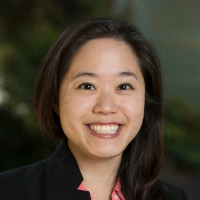 Rachel Wu, PhD, is an associate professor of psychology at the University of California, Riverside. Her research focuses on learning and attention to maximize cognitive agility from infancy to aging adulthood. In her free time, she paints, sculpts, plays the violin and piano, and sings.