Kim Mills: It is painful to grasp, but mass shootings have become a common occurrence in the United States. Whether at a school, a church or synagogue, or a supermarket, these incidents may shock, but they no longer surprise. Cities, small towns, and schools across the country are now associated forever with this form of violence. Names like Columbine, Sandy Hook, Parkland, Uvalde, Aurora, Charleston, Boulder, and Buffalo. Each time, politicians spar over whether to blame guns, mental illness, or moral decay for the massacres. Against this backdrop, it's easy to feel hopeless and to think that mass shootings have simply become an unavoidable part of American life.
But according to some researchers, there is hope. By studying what drives mass shooters, they say we can better understand the causes of America's mass shooting epidemic and perhaps learn how to stop it.
What drives most mass shooters? What do they have in common? What role, if any, does mental illness play in their actions? What about racist and extremist ideologies? What about the internet? Does media coverage of mass shootings drive copycat crimes? Do active shooter drills and armed guards at schools save lives? And what can be done in workplaces, houses of worship, and other venues to make the next mass shooting less likely?
Welcome to Speaking of Psychology, the flagship podcast of the American Psychological Association that examines the links between psychological science and everyday life. I'm Kim Mills.
My guest today is Dr. Jillian Peterson, a psychologist and associate professor of criminology and criminal justice at Hamline University in Saint Paul, Minnesota. She is a co-founder of The Violence Project, a nonprofit organization that has compiled a database of every mass shooting in the U.S. since 1966. She and her colleagues have also interviewed friends, family, victims, and in some cases, the perpetrators themselves to compile detailed life histories of some 180 mass shooters. The goal of The Violence Project is to use this information to better understand mass shooters' pathways to violence and develop strategies to stop them. Dr. Peterson's book, The Violence Project: How to Stop a Mass Shooting Epidemic, co-authored with her colleague Dr. James Densley, was published in 2021.
Thank you for joining me today, Dr. Peterson.
Jillian Peterson, PhD: Thank you so much for having me. I'm happy to be here.
Mills: So I just mentioned that The Violence Project has compiled a database of every mass shooting in the United States since 1966. So first, how did you define “mass shooting”? Because not everyone who counts these incidents defines mass shooting in the same way.
Peterson: Yeah, it's an important question because depending on how you define a mass shooting, you can say there's been five or six in the past year or hundreds. So we use a pretty narrow definition, which is four or more people killed in a public space—not including the perpetrator—and the shooting is not related to other underlying criminal activity, and it's not a domestic violence situation.
Mills: So many of us have the impression that mass shootings are on the increase in the United States. Is that borne out by the data you've been collecting?
Peterson: It is. So we are tracking these incidents where four or more people have been killed. And we see that the worst incidents on record were 2017, 2018, 2019. Those were the worst years. Then we had this pause during the pandemic because public spaces weren't open. And when we did reopen in 2020, 2021, we've seen this kind of resurgence. Especially this summer, we had one of the worst sort of month or two on record in terms of mass shootings.
Mills: What do you attribute this increase to?
Peterson: It's hard to say exactly. I think it's a number of factors at play. One is that during the pandemic, a number of risk factors for mass shootings we know increased. So things like isolation, hopelessness, spending increasing amounts of time online, suicidality. We also had record gun sales in this country. So there's just more access to firearms.
Mills: And what have you learned about the profile of the people who commit mass shootings? What do these men—and they are mostly men—have in common?
Peterson: Yeah. So in our database, it's 98% men. There's four women in the database, two of them perpetrated the shooting with a man. So we see this common pathway and of course it's a little different for each person, but this pathway seems to start with really significant early childhood trauma. So things like physical abuse, sexual abuse, suicide of a parent, domestic violence in the home. Over time, that individual becomes angry, becomes isolated, becomes hopeless, there's a lot of self-loathing there. Many of them are suicidal and attempt suicide before doing a mass shooting. Then that self-loathing kind of turns outward and it becomes whose fault is this? Who do I blame for the fact that I feel this way? So school shooters blame their school. Workplace shooters blame their workplace. Other people blame religious groups, or racial groups, or women.
Perpetrators tend to be radicalized through studying other shooters before them. Many of them spend time on the internet in kind of these dark chat rooms where violence is really celebrated and validated. And then they go into this act knowing it's their final act. So they're kind of actively suicidal, planning to die in the act. They have access to the firearms that they need. And many of them leak their plans. Many of them tell other people they're thinking about violence before they do it. And then they go out and they choose a location that's symbolic of their grievance with the world because they're looking for this fame and notoriety in their death that they didn't have in their life.
Mills: What role, if any, does mental illness play in mass shootings? We always hear from local leaders, politicians, law enforcement, that whoever perpetrated a mass shooting must be mentally ill. Is that always the case?
Peterson: It's not. And this is one of the initial questions that kind of got me into this research because before mass shootings, I studied the link between mental illness and crime and violence. And it was something that we always turn to instinctually. It's like, we don't understand this so somebody must be mentally ill. So we looked really deeply at histories of mental illness, at diagnoses, at previous counseling, psychiatric medication, anything that we could find. So we did find most mass shooters, about two-thirds, have some sort of mental health history. That being said, there was no one diagnosis that was consistent over time. Thought disorders were overrepresented compared to the general population. But when we tried to look at what role does psychosis play in leading to a mass shooting, it was about 10% of perpetrators, we could say psychosis really was an active role here. Whereas the other 90%, it's much more complicated.
So even perpetrators who did have a history of mental illness, it's this complex build, this complex pathway to violence, and mental illness is not typically the thing that is pushing them over the edge. We see that perpetrators are in crisis before the shooting. That might be related to mental illness. It might be not. We see that they're suicidal, but trying to pick out a diagnosis and say, this is what these perpetrators have in common, you absolutely can't do that.
Mills: Do we know enough at this point to predict who might become a mass shooter? I know APA did a study a number of years ago. There was very limited information back then. There's maybe a little bit more today, but we were not able to come up with any kind of a guideline for this person has these five factors and therefore given the opportunity, is going to go kill a bunch of people.
Peterson: Yeah, no, we're not able to do that because for each person who has those five factors, 99.99% of them would never do this. And so it really is finding a needle in a haystack. What we do know is that perpetrators who do this tend to tell other people that they're thinking about it, tend to talk about violence. School shooters, it's about 80% of them tell their classmates that they're planning on it. So we know there's these warning signs. We know they're actively suicidal, in crisis, behavior is changing. And so what we advocate for is building systems in schools and organizations that can watch for this type of behavior—for this leakage—for kids in crisis, provide them with resources. Not because we think, oh, here's the next school shooter. But it's somebody in crisis who needs some intervention and that might prevent a school shooting. It might prevent a whole lot of things though. There's kind of this diffusion of benefit to these systems where you're preventing suicides, you're preventing violence. But there's no way I can give you here's the 20 things, and if you check these boxes, here's your school shooter.
Mills: So you mentioned leakage in schools in particular, where shooters may be letting people know that they're planning something. And in schools, we're very focused on either these active shooter drills, or whether they want to bring in armed guards or other people who might somehow prevent this. But wouldn't it make more sense to be training the children how to recognize these factors and then what to do in the event that they see something, and then they should say something, to whom do they say it? Are we doing that?
Peterson: Not really, yet. I don't think we are quite there yet. I think for a long time, really so post-Columbine, it's been about reducing casualties. How do we send our kids in bulletproof backpacks, and make these fancy security systems, and these strong doors and active shooter training? That was all based on this premise that the person doing the shooting was not a child in the building. We now know that 90% of the time, it's a current or former student. This is a kid sitting next to our kid in class, walking in and out of the security and running through all the drills. This is a child who's an insider, not an outsider. And that really shifts your perspective about how we prevent this.
In some ways it's harder, because it's not a kid you can keep out with security. It's a kid coming to school every day. But in some ways, it's easier because we can look out for these warning signs. We can do things like build really strong trusting relationships between kids and adults in the building so kids feel safe disclosing things. And a lot of times kids don't disclose things because we have this really punitive response. They're not going to tell on their friend and get their friend kicked out of school or their friend criminally charged and sent to prison. But they might report their friend if the response is kind of compassionate, it's about care, it's about connecting to resources.
Mills: So quite a few of the recent shootings have targeted Black Americans or Asian Americans, Jews, other minority groups. What percentage of mass shootings involve racist or extremist ideology?
Peterson: That's not a number I have off the top of my head. It's actually a minority of them. We have seen an increase in hate-driven mass shootings, where there is a specific hateful ideology associated with it. What we're interested in is kind of how do people get to that hateful ideology? And one thing that we've found is that hate actually comes relatively late upon the pathway to violence. It's like they are in crisis, they're suicidal, they self-loathing, they're angry at the world. And then they find this thing to blame that they now hate. And sometimes they find it because they stumble onto a website, but these are not young people being raised in households full of racist ideology.
Sometimes they stumble onto it a month or two months before the shooting, and they couldn't even really tell you a lot of details about it, but they glom onto this thing. And I think it's really important that we tackle that hate, especially I think when we can talk about social media and where young people are getting access to this type of hate online. But it's also important to look at what's underlying that so we can prevent people from getting to that point. And so it's sort of both of those pieces.
Mills: So we talked a minute ago about how most of the mass shooters you've identified are male. Most of them are also White males. And I'm just wondering how much a sense of disenfranchisement is playing a role here, whether it's feminism has ruined my life, or that Black guy took my job, or just these feelings of the world is now unfair to White men. Is that a factor that you see?
Peterson: It is a factor. I think it's a really hard factor to measure, but we talk about it in the book. We have a chapter called “America,” and we can talk about guns in America and we can talk about violence in America. But there's also this other piece here that I think is about disenfranchised White men. And there's this piece that we see in these perpetrators where it's like, I was owed this thing. I expected to be in this place in my life where I'm not. The world owes me success, or owes me a girlfriend, or owes me a job or owes me whatever, that I think when you don't get that, then somehow you're angrier and it must be someone's fault. I do think that level of kind of entitlement is a big piece of this, that goes along with being a White man. A lot of other people don't expect that and they don't feel that they're owed. And so I do think we do see that, but again, it's hard to really measure and grasp.
Mills: Are there similar patterns among the rare people of color you have found who do commit mass shootings?
Peterson: Yeah, you do see—so perpetrators are majority White, but it's only around 60% White. So you do see perpetrators of color. You see a lot more workplace shootings perpetrated by men of color. A lot of times it's somebody—so they tend to be kind of factories, warehouses, they tend to be in the South, kind of the primary employer of the town. And it's typically somebody who just got fired. And so they lose their identity, they lose their resources, they lose social services, all the things that we tie to employment. Somebody who just got fired is pushed over the edge, and oftentimes it's not that well planned. It's like they go to their car and pull their handgun that they legally own out of their glove box and go back in and commit a mass shooting. Those have actually gone down in recent years. We see a lot more of those in kind of '80s, '90s, early 2000s.
Mills: You've written about social contagion, people who are at risk of committing violent acts, they see news stories about a shooting and are spurred to go out and do the same thing. Are there ways that the media could cover these events differently to lessen the likelihood of copycat shootings?
Peterson: There is. Yes, there's this wonderful organization called No Notoriety, which was founded by Tom and Caren Teves, who lost their son. He was killed in the Aurora, Colorado, shooting. And they were really appalled with the level of coverage that that perpetrator received in the media. His face was everywhere, all over cable news, on the front of newspapers and magazines, where their son just kind of faded away and didn't get that same type of attention. And we do know that perpetrators are looking for that attention. We call these a type of performance crimes because they are meant to be watched and witnessed. They're meant to create fear. They're meant to have their manifesto go viral. They're meant to have their name make the history books alongside all these other names. And so there's this piece of this that when we watch and when we consume it, we're kind of giving them the attention that they're looking for. And then also inspiring the next person looking for that same level of attention.
So the No Notoriety Protocol is focused—it's similar to actually the way that media covers suicides, because we know celebrity suicides. There's a contagion aspect to that. And so now journalists are trained in how to cover suicides in a way to not give details about how the suicide was committed, to kind of minimize coverage so as not to amplify that contagion. It's similar for mass shootings. We can talk about the mass shooting. We can talk about the victims, the first responders, but not to give the perpetrator that level of attention that they're looking for.
Mills: For a significant number of mass shooters, the act is a way to end their lives. I mean, you've said that, they're either going to be killed by law enforcement officers or they may end up shooting themselves. Is there a way to use some of the suicide prevention strategies that psychology has developed to reduce the number of mass shootings?
Peterson: I really think that there is. This was a real kind of eye-opening moment for me. We interviewed a number of perpetrators. This was consistently, they said that they went in to be killed by police, or they went in planning to kill themselves. The number of perpetrators who attempted suicide beforehand was astounding. And we realized nobody goes in planning to come out. There's no “put on a disguise and race for the border.” It's you go in, you have to be caught for this in order to get the attention that you want. So you have to either be killed, kill yourself, or spend the rest of your life in prison. It's a final act.
And for me, I have a background in suicide prevention before this. I was like, oh, these are suicides. In addition to being homicides, suicide. We know how to prevent suicides. There's a ton of wonderful research about suicide prevention and strategies that we can use, but we're not using it here because we're not thinking of them like that. We're thinking of them as these horrific homicides that they are. But when we think about homicide, we think about things like deterrents, and armed officers, and all these things that won't work if the person is going in planning to die in the act. And so it really shifts your thinking, and simple things like giving schools and organizations more suicide prevention resources, and suicide prevention training, could be really helpful here.
Mills: It seems like one simple answer is to stop the proliferation of guns. I mean, I know that everybody says that guns kill people. Well, I mean, people kill people. Guns could kill people, people with guns kill people. But I mean, what are the policy changes that could be made in our current environment that would help stem the prevalence of these mass shootings?
Peterson: Gun policy is something we looked really closely at. We actually built a gun database in addition to the mass shooter database. So we coded every gun used in every mass shooting. So it's 4 or 500 guns. And we coded how they were obtained, when they were obtained, legally, illegally, if they were changed or modified to really try to add data to our conversations around gun violence prevention. So we could say safe storage would've prevented this many people from dying. Or a red flag law would've prevented this many people from dying.
So what the data shows is when it comes to school shooters, they are all taking their parents’ guns or their grandparents’ guns, because they can't typically afford or they can't legally buy them because they're kids at that school and they're not 18.
So safe storage campaigns can be really important there. These are guns that are in the home that are unsecured, that young people in crisis have access to. That's something that's got pretty universal support actually from gun owners and non-gun owners alike. Our data would support red flag laws or extreme risk protection orders because we know that so many of these perpetrators are in crisis, are leaking their plans, are suicidal. So those are laws that allow for guns to be temporarily removed from somebody's possession if they are a danger to self or others. There's tricky parts about implementing those laws that I think we're still figuring out, but our data would support them.
And then any way we can slow down somebody purchasing a gun when they're in crisis. So over the summer, we saw a lot of young men on their 18th birthday going out and buying an AR-15. So anything where we can raise the minimum age, where we can create waiting periods, or permit to purchase. It's about slowing that down so you're not able to go out when you're in a state of crisis, immediately purchase a firearm and go commit a shooting.
Mills: What about the way that gun manufacturers are marketing? I mean, it seems to me that there is a lot of push toward a hyper-masculine feeling like you need this big gun because it's going to prove that you're a big man. I mean, what can be done about that?
Peterson: Yeah. It's an interesting question that we haven't looked too much into. So what we do know is that assault weapons are really overrepresented in mass shootings. So in everyday homicide it's about 1% of shootings are involving an assault weapon. In mass shootings, it's closer to 25% and that's been increasing over time. I think we might actually be up to like 28 or 29% now. They really used much more frequently. Part of that is because you can kill more people faster. And a lot of these perpetrators, their goal is to kill as many people as possible to make the biggest headlines.
But the other piece of this is there's this sort of ritual around what a mass shooter does, and what they look like, and what they dress like. And they study each other and they mimic each other. And so I think this assault weapon, an AR-15 in particular, but it's become this symbol, it has this symbolic value that's kind of even greater than the damage that it can do. And so I think mass shooters are drawn to it in that way as well. I don't know if that's marketing or just that social contagion piece of this, but thinking about how do we stop that? I think in particular laws limiting access to assault weapons, especially for 18- and 19-year-old young men in crisis are really critical.
Mills: Are there any other patterns that I have missed asking you about? Is there any kind of a geographic pattern that we see to where mass shootings happen?
Peterson: They happen everywhere. They are most common in the South and in the West. Although West is primarily from the state of California, has a lot of mass shootings. They're heavily populated state, but they also have a lot of fame-seeking mass shootings, which is interesting. School shootings, you see occur typically at very large suburban or rural public high schools. I think we can't say exactly why that is, but theoretically I think it's about that feeling of not being seen, not having people notice you, or pay attention to you. It's just a lot easier to not be seen in these really big high schools. These are young men who typically have really no one that they're connecting with.
We do have kind of a communities database that, and so all of this, by the way, you can download for free and analyze and play with. And it's been downloaded thousands of times by researchers and journalists and policy makers. So our goal was to really get this out into the public for people to use it. So there's a whole community database where we track kind of location and community characteristics of things. Nothing has really jumped out yet. It's one of those we can't exactly predict who's going to do this, we can't exactly predict where it's going to happen, but there's no real exact profile. It changes constantly sort with each shooting that occurs.
Mills: Are there any other policy changes that you're advocating for that would really make a difference here?
Peterson: Yes. In our book, we came up with over 30 different potential prevention strategies. And we tried to organize it around things individuals can do, things institutions can do and then things as a society that we need to do. And I think the society stuff is a heavier lift. And I think we get stuck there sometimes. And we can feel paralyzed when the societal level stuff is not happening, but we do—we need gun control laws. We need crisis response teams in schools. But then there's these things at the institutional level. So things like anonymous reporting systems, or crisis response teams, or training in crisis intervention and suicide prevention, or safe storage campaigns or teaching media literacy and social emotional learning. There's things we really can be doing that the data would say could have a difference.
And then even at the individual level, some of my favorite stories are people we interviewed who planned to do a mass shooting and changed their mind. And when they changed their mind and some of these were even men who were at the school with the gun in their backpack and changed their mind. And it tends to be a human connection. Somebody connecting with them, somebody getting them through the moment, somebody giving them a little bit of hope, somebody seeing them.
One in particular, this man has a TED Talk, Aaron Stark, but he talks about how he was planning on doing a mass shooting. And the day before he went over his friend's house and his friend's mom had baked a pie because he was coming over. And sitting down and eating that pie, it stopped him from doing a mass shooting. It was that powerful of a moment that somebody would've thought “I'm going to make a pie in his honor.” It was just a human connection. And so sometimes I think we can get so caught at what we need to do societally, that we sometimes forget that we can all just be baking pies for each other. You never know when that connection is actually having a really meaningful moment for somebody.
Mills: And you have interviewed a number of mass shooters personally. I mean, how did you go about that? How did you find them and convince them to talk to you? Why would they talk to you?
Peterson: Yeah. So before I went to graduate school, before I was an academic, I worked with men facing the death penalty as an investigator, and I developed their psychosocial life histories for their sentencing hearings. And so to me, it wasn't that big of a stretch to just say, well, let's just go talk to them. Let's go ask them why they did it. And people looked at me like I was out of my mind, but I just wrote a letter to every living perpetrator I could find who was incarcerated, incarcerated for life. Most of them die in the act like we talked about. Most of them either kill themselves or are killed. So we identified, I want to say 32 maybe, who are living. I sent just letters, cold letters saying that I was a researcher and I wanted to talk to them. I didn't want to talk about their crime. I only wanted to talk about the build up to the crime and what their life was like up to the crime.
I said, you weren't going to get paid. I would never use your name. You weren't going to get any fame or attention out of this. The goal of this project is to prevent mass shootings in the future. And I got, well, I got a number of responses. I got some attorneys who said they can't because they're in appeals. I got two very angry kind of, I hate psychologists, don't contact me. But I got seven perpetrators who wrote back and said they wanted to be interviewed. And from those seven I was able to talk to five. Now that's not a huge sample.
Mills: It's a small group.
Peterson: Yes. It's a very small group. When you compare it to there's only 30-something living, it gets a little better. And of course the ones who talk to me are not necessarily representative of all perpetrators. These are perpetrators who are invested in kind of telling their story, I guess, who have a lot of shame and regret I would say, and are trying to in some way, do something positive.
Mills: And so the ones you spoke to expressed regret? They were sorry for what they had done?
Peterson: They did. Some of them, it had been 20 years. Some of them, it had been a few years. And so I would say most of them did not really feel connected or recognize the self that did that. They felt kind of disconnected from it and so were able to reflect on it.
Mills: So what are you working on now? Are there other research questions that you're hoping to be able to answer as you continue collecting this data?
Peterson: Yeah. So we're constantly revising and updating the database. And a lot of that is based on users' feedback. So we will be putting out version six at the end of this year, which will include all of the mass shootings from 2022 and then also some new variables. So for example, the role of SSRI drugs got a lot of attention over the summer from some policymakers. So we went through and we coded who was taking an SSRI so we could kind of add data to that conversation. We had a number of people ask about height and weight of perpetrators with the impression that they're small. So we're adding that. I know.
Mills: Wow.
Peterson: So we add things that people come up with. Our last version added all of the ACEs, the Adverse Childhood Experiences scores, because people were interested in that. So we're constantly revising the database. The other people—
Mills: I want to ask, why just SSRIs? And what would they be taking these for? Because, I mean, they could be taking drugs for ADHD. I mean, there are a lot of drugs that young people could be taking.
Peterson: I don't know. I get a lot of emails from a lot of people who have a lot of ideas about what causes a mass shooting. And the one email I get more than anything else is SSRIs. And I think it was Marjorie Taylor Greene, who brought it up and it kind of went a little bit viral on social media, this idea that it's specifically SSRIs. I will tell you, it's a very, very small proportion of perpetrators that are taking them. It's not that. But we just wanted to add that data point. I'm not sure exactly where that thinking comes from, but I get a lot of people have a lot of ideas about things that we should be coding.
The other big project we're working on right now is actually coding threats of school shootings. So threats are through the roof. Up like 300%. We've been tracking threats since 2018 and we finally started coding all of them. So we're coding about 2,000 threats of school shootings and trying to look for patterns in terms of how schools are responding, who's doing it, why they're doing it. I think we've now got a handle on who commits a school shooting. What we don't understand is who are these hundreds of kids a year threatening to do a school shooting, and maybe they are joking, and we don't really have a handle on what's going on there. Some kids are serving 10-, 20-year prison sentences for something they posted on TikTok because we just don't have any good guidance about how we should be intervening here, what's the appropriate intervention.
So that's what we're working on right now is trying to help schools figure out what to do here. Because I have principals will call me and say, “Somebody wrote something on the bathroom stall. Should I shut down the district?” And I don't know. These schools have no training in how to be making these decisions. So we're trying to add some data to that problem.
Mills: Well, this is amazing information. I really appreciate you talking to me today and wish you the best of luck in this work, which is so important. Thank you, Dr. Peterson.
Peterson: Thank you so much.
Mills: You can find previous episodes of Speaking of Psychology on our website at www.speakingofpsychology.org or on Apple, Stitcher or wherever you get your podcasts. And if you like what you hear, leave us a review. If you have comments or ideas for future podcasts, you can email us at speakingofpsychology@apa.org. Speaking of Psychology is produced by Lea Winerman. Our sound editor is Chris Condayan.
Thank you for listening. For The American Psychological Association, I'm Kim Mills.


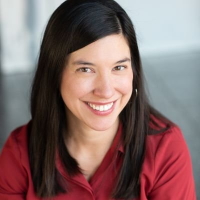 Jillian Peterson is an associate professor of criminology and criminal justice at Hamline University. Peterson has a master’s degree and PhD in psychology and social behavior from the University of California, Irvine and a bachelor's degree in sociology from Grinnell College. Prior to graduate school, she worked as a special investigator in New York City, researching the life histories of men facing the death penalty for their sentencing hearings. Peterson was the principal investigator on a three-year grant from the U.S. Department of Justice focused on understanding the life histories of mass shooters. She and a team of Hamline students built a comprehensive database of every mass shooter since 1966, which has impacted national policy and received global media attention. Peterson is a regular commentator in the media on outlets like CBS Morning News, National Public Radio, Fox News, and CNN. Her areas of expertise include forensic psychology, mental illness in the justice system, violence prevention, and data-driven public policy.