Kim Mills: Does the thought of household budgeting make your palms sweat and your heart race? Did you avoid math classes when you were in school or pick a career where you thought you’d never have to encounter numbers? Or maybe you have a child who panics at the mere thought of algebra. Math is essential to our everyday lives, but for people with math, anxiety, any tasks involving math can cause dread and fear. Now, psychologists are studying where math anxiety comes from, how it affects people’s lives and careers, and what interventions can help people overcome it.
So how common is math anxiety? When does it usually start? Can you be good at math but still have math anxiety? Are girls more likely to experience it than boys? If you have math anxiety, what can you do to become more comfortable with math? And if you’re a parent who sees signs of math anxiety in your child, what can you do and where can you go for help?
Welcome to Speaking of Psychology, the flagship podcast of the American Psychological Association that examines the links between psychological science and everyday life. I’m Kim Mills. My guest today is Dr. Molly Jameson, a professor of psychological sciences at the University of Northern Colorado. She’s an educational psychologist who studies math anxiety in both children and adult learners. She’s explored the factors that contribute to math anxiety, as well as the relationship between math anxiety and math performance. She also created a developmentally appropriate scale to assess math anxiety in primary grades and has worked on interventions for students and teachers to decrease math anxiety.
Dr. Jameson, thank you for joining me today.
Molly Jameson: Thank you so much for having me, Kim.
Mills: Let’s start with the basics. How do you recognize and define math anxiety? I know a lot of people think, “well, I don’t like math, or I’m not great at math.” But how do you differentiate between those feelings and true math anxiety?
Jameson: Yeah, that’s a great question because you’re right, a lot of people say that they do not like math. It’s their least favorite subject, things like that. But having math anxiety does go much more beyond just that general feeling of dislike to an actual fear-based reaction. While math anxiety is not a clinically diagnosable form of anxiety, it does have a lot of the same characteristics and symptoms and behaviors that other forms of anxiety have. So things like negative self-talk, saying bad things to yourself in your head, “I can’t do this. I’m not smart enough.” Racing, heart sweating, brain fog, all of those kinds of things just like you get with other types of anxiety are also present in math anxiety. It just occurs when people are exposed to thinking about doing math or actually doing math.
And so if somebody is like, “oh, I don’t like math,” that’s a general dislike. But if someone is like, “I can’t think, I avoid math, I just don’t turn in my assignments, I get so sweaty and nervous when I have to do math,” that is probably more likely than just a general dislike is an actual math anxiety issue.
Mills: So let’s talk about what causes it. Does it usually start when kids are struggling with math in school? And can it be possible to be good at math and still have math anxiety?
Jameson: There’s a lot of discussion and lack of clarity around why some people become math anxious and some people don’t. In my own research, one thing that I found is that oftentimes people will have some type of embarrassing or personally painful experience around math. For instance, in elementary school, having to go to the board and complete problems in front of your classmates, getting in trouble for a grade that you received on an exam, feeling a sense of rush or pressure with timed math tasks. So in my own research, that’s one place that I find that it comes from. It also can come from our environment. So if kids are surrounded by people who make negative comments about mathematics, who make comments about their own ability in math or have teachers that use very authoritarian teaching techniques, have a lot of rules, don’t allow for mistakes, those kinds of things can happen and help people develop math anxiety.
For other people though, it doesn’t really happen until middle school or junior high school when the math starts to become a lot more abstract than it was in elementary school. So in middle school or junior high school, you’re starting to do things maybe with geometry or algebra in more advanced ways, and sometimes those more abstract challenging kinds of things can make students feel anxious about math. And you can absolutely be good at math and still have math anxiety. We sometimes say—I don’t know if you’ve heard this before, but in psychology, we don’t do research. We do “me-search.” And so that’s how I actually got interested in math anxiety is I had almost debilitating math anxiety from the time I was in elementary school. I would pretend to be sick on days that we had a math test. I would often need to sharpen my pencil or go to the nurse’s office or go to the bathroom or things like that.
And when I was in my doctoral program trying to figure out what I was really interested and passionate about, I remembered those experiences. And I kind of was curious, well, how did I get good grades in math? I always got good grades. I minored in statistics and in college and in graduate school, but I have terrible math anxiety. And that’s because oftentimes people with math anxiety have the foundational knowledge that they need. It’s just that anxiety blocks their ability to find the information that they need. So if you have anxiety and you’re saying bad negative thoughts to yourself, I’m not smart enough. Those thoughts are taking up space in your brain that you could otherwise be using to calculate the math problem. But because our brains only have so much space, calculating the math problem can’t also fit in our brains if our brain is full of negative self-talk or worry or things like that.
Now, that doesn’t necessarily mean that everyone with math anxiety is also good at math. There are absolutely people who have high math anxiety and it really affects their performance and it really affects their grades. And sometimes if math anxiety starts early, students will miss out on some of those foundational skills that then just exacerbate as they move throughout math and throughout school because they didn’t get the foundational information because of their math anxiety, it does get harder and harder, and then they do lack knowledge. So a lot of it depends on the individual person and those individual differences about people.
Mills: And this is not the same as people who really have a debilitating inability to understand math. I mean, that’s a completely different syndrome, right?
Jameson: Correct. Yes. There are learning disabilities that are specific to mathematics, like dyscalculia, and that’s an actual inability to understand and comprehend mathematical relationships and mathematical problem solving. People with math anxiety may have dyscalculia or dysnumeria, but they also might not. So I for instance, do not. I don’t have a problem understanding and comprehending mathematical problems or what a number means. I just get really stressed out and feel so much pressure that it’s hard for my brain to clearly think.
Mills: Can it hit later? I mean, you talked about experiencing it in college and graduate school, but could you go along and be kind of okay with math and then all of a sudden you’re in grad school and you get hit with statistics or differential equations and it’s like, “oh, I don’t get this. Now what?”
Jameson: Yeah, absolutely. While we tend to think that most people probably do experience it sometime in the K-12 environment, it’s absolutely possible that college or graduate school or even a professional setting might be a person’s first exposure to certain kinds of math that arouse that anxiety. And so there’s actually a whole other research line that’s related to statistics anxiety, because statistics are a little different than math. And so sometimes people who have math anxiety will also have statistics anxiety, sometimes they don’t. But we do often find that even in graduate students across lots of different disciplines and fields, that if those graduate students do have some kind of math anxiety, they often delay taking their statistics and research methods courses until the end. A lot of times college students will do the same thing. If they experience a math course that they really struggled in or that they aroused their anxiety, they’ll put it off, maybe they’ll drop the class and they might’ve said, oh, I’ve always been fine with math.
I actually had an NF grant from the National Science Foundation with some of my colleagues who are earth scientists or geoscientists. And we did a study where we did interventions in an introductory STEM class to try to help, especially female students, but really all students have better just overall attitudes towards math—that includes lower math anxiety, increased self-confidence, having more motivation and interest towards math. And we found really, really interesting things in especially some of our qualitative analyses. We found that there were a number of people who reported not ever really experiencing negative math attitudes or having negative math experiences until they got to college. And then when they got to college and they were, like you said, doing differential equations or someone’s like “compute this within subjects variance for this ANOVA”—that stresses them out, and it’s really the first time that they’ve had that kind of exposure and experience with math that made them feel a certain way. And then that kind of exacerbates.
So if I’m a college freshman and I’m having my first experience with math anxiety, I’m probably not rushing out to take another math class, or I’m probably not majoring in accounting or physics. And so whether it develops when you are young in the K-12 or in college or graduate school, it does tend to have negative outcomes in terms of the choices that you make and the kinds of things that you expose yourself to.
Mills: And that leads me to the question of what happens to people with math anxiety as adults? I mean, yes, there could be career choices that you make as a result of wanting to avoid math, but what about in the rest of your life?
Jameson: So in addition to those career choices, there’s also things like—I think a lot of times people don’t recognize and realize how much math is actually in our lives. So I recently purchased a new area rug for my bedroom, and that’s math. I had to figure out which size of the area rug is going to fit in my bedroom. So I had to measure my bedroom and figure out how much space around the rug I wanted and all of that. As someone with math anxiety, that absolutely is nerve wracking for me. So often what I do is I use a heuristic instead of actually measuring. I estimate. So I, for instance, am approximately six feet tall, and so then I visualize how many of Molly could lay on this floor, and then I say, “okay, well that’s about one and a half, so I’m going to go with nine feet.” Sometimes it’s okay, my area rug that I estimated fit just fine, but other times it doesn’t work so well, when you actually need to measure something or you need to do your taxes or you need to calculate a tip or any of those kinds of things are going to require math. It’s not very good to estimate on your taxes. You want that actual precise calculation.
And for people with math anxiety, that can be really stressful, and so they can avoid things like that. I know if people who have avoided doing their taxes because of their math anxiety, another big thing about being an adult and having math anxiety is if you are a parent, that math anxiety will very likely be modeled for your children, even if you don’t mean for it to be modeled to your children. It’s really hard sometimes when you have math anxiety to not make a negative comment or to not say something like, “oh, go ask your other parent, I’m just not good at math.” Things like that. And so kids pick up on those messages and they learn like, oh, math isn’t for me, or I’m supposed to be scared of math, or I’m just like my mom and she has math anxiety, and so I must have it as well. And so as an adult, in addition to affecting your own life in these day-to-day kinds of ways, it can also trickle down and affect your children and your family and have them internalizing those beliefs about themselves.
Mills: So what do you say to educators who are trying to deal with this as a problem? How can they really recognize math anxiety in their students? Is there some kind of a test that they can run to make sure that it’s not just a kid who doesn’t like math, but this is really an anxious child?
Jameson: Yeah, absolutely. So you mentioned my scale at the beginning of the podcast. It’s called the Children’s Anxiety and Math Scale. You can email me and I will gladly share a copy with anyone, K through 12 educator, researchers, anyone who’s interested in the scale. It’s very easy to administer and it’s very easy to score, and it kind of just gives you an overall idea if the student is likely to have math anxiety based on how they’re answering questions. The other thing, if you don’t have the time or ability to do a direct measure like that, another thing I would recommend to K through 12 teachers is to work with and talk to your school psychologist because your school psychologist will be able to do some assessments if you don’t have the time and ability to do that. I’ve worked with a number of school psychologists who have used my scale to work with kids in K-12 settings.
I would also say, if you’re a K-12 educator or work in a K-12 setting, watch what your kids do when it’s time for math. That’s a very common thing for kids is avoidance. When it’s time for math, they might, like I said earlier, I would have to go to the restroom or I’d be sick or I need to sharpen my pencil. And if you have some kids who are constantly doing that, and it’s always around of math, then there’s a possibility that they might have math anxiety. The other thing that you want to really look for is how they are performing in math compared to other subjects. So if they have generally high grades and other things, but their math grade is out of proportion low, that could be a sign that, well, you first would want to check obviously for dyscalculia. But then if a school psychologist rules those out, it’s very probable that math anxiety could be the reason that that kid is scoring at a lower level compared to their other things.
Mills: There has been a long time stereotype that girls aren’t as good at math as boys. Are girls more likely to experience math anxiety? How is this tied into societal stereotypes about girls and women?
Jameson: This was actually one of the first things that kind of drew me into math anxiety research was recognizing that this does seem to be an issue that affects women more than men, despite decades of research showing that math ability and math performance between girls and boys or between women and men is really non-existent, right? There are tiny little differences, but across the board, girls and boys and women and men have the same propensity for math skills. There’s not really a gender issue with math, despite that stereotype.
But when it comes to math anxiety, there are absolutely gender differences, and it does likely come from, what’s the word internalizing—It likely comes from women internalizing that societal stereotype. So as a woman, if I say, “oh, society says women aren’t good at math, and I’m a woman, I must not be good at math.” And I start thinking about that potential for stereotype threat where there’s a stereotype about me or my group, and because of that stereotype, I get anxious and then perform as the stereotype says.
And so that happens with women in math. And so because they’ve internalized that stereotype, because there’s a worry and a fear of confirming the stereotype, I think that women do get more anxious about math. And we see this both in self-report measures. So when we’re doing a survey and we ask people, how math anxious are you, we see gender differences with women reporting higher levels of math anxiety, but we also see it in implicit measures of math anxiety. So there’s a great study by a colleague of mine, Orly Rubinsten, and she gave people a reaction time implicit measure test with words that had to do with math, and that had to do with different genders and found that women would report even implicitly more negative emotions and negative reactions in response to words that had to do with math. Those kinds of measures, like implicit measures of anxiety, the stimulus being presented to people happens so fast that there’s not time for conscious awareness.
So no woman is looking at the computer screen and has time to say, “oh, that screen says math. I don’t like math. I’m going to push this button.” It’s not a thoughtful process like that. With implicit measures, it’s supposed to happen very quick. A word flashed on the screen and the participant has to push a button on the computer. That research also shows that women have higher levels of math anxiety, that they’re slower to respond to math words that they’re avoidant when it comes to math words. So even though the actual stereotype is not true, that there are not gender differences in math ability, that internalization has absolutely resulted in women having higher levels of math anxiety than men do.
Mills: Do you have any idea how common math anxiety is? Is there data around that?
Jameson: Yeah, there is some data, but it’s a very big range depending on the population of people that you are looking at. But typically the numbers are around like 25% of undergraduate students experience some level of math anxiety that negatively impacts their performance, their performance or their learning. Other research has talked about it being up to 80% of people in the general population or at community colleges or two year colleges, that there are often higher rates of math anxiety in those groups. But that’s a very big range, 25% of people to 80% of people. So it really does depend a lot on who you’re looking at, but in most of my work, I tend to say that it’s at least one in four undergraduate students is probably a pretty good estimate of the number of people who have math anxiety.
Mills: So what advice do you have for parents who have children with math anxiety? Where can they go to get help?
Jameson: So I would say the biggest things to do, and I’m a parent myself, and so one of the first things I had to kind of do when my daughter was born was be very mindful just of how I talk about math and how I talk about myself and my own abilities. And I knew that if I said things to her, go ask your dad because I’m not really sure how to do this, that that was sending certain messages, and I had to do this as an educational psychologist who researches this, I had to be very intentional about reminding myself. So if you’re a parent and you have math anxiety, be really mindful about what you’re saying. If you need to put little sticky notes up on the wall with positive things about math that you can remind yourself to say like, math is fun, problem solving, or, wow, we have to work so hard and look at how much we succeed. But putting those sticky notes around so you have an alternative thing to say as opposed to your first thing that you want to say, which as a math-anxious person is probably not something positive.
The second thing is a really important way to help people with math anxiety is to give them opportunities for success with math so that can build their confidence, right? In my own research, I find over and over and over that self-efficacy or a person’s confidence in their ability to succeed in a specific task that is critical for whether or not math anxiety affects people’s performance. And that’s why I, for example, am someone who, even though I had math anxiety, I did okay in math and I got good grades because I have a lot of confidence in my ability to learn, and I have a lot of confidence in my ability to perform well even when things are hard.
So helping your kids build that self-efficacy is really, really important. And that way, even if they have anxiety, the self-efficacy kind of serves as a protective factor and the anxiety doesn’t necessarily impact their performance. So how do you build efficacy? Right? Well, like I said, opportunities for success. That’s a great way to build confidence. Letting someone see that they can do it is so important. And sometimes this means with kids and math anxiety, we might need to give them some problems or some math work that’s at their level or maybe just a little bit below their level so that they can have those opportunities for success. Once they start to feel like they’re capable of success, then they’re going to put in effort, they’re going to try. They’re going to ask questions and they’re going to persist. So really building that confidence is, I think, key.
If you’re a parent, ask your child’s school for help. Again, I have to put a plug in for my psychology sibling of school psychology because they do such a great job in the K through 12 settings of providing assessments, providing interventions, providing self-efficacy, building for kids. So I think that partnering with your child’s school is a really great way to get them the resources that they need. And then also, there’s tons of great resources, free and available, like this podcast, like articles from APA on websites and blogs. So doing just a search on the internet will probably help a lot because you’ll find blogs and information like this about how to help your kids.
Mills: Do similar anxieties exist in other subjects such as reading, or is math anxiety just unique? Is it just about that part of your brain that is affected?
Jameson: So math anxiety tends to be the most studied of the academic discipline area anxieties, but there’s absolutely other kinds of anxiety related to academics. So there is a reading anxiety, foreign language anxiety, computer or technology anxiety. And then I’ve seen some research done in specific areas of physical and natural sciences. Like chemistry often does a lot of research looking at chemistry anxiety, but math is absolutely, I think the most researched, and it is probably because it’s such a strongly disliked area. So many people say they dislike math, it’s their least favorite subject. And so I think because of that, it made researchers realize like, oh, maybe there’s something else going on here too.
Mills: So what else are you studying now? Or what are the big questions that you’re still trying to answer?
Jameson: So I’m really excited actually about this. Another NSF grant that I received from the National Science Foundation, this one I’m super excited about. Not that I’m not excited about all of my grants, but this one I’m super excited about because it is to provide interventions to preservice elementary school teachers. So preservice elementary school teachers or elementary school teachers in general tend to have the highest math anxiety of any college major. And often the research shows that they select elementary education in part because of the lower math requirements. And so what my team and I decided to do was to try to go into these preservice elementary teachers’ math classrooms in their freshman year. They have to take a math content class that teaches them about the content of math that they will be teaching to their own students. One day we’re going to go in do pre and post measures of math, anxiety, math, efficacy, math interests, math avoidance, and in the time period between the pre and the post test, they will get a series of different interventions.
I won’t say too much just in case any of our participants happen to listen, but they will get different interventions that are evidence-based. And the goal is really to try to increase their productive mathematical disposition. So decrease math anxiety, increase math confidence, increase math interest, increase math value, decrease math avoidance through these interventions. A really cool part of this study is we’re also using eye tracking technology to measure the visual attention of these preservice teachers when they’re doing math related tasks, so that way we can see not only are they maybe self-reporting, having negative math attitudes, but their actual cognitive and visual attention. What we hope is that that will also show that in highly math-anxious preservice teachers that they be behave differently. They avoid looking at math. And so we hope that our interventions will help that too, so that we can eventually provide interventions for preservice elementary teachers all across the country so that that will decrease their math anxiety.
And then they go into the classroom and are less anxious and maybe are less likely to model that anxiety for their students. And hopefully they like math a little better, their students like math a little better. So that’s the big project I’m focusing on right now. It just started. I’m super excited about it, but I’ve also got a couple of other cool things that we’re looking at. So one thing is readability, and that has to do with the way that font is presented on a computer screen or when it’s printed, and certain fonts are more readable than other fonts. And we know this a lot from reading kinds of research, but nobody has ever really looked at it related to math. And so one of my doctoral students, a colleague and I are looking at that right now to see do different types of fonts when it’s a math problem, do those different types of fonts make a difference in how anxious someone is or how confident they feel in their ability to answer the question?
We think this is particularly relevant because a lot of times, especially in college, math is taught on a computer or the students will do math homework or math quizzes on a computer. And so if we are arousing their anxiety because of the type of font that’s being used, that’s a very easy fix to change font to make it more readable, to decrease people’s anxiety. So those are really the two things that I’m focusing on right now. Lots of little projects though—my scale, I like to validate and make sure that it’s still doing a good job of measuring math anxiety in different populations and kids with different backgrounds. So I’m always doing that, but really interested right now in kind of the application of how we can help people with math anxiety.
Mills: Well, Dr. Jameson, I want to thank you for joining me today. I think the information you put out there is going to be very helpful to a lot of parents and teachers.
Jameson: Well, good. Thank you so much for having me.
Mills: You can read more about psychologists’ research on math anxiety in the October issue of APAs magazine, Monitor on Psychology. Go to www.apa.org/monitor.
You can find previous episodes of Speaking of Psychology at speakingofpsychology.org or on Apple, Spotify, YouTube, or wherever you get your favorite podcasts. And if you like what you’ve heard, please subscribe and leave us a review. If you have comments or ideas for future podcasts, you can email us at speakingofpsychology@apa.org. Speaking of Psychology is produced by Lea Winerman. Our sound editor is Chris Condayan.
Thank you for listening. For the American Psychological Association, I’m Kim Mills.


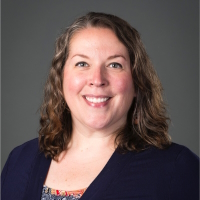 Molly Jameson. PhD, is an associate professor in the department of psychological sciences at the University of Northern Colorado. She is internationally known for her original research on the study of math anxiety in elementary students and adult learners. Her research focuses on understanding the development of math anxiety in two groups of students at opposite ends of the educational spectrum: primary grades students and adult learners. She published the first developmentally appropriate scale to assess math anxiety in primary grades students, has presented at national and international conferences, and regularly assists teachers and parents of highly math-anxious students in ways to improve their students’ math performance and confidence. Her research was been featured in Education Week, and her scale is in use at public elementary schools and research in the U.S. and internationally.