Kim Mills: As the 2020 election cycle heats up, inevitably, so will conversations among family, friends, and acquaintances on opposite ends of the political spectrum. The United States may be more politically polarized than ever, but our disagreements don't have to devolve into shouting matches and ideological one-upmanship. But how can you have a civil conversation about politics with someone who disagrees with you? Is it even worth it to try?
Mills: For people who want to try to engage in meaningful dialogues with those who disagree with them, psychologists have some practical advice to offer. Welcome to Speaking of Psychology, the flagship podcast of the American Psychological Association that explores the connections between psychological science and everyday life. I'm Kim Mills.
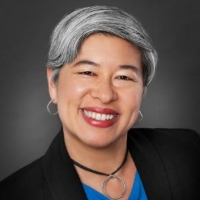
Mills: Our guest today is Dr. Tania Israel, a professor in the department of counseling, clinical and school psychology at the University of California Santa Barbara. After years of leading workshops, teaching people how to talk about their political differences, she has published a book, Beyond Your Bubble: How to Connect Across the Political Divide with advice on how to initiate these conversations, keep your cool and ultimately better understand each other. Welcome to Speaking of Psychology, Dr. Israel.
Israel: Thank you so much, Kim. I'm delighted to be here.
Mills: Let's start with a definition. You aim to teach people how to have what you call dialogue, as opposed to discourse, diatribe or debate. What are the differences among those terms and what is meaningful dialogue?
Israel: So I always try to frame what this book is trying to help people do. And when I talk about dialogue, what I'm talking about is a conversation that takes place between two people, uh, who want to be in that dialogue. So sometimes people get concerned that just because they can do it, that that's a mandate for them to do it. And, you know, I want people to know that they have choices.
Israel: So it's dialogue with a person who wants to do it face to face, uh, not Facebook to Facebook. So really the idea is that this is a conversation that, that people are having either in person or it could be on Skype or Zoom or on the phone even, but, but not in writing, and certainly not in social media, and with people who have differing perspectives and those different perspectives don't have to be the most extreme differences.
Israel: So that really frames what, what I want to help people do. And, and in terms of the difference between that and, and some of the other kinds of conversations people might have, diatribe or, or discourse, or debate, this is not about trying to win an argument. This is, people have a lot of different motivations for what brings them to dialogue. But this isn't just about people expressing their views and expressing their emotions, this is more often about people trying to build understanding or maintain relationships.
Mills: It would be hard to think of a topic that is more polarizing right now than the upcoming presidential elections. There are some people who are hard-line, dyed-in-the-wool pro Trumpers and others who would vote for a can of tomato soup rather than support the incumbent president. Is it possible for people on those two extremes to have a real dialogue and to what end since the chances of changing either side's mind is probably nil?
Israel: So that's a great question. And I hear that a lot. Uh, so why, why are we doing this at all? Is this even possible? And one of the things that I hear from people is that they just cannot understand how somebody else could think as they do or vote as they do. And so what I always think is, well, if you can't understand, and you have someone in front of you who could help you to understand, wouldn't you want to take advantage of that?
Israel: Wouldn't you want to try to find out from that person what you're really having trouble grasping? So that can be one of the goals in itself, just to try to understand. Um, also that lack of understanding can cause a lot of distress for people. People are very disturbed by the upcoming election. And over the last four years, people have been really disturbed by the stress of the political divide, and we know that.
Israel: You know, APA has research that shows that people's stress around politics has increased. And so hopefully this is something that can help people to reduce their stress, help to promote understanding. And I also hear a lot from people who want to maintain relationships with people who are in their lives, family members, coworkers, friends from high school, other parents at their children's school and they're not sure how to do that.
Israel: And so this can be very helpful in that. And then it can also be helpful in terms of talking about and trying to resolve some of these political issues. So if we do have dialogue that could help to move us toward identifying common ground and maybe even working together on some of these issues.
Mills: You, you've written in your book that before people engage in meaningful dialogue, they need to understand their own motivations and what they want to accomplish. Sometimes people may have more than one motivation or even motivations that conflict with one another. Why is it important to sort out your goals before you even try to have these conversations?
Israel: At first I thought, "Oh, well, if I just help people to identify what their motivations are and have them keep that in mind, then they'll really want to learn the skills and implement the skills that will help them to have dialogue." It turns out it's a little bit more complex than that because sometimes people do have a motivation where they want to maintain a relationship with a family member, but they also might have a motivation to want to feel validated in their own views or to openly express what their experiences and their values are.
Israel: So one of the things that's helpful about knowing what your motivations are is that these conversations can be challenging and sometimes you need something that's going to help you to want to persist past the discomfort, and the emotions that come up around the conversations.
Mills: You say that for successful dialogue to happen across political lines, we need to do two things, try to understand your conversation partner, and then help that person feel safe and understood and that the way you do this is through active listening. What is active listening? How do you become an active listener?
Israel: One of the things that I really wanted to bring forth in this book is something I've been teaching for years in my helping skills class, which is active listening. And this is something that we have loads of research on in psychology about the benefits of active listening and what it looks like.
Israel: So active listening, Stephen Covey in 7 Habits of Highly Effective People describes this as listening to understand instead of listening to respond. So when somebody is talking rather than thinking about, what's the thing that you're going to say to, to contrast with what they're saying, it's giving them space to actually express what they're going to say, and then responding by demonstrating that you understand by giving a reflection that summarizes what they've just said.
Israel: And that can help people to feel more comfortable sharing more if they feel like you've heard them. And it can also help people to clarify their views. Maybe you reflect back to them something, you say, "No, that's not exactly what I, what I'm thinking." And, and it gives a chance to go into more depth with things.
Israel: And then the, the other component is when you do want to ask questions, asking open ended questions. So not just yes or no questions, but questions that really encourage elaboration and also questions that aren't just trying, that aren't just trying to trap somebody, or aren't just statements or gotchas, like, you know, "Don't you think this?" That's, that's not really a question. So questions that promote understanding.
Mills: That sounds like a, a really great technique and probably something that we should all do more regularly. But how do you get yourself to employ it when you're listening to somebody who says something that you really find just repugnant, offensive, or, or just wrong, how do you keep your cool?
Israel: I have found that even before the skills, one of the, the underlying stances that we need to have is one of curiosity. It's important that we really do want to know, that we really do want to understand. And if you really want to understand, and you hear somebody say something, you think, "My gosh, that is just ridiculous and wrong headed."
Israel: Well, you can tell someone that that's ridiculous and wrongheaded, but that doesn't actually get you any closer to understanding. But saying to somebody, "Oh, I would love to hear a little bit more about how you, how you came to that view." That can help you to understand more where they're coming from.
Mills: Do you have to just listen in these cases? When do you get to talk? Well, how do you know it's your turn to talk and how do you do so in a way that doesn't alienate the conversation partner? And may, maybe you just talked about that a little bit.
Israel: Well, no. I think that's a great question. Everybody always wants to know, when do I get to talk? Do I really just have to spend all my time listening? When, when I started doing these workshops, uh, the first half of the workshop is all about listening 'cause that's such a foundational skill for building that connection that will allow you to be able to express your views more and have the other person really hear them.
Israel: So I, and I, and I give some guidance about that in the book, sort of, sort of when to do that. But the other crucial thing about when you talk is how do you talk and how do you share your views in a way that, it's likely to be most effective? And one of the things that we might find is that when we're talking with people who agree with us, we can, you know, give some kind of short hand views that can fit on a bumper sticker and we've got slogans and we've got statistics and we can go, "Yeah, that's right."
Israel: And we get lots of encouragement from other people, and that feels really great. If we then turn around and try to talk to somebody who is on another side of an issue and use those same statistics and slogans and, and the same kind of energy around that, it's not likely to help us to meet our goals. So some of the things that we might do instead are to tell our story about how we came to our views.
Israel: We, we often think that we came to our views because of all of those statistics and, you know, logical things, but there's lots of research in the field of psychology that, that shows that that's not typically how we form our views. We're more likely to pay attention to statistics that, that are already aligned with our values. Uh, so talking more about our values and how we came to that can be a much more, um, accessible way to share with somebody, uh, what our thoughts are on something.
Mills: In, in some of these cases, are you really just sort of squelching what you really think in order to give the other person room? Because it sounds like you're talking about some people who really just want to confirm the biases that they already have. And so you accept the data that confirm what, what you think you know. And I may be having a conversation with you and feel like, "Yeah, but you know, you're really not paying attention to, to the good statistics over here. This is the science and that's fake news and you're just wrong."
Israel: I know that's so frustrating, isn't it? It, it, it really, it really is. (Laughs).
Mills: (Laughs).
Israel: And everybody that's experiencing that, well, it turns out that we are all just trying to confirm our biases. Uh, and the, the field of psychology has so much to offer here because it will say that over and over and over again. And we only believe that that's true about the other people.
Israel: You know, we think that we're making these very, you know, logical, well thought out decisions and only paying attention to, you know, the good research and there, therefore the other people must be wrong. It turns out that human beings have these tendencies. And even knowing that doesn't help us to know what to do about it. That's what I try to offer in the book is, is some ideas about how do you actually then have a conversation with somebody who's paying attention to very different kinds of things.
Israel: And there were areas of psychology research that I already knew a lot about going into writing this book, but there were some that were newer to me. And one of the things I learned a lot about was the way that we distort our perceptions of people who we perceive as being on the other side. And this is what some of it's about, is, is really thinking that, that they are illogical, that they are mean spirited, um, that, that we have all kinds of ideas about the other side.
Israel: Well, they have those same ideas about us, it turns out. And there are actually some strategies that can help us to take somebody else's perspective and see things from their view. And that can help us move toward, um, what, what we call intellectual humility, which is another area that I learned more about in, in developing this book. And I, and I think of that as, um, how to be righteous without being self righteous.
Mills: Is it harder or easier to have these kinds of conversations with family or close friends versus people who are just acquaintances or even strangers? It seems like there'd be more emotionally at stake when we talk to people who are close to us, but sometimes those are the people where we act out the most in negative ways.
Israel: Sure. Well, I think it's, it's, uh, easier to avoid these conversations with people who aren't close to us. You know, we can, we can have an interaction with somebody or witness something, there's a lot going on right now around mask wearing and people see what other people are doing or not doing, and, you know, are, and, and I hear people say, "You know, well, I don't know if I should go and tell that person that what they're doing is wrong, or if I should confront them."
Israel: And it's, it's interesting how we usually think about that, that interaction would have to be conflictual in that way. That we couldn't go and say, "Hey, I noticed, you know, that you're not wearing a mask and I'm, I'm wondering how you're making your decision about that." You know? But it's, it's usually easier just to not do that with somebody who we don't know. And so we might have more motivation to actually have those conversations with people who are already in our lives and who we, um, want to keep in our lives.
Mills: I'm going to ask you a question that ma, maybe you don't have any research behind it, but I'd still like to run this past you. How do you think America got to this place where people are so polarized and angry and self righteous about their beliefs? I'm going to out myself as, as an older person. I gr, I grew up in the '50s and '60s when people would not dare to scream at each other in public or hurl the F bomb at strangers. Do you have any theory about why we've stopped being civil to each other?
Israel: Sure. I've got a couple of thoughts about that. I, I think that both media and social media have contributed to this. So one of the things in the media that we see and, you know, in my lifetime also, we've shifted to this 24 hour news cycle. And keeping people engaged in watching the news for 24 hours a day takes, uh, some, uh, takes some doing, you've got to have something interesting for people to watch.
Israel: And so drama is more interesting than, than not drama apparently on TV. And so when we see in these, uh, conversations across political lines on TV, typically they have set it up so that there's conflict. So there are people who are more extreme or who are spokespeople for the different sides, and we're, we're missing there, um, the, the full range of what people's views are.
Israel: And so when people think about having a conversation with somebody on the other side, they're imagining these people who are the most extreme examples of those views, because that's what they've seen or heard in the media. So that's the media piece. The social media piece is that people are on social media more often sort of expressing their views out and it's not about sort of an exchange back and forth.
Israel: Uh, so, so that's one piece of it though, that we're not as skilled, I would say, at doing that back and forth, um, because of social media. But the, the other piece about social media is that we're saying the same thing to everyone. And it's not as nuanced as if we're having some kinds of conversations with people who agree with us and some kinds of conversations with people who don't agree with us.
Israel: And, and having the skill to be able to do both of those things is very useful in life. That kind of flexibility is, uh, beneficial in a lot of different areas, uh, in our lives interpersonally. So, so that's, that's one of the pieces. There's actually an interesting study, um, that was done with people on Twitter, where they had, um, Republicans, who they tweeted, um, liberal tweets to these Republicans and then they tweeted conservative tweets to the Democrats.
Israel: Because of course, we always think that, you know, if we just put out there the, the, uh, view that contrasts, that we're going to share the right research, and then they'll wake up and they'll see how wrong they are.
Mills: (Laughs). Right.
Israel: Right? That's what we think is going to happen, but it's actually the opposite. That the more those participants paid attention to those views, the farther polarized they got. So these kind of, uh, you know, back and forth things that we're trying to do on social media, not only are they not helping to promote understanding, but they're pushing us farther apart.
Mills: So you've said that your advice works best for face to face conversations. And as we've been talking, a, a lot of the conversations that people are having today about politics is happening online. Can, is it possible to use your techniques on Facebook or other social platforms, or can you just not have any meaningful dialogue on say some kind of a comment wall?
Israel: You know, I think that the most useful comment that you can make to somebody who expresses a view that's different from yours is to say, "Hey, I would love to understand more about where you're coming from. Can we set up a time to talk?"
Mills: So you just have to kind of make a separate room where you can go and, and have the dialogue, but it's important to make it a one-on-one.
Israel: It turns out that if we are trying to understand somebody, the more types of information we have in terms of input, the, the easier it is for us to understand them. So just seeing somebody commenting on social media doesn't give us a lot of information. But if we can hear the intonation of somebody's voice and even better, if we can see their non-verbals, the more of those sources that we have, the, the easier it's going to be for us to have that understanding.
Mills: So moving beyond, um, your work, getting people to, uh, break out of their bubble, that's only one aspect of, of your work. A lot of your research has been on LGBTQ mental health, and I know you've done public outreach, including a very popular Ted Talk on bisexuality. How does this tie in with, uh, your, your whole social discourse work?
Israel: That's a great question because I ended up writing this book, not about the work that I've been doing for the last couple of decades on LGBT intervention research, but about a completely different topic. Um, so the work that I've been doing on LGBTQ issues has really brought me into some difficult dialogues.
Israel: And I've, you know, facilitated dialogue around religion and sexual orientation. I did training for law enforcement on LGBT issues. And all of those things have really helped me to see the benefits of trying to understand where somebody is coming from, um, in addition to, or instead of even trying to shift where they are. Because, you know, I've really been able to see how understanding somebody else is so crucial to whatever my goals are in terms of educating somebody or, you know, trying to, um, uh, shift their behavior.
Mills: So there really is a logical thread there from that previous experience, it kind of pushed you in this direction, it sounds like?
Israel: I would say so. But, but even more so, uh, in terms of what got me to, to this book is that I have been teaching helping skills and I've also, um, I w, I was, right after the 2016 election, teaching a class on social justice and counseling psychology where my students were all developing resources to try to help people in the sort of tumultuous times that we were finding ourselves in.
Israel: And so, so what came out of that is I, I started developing some resources too together with one of my students. And, um, what, what I ended up with was the thing that I call the flow chart that will resolve all political conflict in our country. So it was really trying to say, you know, is there something... my work is all on interventions, I'm not interested only in understanding problems.
Israel: Like my life's work is really about what do we do about them? How do we actually make things better? And so it turns out that the flow chart did not actually resolve all political conflict in our country.
Mills: Oh, no. (Laughs).
Israel: I know. Isn't that remarkable? I totally thought that was gonna work. Um, but then, then I went on to develop the workshop and then the book out of that. So, so it led down those different paths. And I also just have some, um, experiences myself that have been really transformational in terms of dialogue across political lines. Um, back in the '90s, I was, um, doing work in pregnancy counseling and ended up, um, bringing together pro choice and pro life people to have dialogue with each other.
Israel: Um, and, and that was a very meaningful experience just to understand people from another perspective. So, so I feel like a lot of what I've done, um, in terms of my research has contributed, but also I'm very engaged in my community, I'm very engaged in the political world. And so in all of those places, I see where, um, where these kinds of conversations can really be beneficial.
Mills: Well, this has been really interesting, Dr. Israel, I appreciate your joining us today. It's really been a pleasure talking to you. And I hope I have listened actively to what you've said today.
Israel: I really appreciate your attempts to understand, and I hope I have also understood where you're coming from. But this has been really, uh, a wonderful opportunity to talk about this work and this book.
Mills: Well, thank you again. To our listeners, you can find previous episodes of Speaking of Psychology on our website at speakingofpsychology.org or wherever you get your podcasts. If you have comments or ideas for future podcasts, you can email us at speakingofpsychology@apa.org. That's speakingofpsychology, all one word, @apa.org. Speaking of Psychology is produced by Lea Winerman, our sound editor is Chris Condayan. Thank you for listening. For the American Psychological Association, I'm Kim Mills.