Kim Mills: The practice of meditation dates back thousands of years and is a part of nearly every major religion. But it's only in the past several decades that researchers have begun to use the tools of modern science to explore what's happening in the brains of people while they meditate, and to measure how meditation can benefit our minds and bodies. In our cacophonous modern world, full of distractions, stress and anxiety, can these ancient practices help us to flourish? And if so, how? What are the different types of meditation? What are the benefits of each? Can you, should you try it at home?
Welcome to Speaking of Psychology, the flagship podcast of the American Psychological Association, that examines the links between psychological science and everyday life. I'm Kim Mills. Our guest today is Dr. Richard Davidson, a professor of psychology at the University of Wisconsin-Madison and founder and director of the university's Center for Healthy Minds.
Dr. Davidson has spent decades studying meditation as both a practitioner and a scientist. He's worked with the Dalai Lama and hundreds of other master meditators, to understand how meditation can shape the mind and promote wellbeing. His center also works to develop meditation-based interventions for children. In addition, he's well-known for his research on emotion, emotional styles and the neural basis of emotion. Dr. Davidson has published hundreds of scientific papers and several books, including his most recent Altered Traits: Science Reveals How Meditation Changes Your Mind, Brain, and Body. Thank you for joining us today, Dr. Davidson.
Richard Davidson, PhD: It's a pleasure to be here. Thank you for having me.
Mills: Our listeners probably have some idea of what we mean when we talk about meditation, but you've said that meditation is like sports–it's a broader term than many people realize. Can you explain that? What are the different forms of meditation that people might not be familiar with?
Davidson: Well, I do use the analogy with sports because there are literally hundreds of different kinds of meditation practices. And we are only familiar with a very small sector of them here in the West. And what has received attention from the scientific community is a small sliver of meditation practices. In the classical traditions, the word "meditation" literally means familiarization. It means to familiarize ourselves with the basic nature of our own minds. And there are practices for many different kinds of characteristics. There are practices to cultivate on basic qualities of attention and awareness. There are practices to cultivate loving kindness and compassion. There are practices that are known as analytic meditation, which have received virtually no attention here in the West. And this is the kind of practice that the Dalai Lama typically does for example, and they intentionally use thinking and reasoning as part of meditation to come to some deep understanding of the basic nature of our own mind. And so there are literally all these varied kinds of practices and what they share in common is a technology, if you will, to promote human flourishing, a technology to learn the fundamental skills of wellbeing. That's really what they're intended for.
Mills: Of all of these meditation practices you describe, mindfulness is probably one many of our listeners would be familiar with. Why has mindfulness meditation in particular become so well known?
Davidson: I think mindfulness meditation has become so well known in part for historical reasons. It was one of the first forms of traditional Asian style meditation that was taught in the West. Also Jon Kabat-Zinn, a very dear friend and colleague, developed a standardized instruction called mindfulness-based stress reduction that has been taught at academic medical centers throughout the U.S. and in most parts of the Western world. And this is a very convenient form of mindfulness meditation that is packaged in a very standardized format and can be taught very easily. And this has helped to, I think, increase the availability and therefore the popularity of mindfulness-based practices.
Mills: You've practiced meditation yourself since the 1970s, when you were in grad school. And you've written about how it's always been an important part of your life. But it wasn't part of your academic research for the first couple of decades in your career. And I understand it was actually the Dalai Lama who inspired your research in this area. Can you tell us that story?
Davidson: Certainly, I'd be happy to. So I became interested in meditation very early on in my career. I had the opportunity to be around some people who were meditators and they just impressed me with their demeanor. They were very warm-hearted people, really friendly. They're the kind of people I wanted to be around. And they weren't, for the most part, my professors in graduate school, they were folks I met on the outside and they all had in common this interest in the practice of meditation. And that's what led me to explore this in the first place. And I actually did do some research very early on in my career and actually published some of that in the 1970s on meditation, but it was made very clear to me by my professors at that time that if I wanted a successful career in science, that was a terrible way to begin and I’d better find some other topic.
And so I was actually a very dutiful student and that's when I began to pursue research on the brain and emotion and kept my interest in meditation very much under the radar. And then when I met the Dalai Lama for the first time was in 1992, and he very directly challenged me and he said, "Look, you've been using tools of modern neuroscience to study stress and anxiety and depression. Why can't you use those same tools to study kindness and to study compassion?" And I didn't have a very good answer for him, but it was a wake-up call. And that was the beginning of a major pivot that we made in our work and oriented more toward the positive qualities of our nature and how they can be cultivated.
Mills: What happened with those professors who were so discouraging? Have you spoken to them since?
Davidson: Some of them–I think some of them came around and some of them ended their careers in a way that I think is a little bit close-minded. But now if you look at textbooks of psychology or hard-nosed journals, the best journals in the world really, they're publishing work in this area. And one of the commitments I made to the Dalai Lama in 1992 is I was going to do everything I could to put compassion squarely within the crosshairs of rigorous science. And if you go back to textbooks of psychology in the early 1990s and 1980s, you won't see the word "compassion" in the index. And that's changed, that's really changed. And so I am very deeply grateful to see how quickly actually progress has been made.
Mills: So in the intervening years, since you met the Dalai Lama, you've brought hundreds of Buddhist monks and other expert meditators into your lab to study how their brains work. What are the differences you find among long-term meditators, novice meditators, and people who have never tried the practice?
Davidson: Well, that's a great question. And it's a difficult one to answer in a specific way, because it really depends on the nature of the practice. It depends on whether we're looking at the brain while people are meditating or at baseline, but there are few things that are general characteristics that are worth pointing out. And this is based on both our own research, as well as the research of other scientists.
One is that we now know that we can use certain structural parameters of the brain to estimate a person's brain age. So all of our brains are aging. Some people have brains that are aging faster than their chronological age. Other people have brains that are aging more slowly compared to their chronological age. If you take a thousand people and you look at the correlation between their brain age and their chronological age, you'll see it's a very high correlation, but there are some people that are off the diagonal, that is whose brains are aging more quickly or more slowly compared to their chronological age. It turns out that long-term meditators have brains that are aging more slowly compared to their chronological age. And so in a very real way, we can say that these practices are beneficial for our brain health, and they actually help us to cope with the age-related changes in a more adaptive way.
The second thing that we can say in a general way is that circuits in the brain that are important for self-regulation are strengthened. So what might be included within self-regulation? Well, one is the capacity to regulate our attention, which is it's so important. It's really difficult to overestimate how important this is. We are living in a culture today where our attention is being continuously captured by the forces around us. The media, particularly social media and technology, have become experts in attention capture.
And we critically need to educate our own minds and brains so that we can regulate our own attention and not cede it over to the media, to all these forces that we never gave our consent to. And we're all pawns in this grand social experiment for which none of us have provided our consent. And unless we take better control of our own minds, we're going to be in trouble. And so this is an invitation to learn the skills of self-regulation. And so regulating attention is one big domain.
And let me mention just the second related domain, which is the regulation of emotion. The prevalence of disorders of emotion is skyrocketing, and it's only been exacerbated by the pandemic, and we need to learn the skills of how to better regulate our emotions, in order to more successfully adapt to the modern world. And meditation provides us with some simple tools to learn these skills of self-regulation.
Mills: So by disorders of emotion, do you mean things like stress, anxiety, depression, those sorts of things?
Davidson: Exactly, exactly.
Mills: You and other researchers have found some evidence that meditation can change a person's brain structure, but you've also urged caution in interpreting those results. Why the caution?
Davidson: Well, there is a scientific literature on the impact of meditation on changing brain structure. And when you reflect on this work, there are a number of important considerations. One is that, let's say that we take a finding that shows that a particular area of the brain may be enlarged through meditation, actually grow in size. Well, it seems to strain the conceptual possibility to think that as you continue to develop more and more expertise, that that area of the brain will become larger and larger. It just, if that were the case, people who are some of the monks we've tested, who've had 50,000 hours of practice, should really have unusually large areas of the brain in those specific regions. They don't, there's no evidence to show that they do.
And so it may well be that there are curvilinear relationships that are very complex. And so when we're first learning some of these skills, for example, the skills of self-regulation, certain areas of the prefrontal cortex, which are important for this may become enlarged, but then after they become more automatic, after these skills are learned at a greater level of expertise, it may be that these areas of the brain begin to recede back to what they were. And so it's not possible for an area of the brain to just keep getting larger and larger. It doesn't make any sense.
Mills: It's limited by your skull, right? It can only get so big.
Davidson: Absolutely. So there are all these constraints. So just based on first principles, it doesn't make any sense that an area is just going to keep getting larger. And so the other thing is just, there are a lot of methodological problems with this research and the sample sizes have typically been small, and there is some reason for healthy skepticism, in my opinion, based on the current state of the evidence.
Mills: Can anyone learn to meditate or are there some people who just cannot? And are some people better at it than others? Is it sort of a talent, like some people have musical ability or they're really good at math?
Davidson: That's an important question. I would say that every person with a normal brain, so to speak, is capable of meditating. That is a brain without any kind of frank damage. It may well be that–I've met lots of people who tell me that they can't meditate. And I say to them, "Well, can you pay attention right now to the sensations of your breathing?" Or, "Can you listen to this sound and know that you're hearing this sound?" And they'll say, "Of course, I could do that." And I'll say, "Well, you're just meditating."
It is that simple. It really is that simple. And when a person says they can't meditate, what they're typically referring to is they can't sit still for a very long period of time. Their attention is very scattered, and that's okay. That's the way human minds often are. And so meditation fundamentally is really about awareness. And so if we can bring awareness to our chaotic mind, that's meditation, and what I encourage people to do is to start very modestly with very short periods of time, even one minute or two minutes that you can sprinkle through a day, and that's how this kind of skill and habit can be slowly built up.
Mills: Are there tools that people can use? Should they go to your website and look for things in order to learn how to practice meditation? Or what about apps? Are there just methods that people can find out there–whether for free or for pay–that would help them become meditators, or better meditators?
Davidson: Well, we have developed an app in our center through an affiliated non-profit that I founded, and the app is called the Healthy Minds Program. And it's entirely free. So there are absolutely no paywalls. You can download it from wherever you get apps. You can also go to the website, tryhealthyminds.orgopens in new window–so all one word, tryhealthyminds.org–and learn more about it. This is an app that provides a very comprehensive training in each of the four pillars of wellbeing that exhibit plasticity, that we know can be trained through this kind of method. And so I would encourage people who are interested, please try it. You really have nothing to lose. It's entirely free as I said, and we'd love to hear from you.
Mills: So you mentioned the four pillars of wellbeing. I wanted to ask you about that. What are they, and how can people work toward achieving them?
Davidson: So the four pillars of wellbeing constitute a framework that we've written about in our scientific work, and that guides a lot of our research and also guides the interventions that we're developing, including in this app that I've described. The four pillars are these: The first pillar is awareness, and awareness is where mindfulness would be. It includes our capacity to regulate our attention. And it also includes what scientists call meta-awareness, which is knowing what our minds are doing. That may sound strange to some listeners. Don't we always know what our minds are doing? Well, I think many of us have had the experience, I certainly have, of reading a book where you might be reading each word on a page and you read one page, maybe a second page, maybe even a third page. And after a few minutes, you realize you have absolutely no idea what you've just read, your mind is somewhere else. That's an example of not knowing what our minds are doing, but the moment we recognize that, that's a moment of meta-awareness and we can bring our mind back to the present moment. So that's the first pillar: awareness.
The second pillar is called connection, and it is about the qualities which are important for healthy social relationships, qualities like appreciation and gratitude and kindness and compassion. And we know from hard-nosed scientific research that these can be trained and training in these qualities helps to change the brain.
The third pillar of wellbeing is called insight. And this is about getting curious about the nature of our ourselves. It's really about self-knowledge. We all have a narrative about ourselves that we carry around in our mind. Some people have a very negative narrative. They have negative self-beliefs and they actually hold those beliefs to be an accurate description of who they are. And of course that's a prescription for depression.
And so part of wellbeing is having a deep understanding of this narrative and recognizing how the narrative may constrain our perception of the world, constrain how we attend to the world, and having that insight can liberate us in a way from these constraints and is conducive to wellbeing.
And finally, the last pillar of wellbeing is purpose, and purpose is not so much about going to find your true purpose, but really discovering your sense of direction in life, and then orienting more and more of your everyday behavior around this sense of purpose. So can you envision that even menial kinds of tasks that you do on a daily basis, can you envision that being related to your sense of purpose? Can you envision that taking out the garbage and cleaning your house is related to your deepest sense of purpose? It's possible to do that. And so that can be trained and that will have a very powerful effect on our wellbeing. So those are the four pillars of wellbeing. Each of which exhibits plasticity, each can be trained, and there are simple meditation practices that you can use to train each of these four pillars.
Mills: How long might it take a novice meditator to see the kinds of changes that we're talking about, or is this way too individual centered for you to be able to give even a ballpark?
Davidson: Well, I'm not sure which changes you're referring to, but if you're talking about changes in the brain, seven hours of practice.
Mills: That's not much.
Davidson: Not much. Half an hour a day for two weeks, you can see changes in the brain. We've demonstrated that in rigorous randomized control trials. It doesn't mean these changes will stick. If you go to the gym and work out with a trainer for two weeks, you will see changes in your body. But if you stop exercising for the rest of your life, you obviously will not have those changes endure. The same thing is true in this realm, the invitation here is to provide people with simple, lifelong skills that they can continue to practice.
Mills: There's been a resurgence of research into the use of psychedelics for mind expansion and wellbeing recently, we did a podcast on it last year. And one thing that researchers have found is that psychedelics may provide some of the same experiences and effects as long-term meditation practice does. What's your view as psychedelics as a road toward achieving wellbeing?
Davidson: My view is a nuanced view. So I am firmly supportive of investigating the application of psychedelics for individuals who are suffering, who have certain kinds of intractable disorders that have been unresponsive to other kinds of treatments. So for example, patients with certain kinds of depression, with anxiety, patients who are terminally ill and facing the prospect of impending death, these are all cases where I think there may well be a very useful role for psychedelics. For people who are on a journey of wellbeing, who are not explicitly suffering from a disorder, I am skeptical that psychedelics will lead to enduring change. They may be helpful in opening a person up a little bit and expanding their sense of what is possible. And that might be in individual cases helpful, but I also see the possibility of some danger as well.
And so one of the things that we learn in meditation is sometimes for a person that meditates daily, not every meditation session is going to be positive. It's not going to be blissful all the time. Sometimes when you look at your mind, you'll see a lot of distraction, a lot of negative thoughts, and it's not so pleasant. But one of the things you learn is that it's not about the experience, the value of a meditation practice, where you're looking at your distracted mind and all the negative thoughts. It's just as beneficial as if you have a positive session, may be even more beneficial. And so it's not about the experience.
One of my meditation teachers said the mind during meditation is like the stock market, it goes up and down. But it has nothing to do with whether it's up or down. It's not about the experience you have when you're meditating. It's about how it affects every nook and cranny of your everyday life. And so the danger, I think, with psychedelics is you become very attached to the experience that you have during the drug-induced effects. And that is not necessarily positive.
Mills: After all these years of working in this field, what's next and what is left for you and others to be looking at?
Davidson: Well, there's a lot left. There's a lot of basic research about how these kinds of practices affect the brain and the body. There's a lot of work that's going on on epigenetic effects, that is changes in gene expression that may be brought about by these practices, which can have some really important effects on health. There's a lot of work going on on inflammation, not just inflammation in the body, but also inflammation in the brain that may contribute to neurodegenerative diseases. And this is an area where meditation may be very helpful in an aging population.
But then there are also a lot of practical questions. We don't know what the best strategy is to bring these practices to large groups of people, to scale them. If a person, for example, is going to allocate 15 minutes a day to start practicing, is it better that they do it in one 15-minute period? In three five-minute periods? Or in five three-minute periods? That question has never even been asked, let alone answered. And my intuition is it's likely going to be different for different kinds of people. Some people will benefit from very short periods of practice, other people may benefit from a longer period of practice. These are all important questions for which we do not have answers. And this is an area where I think there'll be some important scientific research that will be done over the next few years, that will help address this.
Mills: This has been really interesting, Dr. Davidson, I appreciate your taking the time to talk to us today. Thank you.
Davidson: You're most welcome, pleasure.
Kim Mills: You can find previous episodes of Speaking of Psychology on our website at speakingofpsychology.org or wherever you get your podcasts. If you have comments or ideas for future podcasts, email us at speakingofpsychology@apa.org. That's speakingofpsychology, all one word, at apa.org. Speaking of Psychology is produced by Lea Winerman. Our sound editor is Chris Condayan.
Thank you for listening. For the American Psychological Association, I'm Kim Mills.


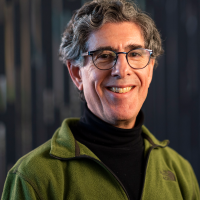 Richard J. Davidson, PhD, is the William James and Vilas research professor of psychology and psychiatry and founder and director of the Center for Healthy Minds at the University of Wisconsin-Madison. His research is broadly focused on the neural bases of emotion and emotional style and methods to promote human flourishing, including meditation and related contemplative practices. He has published over 465 articles, numerous chapters and reviews and edited 14 books. He is the author (with Sharon Begley) of The Emotional Life of Your Brain, published in 2012, and co-author (with Daniel Goleman) of Altered Traits, published in 2017. He was elected to the National Academy of Medicine in 2017 and appointed to the governing board of UNESCO’s Mahatma Gandhi Institute of Education for Peace and Sustainable Development in 2018.