Mills: In May, Melinda French Gates announced that she would donate $1 billion to organizations and individuals working to improve the lives of women and girls around the world. As part of that initiative, Gates's Pivotal Ventures Group chose 12 global leaders each to head a $20-million fund in their area of expertise. One of those leaders is Dr. Alfiee Breland-Noble, a psychologist who has spent decades working to advance the mental health of intersectional youth and youth of color. Today we’re going to talk to Dr. Alfiee, as she’s known, about the state of youth mental health—particularly for youth of color—what are the biggest challenges facing young people today, how has the conversation around youth mental health changed in recent years, and how does she hope to use the new funding to make a difference in the lives of young people?
Welcome to Speaking of Psychology, the flagship podcast of the American Psychological Association that examines the links between psychological science and everyday life. I’m Kim Mills.
My guest today, as I mentioned, is Dr. Alfiee Breland Noble, a psychologist, scientist, author, mental health correspondent, and founder of the mental health nonprofit the AAKOMA Project. A thought leader in her field, Dr. Alfiee focuses on mental health and suicide prevention for intersectional youth and young adults of color. Dr. Alfiee holds a PhD in counseling psychology. Before founding the nonprofit AAKOMA Project, she spent nearly 2 decades in academia as a professor at Duke University and Georgetown University. She’s a sought-after public speaker and a regular media contributor to outlets including TheGrio, the Today show, and The New York Times. She hosts the Audacy Radio suicide prevention special, I’m Listening, with Carson Daley and Katie Neal, and cohosted the Born This Way Foundation’s World Kindness Day short film, The Power of Kindness with Lady Gaga.
Dr. Alfiee, thank you for joining me today.
Alfiee Breland-Noble, PhD: Thank you for having me. What a great introduction.
Mills: There was so much to say about you, but let’s start with this new recognition and the $20-million fund you will be leading. It’s a life-changing amount of money. What was it like to get that call? And had you applied for it or was it a total surprise?
Breland-Noble: This is an easy question to answer. It was a complete utter and total surprise, number one, and I got an email and it was mind-blowing. I wasn’t sure it was real until I had an opportunity to communicate with the colleague who was like, Yes, it’s very real. This is not spam, and at that point it was just kind of, I felt like my world sort of exploded. What I like to say to people is I imagine that it’s something like what happens when people get the call for the MacArthur? You know what they call them—the Genius Award? It’s like, right, so MacArthur is a one amount, but you’ve already shared with this $20 million and it’s like, wait, what? Who are you talking to? You sure you got the right person. So it was mind-blowing to say the least.
Mills: Yeah. Wow. We’ll talk more about that fund a little later, but first I want to ask you about the work you’ve been doing with the AAKOMA Project over the past several years. So how did it start and what kind of work does the project do?
Breland-Noble: Alright, so I’ll start with the second question first because that’s really easy. My elevator pitch for the AAKOMA Project is we are an organization, a 501(c)(3) nonprofit, which is a Black woman—and a Black woman leader in the nonprofit space was very important to me for the independence, obviously with the checks and balances that a 501(c)(3) provides as opposed to as many people in your audience will know, a fiscally sponsored organization. Nothing wrong with that, but it was important for me for AAKOMA to be a 501(c)(3). Before that, AAKOMA was my research lab. So as you shared, I spent the bulk of my career in academic medicine in departments of psychiatry. So at Duke, because I was in the department of psychiatry, and at Georgetown, I was in the department of psychiatry and I was a health disparities researcher.
So I AAKOMA three pillars: a raising consciousness, empowering people, and changing the system of mental health. And really all of that has to do with creating and finding space for young people of color. And when I talk about young people of color, I’m talking about youth, young adults, the families and communities that they are a part of because no child exists in isolation and they’re also people with multiple identities. So our young people might be LGBTQAI+ and of color, they might have a disability and be of color. They might be all those things together. So at AAKOMA, we’re really about finding and creating space without taking up space from our young people to train them, to collaborate with them, to learn from them, and to empower them to find and create space for themselves within the conversations on mental health and not just find space, but to be centered and uplifted and empowered to know and to recognize that their mental health is important.
So that’s what the AAKOMA Project is. We do programming. I’m a researcher at heart, so we do research. The State of Mental Health of Youth of Color was a seminal report that we put out 2022 and 2023, and that’s who we are and what we do. Then in terms of this being a critical, important part of my career in my life, like I said, when I started, I was in academic medicine and what became apparent to me was that there was flexibility that I needed to do this work that I wasn’t going to be able to find in traditional academic medicine. So we took that research lab, turned it into a 501(c)(3), and we’ve just had the wonderful fortune of having somebody like Melinda French Gates see me and see our work at AAKOMA and say, We want to support this, we want to promote this, and we want to give a person like Dr. Alfiee an opportunity to go out there and do for other people what she was able to do for herself, which is carve out a space to do boots on the ground work for a community that is too underserved, too overlooked, too often not centered in conversations around mental health.
Mills: Now, when you do this research, are you just publishing it yourself or are you going through the peer-review process? Are you going to journals or you’re just putting it out there because people need it?
Breland-Noble: We do all of the above. And so in our field, I always joke, I’m a liberated academic. I was at a convention over the weekend and I said that, and people kind of know what I mean. As soon as I say it, like being a liberated attorney, I have a lot of friends who say, yeah, I’m a liberated attorney. So for us, there are multiple audiences that we’re speaking to and I can’t tell you how elated I am to have the opportunity. I’m so grateful to my team—Catalina and other folks—for helping put this together because psychology and APA has always been important to me. I’ve been in APA since the '90s, the early '90s, and I’ve been able to at different points in time, find a home within APA. And so I have to say how important and meaningful it is for me to be here in this moment.
So when I think about how important this work is and why we do this work and how valuable this work is, it is just really important to me for everybody to understand and recognize that who they are in their core being is perfect as is, and that over time what we’re looking for is for them to grow into more perfect versions of themselves. So when I’m publishing, I want to reach people where they are. So you have young people, they’re not reading peer-reviewed journals unless maybe they’re in grad school, right? When you have our academic peers, they’re not reading generally what laypeople are reading. The gravitas your Baf days come from what peer-reviewed publications? I was a journal editor for a while. I have multiple books that I’ve edited. I have three books out. Two are edited, one is coauthored with a music producer who’s a phenomenal human being. So we put our out everywhere. So it’s on our website. We put information out on socials. I have multiple peer-review, many peer-review, probably over 50 peer-reviewed publications. As I said, the books, and we have a newsletter, so our information gets disseminated in all these places because again, the goal is to center and acknowledge and recognize people who are often left out of these conversations. So we have to go places beyond just peer-reviewed journal publications.
Mills: Now, intersectionality is key to the AAKOMA Project’s mission. Can you talk more about what that means? What exactly is intersectionality for our listeners? Why is it important to consider it in the context of mental and wellbeing?
Breland-Noble: Oh, that’s a wonderful question. So I always love the opportunity to shout out scholars with marginalized identities and the sister professor Kimberly Crenshaw, an attorney from out in California is the person who coined the term, and for her, it really was, as I understand it, an outgrowth of recognizing particularly for her as a Black woman, which I also am African-American by ethnicity and culture that we don’t ever just exist as women or as Black people. We’re both at the same time. So there are these intersections and people have taken that and have really blown that concept up, but all praise goes to Kimberly Crenshaw, professor Crenshaw, for being the first one to put it out there. And so how it shows up at the AAKOMA Project, I’ll give you a great example from our state of mental health of Youth of Color report, the full report which we put out in 2023, we were able to look at African American, Black American young people who can be from families that have immigrated from the Caribbean or the continent of Africa or Black Latinos, Latino, Latina folks, Native American, Asian American Pacific Islander, and people who primarily identify as multiracial.
Those were the racial ethnic groups that we included in our sample. That gives us the ability to talk about intersectionality, right? Because how often do people talk about multiracial people as an ethnic group? By the same token, we have data on trans girls and trans girls experience of dealing with their mental health, depression, anxiety, exposure to racial trauma, the experience of COVID. That’s not the kind of data that we typically see in our field. We will either see a story or a journal article that talks about queer youth, right? LGBTQIA+ youth or it talks about youth in generally is Black, White, and Latino. That’s generally how people will—everybody else gets shoved into "other." Intersectionality, doesn’t believe in "other." Intersectionality says everybody’s identity is important, and that’s how we try to make it visible at the AAKOMA project in our work.
Mills: Let’s get back to that amazing grant from Melinda French Gates. Now, did you get that money all at once or is it spread out over time?
Breland-Noble: So the way it’s set up is we have a year to push that money out, and as soon as we’re ready to hit go—we’re still in the process of getting up and running with the funds. All of us are all dozen of the people who are doing this, and so it’ll be over the course of the next year that you will see this start to work and to go out there into the public. But we haven’t fully, fully finished the background checks and everything that we need to do to get everything set up fully. We’re still working on getting set up and running, but we have a year to get it out.
Mills: And you have set up this organization called the MATTIE Fund to distribute the money, right? Can you talk about that? Why is it called the MATTIE Fund and what kind of work and organizations will you be looking to support through it?
Breland-Noble: The MATTIE Fund is an acronym. It stands for Mindful Advocacy for Totally Transformative Inclusion and Equity. So if anybody who knows me knows I’m all about diversity, equity, and inclusion, those are golden words to me. Those are not bad words to me. They’re very important, and MATTIE is an acronym, as I said, but the name is my mother’s name. My mom passed away from pancreatic cancer 18 years ago in September, and she was a person who loved everybody even before it was cool. So my mom—they have this organization called Best Buddies and many people are familiar with and Best Buddies focuses on young people with disabilities and partnering them with people who don’t have disabilities and inclusion. My mom was taking care of young people and supporting young people with disabilities before anybody knew what a Best Buddies was. By the same token, my mother was in what we call an ally now, before we knew what an ally was, I remember growing up and she had queer Black students to mentor my brother and me.
And so it gave me the opportunity through watching how my mom walked through the world and how inclusive and loving she was to also incorporate that and to honor her legacy in the work that I do. And so my focus obviously is going to be on mental health and emotional wellbeing with a focus as Melinda French Gates said, focusing primarily on women and girls of diverse backgrounds. But of course, if you’re going to focus on women and girls, you also have to talk to the men and non-binary people and boys who love them, who are a part of their lives. And so that’s what the work is going to be. Looking for people out there working really hard and grinding to create equity in the mental health and emotional wellbeing space for diverse people, diverse young people in particular.
Mills: How will the MATTIE Fund find these recipients and then when they get the money, do they apply for it and do they have to tell you how they’re going to use it? Is this for education? Is this for other reasons that people might need money?
Breland-Noble: So we’re interested in organizations where they can demonstrate through their work—whatever kind of work it is—a commitment to centering not just including, but centering and uplifting diverse young people and their mental health. That is the core. We are not in a place where we’re opening a formal application process. At this stage, we’re not doing that. I’m not sure that we will, but in terms of how are we going to identify organizations, our goal is to identify these organizations organically through personal outreach and through extending our networks beyond just the people we know. So I don’t want it to be just a snowball effect that the people we reach are the friends of the friends of the friends. I think there are other ways that we’re working on sourcing and determining of how do we reach people who are underrepresented, who nobody else is paying attention to.
Right now, some of that—because I do have a marginalized identity and because I am a person who runs an organization that’s focused on these communities, I will already some organizations that other folks don’t know. But I’m also clear, I don’t know everybody. I don’t know everything. So there are people and entities and organizations I won’t have visibility of where I want to figure out how do we get to those folks because the goal is to reach way out into the margins for people doing good work and to bring them into the center to uplift and support them because they’re doing good work for the communities that they serve.
Mills: So it’s all organization to organization, so it’s not MATTIE Fund to individuals. Is that correct?
Breland-Noble: Correct. I don’t think it’ll be funding any individuals.
Mills: There’s been a lot of discussion of a mental health crisis among young people in the last few years, and interestingly recently, CDC released new data found a slight improvement in young people’s mental health since 2021, including among young people of color. But the rates of persistent sadness and suicide attempts were down slightly among girls, though they were still high compared to 10 years ago. I’m curious whether you think that we’re still in a mental health crisis right now, and if so, how much of that is due to the after effects of the pandemic and how much to other factors?
Breland-Noble: I think we’re still in the midst of a crisis, a mental health crisis. I remember hearing Dr. Arthur Evans talk about an endemic or something he called it. It was three things happening at once, right? The fight for social justice, COVID, and this mental health crisis. So all these things have converged. I don’t see those things going away anytime seem, if anything, what I see is more willingness to talk about these issues, and this is a critical distinction. What I’m not seeing is a huge uptick in communities of color of people seeking care. One, I don’t know that we have measured it accurately. I don’t know if we’ve measured it at all looking specifically at marginalized communities. So we can talk about representative samples, but remember, for what it’s worth, representative samples means that the vast majority of the sample, probably 50 to 60% of that sample is going to be White.
There’s nothing wrong with that, but it means if we’re lumping everybody else into 40% of the sample and they’re small numbers based on people’s representation in the population, then you’re going to have some folks in these studies where their ethnic group is teeny tiny, 2%, 1%. So we need to know more. So I don’t think we know, and I do think that this critical distinction I’m making is, while we talk about it, do we see, can we identify whether or not everybody is increasing in the right proportions based on need versus actually receiving the support that they need? I’m not sure that we’re there. And I think stigma—the argument would be the stigma has reduced. I think it has somewhat, but when you look across generations, I would not argue that stigma has reduced drastically. I’m Gen X, so you look at Gen X, the Baby Boomers, I’m not sure the stigma has reduced that much, and we’re the parents and grandparents of the kids who are clamoring and fighting for, We need more mental health support. So I think the jury’s still out.
Mills: Here’s a broad question. What do you believe based on the work that you do, are the biggest mental health challenges facing young people today and youth of color in particular?
Breland-Noble: I’ll start with youth of color. I think the biggest challenge is that we as the adults who love them and care for them, don’t do a good enough job of either preparing our young people with the plethora of coping skills that they will need to navigate the society that they’re in now, including navigating, taking care of their mental health, number one. And number two, I don’t think we talk about the social injustices that our young people face enough. We don’t talk about it enough, and I think when you look at data, it’s new for a lot of, now, we’ve been doing this at AAKOMA project since we started, so you talking about 20 something years. The challenge is really we don’t talk about those things enough in the literature. So we’re missing a whole chunk of the lived experience of young people of color because we don’t talk about these things. So for me, that’s a critical inflection point. Until we have those conversations and they’re full, I think we’re going to be behind the eight ball, so to speak, in terms of really being able to understand what is it that our young people are dealing with and where are the points where we can go in and help. I just want to see the data get better and catch up to the actual world that we live in, not the representative sample world that we think we live in.
Mills: I want to talk for a minute about the role of social media, which has become so pervasive in all of our lives and how it affects young people’s mental health. Is it—in your view, is social media more of a problem for young people’s mental health, or is it something that’s good that keeps them connected?
Breland-Noble: I think it’s both. So I had the great fortune of working with the surgeon general who put out the advisory earlier this year. I think Dr. Vivek Murthy is phenomenal in terms of how he’s out front on these issues of mental health and mental illness, particularly for our young people. I’ll also say that I’m not sure that we know fully what all the positive benefits are. I think we have ideas and what all the negative detractors are in terms of social media. I think that there’s room for both. I think you phrased it perfectly. There are ways in which social media allows people to have connection, I think in particular about queer kids, LGBTQIA+ young people. Sometimes home is not safe. The physical home is not safe, but that device is safe because I can connect with people who understand me, who can give me advice, who can support me, who know what’s going on in my life because they’re going through the same thing or they have gone through it, and it creates representation.
Young people always talk about representation matters. That’s true. You need to see people who look like you succeeding to know that you can succeed too. I think on the downside, it comes back to those coping skills. If we don’t help set healthy boundaries, because we as caregivers and parents don’t have healthy boundaries with our relationship to social media, we can’t model for young people what those healthy boundaries need to look like, and that in and of itself becomes a problem. So I really think it’s both. I think we’re still trying to figure out how do we manage both the algorithm in terms of what it feeds us, and how do we manage taking care of our brains and our brain health so that we don’t get caught up in the algorithm and we don’t get caught up in those cues and the psychology that keeps pulling us back into the use of social media. So I think we have a ways to go, but I think it has both positive and negative sides to it for our young people.
Mills: Do you see any differences between young people of color and White kids in the way that they’re using social media or is it all the same?
Breland-Noble: I’m not sure it’s all the same. Again, that’s a question I don’t think we’ve looked at enough. What I do know is that data, I remember this data from Pew Charitable Trust years ago that said that over 80% of Black and Latino, Latin@ kids have smartphones compared to White kids—compared to a lower number of White kids, I should say, to clarify, right? So these children of color, they are on these devices. They have these devices across socioeconomic strata. I think that that means almost by definition there are going to be differences in terms of how they’re engaging. I think as well, we don’t know the answer to this definitively because I’m not sure who studied it intensively. There’s a sister out—Benicia, I think her name is Brendesha Tynes out in California, who’s a professor who studies social media use among kids of color, and I believe I’ve seen her talk about, I know this is the case from our data that young people of color are encountering harassment, racial harassment, gender identity based harassment, LGBTQIA+ harassment at different levels than their White peers.
Because remember, you have another layer, so if you’re something other than White, there’s another layer on top of your gender identity or your queer identity or whatever that identity might be other than race. When you add race to it, when you add culture to it, when you add maybe immigration status to it, when you add language, English may not be your first language. That adds layers, and so what we found in our data was about 18 to 20% of all of our young people, not one incident, but report general experiences over the course of a year periodically with racial harassment. I don’t know what that data is for White young people. I don’t know that anybody studied that. So I would say we know that there’s some data there to tell us that there are differences. I don’t know that we have a preponderance of data. You know how we are in our field. If it’s not in print, it doesn’t exist. If it doesn’t have a regression, it doesn’t mean anything. I don’t know that we have enough data to be able to say definitively that we know for certain that there are these significant differences between White kids and kids of color, but we know there are some differences.
Mills: What are the next questions that you want to study through the AAKOMA project and the data that you’re able to collect?
Breland-Noble: The biggest thing I want to add is we did not—we failed in not adding an Arab MENA population, subsample to our first iteration of the study. So we’re going to rectify that with the next iteration of the study in this climate. Young people who have ties to North Africa in the Middle East, I don’t know that we know what these young folks experience is, particularly when you think about the history of how people from that region are classified in the United States. I can remember being in graduate school with a brother from the Middle East, and he told me—now, remember, this is the '90s. He labeled himself, this is how they were encouraged, as White on the census. He had a very different, and he didn’t look White to me. He had a very different experience racially in this country than someone who does visibly appear White.
So I think we’ve passed that now. There’s a colleague who I sort of mentored years ago named Dr. Gigi Awad, I think she’s at Michigan. She’s a Middle Eastern woman, and she studies this a lot. She actually published a chapter in a book I put out about diversity and mental health. I think we still have to gain more insight into what is the experience of that population. That’s one thing I want to study. Another thing I want to study is I want to get a larger sample because I want to understand through equitable sample sizes, which we had, our subsamples were relatively equal in size in the first iteration, I want to do a larger sample and have it even more equitably distributed. Then I want a larger sample of kids who identify as LGBTQIA+, we did have that sample represented in our data. This time we want to do it again and have a larger sample. So I think I just want to get more into the meat of understanding. When you look at more young people, are we going to start to see some differences emerge that maybe we at the AAKOMA Project didn’t see what our initial sample of 3000 young people, and it’s really important to me to make sure that we’re representing the Arab MENA community in the next iteration of the study.
Mills: Anything else you want our listeners to know about AAKOMA or the MATTIE project? Anything that I neglected to ask you?
Breland-Noble: No, I think you asked wonderful questions. The thing that always comes to me, which is why our research at AAKOMA is so meaningful for me, is that coming from academic medicine, it was such a challenge to get research funding to do this kind of work, to focus on this population, and my hope is always, every time I have an opportunity, again, thank you for this platform to talk about it. It is just to sort of beg and plead with folks who are in power and have the capacity to do this, to increase the funding so that other folks out here who are interested in the mental of diverse young people also have an opportunity to generate knowledge so we can answer some of the questions that we’ve taken a stab at answering today. That’s the only other thing I would add.
Mills: Well, I want to thank you so much for joining me today and congratulate you on this wonderful grant that you’ve been given.
Breland-Noble: Thank you so much for having me. This has been a joy and a pleasure, and I love my colleagues at APA. You all are wonderful.
Mills: Thank you. You can find previous episodes of Speaking of Psychology on our website at www.speakingofpsychology.org or on Apple, Spotify, YouTube, or wherever you get your podcasts. And if you like what you’ve heard, please subscribe and leave us a review. If you have comments or ideas for future podcasts, you can email us at speakingofpsychology@apa.org. Speaking of Psychology is produced by Lea Weinman.
Thank you for listening. For the American Psychological Association, I’m Kim Mills.


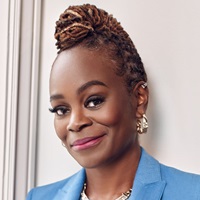 Alfiee Breland-Noble, PhD, (known professionally as Dr. Alfiee), is a is a psychologist, scientist, author, mental health correspondent, and founder of the nonprofit The AAKOMA Project. She was recently tapped as a Melinda French Gates 2024 world leader, championing innovative solutions to advance the health and wellbeing of women and girls worldwide as lead of a $20-million fund, part of the Gates’s $1-billion philanthropic initiative. For over 25 years, Dr. Alfiee has been a trailblazer in mental health and suicide prevention for intersectional youth and young adults of color.


