Kim Mills: We all have things that we want to accomplish in life. Maybe it’s writing a book, or learning a new language, or running a 5K. Or maybe you want to motivate someone else in your life to do something tough, like getting your kids to improve their grades. But no matter how much you try to bribe, cajole, or inspire, you’re just not seeing the changes you want—or making the changes in yourself. At that point, you might ask, Why am I so unmotivated? Or, Why are they so unmotivated?
Today we’re going to talk to the authors of a new book on motivation myths about what the science really says about motivation and about how our misconceptions get in the way of accomplishing our goals. We’ll explore such questions as: Do rewards work to motivate people? Does competition inspire people to excel or does it make them less motivated? What about praise? Does praising people for their smarts or abilities help them to accomplish more? Are some people just basically unmotivated or is everyone motivated in the right context or situation?
Welcome to Speaking of Psychology, the flagship podcast of the American Psychological Association that examines the links between psychological science and everyday life. I’m Kim Mills.
We have two guests today. First is Dr. Frank Worrell, a distinguished professor and director of the school psychology program at the University of California, Berkeley, school of education. He also holds an affiliate appointment in the social and personality area in the department of psychology. Dr. Worrell studies motivation in schools and educational settings. His areas of expertise include academic talent development and gifted education, at-risk youth, cultural identities and teaching effectiveness. He’s author of more than 300 journal articles and book chapters as well as five books, and he’s won numerous awards for his research. He was also the 2022 president of the American Psychological Association.
Also with us is Dr. Wendy Grolnick, a professor of psychology at Clark University. Dr. Grolnick is an expert on motivation and parenting. She’s conducted pioneering studies on the role that parents and teachers play in children’s motivation and achievement. She has published more than 90 articles in scholarly journals, and her work has been funded by the National Institute of Mental Health, the William T. Grant Foundation and the Spencer Foundation.
Drs. Worrell and Grolnick, together with Dr. Benjamin Heddy, are coauthors of the new book, Motivation Myth Busters: Science-Based Strategies to Boost Motivation in Yourself and Others, to be published by APA Books in July.
Thank you both for joining me today.
Wendy Grolnick, PhD: Delighted to be here.
Frank Worrell, PhD: Yeah, thanks for having us.
Mills: Let’s start with the first myth you discuss in the book, which is the idea that some people are motivated while others just aren’t. I think a lot of us have the idea that motivation is some kind of a personality trait—you either have it or you don’t. Is that a myth?
Grolnick: Yes, it’s a myth. A lot of times we think of motivation as something about a person: Some people are very motivated people, other people are unmotivated people. And it turns out what the science says is that motivation is really much more a function of people’s interests and the context that they’re in. Everybody can be motivated in a particular context and there are some contexts that are more motivating than others.
And I think the problem with holding the conception that some people are motivated and others aren’t, is that if we see someone that doesn’t look so motivated, we think that’s an unmotivated person, we start to treat them as a motivated person, an unmotivated person, and when we treat them as an unmotivated person, they might start to act like that more and fulfill that prophecy. So holding the idea that some people are motivated and others aren’t can really get in the way of the way we treat other people, and if we start to see ourselves that way can really get in the way of our reaching our goals.
Worrell: Yes. I would add, if I could, that in speaking to parents and teachers, they are often saying, Well, they’re not motivated. They seem so unmotivated. And I ask, Well, what are they doing? Are they not doing anything? Well, they’re playing video games all day or they’re reading—so they’re motivated to do something. They’re just not motivated to do what the parent or the teacher wants them to do.
Mills: If motivation isn’t actually a personality trait, what is it?
Grolnick: So motivation is sort of the energy that we put toward things. It’s the—where that energy comes from, what direction we’re putting it in, and it’s really a function of our own feelings and beliefs and attitudes and the way we approach different situations. And motivation is really something that is inside of us. So motives are in us, and so when we think about what motivates us, we kind of motivate ourselves and that can be a function of what’s in this situation.
So that’s why we say in the book that you can get someone to do something, you can persuade them to do something, but you can’t really get them to want to do something. You can’t make people be motivated, only—you can set the conditions, but you can’t make people be motivated. They engage and energize from within. So that makes it kind of complex. It’s not just a simple of getting people to do things. It’s inspiring the motives that they have within them to master things and persevere, and that makes it a little bit more complex.
Worrell: And so I think one of the reasons why people think it’s personality is because, as Wendy indicated, it’s internal, so it’s coming from inside and so therefore people assume it’s a trait. You have it or you don’t. But it’s that process, that energy that in fact people have in some context versus others. I’m much more likely to get off the couch to eat cheesecake than I am to do exercise.
Mills: Well, then if you’re the parent of a young child, what can you do to create conditions that will help your child be motivated as a child and be motivated throughout life?
Grolnick: A lot of my work has focused on just that issue. So we start with the idea that people have these needs. They have the need to feel autonomous, to feel they’re the owner of their actions, like they’re choosing to do things. They have a need to feel competent, to feel like they’re good at things. And they have a need to feel connected to other people. And so if we create an environment where people feel like they are the owner of their actions, they have some choice, if we create an environment that helps them to feel effective, if we create an environment that helps them to feel connected to the people around them, those are going to be the conditions under which people will be the most motivated.
So whether we’re talking about the conditions that parents create or that classrooms create or that even bosses create in their workplaces, helping people to feel autonomous by providing them autonomy, support, support for their initiations and being behind them, giving them structure so that they can feel competent and know what they’re expected to do, and feeling loved and valued and cared for and respected, that’s the kind of overall environment that’s going to facilitate motivation.
Worrell: And then kids, if we think about kids specifically, the nature of the relationship that the parent has with their child is going to affect how motivated that child is in engaging with things that the parents want them to do. The same thing occurs in the classroom. A teacher, in fact, who does not have a good relationship with their students is likely to have less motivated students than a classroom where the students love the teacher, they enjoy the teacher.
And if we think about young kids in particular, this idea of competence, so putting things that they can do or that just beyond their grasp so that if they try they can succeed is something that you want to do, because that builds up the sense of competence. And the third point Wendy talks about was autonomy. Every parenting book practically has something about, you hear the story about: Do you want to wear your red pajamas or your blue pajamas? That actually is coming exactly out of this notion of autonomy, giving kids choice. And so it’s limited choice, but it’s choice nonetheless, and that gives them a sense of control, which then will be motivating.
Mills: So it’s prep work also for bigger things to come. If you can choose which pajamas to wear, you might be able to choose which college to go to.
Worrell: Exactly. And indeed, think about the highest levels of education that we have in this country. Doctoral students choose what they’re going to do their dissertation on. So that in fact this idea of choice is really, really key and plays out throughout the lifespan.
Mills: Let’s talk about rewards. This idea is really common that you might promise yourself a treat as an incentive to finishing a difficult task at work, or parent might offer their child cash for an A on a report card. Do rewards like this work, do they increase motivation?
Grolnick: That’s a great question, Kim. It’s something we talk a lot about in our book, and the answer is it’s complex. I certainly could with a big enough reward: I could get my child to clean their room; or if the boss gives a big enough reward, he can get his employee to come in on a Saturday. The problem with rewards is that when you give someone a reward for doing something, they have a sense of motivation that’s external. I’m doing it to get the reward. It makes them feel not choiceful, it makes them feel like they are being controlled by that reward and they might want to get that reward. But what it does is it takes away from the doing of the activity for the either joy of doing it, or for the importance of doing it even.
So if you say, for example, if you eat your peas, you can get dessert, it really devalues those peas and it says you would only eat those peas if you got dessert. And a lot of times, particularly with kids, what we’re trying to do is not just get kids to do things, we can do that, but get kids to value things and to find them important. And when you focus on that external reward, you’re keeping it at that level. So instead of helping kids to understand the value of cleaning their rooms or the value of homework, what ends up happening is that people feel like I’m doing this, I would only do this to get the reward. It’s not valuable in and of itself, versus if you are working with kids and helping them to understand the value of what they’re doing and working with them to figure out how it can meet their goals, they’re going to internalize that and start to do the thing because it’s important.
Now, there probably are some things that we ask kids to do, that we ask our employees to do, that are just one-timers that are not really valuable in and of themselves. Well, then you’re asking yourself, well, why are we asking people to do things that are not valuable? But anyway, and the reward can get them to do it. But when it’s something important and it’s something that we want people to continue to do, we want people to value, we want people to really get behind, rewards can undermine that. So there’s a whole tradition of research that’s shown that when people are doing something they love, you bring them into the laboratory, they’re doing a really fun task, and you say, Hey, we’re going to pay you for every one of these puzzles you’re doing or every one of these widgets you put together. And then they’re like, great.
They do more of them. They do more puzzles, they do more widgets. Then you say, oh, the experiment’s over, we’re done. I’m going to go out and you can do some more puzzles or you can do something else. The people that were rewarded do less of the puzzles or make less widgets because their motivation has been transformed into something they do to get money. And so that sense of I do it because it’s interesting and fun is taken away, you’ve now sort of turned fun into work.
And so the nuance there is yes, you can probably use rewards to get people to do some things, but be very careful with them because if it’s fun things and interesting things, you’ll take away the fun and the interest. And if it’s things that are valuable, you’ll prevent people from moving along a continuum from doing things they have to doing things they want to. So it’s a very nuanced thing.
Mills: It sounds like it can have exactly the opposite effect of what you want. So it decreases motivation ultimately.
Grolnick: Ultimately. So it can really backfire.
Worrell: And so if we think about the example that you asked, for instance, the parent who decides to pay the kids for grades, well, that’s fine when they can afford to do so, but when they actually cannot afford to do so, then the kid may stop working. When the kid goes on to college, are they going to do the work in college if they’re not getting paid for the grade? Because again, as Wendy pointed out, it’s now become I’m doing it for the reward rather than doing it for the value or the interest that I have in the task.
Mills: There’s a lot of discussion out there in the world about whether parents and teachers should tell kids that they’re smart, and I just want to know what about praise? How does praise affect motivation?
Worrell: Well, this is something that in fact has gotten into the school system I think a lot recently. It’s related to attribution theory, the reasons why we do things. And when we tell a kid that you have done well, you are smart, that that’s why you’ve been successful, we’ve actually set the bar that in fact you have this smartness that’s fixed, and so therefore that’s why you did well.
Well, every person is going to come to a point where there’s something that they will do that will be difficult or they will have a failure experience. If in fact they think that their success is due to the fact that it’s because they’re smart, when they have a failure experience, it’s easy for them to then think, I have lost my smarts. My smarts have gone away. And so what happens rather than engaging, continuing to put more effort, then they’re likely to disengage, to become demotivated.
If instead we praise them for the process, you worked really hard on this project and look how it paid off, then what we are setting up is that in fact, not that you are smart, but that the thing that you can control, your effort, is what’s setting you up. And so this then in fact allows them to continue. And this is particularly important in every education context, which applies in work because as you go up the grade levels, things get more difficult. So you are inevitably going to get to a place where there’s something that does not come as easily as the previous task did.
Mills: What about competition? It might seem intuitive that if a student is studying for a spelling bee at school or an employee is aiming to win a competitive promotion, that they’ll be more motivated to work harder. Is that a reality or is that a myth?
Worrell: It turns out that competition, one can think of competition as one end of a continuum with cooperation. Now we know they’re separate now, but for a lot of the early research it looked at competition versus cooperation. And what we found is that in fact, when in fact competition and cooperation are directly put against each other, cooperation wins all the time, hands down because competition becomes almost some of the things we’ve talked about before. It becomes controlling, I’m doing it just to win.
But there are other things to think about. There are different competitive orientations. So people have different competitive orientations. So there are some people who are hypercompetitive, they want to win at all costs. And so these people will always make things into competition, but they may also stray over into being unethical to win because winning, it doesn’t matter what you do once you win. I think we can think about politicians and we can certainly think of many scandals in the sporting arena over the past few decades where that has played out.
But there are also people who are the type of competition that in fact is perhaps most useful is what we call self-developmental competition. So people who see competition not just as a chance to win but as a chance to grow, so that in fact, I am pacing myself. And so I did, I ran this thing in 15 seconds—I’m making it up—before I’ve done it in 14, on this trial so that in fact what I’m doing is a competition, is really a way for me to understand—am I mastering the material and how am I improving? And we found that there are people who have that sort of orientation that for them competition is not as demotivating because if they do not win, they have still sometimes—they’ve learned something about their performance.
And the other thing that we found is not just individual, but these competitive attitudes differ across cultures. So for example, in Japan, they’re much more likely to think of competitors as individuals who are helping them pace themselves, whereas in some of the western countries, competitors are people to be beaten, to be trounced. And so it really does depend on the orientation that you take towards competition. And I think Wendy may have a few things to add here.
Grolnick: Yeah, I’ll just add a little bit in. I mean, we cite—saying that competition can have some negative effects for some people in some contexts, but a lot of times it’s how we present the competition. So for example, in a tennis game, it’s a competitive game. You want to hit it so that your opponent can’t get it. By nature it’s a competitive game, but you can come into that game and focus solely on winning. That’s all that matters. And when you’re so narrowly focused on winning, it actually undermines your motivation and it actually undermines your game sometimes because you’re so focused on winning that your strokes aren’t smooth, you’re so narrowed in rather than having fun and also bettering your skills as Frank was talking about. So what we can do in situations that are competitive, let’s say our children are playing competitive soccer, is not focus so much on winning, focus a little bit more on whether the kids enjoyed the game, how they feel they played.
Instead of when your child comes home saying, Who won? Then they get their ego involved in winning. Then they feel like I’m not good enough if I don’t win, versus I’m really here to enjoy the game. And lots of times kids start playing whatever sport they’re playing to really enjoy it and then get ego involved like that because there’s too much focus on winning. So how we set it up, my daughter actually had a tennis coach who would ask her at the end of tournament, How’d it go? And she’d say, I won. And he’d say, dynamite. And she’d say, I lost. And he’d say, did you have fun? And she said, yep. And he said, Dynamite. So it’s really, it’s not just the competition of a situation, it’s how it’s portrayed. If it’s all about winning, it has that effect that especially when you lose it really can undermine your motivation and just like it’s too much pressure and it doesn’t feel good and it loses its fun.
Mills: So on the one hand you’re saying that you can’t inspire, you can’t make people motivated, but on the other hand, I’m hearing you say that there are things you can say that maybe will enhance their own motivation. Is that what we’re talking about here?
Grolnick: Absolutely. You can set up a situation where people have what they need to succeed. They know the guidelines, they know the expectations, they have some say in it, you set it up so they feel like they have some choice in it, they’re connected to the people around them. You can set up those situations and a context like that. And people will then want to persevere. They will want to try to master things and they won’t get their ego so involved in it and they won’t feel so pressured. And so you definitely can set up a classroom or a team or a home that has high expectations but also is not pressured and has a sense of valuing people’s own goals and what they’re trying to do and not putting pressure on them to win at all costs.
Worrell: And I would add that when we think about competition, right? Competition has a long history. In fact, it probably has been around as long as humans have had the cognitive capacity that we’ve had. When we think of the Olympic games, they go back to ancient Greece—why is it still with us? So inevitably competition is present in society and when somebody wins, others lose. And so they get feedback. When you get feedback, negative feedback, you’ve not won, it’s easy to be demotivated. And so even in the context with regard to your question of somebody who did not win, the way you provide the feedback can be useful in helping them maintain motivation by giving them change feedback, doing it privately, empathetically, giving them choices in their strategy to move forward.
So when we think about the, we have these negative examples of people at the sidelines shouting nasty comments at their children or at their players when in fact something has not gone the way of that particular team or that particular individual. That kind of feedback is not very helpful for motivation. And so people may end up performing, but they’re again doing it under coercion. They’re not having fun. They’re likely to, their performance is like to decrease over time, whereas if in point of fact you are getting empathetic, supportive feedback, things that can better you help you get better at doing the task, you are active and you don’t lose the enjoyment that you have, why you were doing this in the first place and you’re going to continue down that road.
Mills: Now, another myth that you discuss in the book is the idea that if you visualize success, it will come. Why is that a myth? I mean, what do you need to do then instead of visualizing success?
Grolnick: Yeah, that’s one that’s really out there in the media. If you Google “visualize yourself at the top of the mountain.” And so it turns out that there’s a lot of research, some of it by Gabrielle Oettingen and other people, to show that if you visualize the outcome, it’s kind of like your mind thinks you’ve done it and you don’t really have put energy toward the task as much as if you visualize the process of getting there, the steps that you need to get there—it energizes you to move forward and it also gives you the information you need to reach that goal.
So yeah, it’s definitely a myth that you should visualize running across the finish line. It’s really better to visualize the steps you need to take every morning, getting up, turning your alarm clock on, going out for a run and practicing and figuring out how many miles you need to go each time and so forth. And setting these smaller goals and really planning for things by saying if it’s 6 o’clock in the morning, I’ll be out there running. It gives you a plan. It energizes you for each of the steps. You can plan for all the distractions that might come in your way that will prevent you from doing it. And that’s a much better plan than visualizing the endpoint.
Worrell: I think in society we see final products, we see a Beyonce or Taylor Swift concert, we see Steph Curry on the basketball court and it seems so easy. And so this idea of this, oh, you are shooting this beautiful three-point shot and so forth. What we don’t see is the hard work from where this person was to this easy performance on the stage or on the basketball court or the football field. And that is why the visualizing itself can’t work—because the visualizing jumps over the hard work. And so in fact, you should visualize in fact, how are you going to put in the work to get to that final goal.
Mills: But what about the reverse? I mean, when I played softball for example, the coach would say, Don’t visualize yourself dropping the ball. You have to visualize yourself catching that ball in the outfield. I mean, isn’t there some truth that if you imagine that you’re going to miss the ball, you’re going to miss the ball?
Worrell: I think that in fact, we know that there are things called self-fulfilling prophecies. If you visualize yourself dropping the ball, you’re likely to increase your anxiety and so forth. And so therefore, so that’s fine. You don’t want to visualize yourself dropping the ball. You don’t want to set up conditions that are going to make, in fact, your cognitive capacity diminish. At the same time, if you visualize yourself catching the ball without practicing catching that ball, you are not going to catch it either. And so that’s why visualize yourself catching the ball, but you visualize yourself practicing catching those balls on multiple occasions.
Mills: Now, another myth that you tackle is that if you’re motivated, you’ll be successful. Why is that a myth? I mean is motivation alone just not enough?
Grolnick: We’re motivated to do a lot of things that we don’t end up doing. We say we’re really motivated to clean that attic up and it’s really important to us and we never quite get to it. So for things that are difficult, we need to have also a plan. We need to have put into place what we call implementation intentions. We need to put into place statements such as if-then statements to say, if it’s Saturday and it’s 5 o’clock, I’m going to start doing that attic. I’m going to do it for X amount of time. And so really putting into place some plans and some plans also for being distracted. If the phone rings, I’m not going to stop cleaning the attic. So having motivation is a great thing, but you also need to follow that up with some plans.
The opposite is also a little bit true sometimes for things that we don’t really feel that motivated for, but what we need to do, we can make those plans and we will find if we follow them, it’s actually not nearly as bad as we thought it was going to be. So we just need to get, so we say in our book, we say just do something, anything. If you’re feeling like you’re writing a paper and you can’t really get yourself up to do much, you don’t have a whole lot of energy, just do the references. Just do a few little things, do something because once you start, it can really get you rolling. And people anticipate that things are going to be much worse than they actually are. Even for negative tasks. Things that you don’t want to do, there actually tend to be—that cleaning that attic was not really as bad as you thought it was going to be, was actually kind of enjoyable.
Mills: You also bust a myth around the idea that structure damages motivation, that there are some people who think that there’ll be too restricted if there’s a structure around what it is that they need to do. Why is this not true?
Grolnick: We actually did a survey of people to asking them if they believe in these ideas. And a lot of people believe in a lot of these myths that we’re talking about, the structure one people, half the people said, I don’t know or didn’t seem to really know because we don’t really know what structure is. And so the problem is that a lot of times what people do is they pit structure against having freedom—that either you can have structure free environment or you feel controlled. And really there are two separate dimensions. There’s how much structure there is in the environment, how clear the rules and expectations are about what you’re supposed to do, the boundaries. We live in a world, there’s structure all around us. There’s rules and expectations. We can’t drive through a red light and so forth. It’s the way the world is.
And then there’s how that structure is imposed. Is it imposed in a way that feels controlling and pushy where you don’t have any say in it? Or is it structure that’s imposed in a way that you can have a role in thinking about it? You can put in your input. And so structure facilitates people being competent. So that’s really good for motivation. If you don’t know what you’re supposed to do on your assignment, you’re going to feel helpless. So we need that structure. We need those clarity of what is expected of us, but we also need to feel like we have some say in that like it’s not being coerced. We’re not being coerced. And so the best situation is where there are these structures, but we also understand why they’re there. We have reasons for them so that we can internalize their value and we have some opportunity to have input, some opportunity to respond to them if we think that they’re not helping us. And so for example, corporations that have clear guidelines, but their employees also have some say in those guidelines and have an opportunity to give their opinions—that’s really, really, really effective in a workplace or in a classroom. In a home.
Worrell: And we can think of this coming close to home for both Wendy and myself and Ben as well. I guess as professors, oftentimes we have students who come to us, they want to be researchers. If we just say to them, okay, decide on your topic you want to study and stuff, they are actually left hanging because they don’t know how to proceed. But if we say, okay, this is the project I’m working on, we have a variety of questions here that you can choose from, then they can look, you’ve given them some structure within which to work. They choose then which project they’re going to work on. And even as they progress through, they’re doing the dissertation, they have a committee, an advisor. Again, they are getting to make choices, but they get some structure around them to help guide them down the path. And without that structure, they’d be, even if they’re successful, it’d take out much longer time to get there.
Mills: Last question, the final chapter of your book is about structural inequality and how the inequities in our society affect motivation for individuals. Can you talk about that?
Worrell: That of course is I think a myth that was really, really important for me, and I think for all of us because again, this idea of motivation being a trait or individual, we tend to focus on the individual who’s unmotivated, and we don’t look at the context in which those individuals are. Take the example, I think one of the examples we used in the book was the wage gap, the gender wage gap. Two people start working at a firm. One is male, one is female, equal qualifications, and then the female finds out that she’s being paid 80% of the salary that the male is being paid, although she’s doing the same work, same level. Then she can think, whoa, my work, actually, she can start devaluing the quality of the work that she does. She can start devaluing her competence that, Oh my God, I thought I was smart, but I thought I was doing good work, but I’m not really, because if I were, this wouldn’t be happening.
And so her motivation would decrease, and it may appear, okay, she’s unmotivated. But what’s happening is that the context has set her up where the context is telling her that, oh, you are not as good as somebody else. And we know of course, that this applies not just to gender, it applies to ethnic, racial groups, it applies to sexual orientation. There are many sort of demographic groups within societies that are sometimes marginalized in certain ways. And so the student in the classroom, and often in these contexts as well, sometimes these people are loners or singletons, so they don’t have anybody else to even talk to get a sense of, is this normal so that in fact it really is incumbent upon teachers in the classrooms that they set—how are you responding to the students when they put their hands up? Do you have a way where in fact you are getting to every student and some students are not being left out unintentionally? I mean, it’s not always intentional. If you are a supervisor in a company, are you giving feedback and clear directions to all of the employees again in the same way? And do you have the employees help set up the structures that in fact allow for the feedback? We come back to those things about autonomy, competence, and belonging, because that’s the other thing that structural inequities do. They decrease belonging, right? Do I really fit here? And so the structural inequities can infect all three of those major aspects of self-determination theory.
Mills: Dr. Worrell, Dr. Grolnick, I want to thank you very much for joining me today. This has been very interesting. Thank you.
Grolnick: Thanks for having us. It was a pleasure.
Worrell: Yes, I enjoyed myself. Thank you very much.
Mills: And to our listeners, if you’re interested in learning more, you can order the book at www.apa.org/books. You can find previous episodes of Speaking of Psychology on our website at www.speakingofpsychology.org or on Apple, Spotify, YouTube, or wherever you get podcasts. And if you like what you’ve heard, please subscribe and leave us a review. If you have comments or ideas for future podcasts, you can email us at speakingofpsychology@apa.org. Speaking of Psychology is produced by Lea Winerman.
Thank you for listening. For the American Psychological Association, I’m Kim Mills.


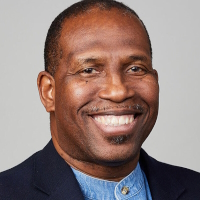 Frank C. Worrell, PhD, is a distinguished professor in the school of education at the University of California, Berkeley, where he serves as faculty director of the school psychology program, the academic talent development program, and the California College Preparatory Academy. He also holds an affiliate appointment in the social and personality area in the department of psychology. His areas of expertise include academic talent development/gifted education, at-risk youth, cultural identities, and the translation of psychological research findings into school-based practice. He is the author of more than 300 scholarly articles and book chapters. Worrell is a fellow of six divisions of the American Psychological Association and was APA's 2022 president.
 Wendy Grolnick, PhD, is a professor of psychology at Clark University. She is interested in motivational development in children and adolescents. Her research focuses on how social contexts, including homes and schools, facilitate children's autonomous motivation. She is an expert on parenting and motivation and is developing a parenting intervention designed to prevent motivational and behavioral problems in school-age children. Grolnick's work has been funded by the National Institute of Mental Health, the William T. Grant Foundation, and the Spencer Foundation.