Kim Mills: Why would someone lie about being sick or do terrible things to themselves in order to appear sick? Factitious disorder, more commonly known as Munchausen syndrome, is a mental health disorder in which people fake serious illness in order to gain sympathy, attention, and support. A related disorder, Munchausen by proxy, or factitious disorder imposed on another, is a form of abuse in which caregivers, often mothers of young children, make up or even induce illness in their kids. This is to gain sympathy and support.
How common are these disorders? Why do they go by so many different names? What’s the difference between factitious disorder, or Munchausen syndrome, and simply malingering? Are factitious disorders related to other mental health disorders? Are there effective therapies? Can a person with factitious disorder be cured of it? What about people who lie to strangers on the internet about being sick, is that a form of one of these disorders as well?
Welcome to Speaking of Psychology, the flagship podcast of the American Psychological Association that examines the links between psychological science and everyday life. I’m Kim Mills.
We have two guests today. First is Dr. Marc Feldman, a board-certified psychiatrist, clinical professor of psychiatry, and adjunct professor of psychology at the University of Alabama. He is an international expert in factitious disorder, Munchausen syndrome, Munchausen by proxy, and malingering. He has authored more than 100 research studies and five books on these topics, including his most recent book, Dying to be Ill: True Stories of Medical Deception. Dr. Feldman is a distinguished fellow of the American Psychiatric Association and has spoken to dozens of media outlets about Munchausen syndrome.
Our second guest is Dr. Janet Cahill, a clinical psychologist and professor emerita in the department of psychology at Rowan University. Her private practice specializes in assessing abused and neglected children and their families, including evaluations and treatments for factitious disorder imposed on another, or Munchausen by proxy. Dr. Cahill has consulted with many human services agencies, including the New Jersey Division of Child Permanency and Protection, the Nevada Division of Child and Family Services, and the South Carolina and Colorado Departments of Child Protective Services. She also provides workshops and training to human services professionals.
Thank you both for joining me today.
Marc Feldman, MD: It’s a pleasure.
Janet Cahill, PhD: Thank you.
Mills: In the introduction, I mentioned that these disorders are known by several different names. Factitious disorder is the official term that’s used in the Diagnostic and Statistical Manual of Mental Disorders, but most people, if they’ve heard of this disorder, are more familiar with the term Munchausen syndrome. Factitious disorder imposed on another, or Munchausen by proxy, is also sometimes called medical child abuse. Are these terms basically interchangeable? What’s the history of these terms, and which do you use for which? Dr. Feldman, maybe you want to grab this one first.
Feldman: Yeah, there’s been a lot of complexity because so many terms have been used to refer somewhat to Munchausen syndrome—that is, people making themselves sick or lying about illness—but really to Munchausen by proxy, which I do prefer to call medical child abuse. The reason I prefer that is it focuses on the fact that this is abuse, it typically involves a child being victimized, and it’s easier to understand. Munchausen by proxy doesn’t tell you very much about what the ailment is and what the behavior is, whereas medical child abuse makes it clear and it also helps focus on the child victim rather than the adult perpetrator, who’s usually the mother.
But formally, the DSM-5 and DSM-5-TR do call these factitious disorder imposed on self, in the case of what we used to call Munchausen syndrome, and, as you said, factitious disorder imposed on another for what people still tend to know as Munchausen by proxy.
Mills: Dr. Cahill, does that resonate with you? Do you also use factitious disorder rather than Munchausen?
Cahill: As a psychologist, I use factitious disorder imposed on another. That allows us to make that diagnosis. We’re really looking at the same stuff, at the same symptoms, at the same problems, but our different professional needs are if we’re going to do it, we need to do it within our own areas. I would use factitious disorder imposed on another, but honestly, for the most case we’re all looking at the same thing.
Mills: Well, let me ask you the difference between factitious disorders and simply malingering, which is basically faking or exaggerating illness. Are there cases where people pretend to be sick but they don’t have factitious disorder?
Feldman: Yeah, this can occur in—Well, let me clarify the difference between factitious disorder and malingering, but also point out that they can coexist. Malingering involves external gains, primarily going after things that are tangible, like feigning or exaggerating illness or even inducing illness to get opioid medications or disability adjudications or not guilty by reason of insanity adjudications, or evasion of military service. It’s things that when you look at the patient situation you can understand why they’ve done what they’ve done, whereas in factitious disorders in general, you have to infer psychological processes because they’re after things that aren’t tangible, like attention, sympathy, care, and concern that they feel unable to get in other ways. But as I said, we all know motivations can shift over time, they can even coexist. I never hesitate to make the diagnosis of both if that’s what’s applicable in a given case.
Mills: Dr. Cahill, let me ask you, how common do you think these disorders are? Do we have any reliable estimates?
Cahill: Well, by definition, an individual who meets the criteria for factitious disorder is doing this on purpose for their own psychological needs, and so it’s very, very hard to catch up with them. We have colleagues now who are doing some research on this, and the more we research it, the more we find it. I think it’s out there more than we expected, but it’s also difficult to get a handle on it.
Feldman: I would just add that the recognition also has occurred that Munchausen by proxy, or factitious disorder imposed on another, can also coexist with Munchausen syndrome. Somebody can be feigning illness in themselves and do it in a child as well. Sometimes we find that, and research has borne this out, up to a third of abusive moms in Munchausen by proxy cases have a personal history of feigning illness in themselves. This is deliberate deception. They know what they’re doing, there’s often considerable planning involved in executing the behaviors, the deceptive behaviors. Anyone who says, “Well, the DSM contains these two diagnoses, the mothers can’t and patients can’t be held responsible,” no, this is deliberate behavior. I always point out that pedophilia is also a mental disorder, but we certainly prosecute those who sexually abuse children. Sometimes we have to seriously look at prosecution in the Munchausen cases, especially medical child abuse or Munchausen by proxy.
Mills: It would seem that for someone to manifest either version of factitious disorders that there must have been some kind of trauma, something happened in a person’s life that led them to this behavior, one would think. How much is known about the causes of factitious disorder? Are there common threads?
Cahill: As Marc was saying, a lot of times they might have been the victims of that kind of behavior, they might have been exposed to it, so that’s possibility it might be trauma, but generally speaking, it’s a psychological need that this parent has. Maybe it could be attention behavior, maybe it could be they want to be seen as a fantastic mom, maybe they have issues of control, they want to control everyone around them. There’s multiple paths to this, but a general way to think about it is this is a parent, and Marc is correct, it’s almost all moms, who are manipulating this child to meet their own psychological needs, whatever those are.
Mills: Well, Dr. Feldman, let me ask you, how difficult is it to diagnose factitious disorders? Do you think that MDs are sufficiently aware of the syndromes so that they can spot it in patients? If people are doctor shopping, which often these people will do, can they go undetected for long periods of time?
Feldman: I actually believe that the majority of these cases go undetected. A lot of that has to do with a knowledge deficit and an educational deficit among healthcare providers. It’s actually getting better, but I, for example, did my medical school training at Dartmouth and my residency training at Duke and I never heard the term factitious or any discussion of Munchausen by proxy throughout my education. The first time I heard of it was when I was confronted with a patient in my office who had feigned terminal breast cancer for a year and a half, and I suddenly had to do a lot of research on my own to figure out what was happening. She did have a full-blown case of factitious disorder imposed on self, we did call it just plain factitious disorder at the time. But if a patient is particularly crafty, we may see no red flags. Again, as I said before, I think the majority of these cases go unrecognized.
Mills: How can an expert differentiate between malingering and hypochondria? They sound very similar. Are these disorders connected? Are they the same thing? Dr. Cahill, any thoughts on that?
Cahill: Yes, as a profession, we’ve gotten better in our ability to do evaluations that separate those things out. If we have enough information, we can make a distinction between somebody who really feels like their child is having this problem, I’m usually coming from the child perspective, but Marc is right, this can also be just an individual with factitious disorder. What we need then is we need to get tons of records and we need to get lots and lots of information, and we have to compare what the potential perpetrator is saying versus what the records are doing. If we’re careful about that and we get enough of the records and we have enough time, we can make the distinction between someone who just is really concerned about their child and messing up to someone who is doing this on purpose.
For example, sometimes if a nurse has a concern they’ll put a camera in the room where the mom is with the child. We’ve had a number of these. Now, you have to get a court agreement for that, you just can’t start putting cameras in the hospitals. But let’s say we have a camera in the hospital with a mom who says that her child keeps throwing up and he’s vomiting and he can’t focus anymore. We look at that after a while and we see that the child is not focusing, but literally the mom is putting a pillow over the kid’s head and blocking. It happens. There we go, we’re set, we know what we’re doing, we saw it with our own eyes.
Even with that, they will deny to the end of time. It’s very difficult to get them to admit they did this, but we have now better protocols whereby using information we have, it doesn’t have to be a camera, but it could be a lot of records, having someone, just a quick example, said her kid keeps throwing up when she goes to school all the time, you talk to the teacher who’s there to guard the kids at the school going across the street, she said the kid never throws up. If we can build a pattern of that, it can’t just be one thing, we can make that diagnosis with some accuracy.
Mills: Dr. Feldman, I want to ask you a question. Back in the 1990s, you coined the term Munchausen by internet. How has the internet changed how this disorder presents itself? Is Munchausen by internet as common as regular Munchausen syndrome, or is it even more common at this point?
Feldman: Well, I coined the term because people, when I lectured, would often come up to me after the lecture and tell me about online cases. Some of them were so extreme it was hard to believe that anyone else believed them, but they tend to impart this catastrophic information about illness or crisis in a gradual way that becomes believable, because who would think somebody would go online and lie about their child’s health or their own health?
Many of the support groups they would log onto are explicitly supportive, they’re there to provide health information and health support, they’re not there to question anything that goes on. But it can be explosive when it’s discovered that a person has lied online, whether about themselves or children, and it can often lead to the end of the group because the group members divide into camps of the believers, those who still believe the stories are true, and those who were finished with the group because they know they’re not.
I think there are way more Munchausen by internet cases these days than real life Munchausen cases, because it used to be that people would have to go to medical libraries, study up about illnesses, then go to an emergency room or a doctor’s office and act really, act out an illness. They had to have acting skills and not everybody does, so sometimes they were detected sometimes quite easily. But Munchausen by internet is different in that it just involves the gift of using words. You can become an expert in almost any medical ailment by spending 20 minutes on Wikipedia. It can include ailments that doctors themselves don’t know that much about. I think, again, if they’re discovered they simply go elsewhere on the internet and may continue the same kind of deception or go into a completely different group, research that one and try to be credible as they post online.
Mills: Yeah, Dr. Cahill?
Cahill: Let me add also, I agree with everything Marc’s saying, that I think also the internet has increased the number of people who are doing this. Now we have people who have a GoFundMe page for kids’ illnesses, saying, oh, the kid can’t eat and he has a gastric tube and he has this and that. They get a lot of attention and positive feedback from people on social media who’re saying, “Oh, you poor thing. We’re so sorry,” pictures of the kids with masks on and in wheelchairs, those kinds of things. I think it gives them access to a bigger audience that gives them the love and they support that they need. It’s harder in some ways to track them, but in other ways it’s easier to track them because we can go onto that website and see what’s going on. I think it’s actually increased the number of people who are doing this against their children because it’s another medium that can be very effective for them.
Feldman: There’s been research, in fact, that’s shown that if you compare the child in the hospital, and some doctors have done this, with what the mother has posted online about the child in the hospital, they grossly exaggerate. Doctors themselves and hospital staffs, if you think it’s ethical to look at what the mother has posted online, can often make the diagnosis based upon the prose and those pictures that Janet referred to, some people refer to it as medical pornography. If you have a desperately ill child, why would you post pictures coming out of every orifice you can mention to a group of strangers? Maybe you know a few people but you don’t know others. It’s perverse and it can be an important warning sign.
Mills: But how can you differentiate between a person who’s posting fake information about medical conditions on the internet in order to make money? You mentioned a GoFundMe campaign, Dr. Cahill. Do all of these people really have factitious disorder or are they con artists trying to make money? How can you tell the difference?
Cahill: Yeah, that’s a very good question. Right, again, with factitious disorder the motivation has to be their psychological needs. If on top of that, they’re malingering and getting some money, so they say their kid has ADHD so they get to send the kid to a certain school or something like that, or they have nurses, we’ve had cases where nurses are there 24/7 taking care of the kid for them, we’ve had cases where they have wheelchairs and they say the kid is dying so they get paid to go to Disneyland. These are all real cases, I know.
But again, I think we’re better with a protocol where we can begin to discriminate those things. I’ll give you a quick example, a case where I had a mom who’s telling me that the kid can’t eat. He had autism and had all these problems, but he couldn’t eat. He had to go through a number of surgeries and he had a gastric tube and those kinds of things. The caseworker I was working with, we did a surprise visit. We walked into the house and we see this kid eating the biggest sandwich we’ve ever seen in our lives, right in front of us, and the mom’s trying to dig herself out of that.
We need to look at what the mom is saying, or the perpetrator, it can be the father and other people, it can be grandparents, and then we have to compare that to other sources of information. If we’re lucky and if we persevere, we often find those differences and that’s how I would make that diagnosis.
I let him finish the sandwich, just so you know.
Mills: I’m sure he thanks you.
Feldman: He appreciates that. There have been cases of mothers starving their children to death. There’s a famous case in Colorado of a victim who died, named Olivia Gant. There, the mother made up a failure to thrive scenario and made the child sound like she couldn’t absorb nutrients. Ultimately, the child went to hospice and died based upon the mother’s instructions that no effort should be made to feed the child. It all is so suspicious as I’m presenting it now, and there were suspicions in the hospital and among a host of healthcare providers, but they never took the step as mandated reporters to alert Child Protective Services or the police, they kept it quiet. Now, with the death of the child, they have had to pay millions of dollars for their negligent care that culminated in death, and the mother is in prison.
Mills: Dr. Feldman, I listened to a podcast interview you did with a woman who had factitious disorder but seems to have overcome it, she hasn’t made up any illnesses in years. Is that common, and what are the treatments that mental health providers have when they’re working with patients who have factitious disorder?
Feldman: Well, it’s a challenge. Many people told me when I encountered my first Munchausen syndrome—or factitious disorder imposed on self—patient, that I should just drop the case because they’re needy, they’re clingy, they have no desire to get better. That is true in some cases, but I was impressed with the fact that some patients did respond really well. We were able to break through the denial.
I found that my lack of over judgment of them, my sitting with them for two times a week in an hour-long psychotherapy led them to trust that there in fact was a health care provider who cared about them and would be very consistent and not fire them from the therapy if they happen to slip up. That’s the biggest mistake that therapists make. They tend to say at the beginning, “If you do this one more time, harm your child or harm yourself, you’re out of here. I’m not going to treat you any further.” That never works. It’s like saying to a schizophrenic patient, “If you have one more hallucination, you’re out of here.” It makes no sense, it’s just crazy.
In the case I think you’re referring to, there were slip ups where she got hospitalized, but I was there for her. In fact, she came to recognize that the more she got medical treatment and hospitalizations, the less she could meet with me. It was actually interfering with something she was benefiting from. She gradually abandoned the behavior and has done splendidly. I stay in touch with her even though it was 20 years ago and she’s free of the behavior.
Mills: Does something like cognitive behavioral therapy work with people who have the disorder, Dr. Cahill?
Cahill: I’m going to talk specifically about Munchausen by proxy, so now we have the parent doing it to the child. Unfortunately, our track record is very poor. We do have a protocol that was developed by the APSAC group, which is very good. It says what we need to do is go through these steps and try to treatment them. Ordinary protocols, like cognitive behavioral therapy or supportive counseling or behavior therapy, does not work with this population.
The problem with the one protocol we have, which we’ve had some very mild successes with, is that the very first step in that protocol is they have to acknowledge that they abuse their child. We often, and so far, we get stuck at that one, we can’t get past that one. They will not agree that they did something wrong to the child. There’s actually some thoughts out there that if they did, they really didn’t have Munchausen. If they say, “Yes, I’m sorry I did this,” they probably don’t have Munchausen, but that’s our problem.
The treatment is normal treatment, a really good therapist, in the situation that Marc explained with someone with factitious disorder, yeah, that’s great. But for individuals who truly meet the criteria for proxy, where they’re doing this to their kid, the one protocol we have is not effective because the person will not admit they did anything and we can’t get past that.
Mills: Wow.
Cahill: If we can get past it, then we can help them to find ways to meet their psychological needs without hurting their children. There’s a few cases where that did happen, but the majority of them, it doesn’t work.
Feldman: Yeah. I’ve done this for 32 years or so and have only had perhaps three patients, or I should say perpetrators, who admitted to me what they had done. They all came through anonymous internet information, I ultimately found out their identities. But part of the barrier is what they’re doing is illegal in every case, and I think part of the resistance to breaking through the denial is they realize by acknowledging what they’ve done they may find themselves criminally prosecuted. It’s a real dilemma.
I’ll date myself here. Back in 1994, I published an article called “Denial in Munchausen Syndrome by Proxy: The Consulting Psychiatrist’s Dilemna.” We’re no further along in having techniques to crack through that denial than we did, honestly, back in 1994. It’s getting better, there are lots of ideas, but still I would totally agree with Janet, that that is a problem that is almost intractable.
Mills: Is factitious disorder limited to humans, or are there cases where people mistreat their pets, for example, and why would someone do that?
Feldman: I’ve written quite a bit about that in veterinary journals because I wanted to alert veterinarians that this could happen, and I sent out reprints of the articles to a bunch of vets that I know. They may indeed, and do, victimize their pets and kill their pets to extract attention, sympathy, concern. I had one case where the motive was a little bit different. The human taking care of the pet had fallen in love with their vet and keeping the pet perennially ill allowed her to stay in touch with the vet. But in other cases, they love the attention, or they may get medications prescribed for the pet, like opioids or benzodiazepines, sedating agents, relaxing agents, and use them themselves. That becomes a case of malingering by animal proxy.
Mills: Wow. A few months ago we did a podcast on pathological lying, and I’m wondering whether people with Munchausen syndrome are dishonest in other parts of their life? Does it co-occur with other mental health disorders?
Cahill: Well, by definition, they are lying and they’re doing it on purpose. Often, that will spread to other things. They’ll make up other stuff, but most of the energy is towards the child. But yeah, they’re definitely lying. In terms of other things, the thing that we have most commonly comorbid, which means the two things occur, together are personality disorders. There’s a number of those we would use. About 50% of the people who we see who meets criteria for Munchausen by proxy will also have a personality disorder.
We can do both, we can diagnose both, but in terms of if they have that, let’s say, oh, I don’t know an example, but let’s say there’s some depression or anxiety, we would target that secondarily. First order of business is to see if we can make sure this child is okay and we would try to treat that, and then we might have to go after the personality disorder later, but generally speaking, again, we don’t get there because we can’t get past the child abuse. But almost always they’ll come in with something else.
Mills: Dr. Feldman, if you suspect that someone you know may have factitious disorder, and this is for our listeners, what can you do? Are there resources people can go to for help?
Feldman: There really are resources available. I established a website called munchausen.com back in 1993. Again, I’m dating myself more than I intended to. Starting in 1996, I introduced an email capacity. Every day I hear from people who have one concern or another about medical deception. It is usually a dad or a new wife or the fiancée of the dad who’s divorced from his spouse looking for Munchausen by proxy information and a consultant perhaps to help them along with that. But I do hear from some patients with factitious disorder imposed on self and I can refer them to a variety of sources. The links on my website help, there are books on the subject, such as my own, Dying to be Ill, and some other earlier ones that I wrote. Dying to be Ill has the advantage of including personal accounts, tons of personal accounts, from patients who have worked through this or who are experiencing it. It’s written in their own words, so it resonates tremendously with patients. I’ve found that that’s been a really helpful tool.
Then for Munchausen by proxy cases or medical child abuse cases, there’s a website called munchausensupport.com that was more recently developed and has a wealth of information for anyone, whether professional or not, who might come across one of these cases in their lives. It includes legal individuals, guardians ad litem, lawyers, but also patients themselves, their families, their friends. I think that’s an important resource. It doesn’t come up easily on Google searches, but again, munchausensupport.com is the site.
Mills: Dr. Cahill, what about cases where somebody thinks a child is being a victim of basically this type of child abuse?
Cahill: Yeah, my best advice, if you’re worried, go do something about it, because they’re out there. I will also just mention too, the American Professional Society on the Abuse of Children, APSAC, is a very good resource for people to get in touch with. There’s a group of people, there’s a committee that has expertise in this area. That’s another place to go to get some help if you need it.
I think it’s really important, I think people need to get past the idea that how is it possible a parent could do this to their child. It’s really hard to get over that bump, because how could that possibly happen? I think one thing to really emphasize is it happens, it’s happening out there. If you have suspicion about that, you should either go to one of the websites that Marc just said, or you should call child protection anonymously and not mess around with it and really try to follow up on it. Now, I think child protection is getting more sophisticated about these things, they’re following up longer, but don’t let it go. If you feel something’s going on with that child, call child protection, go on one of these websites. Try to protect that child in any way you can. If you’re wrong, you’re wrong. Okay, no problem. If you’re right, you’re saving that kid’s life or you’re saving their ability to have a reasonable adulthood.
Feldman: I would also go to the police pretty routinely if it appears that it will rise to the level where the police will help. They often know nothing about medical child abuse or factitious disorder, but sometimes there’s been grossly illegal behavior. There is a consultant who’s a member of the APSAC team who is a police investigator and international expert in medical child abuse in particular. He’s always willing to consult for free with police departments that might encounter a case, and he tells them exactly what to do every step of the way.
Mills: It’s good to know there are resources out there. Last question, Munchausen syndrome and Munchausen by proxy have been dramatized in TV and movies, probably because so many of these stories are compelling, if not downright horrifying. Do you think these portrayals are giving the public an accurate picture of these disorders or are they misleading?
Feldman: Okay. I think they’re helpful overall if they’re well done in educating the public and they’ve particularly shown cases of Munchausen by proxy, but they do, as you might expect on a true crime program on TV or a fictionalized case of Munchausen by proxy, stress the most extreme and dramatic cases, like the Gypsy Rose Blanchard case, where she had her boyfriend kill her mother as a way to finally escape the abuse she’d encountered for 19 or 20 years as a result of Munchausen by proxy and having to play along with her mother’s efforts to depict her as ill. Obtaining money was a big piece of that. Gypsy Rose, the daughter, is now in prison, but will probably get out next year or the year after. She was convicted of second degree murder, even though she didn’t wield the knife. Her boyfriend, who did, is sentenced to life in prison, I think without the possibility of parole. But Gypsy Rose has said that her life in prison is much more liberating and free than what she encountered under her mother and that she doesn’t really regret what happened.
Cahill: Yeah, I would add to that. Yeah, I think getting over the hump that this could happen, I’m all for that. I agree that some of these are pretty dramatic and pretty crazy and they’re missing the little ones where they’re not just doing these dramatic things, but anything that encourages people to understand that it is possible, that this disorder exists, I think is helpful for us.
Mills: Well, I want to thank you both for joining me today. This is an absolutely fascinating topic. I really appreciate you taking the time.
Feldman: Thank you so much for having us.
Cahill: My pleasure, thanks for having us.
Mills: You can find previous episodes of Speaking of Psychology on our website at www.speakingofpsychology.org or on Apple, Stitcher, YouTube, or wherever you get your favorite podcasts. If you have comments or ideas for future podcasts, you can email us at speakingofpsychology@apa.org. Speaking of Psychology is produced by Lea Winerman. Our sound editor is Chris Condayan.
Thank you for listening. For the American Psychological Association, I’m Kim Mills.


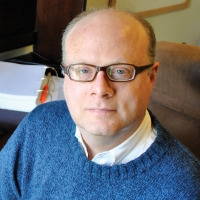 Marc Feldman, MD, is a board-certified psychiatrist, clinical professor of psychiatry, and adjunct professor of psychology at the University of Alabama, Tuscaloosa. A distinguished fellow of the American Psychiatric Association, he is the author of more than 100 peer-reviewed articles in the professional literature. Feldman is an international expert in factitious disorder, Munchausen syndrome, Munchausen by proxy, and malingering. His most recent book is Dying to be Ill: True Stories of Medical Deception.
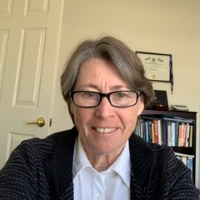 Janet Cahill, PhD, is a clinical psychologist and professor emerita in the department of psychology at Rowan University. Her private practice specializes in assessing abused and neglected children and their families, including evaluations and treatments for factitious disorder imposed on another, or Munchausen by proxy. Cahill has consulted with many human services agencies and provides workshops and training to human services professionals.

