Kim Mills: When you're stressed or overwhelmed, do you ever just go for a walk to clear your head? Many of us feel intuitively that nature is good for us. We know that spending time outside among trees or near the water can help us feel calmer, clearer, and more focused. Now, a growing body of research is proving our intuitions right. Psychologists and other researchers have found that access to nature is critical to people's mental and physical health. And in an age of constant distractions, they're also finding that spending time in nature can help us recapture our powers of focus and concentration.
So what is it about natural environments that is so beneficial for our brains? Do we need to spend time in unspoiled forests or on hiking trails to see these effects? Or can city trees and parks work just as well? What can you do to interior spaces like your home to make them feel more natural? What if you're not an outdoorsy person? Do you have to enjoy spending time in nature to benefit from it? And what implications does this research have for policymakers, urban planners, and others who shape our physical world?
Welcome to Speaking of Psychology, the flagship podcast of the American Psychological Association that examines the links between psychological science and everyday life. I'm Kim Mills.
My guest today is Dr. Marc Berman, a professor of psychology at the University of Chicago, where he heads the Environmental Neuroscience Laboratory. Dr. Berman's research uses brain imaging, behavioral experiments and other methods to explore how our physical environments, especially nature, affect our attention, memory, and emotion. His work has been featured in media outlets including CNN, The New York Times, The Wall Street Journal, and The Washington Post. His new book is called Nature and the Mind: The Science of How Nature Improves Cognitive, Physical, and Social Wellbeing.
Dr. Berman, thank you for joining me today.
Marc Berman, PhD: Thank you for having me on the program.
Mills: I want to start with a study you published back in 2008. As you explain in your book, this was an experiment that helped pave the way for basically all your future research, and it has to do with just taking a walk in a park. Tell us about that study and what you found.
Berman: Yeah, so that study was one of the first studies in environmental psychology that looked to see if interacting with nature changed people’s attention and their memory using objective measures. So often people who did these studies in the past, they would kind of just ask people, did you feel better after the walk in nature? And most people said Yes, they felt better. But we took a more sort of quantitative approach to say, okay, but does nature actually change our working memory and attention performance? So I designed a study with two of my mentors, Steve Kaplan and John Jonides, and basically what we did is we gave participants a challenging attention and working memory task called the backwards digit span task. And that was a task where you would hear digits out loud like 4, 8, 3, and you need to repeat them back in backwards order. So 3, 8, 4. And at three digits the task is pretty easy, but we keep increasing the number of digits all the way up to about nine digits. At around five digits, the task is pretty hard.
We gave participants this backwards digit span task, and then we gave them a map to go on a walk in a more natural environment—this was the Ann Arbor Arboretum near the University of Michigan campus—or we had people walk on a more urban path down busy Washtenaw Avenue in Ann Arbor. Both walks were about 2.6 miles, and it took participants about 55 minutes to complete the walks. And then after the walk, they returned to the lab and they took this backwards digits span task again. We also did two important things too before participants went on the walk. So one thing is we gave participants a GPS watch so that we could track them. So he made sure that they didn’t just go to Starbucks, that they actually went on the walk.
And then we also used the GPS traces to make sure that people didn’t get lost, because we thought if people got lost, maybe the walk wouldn’t be very beneficial, they might be too stressed out. And then we also took participants’ cell phones. So we kept their cell phones in the lab. We didn’t want them sort of chitchatting and texting on the walk. We wanted them to be really, really engaged with the natural environment or the urban environment when they went on those walks. So participants, they take this backwards digit span task, then they either go for a walk in nature or they go for a walk in an urban environment. They come back to the lab, they take this backwards digit spa task again, and then they return to the lab a week later and repeat the whole procedure again. But if they walked in the natural environment the first week, they walk in the urban environment the second week or vice versa. So everybody was their own control. And what we found was pretty amazing—that participants improved by about 20% on this difficult attention and memory task, this backwards digit span task, after they walked in nature. But they really didn’t show any improvement after they went on the urban walk. And we thought, wow, this is a pretty cool finding.
Mills: That’s quite significant. So let me ask you, why did this work? Why would just taking a walk in a park as opposed to on city streets help people do better on a cognitive test?
Berman: Well, we think it has to do with attention. And I mentioned that I did this work in collaboration with Steven Kaplan and John Jonides—and Steve Kaplan had developed a theory called Attention Restoration Theory that basically posits that humans have two kinds of attention and that our attention could be restored or replenished with different kinds of environments. So one kind of attention that Steve posited that humans have is called directed attention. And that’s the kind of attention that we use at work or at school where you as an individual person are deciding what you’re paying attention to. And it’s thought that that kind of attention is fatigable or depletable—that you can only sort of direct your attention for so long before you become mentally fatigued and it’s hard to pay attention anymore. And we’ve all had that sensation like at the end of a long workday where you might be looking at the computer screen and you’re just kind of staring at the screen and you’re not able to get anything done. You’re kind of mind wandering. It’s hard to focus. That’s what we call a directed attention fatigue state. That’s when we think it would be a good time to take a break.
That’s different from involuntary attention, which is the kind of attention that we think is automatically captured by interesting stimulation in the environment. So bright lights, loud noises, those things automatically capture our attention. And it’s thought that that’s sort of less susceptible to fatigue or depletion. You don’t often hear people say, Oh, I can’t look at that beautiful waterfall anymore. It’s just so breathtaking. I’m too tired. I can’t look at it anymore. Or, Oh, I can’t watch this really interesting movie anymore. It’s just too interesting. I’m too tired. I have to shut it off. So the idea with attention restoration theory is that if we can find environments that don’t place a lot of demands on directed attention while simultaneously having interesting stimulation to activate the involuntary attention, we could kind of restore this precious directed attention resource.
And we think that natural environments are one kind of environment that can do this. It doesn’t mean that nature is the only environment that can do this, but we think that many natural environments—think your local park where you feel safe, where there’s interesting things to look at, you don’t have to place a lot of demands on directed attention, but they have interesting stimulation to activate the involuntary attention.
There’s one other thing too that I want to mention also, which is that we think it’s important how your involuntary attention is activated. So we think that it’s important that the stimulation be softly fascinating and not harshly fascinating. So to kind of explain that, again, if you see a beautiful waterfall, it captures your attention, but it doesn’t really capture all of your attentional focus. You can kind of mind wander and think about other things while you’re looking at this beautiful waterfall. When I’m in Times Square, it’s also really interesting, lots of stimulation to capture my involuntary attention, but it sort of does so in an all-consuming way where I can’t really think about anything else. And we don’t think that that kind of attentional capture is restful. So we think that the kind of stimulation that captures your attention needs to be softly fascinating. And again, natural environments tend to have softly fascinating stimulation.
Mills: And is it mostly about the visual stimulation? I mean, what about the other things are happening when you’re in nature, whether that’s smells or sounds, bird calls, I mean, how might that affect your attention?
Berman: Yeah, we think it’s definitely multimodal. So when you’re actually out on the real walk in nature, you’re getting the visual, you’re getting the auditory stimulation, you might be getting the tactile stimulation, you might be getting the olfactory, the smell stimulation. So it’s all those things are at play. We have done studies where we show people just pictures of nature or nature videos and where it’s just a visual stimulation—in particular the pictures. And we find you can get some similar benefits just looking at pictures of nature versus pictures of urban scenes, which suggests that it’s something about the visual patterns of nature. But we’ve also had people listen to nature sounds versus urban sounds, and we get similar benefits there. So there’s something about the acoustic properties of nature, the entropy, the spectral profile that might be easier for our brains to process.
We haven’t yet tested the olfactory properties, although I have a colleague, Leslie Kay, who’s an expert on olfaction, and she’s been talking to me about terpenes, this molecular compound that’s found in nature smells and primarily good nature smells. Maybe there’s something about ingesting terpenes, but we’ve focused more on the visual and the auditory in part because it’s easier, but it’s possible that all of these different modalities are at play.
And importantly, even though we find effects of looking at pictures of nature and listening to nature sounds, which I think is important because lots of people don’t have easy access to nature, we don’t view that as a replacement for real nature. And we find that the effects from looking at pictures of nature or listening to nature sounds are not as strong as actually going out in nature. So going out in real nature is the best, but if you can’t do it, if you don’t have access or if you don’t have time, it’s good to know that you can get some of these benefits from these simulations of nature.
Mills: So I get how you could do neuroimaging while people are in a lab looking at pictures or listening to sounds, but what about people who are actually in nature? I mean, how can you measure what’s happening in their brains? Can you?
Berman: Now we can, and we don’t have results yet, but we’ve started to collect data. There now is a mobile brain imaging technology called functional near infrared spectroscopy or fNIRS, and that’s a little cap that people wear that shines infrared light into the brain, and then you can record how oxygenated the blood is, which is kind of similar to the mechanism for fMRI, functional Magnetic Resonance imaging, which has been a very prominent neuroimaging tool in psychology and in cognitive neuroscience. But as many of you know, being in an MRI scanner is not a very restful experience.
Mills: No.
Berman: It’s very tight. If you have claustrophobia, you can’t go in, you have to keep your head really, really still.
Mills: There that noise that you’re hearing, boom, boom, boom, boom through the whole thing.
Berman: So it’s not a very restful place to be testing how different environments can be restful to the brain. But luckily with this functional near infrared spectroscopy, we can actually have people go out in real nature and real urban environments, record signals from their brain to see, we have some ideas that maybe we’ll find signatures of the brain sort of being in a more rested state when people walk in nature versus a more urban environment.
Mills: Let’s talk about different natural environments for a minute. I spent 18 years living on a lake and I came to believe that just looking at the water every day made me feel better. What does the research say about experiencing these blue spaces near the water or other outdoor spaces?
Berman: Yeah, it’s a good question. People find benefits from these green spaces, so kind of more forest kind of spaces, but people also find benefits from blue spaces—interacting or being near lakes or the ocean even. And again, I think that makes sense if again, if we think about the fact that you can get benefits from the pictures of nature and nature sounds suggests that there’s something about the aesthetic of nature or the perceptual properties of nature that might contribute. So for example, natural stimulation visually has higher fractal than urban stimulation. And what I mean by fractal is if you imagine a snowflake, it’s got a shape, a characteristic shape, and if you put that snowflake under the microscope under a microscope and zoomed in, you would see some of the same shape. And if you zoomed in even more, you would see some of that same shape that it doesn’t matter at what scale, what spatial scale.
You look at the snowflake, it’s got the same characteristic shape, so that’s called fractal or scale free, that it doesn’t matter what scale. You look at the stimulus, it’s got the same characteristic shape. And nature is kind of filled with this fractal or scale-free stimulation. So you can imagine a tree, a tree has got a trunk that branches out into big branches that branch out into smaller branches, it branches out even smaller branches which branches out into leaves, then the veins have leaves, veins that branch out. There’s the same kind of branching structure at different scales of the tree, and people really like looking at fractal stimulation.
And it may be also the case that our brains might process that stimulation more fluently. And whether you’re looking at a forest or an ocean scene, they both tend to have some of the same fractal kind of structure to them. And we think there are similar things happening with the sound. So bird song, waves crashing, these natural sounds tend to have some of the same acoustic properties that we think our brains might process more fluently compared to some other kinds of stimulation you’d find in an urban environment. Like imagine a car horn honking or a car alarm going off. Nobody would say that that kind of acoustic stimulation is pleasant to listen to or really restful to listen to.
Mills: Is there a certain amount of time you need to spend in nature to get these benefits? And does it matter if it’s in a really wild environment or maybe you’re just in a manicured garden?
Berman: Yeah, those are really, really great questions. And unfortunately my short answer is we don’t know everything yet about that. There’s still a lot of work to be done. There has been research to suggest that in terms of interacting with nature, how much would you need to interact to get the benefits? Some people say you want to interact with nature about 2 hours a week. We’ve found that the 50-minute walk in nature works, but people have found that shorter walks in nature could work like 30 minutes or 20 minutes. When we have people view the pictures of nature, that’s for about 10 minutes. Same thing for listening to nature. We had people listen to nature for about 10 minutes. My knee-jerk response is to say more is better. And I think you want to have enough time in the natural environment that you kind of feel like you’re kind of away from your day to day.
But we do think that even if you only had 5 minutes, maybe listening to 5 minutes of nature sounds would’ve some benefit. But we do think the longer that you can interact with the nature the better. Another thing that we don’t really know is sort of like the cumulative effect. So if you spend 2 hours in nature a week for 10 weeks in a row, how good is that? And we don’t know the answer to that in part because those are hard studies to do, but they are necessary studies that we need to do. We just haven’t done them yet as a field.
Mills: So a lot of people don’t consider themselves particularly outdoorsy. Maybe they like taking a walk on a beautiful 70-degree day, but they want to stay inside when it’s cold or raining. Can you still get the benefits of nature even if you’re taking a walk in the rain and you’re not really loving it?
Berman: Yes, absolutely. And I think this is one of the more counterintuitive findings. So everybody says, Oh, okay, Marc, yeah, nature is good for us. We like nature. So it’s not a surprise that nature might improve attention and working memory. But what was really interesting from the walking study, the original walking study, is that we had people walk at different times of the year. So some people walked in June when it was around 80 degrees Fahrenheit in Ann Arbor and people really loved the walk. They said Marc, I can’t believe you’re paying me to go for a walk in nature. Loved the nature walk, showed really healthy attention and memory benefits. We also had people walk in January when it was about 25 degrees Fahrenheit, and people said, Marc, I did not like that walk. I was freezing my butt off out there. They did not show mood benefits walking in January, but they showed the same memory and attention benefits as the people that walked in June.
So you didn’t even have to enjoy the nature walk to get these cognitive benefits. And I think that’s really, really important that this isn’t just about liking. So it’s not like, Oh, if I eat a piece of chocolate and it makes me a little happy that I’m going to get these cognitive benefits, this is something else. This is something about how the, the physical environment can sort of rest our directed attention independent of changes in mood and that can get a cognitive benefit even if we don’t really enjoy the walk in nature.
I guess I would kind of say it’s sort of like eating spinach or broccoli. You might not think it tastes the best, but it’s good for us. Now, I will say that there must be some kind of threshold, and sometimes we have cheeky reviewers that read our papers and they say, well, what about a wildfire? Or what if you’re being chased by a bear in nature? And we’d say, of course, we don’t think that’s going to be restorative of attention because you’re going to have to use a lot of directed attention. So again, if you’re in nature and it’s 10 degrees Fahrenheit and you’re not wearing a proper coat or hat, we don’t think it’s going to be beneficial. You’re going to be too uncomfortable. But if your minimum level of comfort and needs have been met, you don’t have to really enjoy the nature walk to get the benefit.
Mills: That’s interesting. Now, some people will use their daily walks to catch up on listening to podcasts, or maybe they’ll call a friend they’ve been meaning to talk to. Can you still get the same cognitive and other benefits of nature, or do we need to unplug our devices to get the full benefit?
Berman: Yeah, unfortunately, I think you have to unplug. And there’s been some work that has shown that if you’re talking on a cell phone while on the walk, you don’t get the benefit. And I think that makes sense because if you’re listening to a podcast or if you’re talking to a friend on the phone, you’re having to use a lot of directed attention and you’re also distracting yourself from the natural stimulation that we think is softly fascinating. So we think it’s really important that you actually unplug when you go into nature. If you want to get the most bang for your buck, you want to allow all of your involuntary attention to be captured by the environment.
And I would also advocate that you go for the walk by yourself. So for example, I have kids and it’s important for my kids to be out in nature, but when I take them out in nature, I don’t count that as a nature break for me, that’s for them. And I have to find time to go out on my own. I think it is really important to not have any other kinds of distraction or things like that that are going to be requiring directed attention. You want all of your involuntary attention to be automatically captured by that natural stimulation.
Mills: A lot of people try to bring nature into their homes by decorating with plants or photos or paintings of natural scenes. And there’s even a term for this—biophilic design. Is there research that shows that there are actual benefits from biophilic design? And what kinds of decorating touches are we talking about here?
Berman: Yes, that’s a really good question too. And yes, people have found benefits from bringing natural stimulation into their home environments, even if it’s artificial. So we kind of talk about different layers of these effects. So the best thing is if you can go out into real nature, then the second best thing is—if you have a view to real nature that can be good, but if you don’t have a view to real nature, you can bring maybe plants, real plants into your office. But if you don’t have good natural light, you can have fake plants. So for example, I have a plant behind me right now in my office that’s a fake plant because I don’t have good natural light in my office. And people have found that in hospitals in different settings, having fake plants, fake greenery can have some of these same benefits.
I don’t know of studies about improving cognitive functioning with the artificial nature, but definitely improving mood, improving calmness, having even fake nature can be beneficial. And then you also brought up this idea of biophilic patterns. So people have talked about mimicking the patterns of nature. So you can imagine carpet that has some of the curved edge kind of structure of nature, but isn’t actually overtly nature. And people have found that even that can have some benefits. And we’ve found that too with some research on how interacting with nature can change what people think about. So we did a study with a private foundation that was called the TKF Foundation. Now it’s called Nature Sacred. And this foundation built like 150 parks mostly in the Baltimore, Washington, DC, Annapolis, Maryland, area. And all of these parks had a characteristic bench, a TKF bench that they called it, that had a journal entry underneath—a diary, sorry. And people could write journal entries when they’re sitting in the park. And this foundation actually transcribed all of these journal entries. So they’re about 12,000 journal entries from people sitting in these parks and just writing about what they were thinking about.
And what we were interested in was to see do different elements of these parks impact what people write about? And so the foundation also had pictures from these parks. And so with my student Kate Schertz, we actually quantified different things from these images of the parks and also quantified what people were writing about. So first I’ll start with what’s contained in the park. So one of the first things that Kate did was we had pictures from all these parks, and Kate just had people, a different group of participants. So these online participants just rate the pictures from these parks for how natural they thought the parks were.
And some of the parks were in kind of a more urban-y kind of area and had more of an urban feel, even though they were a park, and some felt like you were in more of a secluded natural environment. So it felt more natural. And then what Kate did is she did something called topic modeling, which is a way that you can convert text into something quantifiable. So she ran a topic model that kind of broke down all these 12,000 entries into 10 topics. And then what Kate could do was then say, for each journal entry, how much did it relate to this topic? And so one of the topics that we found was related to nature that people were writing about things related to nature. You said something like tree or bird or things like that. And one of the first sanity checks we found is that when people were in parks that were rated as more natural, they tended to write more about topics related to naturalness.
So that was a good standard check and pretty interesting. An even wilder thing was is that Kate also used some computer vision algorithms to quantify in these different parks how many curved edges or curved lines were in these parks. And she found that if the park had more curved lines in it or curved edges, people were more likely to write about topics related to spirituality and their life journey. So that was pretty interesting, but very correlational. Again, we are not manipulating anything. But then what Kate did was as she ran another study where she manipulated the amount of curved edges that were in pictures that people were looking at, and then had participants pick what topic went with the image. And if the image had more curved edges, people were more likely to pick the topic that was related to spirituality in their life journey.
So that was experimental, but then it got even crazier where she scrambled the scene. So now you take this image of nature and you’ve got all the edges so you can see the trees, but then she scrambles the edges, so you can’t tell what it is anymore. It’s got all the edges in there, but they’re all scrambled up. It kind of looks like a Jackson Pollock painting. And what Kate found was that even in these scrambled images, if they had more curved edges in them people, it caused people to think more about spirituality in their life journey. So that was a very sort of circuitous route to basically say that if you have curved edges, biophilic architecture in your home or in your carpeting or on your wallpaper, it might cause you to think more about topics related to spirituality in your life journey.
Mills: Wow, that’s pretty amazing. Quite an experiment. Has this research changed the choices you’ve made in your own life in terms of where you live or how you spend your free time?
Berman: Yeah, absolutely. So we purposely chose, we bought a house that was close to two nature trails, even though maybe it was a little bit of a smaller house compared to another house that we could have bought that would’ve been bigger, but it would’ve been not so close to these nature trails and also closer to more car traffic. So we are very cognizant about that. We definitely have brought more real plants into our homes. So we have a big bay window in the front of our house, and we have some big plants there. As I mentioned before in my office, I don’t have good natural light, but I have fake plants in my office. And then also too, when I’m working, if I feel like I’m getting kind of mentally fatigued, I don’t scroll the internet or scroll my, well, I don’t even have social media. I don’t get on my cell phone. I try to go out and go for a walk in nature. And I think I know, again, I have the luxury. My schedule is pretty flexible that I can do that. But I think this is important for people to consider that when you are feeling mentally fatigued, it’s not always such a good idea to try to power through. It might be a better idea to try to take a break and the kind of break that we think is going to be really beneficial as a break in nature.
Mills: What are the implications of this research for policymakers and urban planners and other people who make decisions that shape towns, cities, neighborhoods? And does the trend toward these mixed use developments, which are kind of a big thing where I happen to live, is that a good thing or a bad thing based on the research that you’ve done?
Berman: First, I just want to say we don’t think cities are bad. We think cities are really good. So I wouldn’t want anybody to take this research and say, Oh, okay, let’s all move out of cities and go into more rural kind of areas. No, we think cities are good for a number of reasons. In fact, we’ve done research to show that more populated cities have lower rates of depression per capita. More populated cities, larger cities have lower implicit racial biases. So cities are great, but we want to incorporate, want to bring more nature into cities. So we want cities to have more parks, and those parks have to be accessible and they have to be safe. So we’ve done some studies in Chicago where we had high school and college students go around their neighborhood and take pictures of parks in their neighborhood and also answer some questions about parks in their neighborhood.
And we found that in Chicago, many of the parks in the lower resource neighborhoods, these students did not feel safe in those spaces. So it’s not just enough to have the park, people have to feel safe in the park. And so we need to do all that we can to make sure that people are feeling safe and that there’s good lighting and that these parks are well maintained to get the benefit. So it’s not enough just to have the park, people need to feel safe in the park.
And then there’s a lot of things too, so I don’t want to pick on Chicago too much, but Chicago has these fantastic parks, right by the University of Chicago campus, Jackson Park and Washington Park. These parks were designed by Frederick Law Olmsted, the same landscape architect who designed Central Park in New York. But these parks in Chicago do not have the same effect as Central Park in New York.
And I think part of the reason for that is that there’s really a lot of car traffic that is right next to these parks. And I remember taking my kids one time, walking to Jackson Park by this garden, Jackson Park called the Circle Garden, which isn’t there anymore because they’ve built the Obama library. And this circle garden was a really beautiful part of Jackson Park. And as I’m walking with my kids in Jackson Park, literally a car was zooming by on the nearby street and a hubcap flew off of the car and just spun around in front of us. And I remember thinking, this is just such a shame when we have this great park here, but because of the car traffic and the noise, it’s just not having the same effect as if we could remove that car traffic. So I think again, too, so the parks need to be safe, but they also have to be secluded from a lot of this urban stimulation that we think is taxing directed attention.
So that’s I think, something that urban planners also have to think about. And then there’s lots of creative things that we can do. For example, imagine the skyscrapers in our cities if they had vines growing all the way down them, or if we had trees growing out of the top of these buildings. There’s a lot of creative things that we can do to try to put more nature into our cities. And I think that’s something that we really want, want people to think about.
And even another thing too is that the architecture. So we’ve done studies where architecture that’s more biophilic, that mimics more of the patterns of nature—so you can imagine Gaudi buildings in Barcelona or even on the University of Chicago campus, we have this beautiful gothic architecture that has all these curves to it that mimics patterns of nature. We actually find that people really prefer that kind of architecture, and they actually see nature in that architecture, even though there is no overt nature in it. Now, building in that way might be more expensive, but if it leads to these potential cognitive benefits, maybe it would be worth it. So I think that’s really important to think about too, versus some of the architecture that’s around us that’s very brutalist, that just has straight lines. And we find people don’t really like that kind of architecture. So again, this is beyond landscape architects, but even actual architects that are building the actual structures, if they can incorporate more of these biophilic designs into their architecture, we think that can have benefits to.
Mills: So just to wrap up, what’s next for you? What are you working on now? What are the big questions you want to answer?
Berman: So I think we definitely want to start getting direct brain measurements of people interacting with nature. So that’s what we’re doing with fNIRS now, where we’ve started to collect data from about 20 people who have been walking in more natural environments versus more urban environments while wearing this fNIRS device. And we want to see what are the changes in the brain that are occurring when people are walking in real nature versus more built environments. We’ve also become very interested to try to quantify what the soft fascination really mean. So we’ve started to look at thousands of nature and urban images and analyzing them with a JPEG compression kind of algorithm. So JPEG compression is a means that our computers and our phones use to try to lower the amount of memory that images take up. So for example, let’s say we have an image that’s 100 megabytes. Oftentimes what our computers and what our phones will do is compress that image down it to fewer bits. And usually what that requires is kind of throwing away some information, throwing away some of the little fine grain details. And to our human eye, we can’t tell any difference. But it saves a lot of room on our computers, on our phones. And we’ve been wondering, is it possible that nature scenes get compressed down into fewer bits than urban scenes? And it turns out that yes, that’s true. So nature scenes, the more natural the scene is, we’re finding that it gets reduced to fewer bits compared to urban scenes, and maybe our brain is doing something similar related to that.
We’ve also had people tested people’s memory of nature in urban scenes. So we show them a bunch of different images and then ask them later, do you remember this image or not? Did you see this image or not? And it turns out people have better memory for the more urban scenes than they do for the more natural scenes. And you might think, well Marc, that sounds like a bad thing, but we think it’s a good thing. And we think it means that when people see the nature scene, they’re not processing it as deeply and then they’re not remembering it. And so maybe it’s sort of means that it’s easier for our brains to process. So that’s been kind of cool. And then to kind of bring it together, we’re finding that part of the reason why nature scenes are less memorable is because they’re more compressible. So part of the reason why you don’t remember the nature scenes as much is because they’re more compressed down, that more information is thrown away and suggesting that maybe our brains are doing some kind of jpeg like compression on these nature scenes.
Mills: That’s pretty fascinating. Well, Dr. Berman, I want to thank you for joining me today. I think this has been really interesting. I hope our listeners have found it interesting as well, and that they’re going to go out and take a walk in nature after listening to you.
Berman: Absolutely. And thank you so much, Kim, for having me on the program.
Mills: You can find previous episodes of Speaking of Psychology on our website at speakingofpsychology.org or on Apple, Spotify, YouTube, or wherever you get your podcasts. And if you like what you’ve heard, please follow us and leave a review. If you have comments or ideas for future episodes, you can email us at speakingofpsychology@apa.org. Speaking of Psychology is produced by Lea Winerman.
Thank you for listening. For the American Psychological Association, I’m Kim Mills.


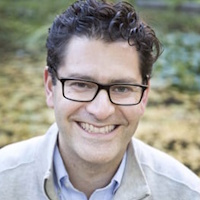 Marc Berman, PhD, is a professor of psychology at the University of Chicago, where he heads the Environmental Neuroscience Lab. He’s the author of Nature and the Mind: The Science of How Nature Improves Cognitive, Physical, and Social Well-Being.