Kim Mills: Speaking of Psychology is taking a summer break, so we’re rerunning some of our favorite episodes from the past. In 2022, I talked to Yale University psychology professor Paul Bloom about why people like to do scary and difficult things—from watching horror movies to running marathons—and the connection between pleasure and pain. I hope you enjoy this episode from the archives. We’ll be back with new episodes in 2 weeks.
What makes for a good life? You might think that the best life would be one of unadulterated happiness, where moments of pain and suffering never intrude on your comfort and joy. But why, then, do people often seek out hardship? Many of us like to watch scary movies or listen to songs that make us cry. We choose to run marathons and to raise children, even though both of those pursuits inevitably come with struggle and pain. Why do we do these things? What do we get out of the pain and suffering that we choose to experience? What does it add to our lives?
And what about pain that we don't choose? Do illness, poverty, or the death of a loved one add meaning our lives? Does unchosen suffering make us better, stronger, or more moral? Or is it always a bad thing? Welcome to Speaking of Psychology, the flagship podcast of the American Psychological Association, that examines the links between psychological science and everyday life. I'm Kim Mills.
Our guest today is Dr. Paul Bloom, a professor of psychology at the University of Toronto and the Brooks and Suzanne Ragan professor emeritus of psychology at Yale University. His most recent book is The Sweet Spot: The Pleasures of Suffering and the Search for Meaning. More broadly, he studies how children and adults make sense of the world, with a special focus on pleasure, morality, religion, fiction, and art. He is co-editor of the journal Behavioral and Brain Sciences. And in addition to scientific publications, he writes for popular outlets, including the New York Times, The Atlantic and The New Yorker.
Thank you for joining us today, Dr. Bloom.
Paul Bloom, PhD: Thank you for having me, Kim. And that was a wonderful introduction.
Mills: Great. Well, we're going to be talking about a lot of those. So let's start first by talking about what you mean by suffering. That's a pretty strong word, and some people might think that an experience must be really terrible in order to be categorized as suffering, but you take a wider view. So what's your definition?
Bloom: Yeah, I think it's important. It's a good question. It's important for us to be clear what we're talking about. Some people only use suffering to refer to real heavy duty experiences, and I'm very interested in those. I'm very interested in extremes of pain or anguish, but the puzzle I set myself to solving is why we pursue suffering in a broader sense. So, it includes the pain you might experience running a marathon, or BDSM. It includes effort, including severe effort, but also milder stuff. Why do we like chicken vindaloo or spicy foods? Why do we like the effort of a crossword puzzle? And so, if somebody says, “Oh, that's not suffering in my heavy duty sense,” I totally agree. I'm using suffering in a broader sense.
Mills: So we're a little bit limited, then, by our language? I mean, English doesn't have many nuances for those types of strains that we place on ourselves.
Bloom: That's right. I was trying to think of another single word – “bad experience” is as close as I could come to it. But another way of putting it is, if we don't want to use the word suffering at all, I'm interested in why we voluntarily expose ourselves to experiences that, under normal circumstances, we would avoid. So, typically pain, effort, struggle, emotional anguish are bad. We want to avoid them. The puzzle I'm interested in is why do we sometimes seek them out?
Mills: Well, why do you believe, then, that some pain and suffering are necessary in life?
Bloom: When I started writing this book, I had one answer in mind, which was, I was very interested in the role of pain and suffering as a source of pleasure. Why do we get a kick out of it? Why do we get a kick out of spicy foods and BDSM and all sorts of things, scary movies? But as I began to write the book and read and talk to people and think about this, I made the argument that there's something else going on. I think something deeper, which is we're not only interested in pleasure, and some of the voluntary pain and suffering and struggle we pick up is in service of other goals, like morality, or having a meaningful life, having a life of transcendent value.
Mills: So, let's dig into the connection, then, between suffering and pleasure just a little bit more. That touches on several things that I mentioned in the intro, like watching horror movies, listening to sad songs. On a more extreme end, you've talked about BDSM. I just want to tell some of our vanilla listeners that refers to bondage, dominance, submission, sadomasochism, sexual practices. And which you talk about at length in the book. You delve into several possible explanations for why so many of us seem to actually enjoy doing the things that bring us either physical or emotional pain. So what are the fundamental reasons for that in your view?
Bloom: Yeah, I should also say I'm kind of a vanilla person myself. And so, I end up talking about experiences that I end up reading about, but not necessarily participating in, just to clear that one up. I think there are many ways in which suffering can give us pleasure. And a lot of my book is review of the work of other psychologists and neuroscientists and philosophers.
One way is contrast. So we tend to judge and experience things, not as absolutes, but relative to what's gone before, relative to what we're expecting. And sometimes I think the pleasure of something can be in terms, we establish suffering and difficulty and pain, because it feels so good when we stop. The bite of hot curry is painful in and of itself, but then you drink this cool beer and you feel really good. You go for a hard run and you stop and you feel great. The bath is hot, but then it's just right. And so, some of it's contrast.
Some of it's the pleasure of mastery. You put yourself in a difficult situation, running is a good example, or something scary, and you cope with it. And you feel satisfaction that you're coping with it.
Some of it, just to go to BDSM, as Roy Baumeister's theory of BDSM is that it's an escape from the self. And you might think that's some kind of a weird voodoo-y way of talking about it. But sometimes our self consciousness, our self-thoughts are unpleasant, and good, sharp, sudden pain is often a way of clearing our head. And so, those are three stories, and there are others, as to why we might get pleasure out of pain.
Mills: So, you also talk in the book about the difficult things we do that we don't necessarily enjoy, some of which you've just articulated. Why do we find meaning in pushing ourselves to climb mountains and run marathons? And is actual suffering an essential part of that? Is there no meaning if there's no suffering?
Bloom: I think there's no meaning if there's no suffering, or at least if there's not a chance of suffering. I think our common sense notion of a meaningful activity is one that has challenges and difficulties and struggling. It's a very difficult, I think impossible thing to say, “Wow, this is a very meaningful thing I do, and it's totally easy.”
This is why sitting on a sofa watching Netflix isn't meaningful, but climbing a mountain might be. It's why a nice nap isn't meaningful, but having children might be. And it's an important distinction because when we engage in certain activities, I don't think we're actually seeking out suffering and pain. I say, “I want to run a triathlon. I want to run a marathon.” And I want to run it, I'm actually hoping to have a great experience. I'm not seeking out blisters and sprained ankles and struggle and disappointment. But without the possibility of pain and difficulty, there'd be no enjoyment in it, no deeper satisfaction. So, yeah, I think to some extent, suffering and meaning are inextricably linked.
Mills: Do people who have more meaning in their lives, then, usually have less day-to-day happiness? Or can you maximize both?
Bloom: You can maximize both. There's been some very nice research. And again, there's work by Baumeister and Kathleen Vohs, and their colleagues, where they ask people about how happy your life is and how meaningful your life is, and ask those sorts of questions. And one finding is that these things are not essentially in opposition. In fact, they're correlated. Somebody who says their life is happy is more likely than not to say their life is meaningful and vice versa.
But at the same time, they're not one and the same. So, they looked at people who say they have happy lives versus very happy lives versus very meaningful lives. And the people who say they have very meaningful lives report more anxiety, more struggle, more difficulty, more stress. They had more children. They might be happy, but they're struggling. Well, there are people who claim to have very happy lives whose lives contained relatively less struggle and difficulty.
Mills: Your book also talks about the connection between suffering and morality. The idea that if you do something that in any way benefits yourself, people won't see it as altruistic or good. So, where does this idea come from that doing good has to somehow hurt? Has to be painful?
Bloom: I don't know where it comes from, but I know it's true. There's some nice research by colleagues and friends of mine, Daylian Cain and George Newman, who were at Yale with me. They have discovered, talk about what they call tainted altruism. And it turns out that, and there's real world examples, they would do this in the lab, that people who do good but enjoy it and gain something from it, we don't think they're as good people. We like our people who do good to suffer.
And this shows up in the charities we do. So, you ever ask yourself, why are there fun runs? Why do people pour ice water over your heads to raise money for treatments for ALS? Why don't they have fun massages? Or why don't they eat chocolate croissants to raise money for ALS? Well, the answer is, for whatever quirk of our heads, we relate suffering and morality. So, if all of a sudden I want to raise money for a good cause, there got to be suffering in it.
Mills: It rings true in so many ways, and it's really hard to put my finger on why. Years ago, I did an AIDS ride, for example. Three hundred miles over three days. And I mean, that was a killer. And yeah, I raised money, but I, and I also had a great sense of achievement. If I had just walked for three days, it probably would've been painful too, but riding a bike for three days, man, that was a killer.
Bloom: I hear you say this, and I think you're a great person. And if you tell me to raise money for this worthy cause, instead you participated, you lay in your sofa and you watched HBO and drank beer, I think, “Okay, this is something, but no, you're not as good a person.”
Mills: Let's talk for a minute about the difference between chosen and unchosen suffering. Terrible things happen to people all the time. People get ill, they're victims of violence, their loved ones die. And there's a theory that's become popular called post traumatic growth, which says that people who endure trauma see some positive growth afterward. That they somehow become kinder or wiser. And you argue against that. So, can you talk about that a little bit?
Bloom: I do. And it's an absolutely critical distinction. Right before my book came out, I had a summary of it published in The Wall Street Journal. And you get emails, and right away, I got email. And the person said, “You are such an idiot. You are pro suffering.” And she said, “I live with chronic pain. How can you be so cruel to say that my life is benefiting from my suffering.”
And I wrote to her right back and said, “No, there's a distinction there, which I actually make, which is chosen suffering, I think, has a lot of benefits. And there's a lot of value. Unchosen suffering is a very mixed bag. Unchosen suffering—and we're living in a pandemic, there's plenty of unchosen suffering around—but it's by no means clear unchosen suffering has the benefits of chosen suffering.
Now, when I say this, I bump up against people, some really respected scholars, psychologists, psychiatrists, who say, “No, very often, unchosen suffering, the death of a child, a severe serious illness, your house burns down, you lose your job, has benefits.” They call it post-traumatic growth, to distinguish it from post-traumatic stress disorder.
But I’ve got to say I'm a skeptic. I review literature in my book saying that, although people often think that bad experiences make them stronger—and I'd be crazy to deny that, in some cases, a bad experience could make you stronger, people are complicated—there's no regular rule that bad things are good for you.
The good news is we seem to be very resilient. Bad things don't hurt us as much as we often think they will. But bad experiences are actually, for the most part, not good for us. And to say otherwise is wishful thinking. And I also think it's something important to get right. Because if you're wrong and you tell people, “Oh my gosh, your kid died. Well, I'm sure there's a lot of growth going to happen.” It sets up unrealistic and unfair expectations. I think a better thing to say is, “That's horrible. It's going to take you time, but I hope you recover.”
Mills: And is it a case of people rationalizing to themselves, in a sense? Because there's no way to turn the clock back and make it not happen. You can't compare, “My life went this way, or my life went that way.” It's going the way that it's going. And so, you've got to find some meaning from a terrible thing that happened to you.
Bloom: That's right. And in some way you could be viewed as what psychologists call cognitive dissonance or Dan Gilbert calls the psychological immune system. Which is a healthy mind, when faced with some bad news, tries to make it good news. Tries to say, “Well, I'm sure there's an upside to this.” And I'm not sure it's bad to come in with that attitude, but I think this belief is largely a cognitive illusion. That in fact, bad things often don't have upsides. Be nice if it were so, but it's, for the most part, not true.
Mills: There's been a lot of discussion recently about how politically polarized the United States is right now. And even in the face of a traumatic event, like the COVID-19 pandemic. How unusual is this, when communities experience suffering together, like in a pandemic or a natural disaster? Does it usually bring people together or does it usually tear them apart?
Bloom: It depends on the crisis. So, a lot of people, including some friends of mine, when this pandemic began said, “Well, here's the silver lining, which is there's an excellent historical record that, when bad things happen to people, it brings them together. It fosters a sense of community, of love, of meaning.” People give examples of tsunamis and earthquakes, the 9/11 attacks, the bombing of London during the Blitz in World War II.
Rebecca Solnit has a wonderful book called A Paradise Built in Hell, where she talks about how these things give meaning to community. And she said, “In some way, here's the silver lining of the pandemic. We're all going to come together.” But the problem is this doesn't work for pandemics. Stories of the Spanish flu suggest that, during that time, people just got mean. They didn't form communities. They were increasingly antagonistic towards immigrants. And there was not much positive.
Because what happens in this sort of crisis is it isolates us. We are not dealing with COVID by gathering in the streets and celebrating, or keeping a stiff upper lip as, you know, the bombs fall from above. We're all sitting at home, ordering from Uber Eats and staying by ourselves. It's isolating. I wish it weren't so. But not all crises lead to this sort of solidarity and growth. This one certainly has not. And this one, and this is not something I study, but just an observation, seems to have fueled political polarization rather than ended it.
Mills: But let's switch gears for a minute here. Your previous book was called Against Empathy. And in it, you made a counterintuitive argument that empathy is often a bad thing, that it's a bad basis for making moral decisions. Can you talk a little bit about the idea?
Bloom: Yeah. A friend of mine tells me that my books are “everything that looks good is bad and everything that looks bad is good.” But I stand by my anti-empathy argument. I have to begin with the most boring all ways, which is by defining my terms, because some people use the term empathy to mean understanding other people, and I'm in favor of that. And some people use empathy simply to mean being good, being kind, being loving, being a mensch. I'm in favor of that.
But there's a sense which a lot of psychologists use it, and a lot of people use it, which is feeling the pain of another person. And a lot of people say, “Well, to be empathic, to be a good moral person, you have to feel the world as others feel it.” And I argue that this is a horrible moral guide. And I have many arguments, but the main argument I give is that there's a million studies, plus common sense, that tell you that you it's most natural to feel empathy for somebody you look like, or someone who's a member of your tribe, or speaks the same language. I can naturally feel tremendous empathy for other professors in my department, for my wife and my kids, for my neighbors.
But we don't naturally feel empathy for people we're afraid of or who don't look like us or speak a different language or live in another country. And fortunately, I argue, we have other moral resources. We have compassion, we have love, and we have rationality. And even though I might not feel empathy for somebody in a faraway land, or for someone whose political views differ from my own. I can understand they're people just like me, and I could extend my natural compassion towards them.
Mills: So, given that you seem to have an affinity for making counterintuitive arguments, where do you go next? What are you looking at now?
Bloom: I'm currently working on a book, which is an introduction to psychology. But not a textbook, not a book for the classroom, but a popular book that somebody who's just interested in psychology could pick it up. The subtitle right now is An Opinionated Tour of the Mind. So, I'm sure there's going to be parts where I'm going to tell you what seems to be good is bad and vice versa. But I don't expect this one to be particularly controversial. At least I hope not.
Mills: I would think that you'd have quite an audience for it. I mean, what we find at the American Psychological Association is a great deal of interest on the part of the general public in understanding more about psychology and how it works, what it does.
Bloom: Well, as my grandmother would say, from your mouth to God's ears.
Mills: Well, thank you so much for us today, Dr. Bloom, this has been really interesting and I wish you good luck with your upcoming book. Thank you.
Bloom: Thank you so much. And this has been a wonderful conversation. I really appreciate you having me here.
Mills: You can find previous episodes of Speaking of Psychology on our website at speakingofpsychology.org, or on Apple, Stitcher, Spotify, or wherever you get your podcasts. If you have comments or ideas for future podcasts, you can email us at speakingofpsychology@apa.org. That's speakingofpsychology, all one word, @apa.org. Speaking of Psychology is produced by Lea Winerman. Our sound editor is Chris Condayan.
Thank you for listening. For the American Psychological Association, I'm Kim Mills.


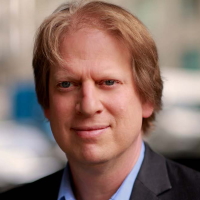 Paul Bloom, PhD, is a professor of psychology at the University of Toronto, and the Brooks and Suzanne Ragen professor emeritus of psychology at Yale University. He studies how children and adults make sense of the world, with special focus on pleasure, morality, religion, fiction, and art. He is the author of six books, including his most recent, The Sweet Spot: The Pleasures of Suffering and the Search for Meaning. He is past-president of the Society for Philosophy and Psychology and co-editor of the journal Behavioral and Brain Sciences. He has written for scientific journals such as Nature and Science, and for popular outlets such as The New York Times, The Guardian, The New Yorker, and The Atlantic Monthly.