Kaitlin Luna: Hey everyone, it's Kaitlin Luna host of Speaking of Psychology. This episode was recorded during APA's Technology Mind and Society Conference held on October 2019 in Washington, D.C. I was away on maternity leave during that time, my colleague Kim Mills was a guest host. We hope you like this episode.
Kim Mills: Hello and welcome to Speaking of Psychology, a bi-weekly podcast from the American Psychological Association that helps explain how the science of psychology is connected to everyday life. I'm your host Kim Mills. There's been a great deal of media attention focused on shootings in which a white police officer fired on a black or non-white suspect. Psychology has for years performed research to determine whether racial animus plays a role in such shootings. These studies have usually entailed having participants sit in front of a computer screen and respond to images of suspects who pop upholding a gun or benign objects such as a wallet or a can of soda. These experiments are helpful, but is there a better way to study this phenomenon so we can curb these types of shootings?
I'm here today with Dr. John Tawa of Mount Holyoke College, who has developed a new and perhaps more realistic method for testing these responses. Dr. Tawa is an assistant professor of psychology at Mount Holyoke, where he studies the processes that both hinder and help race relations. He's particularly interested in relations between minority groups, such as between blacks and Asians. Dr. Tawa has found that virtual technology is a particularly powerful medium for assessing integral behavior. For example, in one of his studies, Dr. tower had participants create avatars that resembled themselves and interacted in the virtual world Second Life. We'll talk in a few moments about what happened between these groups.
Dr. Tawa, let's start by talking about your research into police shootings. Could you describe the design of your study and how exactly it differs from other experiments that don't use virtual reality?
John Tawa: Sure. Yes, I want to just say one thing that I don't intend it to be better than, like a better method than. I think that the research that you described where people sit in front of a computer has been really impactful. I want to say that's established that that is the case that people are faster to shoot on black suspects. They have greater difficulty differentiating weapons and benign objects in the hands of black suspects compared to white suspects and archival data too.
Starting in 2015, the Washington Post started just making freely available online every record of any individual killed by the police and that data is the raw data is available online. A quick analysis will show you that black and African Americans are way over-represented in that database relative to their population. They're more likely than white suspects to be running or fleeing the scene when they're shot. In fact, about twice as likely, and about twice as likely to be unarmed when they're killed.
My point here is that, in some ways, what we're trying to do with VR is, is not necessarily approach that idea. We're taking that as a basis, there's been quite a bit of research that's established that. What VR does that's really exciting and what it has the potential to do is really immerse people in scenarios where they may experience things like fear, physiological arousal. They may, for example, have not known necessarily who this suspect is, the suspect might come from behind them or from the side. There's an unexpected element that you can't quite get from sitting in front of a computer and then what our real interest is, within that context, be able to look at what kinds of cognitive processes and what kinds of emotional processes are interacting to create bias.
Mills: What do you find and what is different about the brains of people when they're in these situations?
Tawa: Well, I do want to say this, that what we have now is some preliminary data from a sample about 45 Participants, none are police officers, about half our criminal justice majors. It's just a preliminary sample. I do want to say that one of the first things —We actually just completed our first analysis of that data. One of the first things that I was interested in looking at was about how people's beliefs about the concept of race affect how they interact with suspects in the VR. This is just been an interest of mine, what we call racial essentialism, the extent to which people think of races as naturally distinct from one another, and as biologically or genetically different from one another.
What we're seeing in other research is that that belief set is really related to a host of really bad inter-group outcomes. People are less comfortable interacting with people across different races, they're less likely to make friends across races, they have more difficulty recognizing other people's faces, just a whole host of bad consequences. Yes, that's one of the first things that I looked at was how people's beliefs about race impacted their shooting decisions. Here's one of the interesting things about behavioral research is that you have so many ways to operationalize outcomes.
This one, in particular, is something that's been done in those previous studies, which is just to look at reaction time. How fast are people when a weapon or a benign object is drawn, what's the amount of time it takes them to decide to shoot? What we're finding is that when you look at how people interact with the black suspects, that there is a significant correlation between beliefs about race as distinct and quicker reaction times. The more people think of other races as distinct, that leads to quicker reaction times, but only towards black suspects. When we do the same thing with white suspects at the moment. We don't have any correlation.
Mills: That's amazing, but what you're saying then is that you really not tested with police officers at this point, it's just an average citizen.
Tawa: That's right.
Mills: In a sense and finding similar reactions. Is this something that maybe could help an average citizen understand what's happening in these police shootings? Is the information useful in that respect?
Tawa: That's right. It is my ultimate goal to be able to do this with police officers and that's something that's in the works now. Yes, that's the ultimate goal, but is this useful for civilian or non-police officers? I think absolutely. One of the reasons that I've in the past been interested in racial essentialism is because I'm an educator. To me, that's something that you can just teach people that this is now what races and presumably that should have all types of positive effects. Now, in the past I've studied things like interactions with diverse others. This is the first time I've re ally gone into something specifically related to police violence, but yes, absolutely.
Mills: How prevalent is this notion of racial essentialism? The idea that race is something biological or genetic.
Tawa: That's a great question. I can just tell you what I know from a study that I did, using, I'm going to call it a national sample that might be a little generous. It was a sample I collected on Craigslist, basically, targeting major cities in the US. The purpose was to get outside of a college student sample and to try and get a racially representative sample with age diversity, education diversity. I ended up with a sample of about close to 600 people and asked them a series of questions about their beliefs about race and not just the question. Do you think race is biological or not? It's sort of call it like a depth of essential list model so that the sort of deepest level of essentialism is what we call speciation or the idea of people thinking that races are actually different species or that the different races have their own Adam and Eve, for example, that was one item on this test or the idea that races represent different departure points on the evolutionary scale. Deep level of socialism. That item in our "national sample", that item was endorsed by about 25% of the population.
Mills: That's amazing.
Tawa: Yes.
Mills: Where would people get that idea? Don't they understand what species are? I can't answer that myself. I guess we don't teach science very well.
Tawa: Sure. I have a thought about that. Let me just scale down a little bit because the less depth-- How do you say it? The less deep beliefs were probably endorsed more so I want to make sure that's clear. Just basically it's about, what we call genotypic essentialism, the belief that you could, for example, determine somebody's race just looking at their bone structure or through an autopsy or just by looking at genes and DNA that was endorsed by about 50%.
Mills: Wow.
Tawa: Yes. Where do these beliefs come from? This is something that I've thought a little bit about. When you take surveys, is it a belief or is it like an empty set and then somebody gives you a statement and you hadn't thought too much through it, but it sounds right. If that's true, I think that's still impactful, that somebody could look at a statement like different races originated at different parts of the earth and you hadn't thought it through ever in your life.
Then you say, "Yes, I think that's true." That means something too, but that's a little bit different than actively promoting. That's one thing that's unclear. I'll tell you that, you know, I'm 42 years old and the reason I'm telling you that is to say that when I was in eighth grade, I remember my science textbook telling us about the three races.
Mills: Where did you grow up?
Tawa: In Western Massachusetts. In reading that there were Mongoloids, Negroids, and Caucasoids. Somebody with Japanese heritage and white hair, just trying to understood where I fit in. I guess what I'm saying is, I don't think I'm that old, I'm only 42.
Mills: [laughs]
Tawa: That's what I was taught explicitly.
Mills: Yes. That's pretty astonishing.
Tawa: Those beliefs were explicitly taught. Then I think we entered a color blind era, where we just weren't supposed to talk about race, but we didn't undo those deeply rooted beliefs that I think people held.
Mills: When you look at that question about racial essentialism, demographically or in terms of race and ethnicity, who tended to be believed more in the idea of essentialism. Was that white people believed that more? People of color believed it more? How did it split up?
Tawa: People of color, in my sample so far, I have had stronger levels of racial essentialism, but it disappears when you control for immigration status. What I think that might imply is that growing up in a more homogeneous environment might actually promote those ideas. That's the most sense that we can make out of that.
Mills: Can you talk a little bit about the research that you did in Second Life and how you pitted or had people create Avatars and then pit against each other?
Tawa: Right. It's my first attempt to use technology to try to study behavior as it's happening rather than relying on self-report or survey. For that study I had people create an Avatar in the program, Second Life which is a free- more people are familiar with the program Sims, but it's similar to that except that all the users are online and so you can create an Avatar. That looks relatively realistic and then you can interact with one another in these virtual environments.
One of my, I would say, theoretical interest is in terms of how perceived competition for resources creates the sentient particularly between minority groups. It has a little bit of an asymmetric effect and that it impacts minority groups more so than each minority relationship to the dominant group. When people feel like they're competing for resources they think of resources as zero sum, so more for me means less for you, more for you means less for me.
Mills: What are the resources in Second Life?
Tawa: What we had to do was model it, right? What I did was I had people create these Avatars that look like themselves. They would interact in these groups of about 20 at a time. Then in some conditions we call a Utopian condition, actually they weren't competing for any resources. They were just told that at the end of the study somebody would be randomly picked for a $300 stipend.
On the other hand, sometimes, what we did was we said that, "Well, your job is to assemble a team of people that you think are the most intelligent and hardest working." You're trying to form a business group to simulate this economy. In the end the team that the people have formed, the strongest groups, like that, have a better chance of winning a $300 gift card.
Now, suddenly you're interacting with people a little differently because you're evaluating people for how intelligent you think they are. How hardworking you think they are. It dramatically changes how people interact to one another. Maybe relying on stereotypes even in the virtual world. What we saw, one of the things that I like about doing this in a virtual environment is that, Second Life is, everything's on a grid, like an XY coordinate grid.
You could look at actually physical distances between people and how those distances changed over time. What we saw was that, when people were competing for resources, it was the black and the Asian participants that gradually, over time, moved away from each other. When they weren't competing, actually the black and Asian participants moved closer to one another. That wasn't actually true about how they moved in relationship to the white participants.
Mills: How did they move in relation to the white participants then?
Tawa: In the resource competition condition they, everybody moved away from each other. It was not linear, let me just this.
Mills: [chuckles]
Tawa: Basically what happened was they-- In the resource competition condition there was a coming together. People approached one another.
Mills: Were they forming groups in order to succeed?
Tawa: I think what was happening was, they are scrutinizing one another. Then it had this adverse effect wherein they pulled apart. It was a U-shape. If you look at it over time, they would come close together and then they will pull apart. That U-shape pattern was true for everybody, but it was just significantly stronger for black and Asian participants in relationship to one another.
In the Utopian condition, that's what we called it, actually there was still a gradual, it was more of a gradual movement away, but actually the black and Asian participants in particular had a gradual movement towards one another.
Mills: What does this tell us about real life?
Tawa: That's a great question. Maybe in those cases there's actually a sense of affinity between minority groups. The way we modeled these scenarios, what we always had, we tried to model white numeric dominance by always having about twice as many white participants. You see that a group of 20 you'd have 10 white Avatars/participants, five Asian, five black about. When there isn't competition one possibility is that there is the sense of affinity that you are people of color together. You're a minority group members together.
There was a sense of camaraderie. As soon as there's competition, suddenly, especially if you think about the way we worded the instructions, you try to find people who are intelligent and hardworking. That was purposeful. That was tapping into these, what we call, model minority stereotypes of Asian Americans. It's interesting to look at the chat logs because we've written about this, there's evidence that people are in a coded way, trying to find out if people are Asian, because you don't always know, it's an Avatar.
"Hey, who speaks foreign languages. Oh yes, what language do you speak?" Really interesting. Then suddenly the ones that speak Chinese or Japanese, people are drawn to them. Now in the resource competition you have two groups who are stereotyped really oppositionally were Asian Americans are stereotyped as being intelligent and hardworking and African Americans are stereotyped as being unintelligent and lazy.
Suddenly, you have an idea set that is pulling two groups apart. It's just interesting to see it in the behavior. When you watch one of these social events, they're only 15 minutes. By the way when you watch one, because we did, we would watch them as the participants were interacting. You really can't see anything. I remember when I was doing the study, thinking like, maybe kind of a bust, but there were significant. When you actually look at it, at a really acute behavioral level, there is a gradual increase or decrease in that that are significantly different than racialized patterns of movement, I should say.
Mills: Yes. Is there an application for this? How would you translate this for some other researcher to use or take it into everyday life?
Tawa: I think of a couple of directions that we've gone in terms of trying to make it more applicable beyond this particular study. We recently published in behavior research method. It's a secondary data analysis from that very data set, but what we're interested in doing was trying to figure out what kind of metrics of intergroup behavior you could derive from what we call spatial temporal data. You have data where people are interacting in a physical space over time. In this case, it's like people are interacting within meters of one another over seconds, because we're recording data at every second.
If you have that kind of data, what kinds of movement patterns can you determine from them that's a little bit more nuanced than just say, moving away or moving towards somebody? What we actually did was we created overhead still videos of how the nodes moved in relationship to one another and did a qualitative observational analysis. From that, we determined, for example, we had one movement pattern, which we called, seeking behavior, where people would bounce around between small groups. Then the next step was to operationalize that with a formula, and then see how that metric predicted things like intergroup anxiety, for example, like on a survey.
That paper that we just put out has a series of four different types of movement. There was a leadership style of movement, a seeking style a movement. We call it homophile or diversity style movement, in terms of people interacting with people unlike them or like them, and a way to cooperate, so people who avoided social interactions. Anyway, the hope is that that's general enough that if anybody has data that is recording spatial locations between people across time, that you could use those formulas and measure those four things and see how they-- That's one application. The other is that I've been doing this for a while.
Actually, as a teacher, I've been using Second Life in my psych of racism and cross cultural psychology classes, because it's an opportunity to walk in someone else's shoes, right? If you're White use this Asian avatar for two hours in Second Life and see what it's like, what the experiences like.
Mills: Yes, what did the students say?
Tawa: Well, I get some students that it's a really unique opportunity that's unlike nothing else. If we have time, I can give you a brief example of that. I had a student; he was a White student. He's a French international student, he's White. He was assigned to use a Black avatar. One of the things that they had to do in this assignment was they had to go to a pub, it was called the Blarney Stone Pub.
Mills: Of course.
Tawa: It had a lot of Irish decor. I picked it because it would be like a very kind of, obviously, White context. He's in there as a Black male, and there's a band playing. What that means in Second Life is there's actually people on a stage that are being run by users somewhere in the world. I don't know how they're doing this, but they're playing music.
Mills: Amazing.
Tawa: Yes. The other is that you can tip the band. You can give money to the band. My student is writing about this in a reflection paper and he's saying like, "Oh, I was like, Well, I'm not going to tip them. Because this is not even my account. This is a class project." Professor Tawa gave me this avatar. There's no money in it. Then he's like, "Oh, well, are people thinking I'm not tipping them because I'm Black?" Then he just goes with it and he has this whole insight that nothing has to happen. That that's part of the minority experience is that things don't have to happen for it to be taking up headspace and troubling you.
I really liked that he shared that because that made me think like, "Okay, that's not something you can get from showing a movie about minority struggles or something like this." I Okay, you asked me how the students react, those were the best from a teacher's perspective, but then there are some students who are just kind of like, "This is not realistic. It's ridiculous."
Mills: It's not realistic, but there are some elements. It's interesting. Going back for a moment to the shooting experiments that you did, were your results markedly different from what happens with the traditional tests where you sit at a computer screen and suspects pop up?
Tawa: They're markedly different in the sense that we're approaching analysis in a completely different way. Again, it's less about is there bias, and more about trying to figure out what predicts bias. Instead of just trying to see is there differences in shooting time, it's like, what are the various cognitive and emotional things that predict bias? As I said, where we're at right now is that we've looked at this belief set around beliefs about race. We've also looked at, one of the things we do is we attach physiological device to measure stress through heart rate variability.
That's another thing that we've seen that when people are stressed, there's a correlation between stress and quicker reaction times towards Black suspects, but that we don't see that same correlation happening with White suspects. What's exciting to me about this is that's just where we're at. Everything else is in the works and trying to figure out much like we did with the Second Life stuff. Now it's trying to figure out how to make more nuanced measures of things. They find it fun, but I think also has a lot of applications, but trying to figure out, for example, the VR set that have comes equipped with eye tracking, so being able to look at different attentional patterns inside the VR.
Specifically, we have some hypotheses about different ways that stress and attention patterns interact to actually lead to bias. One of the things that we've seen-- We have the numbers, but we're also watching the screen recordings of the participants interact in the scenes. One of the things that we're seeing, which is pretty interesting is that when people become physiologically stressed out, they have these attention patterns that seem to go in different maladaptive directions. One of which is becoming just very disorganized, right?
You can imagine if you're looking left and right real quick and somebody approaches you from the right, even if that person is approaching you gradually, because you're whipping your head around left to right, that person is actually approaching you really quick. We're seeing fatal errors in that kind, but we're also seeing people go the other way when they get really anxious is that they lock in, they fixate in a way that's a little bit-- If you just decide early on in the scene that this is the suspect and you fixate, now you're not seeing all the other cues that could lead you to make the right decision.
On the other hand, what we're seeing is a pretty-- I just want to be clear, this is observation, but what seems to be, I want to say, healthy or adaptive attention pattern is having this flexible, but structured attention pattern. You see people looking at a suspect, then looking at the hip to see if they have a gun, back to the suspect, looking left, looking right, back to the suspect. It's not frozen. That's what we see, and now, it's about trying to how do you operationalize fixated, flexible and disorganized eye attention in a 3D, 360 environment? That's what we're working on right now.
Mills: It's pretty cool stuff that you're doing.
Tawa: It's fun. I don't mean to say like, it's just for fun. I really have some confidence that it could be very meaningful. It's obviously why I do it, but there's a part of me that's excited about it.
Mills: Yes, sure. Are you offering the program to police departments at this point as a door?
Tawa: A total open invitation, but I'm having a hard time-
[laughter]
Tawa: -getting people to accept. I understand it.
Mills: Really? Why do you think?
Tawa: I understand it. We've shot ourselves in the foot a bit as psychologist in terms of being, "What are you doing with our data?" I get that. I have no intention of this. I have you even said here just now that my goal is not to determine if there's bias. It's trying to determine within a person, what predicts bias.
That's hard to trust especially right now that I could go to a police department and say, "Hey, can I assess your officers on this?" Then that I wouldn't just come out with some report saying that this is a biased Police Department. I understand that but that's what I'm hoping for.
Mills: Well, that all sounds really interesting. I appreciate you coming by today and talking with us.
Tawa: I'm happy to do it.
Mills: This is edifying to spend a little time in Second Life, maybe try an avatar of a different race and see how that works out.
Tawa: Just before was a weird.
[laughter]
Tawa: You'll see things we were expecting to see. A lot of these things they can be strange and unfamiliar and uncomfortable. I just seem excited about the prospect of them for studying behavior.
Mills: Great. Well, thanks again. I just want to say before we sign off here that we'd like our listeners to talk to us. We're open to your ideas. Send us your comments, maybe topics or guests that you'd like to hear us talk about in the future. You can send these ideas to speakingofpsychology@apa.org.
While you're out there doing things like that, could you give us a rating in iTunes? That's really helpful. Speaking of Psychology is part of the APA Podcast Network, which includes other informative podcasts, such as APA Journals Dialogue, about New Psychological Research, and Progress Notes about the practice of psychology.
You can find all our podcasts on Apple, Stitcher, or wherever you get your podcasts. You can also go to our website,www.speakingofpsychology.organd listen to more episodes. I'm Kim Mills with the American Psychological Association.


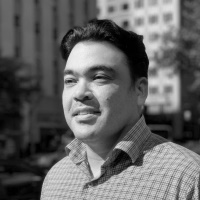 John Tawa, PhD, is an assistant professor of psychology at Mount Holyoke College. His research examines the role of race in intergroup interactions. More specifically, Tawa is particularly interested in relations between minority groups (e.g., relations between blacks and Asians). Some of his research supports the idea that perceived competition for resources (e.g., educational, economic) creates greater distance between blacks and Asians relative to both their distances towards the white majority group. The second line of Tawa’s research examines the ways in which people’s essentialist beliefs about race influence their intergroup behaviors. This research demonstrates that people who think of race as biologically distinct (i.e., racial essentialism) tend to experience less comfort among racial outgroup members. However, Tawa's research also suggests that educational approaches that encourage critical thinking about concepts such as race can improve people's comfort level interacting across racial groups.

