Kim Mills: Once again, it's election season. This year, contests from governorships and Senate seats to city councils and school boards will turn on headline grabbing issues including abortion, the economy, climate change, and education. But political and psychological research has found that most often, voter behavior is not driven by the nuances of policy debates on these topics. Instead, it's how voters feel about candidates and political parties, whom they trust to share their values, and the emotions that politicians' messages, speeches and ad campaigns evoke.
So how do emotions drive our political behavior? What makes an effective political speech or ad campaign versus one that falls flat? How can small changes in wording reshape voters' opinions on controversial topics? And what role might political messaging play in shaping our increasingly polarized public discourse?
Welcome to Speaking of Psychology, the flagship podcast of the American Psychological Association that examines the links between psychological science and everyday life. I'm Kim Mills.
My guest today is Dr. Drew Westen, a clinical personality and political psychologist and professor in the departments of psychology and psychiatry at Emory University. He also runs the consulting firm Westen Strategies, which advises progressive nonprofits and Democratic candidates on how to talk with voters about a range of issues, from abortion to immigration to taxes. He's tested political messages with thousands of voters over the past two decades. He is also author of the 2008 book, The Political Brain: The Role of Emotion in Deciding the Fate of the Nation, and he's working on a follow up book to be published in 2023. He is a frequent contributor on political and psychological issues on radio, television, and in print in venues such as The New York Times, The Washington Post, and CNN.
Thank you for joining me today, Dr. Westen.
Drew Westen, PhD: Thanks for having me, Kim.
Mills: Before I toss out my first question, I want to make clear that APA is a nonpartisan organization, so I want to be sure that our discussion is balanced and that we will talk about Democrats, Republicans, and independents without fear or favor. How does that sound to you?
Westen: I promise to be just like Fox News, fair and balanced. But I will say that you did introduce me as someone who works with Democrats, and Republicans will be especially happy with what I have to say because Republicans tend to be very good at messaging, and Democrats tend to be really awful at it, so I'll be more critical of Democrats.
Mills: All right, thank you. So my first substantive question. In an article a couple of years ago called “How to Win an Election,” you wrote that politics is “less a marketplace of ideas than a marketplace of emotions.” Why is that? Why is it so crucial for politicians to reach voters on an emotional level rather than just an intellectual one?
Westen: In some ways, you could answer that question by asking, how do we choose a mate? Or how do we choose dinner? We don't go through a list. Like with a mate, if we do go through a list of, let's see, I'm going to make a list of pros and cons, there's 15 on this side, 15 on that side. We would typically be divorced in about two years, because that's simply not how our minds work. I guess another way to put it is that emotions provide the fuel for human behavior, and cognition provides, or thinking provides, the roadmap.
So there are two basic questions that voters ask when they're trying to decide on which party or candidate they support. One is, does this person understand and care about people like me? And the second is, does this person share my values? And you know what—if you're an educated voter, if you're not a terribly educated voter, those are the same two questions that you ask. And in an emotional way, they're actually pretty rational questions most of the time.
Mills: So much of your work has to do with exploring the importance of language in political messaging. One example I've heard you put forward is that people react completely differently to a program that's described as say, helping the unemployed versus one that helps “people who have lost their jobs.” Why are these seemingly small changes in language so significant?
Westen: From a neuroscience perspective, they're activating different, what you would call, and you would call this from a clinical perspective as well, different networks of associations in their minds and brains. That is, interconnected sets of thoughts and feelings and images and memories and values, so that when you activate part of that network, you activate the rest. So when you, for example, say, oh, I'm concerned about the unemployed, you're taking real people with pain-lined faces who may have just had to tell their kid that they're moving, and that this is, sweetie, this isn't going to be your room anymore. I mean, that's a really evocative thing, and it makes you feel something. You're turning people like that into a nameless, faceless abstraction, the unemployed, which is also an “other.” It's like, if I'm not unemployed right now, I'm thinking, well, I'm sure glad I'm not them. And as soon as you “them-ify” somebody, you decrease empathy for them.
Mills: So can you really flip public opinion on a question just by describing the topic in a different way? I mean, how much difference might this make in terms of poll numbers?
Westen: I'll give you a couple of examples. Recently, I did a study on southern voters, looking at how to diffuse the issues of race and race baiting that were brought up by the right’s attack on “critical race theory” or CRT, which of course, it's not being taught in any school. It's not taught in the vast majority of undergraduate universities. It's taught in a handful of law school classes. In fact, there's one law school class at Emory on it, and the professor asked me to guest teach on how to talk about it. So that's the extent to which our children are being exposed to critical race theory.
But what the right did was, it was completely unethical, but very smart, and they're really open about it. They basically said, all right, how can we take anything that's being taught in about race or racism in elementary and high schools, middle schools, how can we turn that into something that sounds really scary? Well, let's call it critical race theory. Why? First of all, it's critical of America. Now, that's an unconscious association. They say critical. They don't say of America, but that's part of that network of associations that's activated unconsciously. So you get it in there, it's critical of America, critical of white people. It's about race, and it's just a theory. No facts, just the theory promulgated by those socialist, communist people who just hate white people and can't stand white privilege and all that kind stuff. So that's the right side of it.
Now, it turns out that you can diffuse that really, really easily, but Democrats tend to use the wrong language. They'll say, we must fight systemic racism. Well, that would be great, except that as I actually found in that particular survey, less than 20% of people, including 20% of people of color can define critical race theory. They have no idea what you're talking about. So when you talk to someone, just like I often say to leaders, if you're speaking to someone who's a native Spanish speaker, don't talk to them in English. You speak to them in the language that they use. And the litmus test for me on language that I always try to tell people is, if this isn't how ordinary, normal Americans would speak about this, I don't care how you activists speak about it, but if this isn't how ordinary voters speak about this, just don't use it.
So instead of saying critical race theory, for example, or instead of saying systemic racism, if you simply describe it, if you say, hey, look, we all know that back in the fifties when President Eisenhower was developing our interstate highway systems, if a highway had to be built between one of two neighborhoods, one of them was a poor Black neighborhood, the other one was a white neighborhood, we all know which one was going to go through because back then, that was just seen as that was acceptable. Racism was acceptable in a way that—we've had some politicians who've made it acceptable again, but it wasn't acceptable for about 50 years.
So what you say is, look, back then we know which way it would go. And it's easy to say that that's history. But here's the problem. The problem is that 50 years later, think about the value of the houses on two sides of that highway versus the value of the houses in that white neighborhood. The white people's houses have gone up, skyrocketed in value, and the people in those Black neighborhoods, what they've been passing onto their kids isn't worth much at all.
And then you ask, well, why do all these poor Black kids have all these problems with asthma? What do you think happens when you have fumes coming off the highway? If you say that, and then you say to a white working class voter, we just passed a trillion dollar bipartisan infrastructure act. Why don't we fix this? And they'll say, absolutely, that's not fair. But if you say to them that we have this problem with systemic racism, their immediate responses to get defensive.
Just one more quick example that is if you say, when we teach about history, we need to teach about the history of racism because, you will break even or do a little better than break even with the average voter on that. If instead you say, we need to teach about the history of race and racism because, you'll kick up an extra 15 points in the polls. And the reason for that, which, I mean, it's a tiny change from “racism” to “race and racism,” what you've just done is you have blocked white people from getting defensive. The second you say, we need to teach about the history of racism, immediately it feels accusatory if you're white. And you can understand why people feel that way, because racism, you hear it, and you hear like, oh, I'm about to be attacked. Instead, if you say the history of race and racism, people go, well, of course, we should teach about that.
Mills: There's been a lot of discussion of how increasingly polarized our political landscape has become. Does that affect the way people respond to political messaging? I'm wondering if it's possible these days for a Democratic politician to connect emotionally with a Republican voter, or vice versa, or do people just tune out whatever comes from the other side?
Westen: It really depends on how far to the other side the other side is. I actually don't agree with many of my colleagues on the left who are pollsters about who they think is moveable, because who's movable depends on how you talk to them. If, for example, on abortion, if you say to, say suburban, independent, or suburban Republican voters, or you say to even a lot of rural voters, as we learned in Kansas where you'd get these bright red counties where 40% of people would say, no, I want the right to abortion. If in a polling question you ask people, do you believe in abortion? Well, in those suburban Republican areas, you're going to get a mix of feelings. Well, you'll get more positive than negative. You'll get about two-thirds of Americans will say yes to that.
But if you ask instead, are you pro-life or pro-choice, people have split evenly between those two things—for the last 25 years until the Dobbs decision, the decision that overrode Roe and which led the pro-choice side to go way up in the polls. Well, if you look at that, you might think, well, those are really conflicting results. Two-thirds of people say that they're for abortion, for abortion rights, yet under half say they're pro-choice. Well, instead of using language like, even pro-choice, which is pretty common—pro-life suggests no matter what, I believe that from the moment of conception, you're killing babies. And that's the position that the right's now taking, and it's taking a really extreme version of that position.
So why is it that people reject the language of pro-choice half the time when they believe in abortion rights? It's because Democrats and progressives are offering them a position that's not equally untenable to the right, but sounds untenable, which is anytime you feel like it, you can abort. But the reality is most of us don't actually feel that way. I mean, what they feel is early on in pregnancy, when you look at what a fetus or an embryo looks like, it doesn't look anything like us. For weeks, you can't tell the chicken embryo from a human embryo. That's why most of us intuitively feel like you need better and better reasons the further on that you are. Early on, it is clearly, it's not a question between a mother's rights and the rights of fetal tissue, because that's what it is. We don't say, oh, when's your baby coming, when you're not even showing yet. We say that towards the end though, and that says a lot about how we feel.
And the point I was getting to about this is if you use language like reproductive justice, it's again one of those abstractions. First of all, no one has any idea what you're talking about. What does reproduction have to do with justice? It's like when people use words like environmental justice. I've tested that one as well. Less than 10% of people can accurately define environmental justice. People go, I don't know, be good to the earth. And that's actually not what it's about. But so if you say reproductive justice, not only are you turning something that's really deeply personal, and that you feel when you hear about, say that 10 year old girl who was raped and couldn't get an abortion in her own state. Democrats should be referring to that as a moral issue. There's a moral choice between two sides. And I would urge Democrats to say, yeah, they believe that every rapist has the right to choose the mother of his child. We believe that every woman has the right to choose the father of hers. That's the difference in our moral worldviews.
Mills: But see, that's a long phrase, and I'm thinking pro-choice was poll tested before it ended up in common use. And pro-life has been poll tested, and they're both handy and short. But what if pro-choice doesn't work, then what's the shorthand alternative that will work?
Westen: That's also a great question because the left tends to have more nuanced positions on things than the right. The right will simply say, no guns, second amendment. That's their position. Or you're killing babies. Those are the—or the free market, can't interfere. Yep, there you go. It's pretty simple.
Whereas it's not that easy on the left because the left is defined by having more nuanced views. So you might have to get up to a few more words like something like this, instead of talking about reproductive justice or pro-choice, if you say this is about the freedom to decide when and whether to have a kid, that's pretty much it. Or if you want to expand it, the freedom to decide whether, when and who to have a child with or who to have a family with, everyone understands exactly what that means. And if you notice, when I say, “the freedom,” I'm emphasizing the value that is core to what this whole thing is about. It's not about justice. It's not really about health so much. It's first and foremost about this is about our freedom. One of the most essential freedoms we have to decide who and when and whether to have a child.
But the other thing about it is you notice I can put intonation in my voice when I say it. If I say “I'm pro-choice,” no feeling in that. You could say it louder. You could say, “I'm pro-choice.” Or you could say, “I'm pro-choice, and I'm proud.” Well, actually not that many women feel like they go into an abortion clinic or to Planned Parenthood because they have an unwanted pregnancy. They're not going in there thinking, I'm proud. They're not necessarily thinking, I'm not proud, but they're not thinking—it's not about pride. It's about freedom. It's about this wasn't the right time, or this isn't what I wanted, or this was a Tinder date, for God's sake.
Mills: Now you've done work using FMRI to study people's brains while they absorb political information. And I'm just wondering, do we absorb political information differently from other types of information, particularly information that maybe doesn't comport with our preconceived notions?
Westen: Yeah, that's a real problem. This was a design flaw built into the human brain by, if you're on the left, natural selection, if you're on the right, God messed up. And that is, we learned from Skinner 75, 80 years ago that people are, well, he didn't like to use feeling words, but that we are essentially drawn to things that we associate with reinforcement or with positive outcomes for ourselves, for our families, for the communities that we care about. And we either fight or flee things that do the opposite. That makes complete sense from an evolutionary standpoint. An organism that didn't do that, we wouldn't be knowing that organism today. It would've gone extinct millions of years ago. The problem is that we, as humans, can do exactly the same thing with ideas, and that is that we are drawn towards ideas, towards beliefs that make us feel good, that are reinforcing, and we repel beliefs that make us feel the opposite.
So if you want to know how that actually works in the brain, we did a study back in 2004 in the election between John Kerry and George W. Bush where we looked at the brains of strong partisans as they listened to information, and we asked them to perform a reasoning task with that information about their candidate or the other candidate. And what we found was if you looked at the, say 1000 or 1500 prior studies using neuroimaging techniques like functional neuroimaging like FMRI, if you look at the, say 1000 studies before that of reasoning tasks, they all found activation in an area towards the top of the front of the brain called the dorsolateral prefrontal cortex, which is involved in conscious, rational thinking, in holding things in mind consciously so you could make decisions about them in more abstract thinking. And when people reasoned, they used those circuits, which made a lot of sense.
Well, we had a suspicion that in politics, when it got to be about your candidate, and you had an emotional investment in your candidate, we didn't think any of the circuits were going to turn on at all. We expected that what was really going to happen—so here's an example, and this was a slightly altered example. So we did alter examples if they were, most of them were very close to things that the candidates actually said or done.
So here's an example that was a Kerry example—people are lying in the scanner, they're reading this. They're listening to this, and they're about to make a rating. And they hear the first slide comes up. It says, in 1996, John Kerry was on Meet the Press discussing social security. And he said, “we have a generational responsibility to put everything on the table here, whether that's means testing, whether that's affecting the, changing the automatic cost of living adjustments because we have to make sure this program is solvent for all this decades down the road.” So that seems pretty reasonable.
Well, then the next slide comes up, says this year, 2004, on Meet the Press, John Kerry was asked about social security and said, “we should never touch social security. We have a generation responsibility to our seniors to leave it just as it has been.” So then the next slide comes up and says, consider Mr. Kerry's words and actions are inconsistent. Well, obviously they are. I mean in 1996 says one thing. 2004, now he's playing to the seniors. He says a different thing. And again, let me just stress this is not a completely real example. It had elements of truth, but it was not entirely real.
So we then have them rate on a four point scale, the extent from one, not inconsistent at all, to four, completely inconsistent. And their finding was that Democrats had no trouble seeing the inconsistencies for George W. Bush. Republicans has had no trouble seeing the inconsistencies for John Kerry. But here's where there was a difference. The difference was when they were looking at their own candidates, we saw no activations in the reasoning circuits whatsoever. We saw what we expected, which was a bunch of, first, activations of emotion circuits, negative emotion circuits. They were saying, they were just pinging, pinging, pinging, saying, uh oh, this doesn't feel good. How am I going to get out of this?
Then we saw activations in parts of the frontal lobes right around our eyes or between our eyes or just above our eyes, well, the ventromedial prefrontal cortex, which we had hypothesized would be involved in people unconsciously regulating their emotions, trying to figure out how to shut them off.
And then there was a huge activation in part right behind those eyes called the interior cingulate, which is involved in, among other things, monitoring and trying to figure out what to do about conflict. And the prior studies that focused on cognitive conflict. We were giving emotional conflict. So all of those circuits were just wildly on. Then about 20 seconds later, they started to all turn off as people came up with rationalizations to give their candidate, oh no, not inconsistent at all. And once they did that, this was the part we did not expec—they got bursts of dopamine in reward circuitry in the brain, and essentially they were getting reinforced for coming to a biased conclusion. And that's the part that's scary.
And it was scary in back in 2004 when we did this study, when we were still in the post-Watergate era where, not quite, but we had moved out of it, but back in the Watergate era, Republicans were the ones who went to Richard Nixon said, you got to resign, buddy. We just can't support you in the Senate because you obstructed justice. I mean, it seems like that was 200 years ago because you can't imagine that happening now. The problem now is that on top of that design defect in the brain, we have a design defect in the media, which is that we have now most people getting the news from social media, and they're getting it from sources that have no fact checking and who are largely the sources who are sending them information because they're like-minded, so now we don't even share similar facts, let alone have to reason about facts in ways that are differently.
Mills: Now you started out as a personality in clinical psychologist, and you still do academic research in those areas, but what made you turn your attention to politics, and how do those two parts of your career fit together?
Westen: It's a really funny story. It started at first during the Clinton impeachment trials, and I was really struck by the fact that you'd have all of these commentators coming on television from the right and the left. They would be marshaling “evidence.” They'd be talking about facts. They'd be talking about, well, what did Hamilton and Adams mean when they were crafting this language on impeachment and the Constitution etc. And they're talking about that, and they're talking about the facts of what happened with Lewinsky, what didn't happen with Lewinsky, etc. And they all seemed to come down on the side of what they wanted to believe in the first place. And it was clear that the facts were making no difference whatsoever.
So I actually started doing a little bit of research back then, and I found that there were actually three predictors of which side people came down on, pro-impeachment or against impeachment. One was their feelings towards the parties. That was primary. Second was their feelings towards Bill Clinton. There were Democrats who didn't like him, and there were Republicans who did. And then the third was their feelings about feminism. And if they had very strong feelings about feminism, they were more likely, even beyond their feelings about Clinton, to believe that this was an impeachable offense.
And the point of it all was when you got down to their knowledge of the facts about either the Constitution or about what had happened that had led to this, what had Clinton done or not done, the facts predicted 1% of the variance in people's voting, and the rest was controlled by people's emotional reactions to the parties, to Bill Clinton, to feminism.
And so what that led me to think was, wait a minute, and it actually, it predicted eight out of the nine judges on the, justices on the Supreme Court and how they voted in Bush v. Gore. The only one who was unpredictable, who frankly has been my favorite justice in my lifetime was David Souter. And I say that not because I've agreed with his politics. It's because I never knew which way he was going to come down because he seemed like he was a justice who did what he was supposed to do, justice. Look at the facts of the case. Don't start out with your own values, your own preconceptions, your own politics, but just look at the facts of the case and say, well, actually on this one, I really have to tip this way. I really have to really have to tip that way.
But the thing that was really, that kicked me over from being a mild-mannered clinical psychology professor to being an ill-mannered political consultant was watching first Gore throw an election in 2000 by speaking like a Democrat, listing his 10 point plans, not speaking enough about his values, never speaking about the one thing that his consultants told him not to speak about, which was typical Democratic consulting. Don't talk about what matters to you because it's not high in the polls, and that was energy and climate.
Imagine if Al Gore had gone to Florida, and he had given speeches on the coast of Florida, and he had said, look, there are a lot of you who are parents and grandparents and who worked really hard for this land that were standing on right now, that you want to pass on to your kids and grandkids. I know a lot of you are not sure whether or not there's anything to this idea about climate change.
I understand it, although it's kind of a lot like what we saw when the tobacco “scientists” in their white coats were saying, oh, you can breathe this black soot into your nose. Don't worry about it. It's not going to do anything to you. It's kind of like hear these people saying in white coats for the oil company saying, oh yeah, you can breathe this pollution into your nose, won't bother you there. And then it goes up into the air, and there's trillions of tons of it up there. Don't worry. It won't affect the earth. It won't affect the atmosphere.
But even if you don't believe any of that, even if you don't believe what the vast majority of scientists now do believe, do you want to gamble with the land and the homes that you have worked so hard to leave for your kids and grandchildren? Do you really want to do that? It's not a gamble I'd want to make. Because I could be wrong about this, but people on the other side could be wrong about this too. And if they are, you're not going to be leaving anything to your grandchildren. Now he lost by 500 votes in Florida. Imagine if—
Mills: In Florida, yeah, if he had done that in Florida. Yeah.
So just to wrap up, you wrote your book The Political Brain 15 years ago, and a lot has happened since then, and you're working on a follow up book. So can you give us a little preview of what might be in the next book?
Westen: Yeah, I sure can. It's based on—When I wrote the last book, I'm being totally honest here, I had no idea before and when the reviews came out, whether they were going to come out saying, this guy's a total fraud. He's a psychologist. Yeah, he's done a bunch of reading on elections. He's gone back—I had an editor who made me go all the way back to FDR and to study his convention addresses all the way on up. But I hadn't done any work in practical politics before. I'd never given a speech to a political audience. I might have given one academic talk at a political psychology conference once. I don't even think I'd done that by that point.
So I'm thinking, I have no idea how this is going to be received because it was advancing what at that time was, believe it or not, you're going to laugh, was a radical thesis, that emotions are central to politics. Because at that time, Democrats were all running on this, all they were being taught was, and they were running on campaigns on the idea that a campaign is a debate on the issues. So what you want to do is you want to spell out where you are on the issues and your 10-point plan on every one of them.
And the thesis of my book was, no, actually no one wants to see your fact collection. That's not what they're interested in. And if you look at the history of elections, that's not how people vote at all. If you look at Barack Obama versus Hillary Clinton, I don't think they differed on anything in their politics, in their policies, but they ran really different campaigns, say in 2007, 2008, where he could speak to people emotionally talking about the same issues. And she just had a much harder time doing it to the average person, to speak to them in an emotional way.
So anyway, the book was advancing this radical thesis that not only was that Democratic strategy wrong, so were the political scientists' models, which were virtually all rational choice models at that point. Oh, let's see. I weigh abortion this percent. I weigh the economy this percent. I weigh immigration this percent. And I have this whole list of 25 issues that I'm keeping in my mind, and I'm weighing how much do I like them and how much do I like each candidate party's position on each one. Well, in psychology we call that doing multivariate statistics, and it requires really, really well worked out statistical programs and software. And it involves hundreds of thousands or millions of split second calculations that our brains cannot do. Most of us cannot do multivariate statistics in our heads. So what do we do? We simplify the equation by asking those two questions. Does this person understand and care about people like me? And does this person share my values?
So that's where I was coming from at the time. I had no idea how the political community would receive it. And I also really wasn't entirely sure I wasn't a fraud. And then, I actually got a call about two weeks after the book came out from this person says, is this Dr. Westen? I said, yes. And I'm in a Starbucks in my sweats in Atlanta. He says, would you hold for President Clinton? And this was 2007. And I'm thinking, yeah, and I hold for Mahatma Gandhi too, and maybe Martin Luther King while we're at it. But I didn't say it, but that's what I was thinking.
But then next thing you know, this voice comes on. It's Bill Clinton saying, I'm in Iowa right now with Hillary, and we're doing stops where she's campaigning, and I'm reading her your book and reading her passages from it that I think are particularly useful for her. And he said, those things that you said Al Gore should have said in his debate against George W. Bush, said that stuff was spot on. And all right, if this guy's saying this, maybe I'm not completely a fraud.
In clinical work, you're doing the same thing. You're kind of threading the needle. Someone's got a conflict about something. You're trying to figure out, how do I talk with this person about this in a way won't make them defensive, but allow them to consider possibilities that they might not have considered before and consider changing in one way or another. Well, and what I realized was when I started to do political consulting, I was doing psychotherapy with 60 million people at a time. The skills were really not all that different. The only thing that was different was that I wanted to make sure that if I generated say, nine different ways of talking about an issue, whether it was back then the Iraq War, whether it was immigration, whether it was trade policy, whether it was taxes, whether it was how do we help working people, whether it was abortion. And most of these issues, by the way, have really stayed the same since I started working on this stuff 15 years ago.
I didn't want to just do this by the seat of my pants. I wanted to test those messages against each other and against the absolute toughest message I could write from the other side. So what I said was, yeah, I'll do this, but only if I can do the quantitative work along with it, which at first meant working with pollsters, and then I eventually started doing that myself. But this is a long-winded way of saying that what I often told people when they said, well, that's going to be a lot more expensive to do all that polling along with this. I said, yeah, but I said, the best antidote to narcissism, and especially male narcissism, is empiricism.
You know could think you have the greatest ideas of how to talk about this thing, and then you test them, and you learn that, well, that one beat the opposition, but there was another message that I didn't realize was going to do even better. Let's go with that one. Or let's offer people several messages that they could use because they're actually all beating the opposition. But I'd catch all kinds of words and phrases that I was using that I thought, oh geez, how did I make that stupid error? Well, I learned that I made the stupid error by testing it.
So in the meantime, since The Political Brain came out 15 years ago, I've tested about a million messages with over a 100,000 voters. And so this next book is going to have the benefit of, not only the background in psychology and neuroscience, but having actually tested these things in real politics with real voters in focus groups, in online testing, in regular opinion polls, by telephone surveys with thousands of voters so that I actually now can tell you, there's an old adage in advertising, which is that half of our advertising dollars are a complete waste of money. And the other half work. The problem is we don't know which are which. And I'm now at the point, having done this, that I'm up to about 75%, 80% getting it right. But that still means I'm 20%, 25% getting it wrong. And if I want to work for non-profits or for a party or for a candidate in the U.S. or somewhere else who's values I share, I want to do the best possible job for them I can rather than just assuming that because I thought it, it must be right.
Mills: So is this book going to give away all your trade secrets then?
Westen: It's going to give away a lot of them. And just to get, I will give a plug now, this is a nonpartisan podcast. I will give a plug for someone on the other side who he and I were often pitted against each other on issue after issue where he was doing the right wing side of things of how's best to talk about this, and I was doing it on the left, or at least from center left to left. And that's Frank Luntz, who was Newt Gingrich's brilliant wordsmith. I really like Frank, but I didn't like the work that he did because I didn't like the values behind it. But Frank is as good as you get at this.
I taught a course of Emory for many years, a seminar called The Psychology of Political Persuasion in American Electoral Politics. And I always assigned Frank's book because he's got a book called Words That Work. It's just absolutely brilliant and describes a lot of these similar kind of principles. I remember when I eventually read it—I hadn't read it until after mine came out. They came out at pretty similar times. But I remember reading it and thinking, wow, he's really let out all the secrets from the right.
But my attitude on that is kind of, as opposed to let's just have a competition of ideas in the marketplace of ideas, why don't we have both sides present their ideas in the most emotionally compelling ways possible so that voters really know what they're looking at, so that they really know there are one out of every 50 women is having a pregnancy where the embryo is implanting outside her uterus, an ectopic pregnancy. That fetus or that embryo is going to die no matter what. So the idea that now doctors are afraid to take dead fetal tissue out of a woman's body that could cause sepsis and kill her, or that could lead her to be infertile, and the other side's calling that a culture of life. To me, that's how you talk about it.
And voters should hear it in that form, not in the sanitized form of some people believe that we should have choice. Some believe that we should be pro-life. Do you strongly agree, agree, disagree? That's how pollsters ask these questions. And it's not how they play out. And frankly, it's not how politicians speak about them. And I don't think it's how politicians ought to speak about it. I think they should speak in the most emotionally compelling ways about things that they believe are true, that fit their values and that there's good evidence that they are true. And then let the chips fall.
Mills: Well, Dr. Westen, I really appreciate you joining me today. This has been a fascinating conversation. Thank you so much.
Westen: Thanks for having me on.
Mills: You can find previous episodes of Speaking of Psychology on our website at www.speakingofpsychology.org or on Apple, Stitcher, or wherever you get your podcasts. If you have comments or ideas for future podcasts, you can email us at speakingofpsychology@apa.org. Speaking of Psychology is produced by Lea Winerman. Our sound editor is Chris Condayan.
Thank you for listening. For the American Psychological Association, I'm Kim Mills.


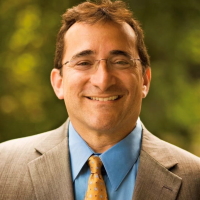 Drew Westen, PhD, is a clinical, personality and political psychologist, a professor in the departments of psychology and psychiatry at Emory University, and founder of the consulting firm Westen Strategies. He formerly taught at the University of Michigan and Harvard Medical School. Westen is the author of three books and over 150 scholarly articles, including The Political Brain: The Role of Emotion in Deciding the Fate of the Nation, which has influenced campaigns and elections around the world. He is currently working on a follow-up, to be published in 2023. He has been a frequent contributor on political and psychological issues on radio, television, and in print, in venues such as The New York Times, and The Washington Post, CNN, MSNBC, PBS, NPR, and the BBC. He has advised a range of organizations, from presidential and prime ministerial campaigns in the U.S. and internationally, to nonprofits on a wide range of issues, to the Democratic Caucuses of the U.S. Senate and of the House of Representatives, as well as state Democratic and progressive organizations and caucuses around the country.