Kim Mills: Power is one of those terms that we all think we understand. It's being in a position to call the shots, to set the agenda, to lead others, and maybe to boss them around, or even punish them, right? Our culture’s understanding of power has been heavily shaped by one person, Niccolo Machiavelli, the Renaissance-era politician and diplomat who infamously wrote that power is essentially about force, fraud, ruthlessness and strategic violence. But what if he was wrong?
So what is power? Why do people seek it? What types of people seek it? And if you want power, what's the best way to get it? Is it human nature to abuse power? And why do some people lust for it? What is the impact of powerlessness?
Welcome to Speaking of Psychology, the flagship podcast of the American Psychological Association that examines the links between psychological science and everyday life. I'm Kim Mills.
Our guest today is Dr. Dacher Keltner, founding director of the Greater Good Science Center and psychology professor at the University of California, Berkeley. He is author of the bestselling book, The Power Paradox: How We Gain And Lose Influence, as well as host of the podcast, The Science Of Happiness, which is also the name of a popular course that he co-instructs. Power is one of the many areas he studies, along with love, compassion, beauty, social class, inequality, and awe.
Thank you for joining us today, Dr. Keltner.
Dacher Keltner, PhD: It's great to be with you, Kim.
Mills: Here at Speaking of Psychology, we often start by defining terms, and I asked this question in the introduction, what is power? How do you define it? And is your definition different from Machiavelli's?
Keltner: Yeah. This turns out to be one of the hardest things to do in the science of power. Bertrand Russell, the great philosopher, wrote that power is the basic medium of social life. As I've studied power with my colleagues for 25 years, I tend to agree. It's just everywhere and that makes it hard to define. There are various definitions of it, but we really align with somebody named Steven Lukes, who has a wonderful treatment of power, he's a sociologist, that power is your capacity to alter the states of other people or to influence others.
So power is different from status, which Cameron Anderson has studied, which is the respect you get from your peers and your colleagues and the people you—power is different than wealth and class. In fact, in our work, those two constructs only correlate about 0.15 or 0.2. Power is different from dominance, which is strategies to coerce people, to manipulate. Power is your capacity to influence and alter the states of mind of people around you.
Mills: So, why do some people seek power? What are the psychosocial hallmarks of people who actively want power?
Keltner: Well, this is an old question. People like David Winter really were interested in it, there are individual differences in how much we want power. Some people want the spotlight, they want to lead. They have certain characteristics. They like power, they enjoy it. They're a little bit more extroverted. Why we want that is, I think one of the really subtle lessons of this research, which is that there are a lot of good things that come with power. People feel better, they are happier, they have more freedom. They have more connections with others, they enjoy more resources. So there are a lot of good reasons for wanting power and we shouldn't condemn people for that aspiration.
Mills: Why do other people run away from power? Is it just a fear of responsibility?
Keltner: Well, yeah, I think that's part of it. I think part of it is the social obligations of power, that people are going to be attending to you, you're in the spotlight, if you will. You have responsibilities over other people's welfare and perhaps that's why more extroverted people gravitate to positions of power and want it, and people who are a little bit quieter, shyer and the like, maybe initially shy away from it. But that thesis is being challenged in different sectors right now. So, I think part of the reason that people shy away from it is the attention that is forced upon you once you have power.
Mills: But isn't it almost impossible to have no power? I mean, whether it's you've got kids and you have to raise them, or you've got a job and you've got a certain level of power within what you do every day in your life. I mean, it's really hard to have no power, isn't it?
Keltner: Yeah, you know, Kim, I mean your question is what really got me to think about power for a long time, which is that I grew up raised by hippies and this late '60s utopian world of like, "Let's get rid of power." And I kind of believed that, and then life confronted me with truth, which is, we always have some degree of power. In every relationship—if you raise kids, there are going to be power dynamics, biologists are now discovering, from when the woman is pregnant until the end of life.
So power is just part of the game. We always have some degree of it and that's why we think we have to take the science seriously, which that if it is this basic medium of life, whether we're raising kids, or in romantic relations, or with friends, or in groups, we got to do a good job with the power that we have, but it is on a dimension from very little to a great deal.
Mills: So talking about a great deal of power, I mean, there is the old adage that absolute power corrupts or that power corrupts and absolute power corrupts absolutely. Is that true in your experience and in the work that you've done?
Keltner: Yeah. I think it's a little bit more subtle, the scientific literature finds, and I think that's why we called our theory with Cameron Anderson and Deb Gruenfeld about power disinhibiting you. I think that that's the broader truth, which is that we have these tendencies, they vary according to who you are as a person, and power tends to free you up to express your tendencies, independent of social constraint or the consequences of your behavior.
Now in general, people tend to be a little bit more self-serving and self-focused and wanting to maximize their own gains. So when we have power, we do become a little bit more narcissistic, a little bit less attentive to other people, a little bit more impulsive in our behaviors, but Serena Chen has done really nice work, my colleague at Berkeley, showing—and others have—that if I'm the Dalai Lama and I'm kind and compassionate and suddenly I have power, it actually disinhibits my greater pro-social tendencies, my empathy and my kindness and sharing.
That has a really important lesson, which is we got to be careful about who we give power to. If we hew to this idea that power should go to the Machiavellians, who you raised earlier and we, just through stereotypes and misconceptions, give power to the authoritarian type or the person we think fits the model, we may be perpetuating a lot of problems by allowing them to express their more Machiavellian tendencies.
Mills: Well, our friend Machiavelli also asserted that it's better to be feared than loved, right? What do we know about the long-term effects of people who are feared and are essentially—I mean, they're misusing their power.
Keltner: You know, I'm so grateful, Kim, you bring up Machiavelli and you rightly frame it, and people don't realize, Machiavelli wrote The Prince in the early 16th century. It was the age of the Renaissance, there's all this explosion of culture. People actually don't know whether he was sincere in what he said about power, because he was a playwright and a satirist, and the like. It's also important to remember that he wrote in one of the most violent times in human history. Torture and violence and mercenaries and sexual violence were just everywhere. So his thesis was power is about manipulation, deception, feigning a religious commitment when you don't have it, and it reminds me of our former president, and harm. He really recommended you hurt your allies, you weaken others around you.
And frankly, in most places today, the empirical literature shows that model of power doesn't serve you well. It won't serve you well at work, you don't rise in the ranks if you apply it as a psychologist or a teacher. It leads to isolation with other people. You're less happy if you practice that philosophy of power. It does work in certain sectors. If I was in a drug cartel, I'd probably study The Prince very carefully, but it is gradually moving its way out of as being the prevailing model of power, with really interesting political exceptions.
We had this bump in authoritarianism recently that may be on the wane a little. So it's always a struggle how we approach power, Machiavellian approaches, or more collaborative approaches and that's what makes it so dynamic.
Mills: It's hard not to apply your thinking to what we've been going through in the last administration, let me put it that way. I mean, that was a person who was very lustful when it came to the concept of power and yet seemed very unhappy even when he had the ultimate power. Now he's still out there trying to grab it back, I mean, it's—
Keltner: Yeah. I mean, I titled this book The Power Paradox, because it is this interesting rise and fall dynamic. This isn't just men and politics, this is just life. I was just talking to a leading feminist from a marginalized community who said, "This happened to me too. I rose, I had this message. I appealed to a lot of people and then I found myself losing touch." I think you could look at the last presidency is a textbook case example of somebody who caught us by surprise, by as Hannah Arendt says, gaining your power by reaching a network and inspiring them. He spoke to people and then the way that he conducted himself—and then the fallout of COVID and our failure as a culture speaks to what happens when we don't take power seriously and we abuse it.
Mills: Well, you do talk quite a bit in your book, The Power Paradox, about what you learned regarding relative powerlessness, as a result of growing up on Kayo Drive and a lot of your neighbors there were relatively powerless and that had some observable effects on their life trajectories. Can you talk about that and really what you learned from that?
Keltner: Thank you, thanks for asking that. Yeah, Kim, it was really interesting. My mom was a professor at a state university and a feminist, and she and my dad, we went from a very strong middle-class community where the schools were good and the kids became psychologists, and teachers, and medical doctors, and the like, and we moved for various reasons to the poor rural foothills of the Sierras in California. Our town had 300 people and we lived on a street, there were 19 kids on the street, I think only three went to college, two were my brother and me and then the third was my friend Memo, who went to college because of my parents, who really encouraged him to. So, it was very poor and rural poor.
As I was writing the last chapter of The Power Paradox, I think when we think about power, we have to—it's tempting to only think about the abuse of power, but you really have to think about this collective process of power. What happens to the people who are not given a chance at having power and influence in society, the disenfranchised, the poor, and I was growing up around them.
I was really struck by the work of people like Keely Muscatell, Edith Chan and Greg Miller, Shelley Taylor and others on, wow, what happens if you're not included in society and you don't have a voice? People started to learn, high cortisol, stress, rejection regions of your brain, inflammation in your body, shortened life expectancy, Nancy Adler's groundbreaking paper from 1996, the lower you fall on a rung, a 10-rung ladder of status in society, the shorter you live. I started, Kim, to think as I was finishing The Power Paradox about the people I grew up around on Kayo Drive, and they fit that profile.
They were great human beings. They would share anything with you. You always had a spot at their dinner table. In some sense, it was idyllic and free. But at the same time, people were dying younger. You could look at them and they, there was more depression, there was more clinical levels of anxiety, which we know to co-vary with lower resources. As I thought about the people around me, there were people dying when they were 40. There were people dying at 60, 55.
So I thought, "Wow." When I was 10 years old, I moved from this middle-class world and I moved to a poor rural, country street, lane and it felt magical to me, but it had this—
Mills: Had a downside, yeah.
Keltner:—this sadness to it, yeah, that was about power. And what happens when society doesn't give people a chance.
Mills: Well, on the other side of the coin then, are people who have power, relatively speaking, it doesn't have to be absolute power, but people who have power. Are they healthier?
Keltner: Yeah. I mean, there are abuses to power. There are costs to power. We like to talk about how it's lonely at the top and there are interesting variations on that idea, but the raw facts of the matter are that if you have resources and you have power and voice, you feel better about life, you are happier about life. You feel greater joy in your work. You are physically more robust. You have a longer life expectancy. Your kids will live longer. That was really interesting to me, and it's to one of your questions earlier, which is that we want everybody around us to enjoy that sense of influence and power, because of these consequences or correlates of it. For people who are suspicious of power, or want to eliminate it, they should really be thinking about this profile of greater robustness in mind and body if you feel empowered in your context.
Mills: In your work, you talk about how power is given. But we see situations everyday where people gain power by force, whether they sabotage a coworker, or they steal someone's spouse, or even overthrow a government. So are you saying that true power can never be wrested or stolen?
Keltner: Well, this was a great observation of a sociologist who said, "Power is given to you it's not taken." That's a direct confrontation with the Machiavellian view of all power is taken. I think in many ways, this observation of power is given, reflects this interplay between your capacity to influence and what other people think about your leadership and your execution of power. In some sense, in a lot of contexts it's given to you, and that's the basis of enduring power, is to lead and use power in a way that does not abuse. We're looking right now at Andrew Cuomo, who was literally today—16 months ago, he was the hero of the United States and now he's a disgrace because people are no longer giving him power. Those 11 women reporting upon him are saying, "We can't give this guy power anymore," and he's going to lose his power.
So, I think it's a very powerful dynamic in most relationships, but then you have to worry, and this is—right now, people are thinking a lot about authoritarianism. Like, what are the conditions in which white supremacy or political authoritarianism can rise and return us to these asymmetric dynamics? I think this is one of the key warning signs, is when you no longer as a member of a community, can give people power. Trump tried to degrade that, frankly, he tried to undermine accountability, undermine the scrutiny of his behavior, undermine the press whose job is to give people power and to critique them. That's a warning sign of when power is healthy and when it's imbalanced. So, it really depends on the context and how we negotiate power.
Mills: Funny that you should mention Andrew Cuomo because I was going to ask a question about him. When I was a journalist, I covered his father, who was the governor in New York. His father was a bully, yes. I mean, he was a bully to journalists. I'm sure he was a bully to other people. I'm just wondering who teaches us these power styles as we grow up? I mean, you could even contrast say, Andrew Cuomo with his brother who seems like not the same kind of guy, but they grew up with the same dad. I mean, what do we know about how you learn your power style?
Keltner: We don't know and that's a terrific question. In fact, Leanne ten Brinke and I just published a paper in the Journal of Personality and Social Psychology on kind of these two models of power that you and I have been talking about, Kim. More collaborative model of power, women tend to endorse that a little bit more, for example, versus a coercive, domineering model of power. So these are these theories of power that rise to different degrees in different cultures and historical moments and sectors of society. So my hunch is the coercive model is more popular in Washington, D.C., in politics and so forth.
But I think one of the really interesting findings in the science of power, and there have been these large meta analyses of—our model, our thinking about power, is changing and you referred to this at the start of, as a culture, we're always changing our views of power. Forty, 50 years ago, it was kind of the Mad Men approach to power of like dominant men, hierarchical. We've moved in lots of ways to a different theory or approach to power, more collaborative.
I do a lot of work with medical doctors. Thirty-four years ago, the medical doctor was more Machiavellian and executive and now it's much more collaborative. So, it's always in flux. How do we get it from our families? We don't know. That's a great question. How do we get it as a function of culture? If I'm from a super touch-oriented culture, does that get me into more trouble? That may be the case. So, that's a great question for future research.
Mills: Well, let's shift gears for a minute and talk about gossip because I know you've looked at that as well. What's the role of gossip relative to power and how has social media affected gossip and by extension, its connection to power?
Keltner: What a terrific question, wow. Yeah, people always, when they hear I sing the praises of gossip, are like, "I'm going to go after that guy." So this came from a brilliant paper, Our Interest In Gossip by Christopher Boehm, who's an anthropologist and it was a prize-winning paper, I think from 1991 where he studied 48 hunter-gatherer societies. These are people living in groups or different kinds of circumstances, but in the conditions in which we evolved, ethologists and anthropologists had made systematic observations about their power structures.
So you drop into a group of people in the Amazon, or in New Guinea, or parts of Indonesia, and what are the power dynamics like? They're modern humans, but they don't have the Wall Street and capitalism and so forth. He made this really interesting observation, it was more egalitarian, which is interesting. Power is more equally distributed prior to the advent of agriculture and big religion. He talked about this really interesting dynamic by which the group gives power to the different individuals and levels it, reduces it, keeps them in check and it's things like teasing, which I've studied, commentary, gossip. If you really violate the rules of that group, you're exiled, and you're just like, "No, you're no longer part of this group."
But he said, gossip’s really important, that people—and also forms of humility. So in those societies, around the world, the deep universal is to gossip about people when they violate the social contract and they start to abuse their power, they take too much of a resource, or too much of some food, or like you said earlier, they flirt too inappropriately with somebody's sexual partner, et cetera.
So that gave us this idea that gossip is a way in which we constrain the abuse of power. And lo and behold, our research has found in social groups, people gossip about the Machiavellian in their group. They're like, "Did you see him? He's totally offending these other people or coercing these other people." One of my favorite examples is newspapers, we look at newspapers which are a predecessor to social media, they emerged in the 18th century largely to gossip about well-to-do people like, "Oh, he's having sex with the maid," et cetera.
So, gossip has this really important function when it's used right, and Kim, your question is so original because it's striking. A lot of social media is kind of a form of commentary. Yelp is a way in which you kind of gossip about a restaurant with other people, even the chat function in Zoom.
When I teach now students, I see the chat comments and they're like, "Oh my God, Professor Keltner, do you see his nose hairs? They're ridiculous." Or, "He's got to brush his teeth." Or "He's said this before." I'm like, "Wow, I better be on my game here," but it can obviously get out of hand and gossip has to be constrained. So it has its place. Like every human behavior, it can be excessive and problematic. I think at its core, it emerged to keep us keep the abuses of power in check.
Mills: I think it's also given people who wouldn't have had power otherwise, a whole lot of new power. I mean, it's astonishing, how somebody who has 25,000 followers on Twitter can really change—can move markets.
Keltner: Oh my God and the new Twitter politics and Twitter power is striking. And it does, it's this interesting democratization of power where now, if you can get an audience, you can have power. Just to wrap up for the skeptics out there, Matt Feinberg, who's up at Toronto, and Rob Willer have done really nice research. I was part of one of the studies and they have other work showing in group settings, if you just let them know, like, "Hey man, you guys get a chance to gossip about each other." People behave pretty well, they're more cooperative. That tells us that there's this cooperative social function of gossip that we shouldn't forget about.
Mills: So, something else in the news recently, we witnessed two multibillionaires who got shot into space because they had the money to do it. Now, was that just a show of power? And could you tell me, what was it about Jeff Bezos' cowboy hat? What was that supposed to mean? Because I think it really backfired on him.
Keltner: It's so absurd, when you think about—I feel like in writing The Power Paradox and doing this work, you would hope that people with all these resources, there are studies that show that the richest person in each country around the world, if they gave away half their wealth could probably solve the problem of poverty in that country. That's mind-blowing to me, if poverty is the central social problem alongside white supremacy of our culture. Wow, just a little bit of generosity of these Jeff Bezoses and Elon Musks, could really change things and they don't. It's just funny to me, there's this pronounced tendency for people with a lot of power, they want attention. They want to be looked up to, it's not random. Then when we shifted to big God religions, 12,000 years ago, 15,000 years ago, we went from, like in indigenous societies, communal rooms, where everybody was on the same par and we started to build pyramids and obelisks, where the person in power is looked up to because you look up and you go, "Wow, he's almost a God."
So it cracks me up when I saw this, like Jeff Bezos being shot into space, it's like, of course. He didn't get a little sub and go underneath the ocean, which is probably harder to do. He shot himself into space because he likes to be high above people, that's a deep universal, and he wanted attention. And boy, the powerful will go to no ends to be above people and to get a lot of attention. What a lampoon of a waste of resources and opportunity.
Mills: But just on a more quotidian level, I mean, if an average person thinks that he or she wants power, what's the best way to get more of it?
Keltner: It's interesting, there's work that shows, like Cameron Anderson, my collaborator at Berkeley, has this nice finding, you can study these groups. No one has a position of power, they just start doing something together and they can figure out who rises. There are things like speak up. So, one of the things I tell people as they adapt to leadership is, make sure you voice yourself. Even if you're introverted, even if maybe you come from working in a gender-biased context, take the courage to speak up, connect to other people, ask great questions, propose bold ideas, and be ready to back off them.
One of the, I think, motivations for me to write The Power Paradox and to do this work is it shows that—and also to remember how much of power and influence in the world is local and comes from unexpected people. The best-selling writer of all time is Agatha Christie, no comparison. I believe the most important technological alongside the computer of the 20th century was the birth control pill, and that was led by Margaret Sanger, who's this kind of an unconventional person with no resources.
You could go on that Black Lives Matter, abolitionism, et cetera, were led by people who influenced locally through social networks, through courage. So I think when we rethink power, and it's not just wealth, or domination, or being a male, but it has this local quality to it. It gives us reason to go after it, and for social good.
Mills: So is being benevolent and cooperative then, the best way to hang on to power once you get it?
Keltner: Yeah. People always press me on that and, and I think there's a lot of neat new work by people like Rob Willer and economists, that sharing resources in a thoughtful way is a really good way to rise in social status. Building social ties is a good way to gain power. There's amazing social network research showing that if you can build a lot of strong ties with people, where they like you and trust you, in finance firms or tech firms you'll have a lot of power because you're in the mix and you're getting a lot of information. So, that's all pro-social.
But I also think you have to be ready to fight for stuff. You have to be ready to call out the Machiavellian and to stand up for stuff and draw hard lines. So, I'd say 75% in many of today's contexts that our audience might be working in, is about connecting, empathizing, sharing, but be ready to fight for the things you believe in.
Mills: Do the dynamics of power change within people as they age? So, maybe kids who were powerful or even bullies, will they continue to be that way as adults or what does the trajectory look like through life?
Keltner: That's a question that we—regrettably, developmental longitudinal studies are hard to do. You got to follow people for 10 years and in some sense, we don't have an answer to that question. One of the critiques of a lot of the literature I'm citing is, like a lot of social psychology, is it's a temporal, it studies people in one instant in time. Kim, your question speaks to one of the most interesting things about power, which is how does it evolve over time? I think we're in one of the most dynamic periods to ask that question, a lot of women are rising in power. A lot of people of color are starting to rise in power. Hopefully, indigenous people will be rising in power too in education and career and wealth and the like, and so what happens to their conceptions of power? It's a wide open question.
We do know with respect to the Machiavellian, bullies tend to be more Machiavellian and bullying does have this interesting trajectory, where it peaks when you're 11 and 12 years old and starts to taper, but it is this stable—the bully that 11 is going to be the Machiavellian in the workplace, who's really undermining people and causing discomfort. So, there's a little bit of stability there to your question, but again, a wide open, interesting question for us.
Mills: What are the other big questions left to answer in power? I mean, I'm sure that this is probably an unfair question because there's so much we don't know, but if you had your druthers, I mean, what are you looking at now? What would you like us to know more about?
Keltner: One question is, and you've already gotten to a part of it, is the trajectory question or the dynamics over time. Regrettably in the United States, we have a lot of stability and immobility in our economic class, where it's changed, where we aren't as mobile as we used to think we were, but there are people who rise in power. So there's this interesting question of, do I abuse power if I rise from a lower class background and now I'm Bill Clinton, versus I'm born into privilege and I have power.
So there's this interesting, does that change things? And we don't know, rising to power versus it coming to you because of the context of birth. So, that's an interesting question.
One of the really interesting questions to me is this how we approach power. Do we really hue to this authoritarian Machiavellian view, or do we endorse this more collaborative cooperative view? And you've brought this up, and to me, it's interesting to think about what contexts do we cultivate this? Are there cultural differences? Psychology, and social welfare and so forth, is probably more collaborative in its approach to power.
You move over to finance, and there's going to be a little bit more coercive approach to power. So where did the theories of power originate? You asked me that question earlier, and that's an interesting cultural question. So, I would point to those two questions as needing answers soon.
Mills: Well, this has been really interesting. I very much appreciate you taking the time to talk to us. Thank you, Dr. Keltner.
Keltner: Thank you for your wonderful questions, Kim, and for provoking thoughts about what we need to do next. So, thank you.
Mills: You can find previous episodes of Speaking of Psychology www.speakingofpsychology.org, or on Apple, Stitcher, or wherever you get your favorite podcasts. Please leave us a review. If you have comments or ideas for future podcasts, you can email us at speakingofpsychology@apa.org, that's speaking of psychology, all one word, @apa.org. Speaking of Psychology is produced by Lea Winerman. Our sound editor is Chris Condayan.
Thank you for listening to the American Psychological Association, I'm Kim Mills.


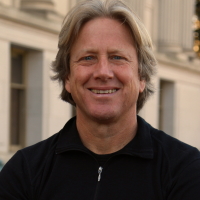 Dacher Keltner, PhD, is the founding director of the Greater Good Science Center (GGSC) and a professor of psychology at the University of California, Berkeley. His research focuses the biological and evolutionary origins of emotion, in particular prosocial states such as compassion, awe, love, and beauty, and power, social class, and inequality. He is the best-selling author of The Power Paradox: How We Gain and Lose Influence and Born to Be Good, and a co-editor of The Compassionate Instinct. He is also the host of the GGSC’s award-winning podcast, The Science of Happiness, and is a co-instructor of the GGSC’s popular online course of the same name.