[music]
Kim Mills: For the past week, protesters have filled the streets of cities and towns across the United States and even in some locations abroad. People from across the political spectrum of all races, ages, and backgrounds are joining in demanding an end to racism in response to the police killing of George Floyd in Minneapolis. Major companies are posting messages of support for racial equality.
While some demonstrations have been marred by violence and looting, most of the protests and protesters are peaceful. Why is this happening right now? What has made this moment right for collective action on this scale? What are the psychological forces that are driving people even in the midst of the COVID-19 pandemic to turn out in such numbers and in so many places?
Welcome to Speaking of Psychology, the flagship podcast of the American Psychological Association that looks at the connections between psychological science and everyday life. I'm Kim Mills. I'm speaking today with Dr. Lauren Duncan, a professor of psychology at Smith College who studies what motivates some people to try to change society while others are happy with the status quo.
While she didn't exactly write the book on the psychology of collective action, she did write the chapter of that name for “The Oxford Handbook of Personality and Social Psychology”. Her research digs into the reasons why people act on their political beliefs, looking at internal factors like personality and external factors such as current events. Thank you for joining us today, Dr. Duncan.
Dr. Lauren Duncan: Thank you very much, Kim.
Mills: Let's start by talking about what's happening today that's driving people into the street in great numbers and not just in big cities but in small towns and overseas. Let's be honest. We see injustices in the world every day, but rarely have we seen protests quite like what we're seeing now. What's different about today?
Duncan: Well, I have been talking with friends and we've been talking about the concept of tipping point. Anytime there's any sort of meaningful social change, there comes a tipping point where people who have been oppressed or treated unfairly or treated with violence for years and years and years have been protesting against it for years, but it's only when the "silent majority" people who aren't actually directly affected by this maltreatment.
It's only when those people finally take an interest and start to get outraged that that causes the things to tip over into wide-scale social change. You're asking about, why are there so many protests right now? Well, obviously, we have these events that so many instances of innocent or Black people getting treated violently by police and that's been going on for a long time. You're saying, what's different now?
There are a couple of things that are different right now. I would say the pandemic is actually one of the contributing factors. There are a lot of people who have been cooped up inside their houses for two months to three months and some of them have lost their jobs. They have a lot more time to be consuming social media, to be watching TV, to be up on political events.
The fact that, nowadays, everybody has a phone that has a camera on it and we also have many social media platforms means that many people are direct witnesses to protests to not just the events that's for the protest, but the protest themselves. For example, we've been seeing a lot on social media police reaction to peaceful protest. That has also fueled these continuing protests. The fact that people all have cameras, we're able to see these vivid visual images of unjust treatment.
They get posted on social media. Social media is one of the best ways to reach millions of people, so it spreads like wildfire. We have these distribution channels for amateur videos that is unprecedented. We've got the pandemic where people have more flexible time and also the availability of avenues in which to post videos and to share information and to analyze what's going on from a structural point of view. That's all been very important.
I would also say in terms of the pandemic, I've heard a lot of talk about these read articles about how the pandemic is spurring a lot of people to think about what's really important in life. For people who have been just caught up in the daily grind for years and years and years or months and months and months, going to their jobs, taking care of their kids, going to school, whatever, and basically saying, "I don't really have time to engage with what's going on outside of my neighborhood."
Because for a lot of these people, this is outside their neighborhood. Now, they're sitting at home with their families and a lot of people are re-evaluating what is important in life. People are saying, "I see these things on social media. That is the really vivid image. That is so unfair Who am I as a person? I need to take a stand." There are many ways to take stands and they're widely available.
Social media makes lots of ways to donate money or to even do things like just click a like or repost things. There are many low-cost ways for people to protest. Also in towns, cities across this country and in other countries, there are protests being organized daily. It's very easy to find a way to engage in this particular set of protests right now.
Mills: Your work posits a model that shows two distinct routes to collective action. Can you talk about what they are and how they're playing into the protest that we're seeing right now?
Duncan: Sure. In my model, we talk about the fact that there might be collective action that is taken. The distinction is, really, they're called movements of crisis and movements of conscience. In times of crisis, immediate reaction to maybe a killing or some sort of violence, people may react to what just happened in a disorganized way without any articulated political analysis of what's going on. The classic example of that are riots, the Watts riots where the Los Angeles-- what happened after Rodney King was acquitted in 1992. Not Rodney King, the four White police officers who had beaten King.
Mills: Right, exactly.
Duncan: When those four White police officers were acquitted of any wrongdoing in the beating of Rodney King, there was a response from Central Los Angeles communities of color. That involved some violence or destruction of property, et cetera, but you wouldn't necessarily say-- There was a diffuse feeling of anger. There's a feeling of anger. Things aren't right, but there wasn't necessarily an articulated political analysis of, "This is exactly what needs to change."
It was just this frustration. People were acting out, but then you have crisis of conscience, which tends to happen in times where basic human needs are met and people are agitating for rights. The women's movement is a classic example of this. Women have been agitating for equal rights for hundreds of years. Usually, what happens for women's movements is you don't typically have-- Basically, what you have is people who develop an analysis of the situation.
They recognize sexism and they recognize things that are unfair and then they take action that is very strategic and thought out about how we want to change things. What's interesting about this particular set of protests right now is it seems to be a combination of the two. There is a very sophisticated political analysis about institutional racism and about how the police state or structural-- the way police officers are socialized, how that has to change.
There's a sophisticated analysis about that, but there's also this sense of diffused anger, particularly in communities of color that we can't lose another life. We can't lose another life. It's combination of the two. What's interesting is, oftentimes, when people go to a protest because they have this feeling of anger and they're not really sure what to do about it, when they go to a protest, they often then develop they're exposed to the sophisticated political analysis that ends up sustaining long-term activism.
Mills: Something like, say, the Women's March right after the election of Donald Trump, that seemed very diffused like there really wasn't a clear agenda. Is that why that seems to have fizzled out?
Duncan: Well, I think that definitely is an example of-- that's another example because women's rights have been a movement for so long. That was a combination of both again. There were a lot of people who had never participated in protests before who attended the marches right after Trump was elected because-- right after he was inaugurated because they were just feeling so hopeless and that they needed to be around people who felt the same way they did and they didn't.
A lot of young people who didn't have any sophisticated analysis of this, they just knew they didn't like this fact that Trump got elected. They were there, but there were so many different groups that went to these marches. They weren't just women's groups either. They were fighting for immigrant rights and anti-racist groups and you name it. If it's on the progressive left, they went to that movement. I think trying to sustain something at that scale is going to be really hard.
If the original marches that happened right after the inauguration, if they were dependent on people who needed an immediate outlet and not totally made up of people who had this sophisticated political analysis, of course, the movements are going to get smaller, but I wouldn't say that these movements have disappeared. They haven't. They've just taken more standard paths now. They're being filtered through organizations that have been created since the inauguration of Trump. Even the #MeToo movement, you could argue that that's--
Mills: That's part of it.
Duncan: Yes, exactly.
Mills: Yes, I could see that. There's a new poll out that shows a large majority of Americans, 74% support the current protests and that more than two-thirds believe the killing of George Floyd wasn't an isolated incident. This contrasts with 2014 when police killed an unarmed Black man in Ferguson, Missouri when Michael Brown was killed and in New York City, the case of Eric Garner. Back then, there was a poll that found 51% of Americans thought those killings were isolated incidents. This seems like a big change in just six years. Now, I realized that polls are just a snapshot in time, but has public opinion really changed that much? Is that a big change over a short period of time?
Duncan: This is why I'm arguing this as a tipping point. I think this is what happened. This is what happened with gay marriage. For a long time, people were arguing that non-straight people deserve the rights to get married, et cetera. That went nowhere for years and years and years. Maybe it's generational replacement. Part of the time, it's younger generations getting to be voting age, whatever, or just a series of events that happen that, again, convinced the "silent majority" that, finally, like, "No. We need to actually speak up for these people's rights."
I would say that the change in the polls that you just talked about is really encouraging. I'm really happy to hear that. To me, that's evidence that things may actually have a chance to change. We've seen in the newspapers recently too about how police departments across the US are reconsidering their-- some are talking about completely-- the Minneapolis Police Department is talking about completely starting over with how they're going to police or how they're going to think about police. That is really what needs to happen. I've just been reading it. Town after town is doing this. I'm feeling like this is a tipping point and that things hopefully will change now.
Mills: Your work talks about how identity is related to collective action. Can you talk about what that means?
Duncan: Yes. Hundreds and hundreds of studies in psychology have shown that there are three components, three things that, if you have them, tend to be related to participation in collective action. The first is identity. Identity means, oftentimes, when we've done research on this, we're usually talking about groups who haven't held a lot of power and influence in society.
African Americans, you might talk about versus Whites. You might talk about women versus men, non-straight people versus straight people, the people who don't have a lot of power and influence in society. Those are called social identities, the group memberships. Everybody has a bunch of social identities that influence how they're treated in society and how they think of themselves. Everybody's got a unique combination of those sorts of social identities.
Some tend to be privileged and some tend to be treated less well. When we talk about collective action, we talk about identity. We're talking about organizing around subordinate group identity, so feminists identifying around their gender identity, African Americans organizing around their racial identity, et cetera. Most research on collective action has shown that when people identify with their social group and link their fate to the fate of other members of that group.
They don't just see themselves as individuals. They say something like the way African Americans are treated in society is going to impact how I'm treated, the way I'm treated impacts other members of my group, et cetera. If they have a sense of common fate, if they think that what happens to them will have an impact on other members of their group and vice versa, that tends to be their social identity.
That's the identity component, but you can identify with a social group like you can identify as gay without having a politicized identity. The next part that you really need is a sense of injustice. The idea that I'm a member of a particular social group and my group has been unfairly treated in society, we've been unfairly deprived of power and resources, we've been discriminated against, we've been treated with violence, et cetera. It's not our fault. There's systemic reasons and that's really the key.
The key is to get away from these classic American meritocracy arguments that the reason we haven't had a woman president yet is that just women aren't interested or women aren't good enough. It's because there's systemic sexism in our society. The reason that African Americans in Minneapolis are seven times as likely to be treated with violence by the police than White people is not because the African Americans in Minneapolis are seven times more violent. It's because there's systemic racism there.
Once you have a systemic analysis and you get away from the individual's fault, it's because there's some structural stuff going on. That helps you politicize that particular identity. There's identity and justice and then the other one is efficacy, which is basically a belief that you need to work together as a group to change things and that you have to believe that your actions will make a difference.
That's how the three are related. When we talk about our allies, for example, White people who are out on the streets protesting right now, you can think about expanding identity so that it isn't just that you're focusing on members of your group. For White people protesting right now, it could be that they have embraced an anti-racist identity, which is a very good identity for White people to embrace when they're going to do this work.
It could also be that they've expanded their definition of identity to think about all of humanity. Oftentimes, you'll see religious groups. When they do this sort of activism, they're talking about morality and they're talking about we're all human and they're not focused so much on their individual racial identity. They're talking more about all humanity. There's two ways that works.
Mills: Yes, or even their individual religious identity. It's not like an Episcopal is marching for Episcopals.
Duncan: Right. They're marching based on maybe an identity that was being formed or was helped in its formation by their religious beliefs or [inaudible 00:20:07] beliefs. The key identity there would be that I believe that there's no difference between human beings of any racial group. What happens, it's this sense of common fate. What happens to African Americans has an impact on me as a moral person as well. As long as you have an identity that can embrace something like that, then that can also be motivating for activism.
Mills: Looking through a historic lens as well as a psychological lens, are there factors that tend to make certain protest movements more or less successful?
Duncan: Yes. This is the tipping-point argument and the silent majority argument. Martin Luther King, Jr. was a pretty brilliant organizer. One of the things he did to help the civil rights get act, get passed, et cetera, was he was very strategic when he was working with local communities. The civil rights movement had been going on for years and years and years. African Americans had been protesting unfair treatment and discrimination and segregation for years.
The tipping point came when he and his other leaders of the movement decided to hold protests in towns where they knew that there was a reactionary mayor or some sort of government leader where they knew that the police would turn fire hoses on them, where they knew that they would be treated with violence. They would choose those places to do peaceful marches. It had to be peaceful. The protesters had to be well-dressed because they were trying to convince the silent White majority in the North that they deserved to be treated like White people.
They called the media in. When somebody sitting up in their farmhouse in Maine opened the newspaper or saw on TV these images of these very respectable-looking African Americans doing something very peaceful, but getting treated with this obvious disrespect and obvious violence, then that was a way. Getting this dramatic there's-no-way-you-could-think-that-this-was-okay image, once you did that, then it was easier to-- that's when the tipping point comes is when-- That's one of the factors that can help create this tipping point, is when you have these clear contrast. It's what's right and what's wrong.
Mills: Setting dogs on people or turning the fire hoses on them was shocking?
Duncan: Yes, exactly. Somebody sitting in their farmhouse in Maine has never seen that before. You can read about it in the paper all you want. When you see the image, the images are just-- I mean, human beings are wired to respond to visual images. When you see it or you hear it or both, it's just much more likely to help create that, that thing that gets people who have privilege, who don't "have to do anything" spurs them into action.
Mills: Yet there were frightful images during the Vietnam War protests. I know. I was alive at the time. Certainly, I was aware of what was happening that you would hear people saying, "Well, those dirty hippies, they deserve it."
Duncan: Right.
Mills: How is that? How does that contrast with what African-American people did in the '60s?
Duncan: Well, so it's very interesting. Human beings seem to have this natural tendency to group people into us versus them. One of the ways that you can get if you're part of a subordinate group and you want to get the "silent majority" on your side is you want to get the silent majority to see your group as one of them. This example that I was giving you with the peaceful civil rights movement protests where they said, "You need to dress in your Sunday best. You need to be polite," it's ridiculous.
You shouldn't have to do any of that, but this was a tactic used so that White people in the North, in particular, would look at these people and say, "These people are exactly like me. Maybe their skin's a little bit darker, but they're exactly like me." When you're talking about "dirty hippies," most of whom were White, they didn't have that whole- Especially college students, White college students, part of the baby boom who were protesting Vietnam, they were mostly from middle-class White backgrounds.
They didn't have a whole legacy of knowing that when you go out and you protest that, you're trying to convince the "silent majority," and so you need to appeal to them and their conservativism, right? These were kids who were like, "Hey, I'm going to do what I want" and "This is wrong" and "They're going to listen to me." I think that's the difference. Does that make sense?
Mills: Yes, totally, because I remember similar things with LGBT rights movement where there would be like the Christopher Street March in New York and one faction would say, "Oh, my God. All of these people are naked and this is horrible." Another fraction would say, "But this is our identity and we're not going to change."
Duncan: Right. I'm not arguing that there's a right way or a wrong way to do any of these things. I think most movements have multiple strands and different constituents and different people who participate and they probably need all of them. For some people who are identifying with the gay rights movement and who want to fight for the rights of gay people, it's really important to show the totally flamboyant gay men out there or naked people or whatever.
That was really important to get some percentage of the public on board. If you're talking about trying to convince the "silent majority," first of all, you're trying to define that in a way where you don't really have very much information, but you're trying to appeal to all sorts of people. I think most movements need different types of people, a range of different types of tactics and people to be successful. They tend to be more successful if they've got a range.
Mills: How important is one individual to a social movement? Does a movement need a Gandhi or Rosa Parks or Lech Walesa to succeed more quickly?
Duncan: Well, the interesting thing about Rosa Parks, of course, is that she had been doing protest movements for years and years. She was strategically chosen to be a symbol to-- I think that is the point is that individuals sometimes become symbols or figureheads just because they happen to be in the right place at the right time, but sometimes they're strategically chosen by movements to spur a particular reaction.
She was chosen to protest the segregation on the bus because who-- Again, the silent majority, if they see this harmless-looking, little, old lady on a bus and she's so tired after her long day at work, who could ever say that, yes, she needs to go sit in the back? Sometimes it's strategic. When you talk about leaders, some people are charismatic. They tend to say things in the right way that happens to correspond with what needs to be heard at a particular time. Definitely, individuals are important sometimes for strategic reasons, but sometimes because they just happen to be the right person saying the right thing at the right time.
Mills: Let's change tracks here a little bit and talk about the role of family involvement in political activism. Children of anti-war demonstrators, for example, are they any more likely to become activists today and what might be the impact on kids who are being taken to protests right now?
Duncan: Oh, absolutely. The research in psychology has shown a generational impact. My own research showed that when we're talking about the protests against the Gulf War in 1991, I was at the University of Michigan at that point. Right around the time when President Bush, the first President Bush, was deciding whether or not to invade Iraq or not, I mean, Kuwait. Anyway, what we found was that kids, so college students, who had parents who had protested the Vietnam War were much more likely to protest the Gulf War. Kids who had parents who had either fought in Vietnam or were pro-Vietnam supporters were more likely to be on the support our troops side. Interestingly, kids who had parents who didn't have any sort of reaction to the Vietnam War, active reaction, were also more likely to not do anything in response to the Gulf War. This is just one example of a study. There have been many studies that show that parents model behavior for children. They model, "How do you solve political problems? How do you react to political problems?"
When parents are taking children right now to these protests, it will probably become just a part of how children see when they become adults, "This is one of the things you can do. This is a tool you have in your toolbox if you see something unjust." It's not just the behavior, right? They're also learning particular attitudes too at the time. I would say there's two points I want to make here.
One is that whatever your parents are modeling for you as a child becomes your default for the way you're just going to see, "This is how I deal with things in general." When we're talking about young adults, young adults are in identity development. They're trying to figure out who they are, where they fit into the world, what they believe in. They may be questioning what their parents have taught them. Is it consistent with what they believe now?
They're trying to figure out commitments in that way. Lots and lots of research has also shown that whatever's happening when you're a young adult is going to have a long-lasting impact on how you see yourself even many, many years later. The classic example we have of that are these protesters against Vietnam or Vietnam War supporters, baby boomers in general, that may end up defining themselves even many years later a 70-year-old as '60s radicals. These events that are going on right now can have a huge impact.
Mills: Any thoughts on what we should expect to see in the coming weeks and months? Does this protest have legs? Can you tell yet?
Duncan: Well, just the fact that I'm reading in the paper about police departments making changes in my own town, my small town of North Hampton here, we've had online city hall meetings with the public commentary on the last one. I think it's usually supposed to be just a couple of hours. The first one was six hours and then it was like midnights. They had to add another meeting a couple of days later and that was eight hours.
There are hundreds of people, my town of 30,000, hundreds of people who were getting onto the Zoom meeting and basically talking about cutting funding to the police department, et cetera. You're seeing that in communities all across the United States. I think that has legs. I think that the fact that people have organized over social media can have legs. This is true of any movement and it's easier these days because of the way things are advertised on social media or presented on social media.
It's very easy for people to drop in for a day or two and then drop out. That's super easy when they call it that. That can be clicktivism. That's one of the terms that we insist and you just click a like and that's it. Some percentage of people will just end up dropping out of it altogether, but this will have an impact. Some percentage of people will continue with this. I personally see this as a tipping point.
I think there is going to be more sustained commitment to this, especially with younger people. The other thing is it's really important for people who start participating in activism to get connected to a community and to make friends and to feel support because it's really hard to be angry all the time. They need to find ways to connect in with an organization or a group that has learned how to manage the emotional toll that it takes on people to do this sort of thing. This is not easy work for anyone.
Mills: Well, thank you for joining us today, Dr. Duncan, and for sharing your insights into these challenging times we're experiencing.
Duncan: My pleasure.
Mills: The American Psychological Association has information and resources on our website regarding racism and disparities along with techniques for coping and minimizing the stress and anxiety you might be experiencing right now. Visit us at apa.org. You can also find previous episodes of Speaking of Psychology on our website at www.speakingofpsychology.org.
You can subscribe to our podcast on Apple, Stitcher, or wherever you get your podcasts. While you're there, please give us a rating. If you have comments or ideas for future podcasts, email us at speakingofpsychology@apa.org. Speaking of Psychology is produced by Lee Wierman. Our editor and sound engineer is Chris Condayan. Thank you for listening for the American Psychological Association. I'm Kim Mills.
[music]
[00:36:32] [END OF AUDIO]


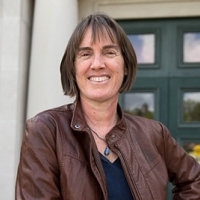 Lauren Duncan is the William R. Kenan, Jr., professor of psychology at Smith College. She received a PhD in personality psychology and a graduate certificate in women’s studies from the University of Michigan. A passionate and award-winning teacher, Lauren offers courses in political psychology, the psychology of women and gender, and the psychology of political activism. Her scholarly research focuses on two questions: (1) What motivates some people to want to change society whereas others want to keep it the same? (2) What motivates some people interested in political and social issues to act on their beliefs?