Kim Mills: "Turn on, tune in, drop out." This phrase was made famous by Harvard psychologist, Timothy Leary, who in the 1960s, was studying whether psychedelic drugs, particularly psilocybin and LSD, could have therapeutic uses. For a lot of reasons, including that he took the drugs along with his students' subjects, Leary was fired from Harvard and LSD, psilocybin, and other hallucinogenic drugs were deemed illegal by the Food and Drug Administration.
Fast forward to 2020, psychological research with hallucinogenic drugs is now a legitimate field of study again, with the FDA allowing a handful of medical research organizations to conduct what's called, 'breakthrough therapy' with psychedelics. Researchers are looking at whether these drugs can be used to treat depression, anorexia, PTSD, and even alcohol and tobacco dependence. In June, advocates in Oregon announced that they had gathered enough signatures to put an initiative on the state's November ballot that would legalize psilocybin assisted therapy. Meanwhile, Washington, DC voters are likely to consider a psilocybin decriminalization measure this fall, following the examples of cities including Denver, Colorado and Oakland and Santa Cruz, California, which have recently passed similar measures.
So what's different about today's research using psychedelics? How do drugs that have long been considered taboo in polite society become tools for treating a growing number of mental health issues? We will be delving into those and other questions today here on Speaking of Psychology, the bi-weekly podcast from the American Psychological Association that explores the connections between psychological science and everyday life. I'm your host Kim Mills.
Our guest today is Dr. Roland Griffiths. He is director of the Center for Psychedelic and Consciousness Research, and a professor of psychiatry and behavioral sciences at Johns Hopkins University in Baltimore. The center's research group was the first to obtain regulatory approval in the United States to re-initiate research with psychedelics in healthy volunteers. Their 2006 publications on the safety and enduring positive effects of a single dose of psilocybin is widely considered the landmark study that sparked the renewal of psychedelic research worldwide. Dr. Griffiths himself has published widely on the psychological effects of sedative-hypnotics, caffeine, and novel mood-altering drugs.
In 1999, he initiated a research program investigating the effects of psilocybin in healthy volunteers, in long-term meditators, and in religious leaders. Welcome to Speaking of Psychology, Dr. Griffiths.
Dr. Roland Griffiths: Thank you, Kim. I'm pleased to be here.
Mills: My first question is, how did you get into this line of research? Where were you in the 1960s and what were you doing? On a more serious note, how were you able to do studies on psilocybin in 1999?
Griffiths: My training was in psychopharmacology, interdisciplinary program in psychology and pharmacology. I received my PhD at the University of Minnesota and then came out to Johns Hopkins to pursue research on mood-altering drugs. As you mentioned, I did quite a bit of research on sedative-hypnotics, caffeine, and a variety of other kinds of compounds.
Most of our research was focused on drugs of abuse. About 25 years ago, I started a meditation practice that got me very curious about the nature of altered states of consciousness, and the potential for transformative change. In so doing, I became reacquainted with this older literature on psychedelics that suggested that they might be useful tools for investigating the various states of conscience that really I was finding so interesting through meditation.
It was that, that got me interested enough to put in to our IRB and to FDA, a protocol to investigate what turned out to be a high dose of psilocybin, and comparing it to an active control compound, methylphenidate, under deeply blinded, double-blind conditions to volunteers who were psychedelic-naive individuals. In that sense, it was a study that had not been done for some decades after the shutdown of this research in the late 1960s, early '70s.
That was my lead in to this area. I was curious about states of consciousness. I had a personal sense of ambivalence about whether or not administration of psychedelics was going to lead to or fulfill the kinds of expectations that I saw promulgated by psychedelic enthusiasts. At the time, those seemed to me to be overzealous from my perspective, but indeed the results of our initial study were nothing other than stunning to me.
What we showed was that when psilocybin is given at a reasonably high dose to carefully prepared volunteers, who had been very carefully screened and with whom we have spent significant time preparing them for a psychedelic session. When it's given to these people, they end up reporting having had experiences that are among the most personally meaningful and spiritually significant experiences of their entire lifetimes. They may compare it, for instance, to the meaningfulness of the birth of a firstborn child or a death of a parent.
More stunning than that was that the attributions that people made to these experiences endured over time. Months after the session, people would continue to claim that these were continuing to be the most meaningful experiences of their lives. They made many positive attributions in terms of changes and moods, attitudes and behavior to the experiences. There's something really fundamentally interesting about these kinds of experiences that for me as a scientist has just been riveting to explore, because so little research had been done on these compounds for some number of decades.
Mills: That sounds almost magical in a sense that this could happen, and a single dose could be so transformative for people. I'm just wondering, how much do you know about what's happening in the brain that make this happen? Are you doing, for example, FMRI or PET scans during the course of the administration of these drugs?
Griffiths: Yes, we are. Just to get to your point, it seems almost magical. It does seem unlikely, doesn't it? One of the reasons I think that the scientific community, among others, and the psychiatric community was reluctant to even believe that these kinds of effects exist, because we're unaccustomed to seeing abrupt changes in what amounts to personality and dispositional characteristics that occur so suddenly, but can be done prospectively.
What in the world is going on here? How do we wrap our heads around this? How do we understand it? The answer that it's complex, and it's multi-level. We know quite a bit about how these compounds work, but in a larger sense, we know very little. Let me just lead you through what we know and how we're trying to discover it. Psilocybin, along with the other so called, 'classic psychedelics' which would include DMT, which is the active ingredient in ayahuasca and mescaline, which is the active ingredient in the peyote cactus and LSD. All of these classic psychedelics have their principal effect by binding the serotonin to a receptor. We know that from pre-clinical studies and from clinical studies in which we have given receptor blockers. So that initiates a cascade of activity.
We know that under acute administration of psilocybin that there's vast network inter-connectivity within the brain. There are areas of brain that are speaking with one another, if you will, that normally don't, and there's some organization to that, it's not just chaos. Signals of that sort have been demonstrated from MRI imaging studies that take a look at the brain function during acute psilocybin or LSD administration. Once psilocybin is eliminated from the body those brain circuits fall back into what appears to be a much more normal looking pattern.
One of the questions then is what enduring changes might occur in those brain systems? We are doing a before and after MRI studies and other imaging kinds of studies to try to get a sense of what kind of signaling is going on there, and we have some sense of that. One of the interesting observations that's been made with respect to brain function is that under acute administration of the psychedelics, there's a decreased functioning in something called, the default mode network. Now that's an interesting brain network that is usually online when people are told in the scanner, "Don't do anything," and it's associated with mind wandering or self referential behavior, also perceptive behavior of various types. The default mode network function is increased in depression, is decreased under psilocybin, and interestingly it's decreased in long-term meditators. That fits with a story, if you will, of a decrease in self referential processing, decreased egoic functioning, if you.
Mills: I'm sorry, egoic? I'm not familiar with that word.
Griffiths: The egoic.
Mills: I got you, egoic.
Griffiths: To fall back on Freudian terminology, this sense of self and this self referential inner discussion that we have falls away. What emerges from that, and this is in the phenomenology of the psychedelic experience as well, is the present moment. So the past and the future drop away. One is very present with whatever is, and that's one of the qualitative features of these kinds of experiences. As well people often report, from a phenomenological point of view, something called a mystical type experience, which is this sense of inter-connectedness of all people and things, a unity if you will, and that's often coupled with a sense of preciousness of that experience and the truth value of that experience. That memory for that experience is what endures.
We're just beginning to explore the basic brain processes there, but then you can approach this at the psychological level and say, "How are people altered psychologically?" People make these positive attributions to these experiences in terms of their moods, their moods tend to be better, they're less inclined to become upset, they're more mindful, their attitudes, they're more curious and engaged with life, they're more sensitive to other people and their behaviors. People are more likely, if these are healthy volunteers, to take on self care activities like a better diet or change their exercise routine or engage more in a more satisfying way with their loved ones.
One of the constructs that we've been working with in terms of explaining how people are changed enduringly, is that of psychological flexibility. It seems that these experiences, for whatever reasons and through whatever mechanisms, be they basic brain functions or psychological- which of course blend at some point- they result in an increased psychological flexibility in which people seem to have more curiosity about the nature of mind. They're more able and willing to endure a discomfort and they have a increased sense of self efficacy. I think it's that combination of things that can turn out to be therapeutically useful if we're studying things like the existential anxiety or distress attached to a life threatening illness, a major depressive disorder or drug addictions.
Mills: What you are describing, the effects of this drug on people, just sounds wondrous, and not to be glib, but how do I get some? I'm just wondering do you think that this drug should be deregulated or more widely available because it sounds like it could help people in everyday life?
Griffiths: Thank you for asking that and the answer is that we need to be very cautious about this. The psychedelics have significant risks attached to them. Sometimes those risks get under-emphasized or de-emphasized by psychedelic enthusiasts. It's something that we have been very interested and concerned about. We conducted a large scale survey study in people who had used psilocybin in non-medical circumstances, and ask them to tell us in great detail about their most challenging or difficult experiences and the consequences of those experiences.
The percentages of endorsement here don't represent the percentage from first administration or a single administration. These are people for the most part who had used psilocybin on any number of occasions and they were describing their very worst experience, but nonetheless the results are really quite sobering. About 10% of those people endorsed having put themselves or others at risk for serious harm. People can engage—they can become panicked or confused and engage in dangerous behavior. That could include running out into traffic or literally jumping out of a window or harming someone else in fear.
Mills: You said that's 10%. What about the rest of the folks who answered this survey?
Griffiths: They didn't endorse that. So 90% didn't but 10% is reasonably high. Another 10% said that they reported enduring psychological problems that lasted a year or longer after the experience. That's certainly a concern. So panic is one, panic and confusion and engaging in dangerous behavior is one major concern, and the other major concern we have, is that in vulnerable populations, so people who may have a predisposition to psychotic illness, the thought is that an experience of this sort might be enough to precipitate enduring chronic illness.
It's for that reason that we, from all of our clinical studies, exclude anyone with a personal or family history of schizophrenia and currently, we also exclude people with bipolar disorder if it has bipolar One, which can have psychotic presentations. There is concern about this. We are strong advocates, our research center, for systematic investigation of the risks and as well as the benefits and therapeutic efficacy of these compounds. We think that that's best played out using the tools of science that we have, through systematic research and ultimately regulatory trials that are currently ongoing.
There are two companies right now that are leading trials to investigate psilocybin as a treatment for either treatment-resistant depression or major depressive disorder. If those trials proceed- and they're under the direction or under the control of FDA—if those proceed and are positive, then we would expect within four to six years from now, psilocybin may be approved for medical use. I'm thinking, if it were, it's likely to be approved under very controlled conditions in which the drug is dispensed to clinics and providers who know how to manage these types of experiences, and who can provide the screening and support during the sessions, and the aftercare that is necessary to optimize experiences and minimize risks.
Mills: So it would be what you're doing right now, where there would be people present at the time that somebody took the drug, maybe you can talk about that and what the therapists do while they're sitting there, because I would be concerned. It still would be possible, even though you're carefully screening your participants, for somebody to have what we from the '60s and '70s would call a bad trip. What happens then?
Griffiths: Yes, well let me describe the setup for the sessions and then we can go into some of those more difficult experiences. People are carefully screened, we do psychological testing with them, we go through a full SCID [Structured Clinical Interview for DSM-5]. We need to assure ourselves that we can develop a rapport and trust with them because these experiences at high doses of something like psilocybin can be very disorienting and people can feel really quite psychologically vulnerable. We spend maybe eight hours in contact time with them, and there are two therapists involved in this prior to the session.
The psilocybin session itself involves people coming in, having had just a very light, low-fat breakfast, taking a capsule that contains synthesized psilocybin, and then we have them lay on a couch for the day. Psilocybin effects last anywhere from six to seven hours. We have them lay on the couch with eyeshades and headphones through which they listen to a program of music. We ask people to direct their attention inward, on their inner experience, and there are two therapists or guides present throughout the session day. They're there to provide reassurance to the individual should they feel anxious or distressed. So we're essentially creating this safe container for people to feel really quite vulnerable and explore the inner workings of their mind, if you will.
The invitation is that this is not—it's not a guided session, per se. We're not asking people to go anyplace in particular, what we're doing is asking people just to be with whatever it is that they're experiencing. Now, very often and very commonly, they'll be visuals, images may appear or patterns may appear, but that is not true of everybody, but for many people, emotions may vary widely from, as I described, transcendent and open-hearted, to experiences of really great anxiety or fear, and anything in between. People that are on these high doses are really often incapable of navigating around the world in any normal circumstance. These are very high doses of psilocybin.
We check-in with the volunteers throughout the session and if they're experiencing significant anxiety or fear, we'll provide reassurance to them. We may take their hand, tell them they're doing just fine, reassure them there's nothing in the experience that can harm them and what we invite them to be is curious and interested in the nature of the experience. That's one of the profound teachings that come out of these experiences, and that is that the mind is a remarkable playground of objects that emerge, thoughts that emerge in mind, images that may emerge in mind, but that's just it, it's a play of consciousness and if one can recognize that, even if what is emerging is fearful imagery or fearful thoughts, then one comes out with just a renewed sense of control and ability to tolerate and be interested and curious with whatever it is that emerges in mind, be it pleasant or unpleasant.
I think therein lays part of the power of the psychological flexibility, because if one comes out of an experience having face their demon, if you will, and that could be literally or figuratively a vision of a demonic figure that's about to destroy them, but it may as well come in the form of feeling that they're dying or the feeling that they've gone insane and they're never going to get back to consensual reality. These difficult experiences can take any form and shape and they'll be unique to the individual, but if one can experience that and stay with it and see it for what it is, and that is that it's simply a temporary illusion of consciousness, then one comes out of those experiences and is able to engage in normal everyday life, and the difficulties one normally faces in life, and recognize the extent to which they're wrapping their own thoughts around and they're becoming their own worst enemy in how they're holding their experiences of life. Therein, I think, lies the power of this psychological flexibility.
Mills: Some of the people you have worked with are terminal cancer patients, right? What I've read is some of them confront the idea of death and then when they come back from having taken the drug, they are less fearful and are able to live what's left of their lives in a very mystical state almost.
Griffiths: Yes. The first clinical population that we worked with were individuals who had a life threatening cancer diagnosis and had significant anxiety and depression. We thought this certainly was among the most difficult existential dilemmas that we as sentience human organisms can face. The remarkable thing about that was that people had these experiences, sometimes of spiritual nature but not always, but there was a larger framing that came out. Now, some people would make the claim that their experience reassured them that death was just an illusion. Of course we have lots of religious traditions that teach just that, but that's not a necessary outcome. There's another way of holding these experiences and so the precise interpretation of this is going to vary—I think it's going to vary depending on the culture of the person and some preexisting ideas or dispositions.
Mills: If you believe in an afterlife, you may experience that sense?
Griffiths: Yes, and some people go in not believing in an afterlife, but come out believing in the possibility of an afterlife. Other people would say what they really appreciate is just the larger mystery of what we don't understand about this whole project of what it is to be a conscious human being. That there's an elegance to being a sentient human being. There's a connectedness to this project of consciousness that's all around us and to which we're sensitive, that is so marvelous and so inscrutable that there's something absolutely beautiful about this play of life. So people are much more content to just live their lives and they recognize everyone is going to die at some point. The anxiety somehow for many people just drops away and they're able to live their life more fully, whether or not they believe in an afterlife.
I should say that one of the things that we're seeing across these studies though, is this altered sense of what we believe reality to be made up of, that it's a much larger project than many people have contemplated prior to going into these sessions. That it's simply much more, it's much larger and more mysterious, and there's a sense of humbling that comes out of having that experience. It really a sense of astonishment at the largeness of the project, and a sense of gratitude that comes out for being gifted this opportunity to be this sentience, highly evolved human creature, walking the face of the earth, and we find ourselves with this astonishing fact that we are aware that we're aware. It's really so puzzling, but it's the very nature of what it is to be a conscious human entity. There's grander and beauty and humility that comes out of that.
Mills: You'd alluded to using hallucinogens to overcome alcohol addiction. I'm just wondering, that sounds almost counter-intuitive that a drug that makes you in some sense feel, if not high, at least ecstatic, how could that be effective to help someone who's got a substance use disorder, who's probably using the substance to feel some, if not euphoria, at least to feel somehow better, how does that work?
Griffiths: Well, one point I'd make right off the top is that the classic psychedelics are not considered drugs of addiction. The National Institute on Drug Abuse does not classify them as drugs of addiction or dependence. They're not self-administered by laboratory animals. While they may produce positive states of consciousness, they also produce very negative states of consciousness.
As a matter of fact, the Addiction Research Center in Lexington, Kentucky that developed a lot of original measures of subjective effects of drugs had something called the LSD scale. That scale that was a rating scale people completed. That scale was thought to be a prototypic scale to measure dysphoria or unpleasant effects of drugs. These certainly don't routinely produce positive effects. I should say, I didn't mention, about 30% of people undergoing our trials, which are optimized for producing positive changes, about 30% will report having had a deeply fearful experience at some point during that session. It may be of short duration or longer duration, but that aspect of the experience is not escapable, but you ask a good question.
Why would these be useful for drug addiction? When we initiated our first study in the addictions, we actually chose tobacco dependence. These are studies that have been done by Matt Johnson and our group. We thought we didn't want to start out with cocaine or alcohol or opiate dependence because we didn't know what was going to happen, we didn't know if these were going to have positive effects. We ran initially a small pilot study in 15 chronic cigarette smokers and combined psilocybin administration with cognitive behavior therapy for cigarette-smoking cessation. The results showed that 80% of that group was abstinent, biologically verified abstinence at six months. Now that's actually an outrageous outcome for cigarette smoking.
Mills: Because it's so high.
Griffiths: It's so high. It's unthinkably high. We now are proceeding—Matt's running a comparative efficacy study, comparing psilocybin intervention with nicotine replacement, but other investigators, Michael Bogenschutz at New York University, is doing very promising work in alcoholics, and he's seen a very positive signal there. Peter Hendricks down at University of Alabama in Birmingham, is showing a positive signal with cocaine in his preliminary studies. We're about to launch a study in opiate users.
So it does appear, and this is one of the remarkable features of the psychedelics as therapeutics. It does appear that they have cross or trans-diagnostic efficacy. That they act across a range of different conditions. We're accustomed to treating drug dependence with a pharmacological tool that's specific for the receptor and the drug for which people are depending on.
Mills: Like methadone for heroin addiction.
Griffiths: Correct, and nicotine replacement for-
Mills: For smoking.
Griffiths: -cigarettes, right, but here we had this intervention that appears to be efficacious across a range of drugs. Again, it's pointing towards the psychological flexibility as being the mediator of this, rather than interacting at a specific receptor site system that's underlying the addiction process of the particular problematic drug.
Mills: Just a last question. We may have listeners who are experiencing depression, substance use disorders or other mental health problems, who think that this kind of therapy sounds like something they would like to participate in. How do they get involved? If not at Johns Hopkins, where can they apply to become participants in tests and trials?
Griffiths: As I mentioned, there are two entities that are running clinical trials right now, except for all research centers being shut down at least temporarily, those trials will continue. The Usona Research Institute and Campus Pathways. If people Google those, you can find them online. You can enroll in their trials. Both of those companies have a series of sites across the country that are enrolling volunteers. We're enrolling volunteers for the Usona trial at Johns Hopkins in Baltimore, but I think they're about 10 sites across the country for each of those entities. So people could apply for those studies.
That said, the inclusion-exclusion criteria are substantial, and people may get randomized to a placebo or a very low dose condition, but that's the nature of what's required in order to run regulatory trials.
Mills: Sure. Dr Griffiths, thank you so much for joining us today. This conversation has been enlightening on many many levels.
Griffiths: Let me just add that your listeners could also look up our center website. If you Google, Hopkins psychedelic, you'll find the Johns Hopkins center for psychedelics and consciousness research. We're running a number of studies through our center, some of which we're recruiting from out of state. So if you look at the studies that we're recruiting for, and those are consistent with a medical condition you have or interests that you have, you should feel free to complete the online screeners.
Mills: We can add some that information to the program notes that we'll put on our website. Thank you. For our listeners who want to learn even more about the use of psychedelics in psychotherapy, you can also read the cover story in the March 2020 issue of The Monitor on Psychology, the magazine of the American Psychological Association. You can find that on our website at apa.org/monitor.
If you have comments or ideas to share about our podcast send us an email at speakingofpsychology@apa.org. That's speaking of psychology, all one word.org. Please consider giving us a rating in iTunes, it really helps. You can find previous episodes of Speaking of Psychology on Apple, Stitcher, Spotify or wherever you get your podcasts. You can also go to our website and get all episodes at www.speakingofpsychology.org. Thank you for listening. I'm Kim Mills with the American Psychological Association.
[music]
[00:44:39] [END OF AUDIO]


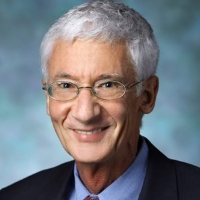 Roland Griffiths, PhD, is a professor in the departments of psychiatry and neurosciences at the Johns Hopkins University School of Medicine. His principal research focus in both clinical and preclinical laboratories has been on the behavioral and subjective effects of mood-altering drugs. His research has been largely supported by grants from the National Institute on Health and he is author of over 400 journal articles and book chapters and has trained more than 50 postdoctoral research fellows.

