[music]
Kim Mills: The social and behavioral sciences have much to say about the reasons for many of our behaviors in response to the novel coronavirus. How we perceive and navigate threats, whether we believe conspiracy theories, how we demonstrate altruism or not are all behaviors that scientists for many disciplines have studied for years. In late March, several scholars posted a preprint of an article that was developed by pulling together experts from many disciplines to look at what the research tells us about these and other behaviors. What they concluded may help at least some of us better understand why we're doing what we're doing, and if we're attentive and intentional, these insights might actually help us act in ways that will help flatten the COVID-19 curve.
Welcome to Speaking of Psychology, the flagship podcast of the American Psychological Association that examines the links between psychological science and everyday life. I'm Kim Mills. Our guest today is Dr. Jay Van Bavel, an expert on group identities, moral values and political beliefs. He is an associate professor of psychology and neuroscience at New York University where he directs the social perception and evaluation lab. His research examines implicit bias, diversity and inclusion, team performance, cooperation and decision-making. Welcome to Speaking of Psychology, Dr. Van Bavel.
Dr. Jay Van Bavel: Hi, it's nice to be here.
Kim: Great. You recently gathered something like 41 experts to draft a summary of research findings relevant to how best to handle the COVID-19 response and you published this article that united psychologists, economists, sociologists and others for review of research on fake news and conspiracy theories, leadership, threat perception and other issues that are all at play in the ongoing public health crisis. Can you tell our listeners some of what you all concluded?
Dr. Jay: Yes. Basically what we tried to do is pull together what we thought was the best evidence and research in many fields that might be relevant to COVID-19. Obviously COVID-19 is new and we're doing tons of research on it right now but there isn't a lot of published research so we drew as much as we could from prior pandemics, public health messages and other topics that we thought were relevant.
Many of the ideas that we came up with were around things like getting people to manage the threats, encouraging social connection during the period of isolation and distancing, also work on how to deal with misinformation. You mentioned conspiracy theories as well as fake news and how to give leaders and members of the public insights about what ways they can engage in effective persuasion and communication. We tried to pull all that together and again, our paper's really a consensus across sciences. It's not just psychological science but collaboration between many people in many different disciplines to figure out what we tended to agree on across all of these different disciplines.
Kim: One concept that your paper discusses is optimism bias, the notion that bad things are more likely to happen to other people, not to me. How can leaders use communication strategies that strike a balance between breaking through this optimism bias without inducing excessive feelings of anxiety and dread?
Dr. Jay: Dealing with optimism bias is challenging, and optimism bias in this context essentially takes the form of understanding the risks. Maybe you're watching the news or TV and you realize there's a very real risk of this virus spreading and people maybe even in your community getting the disease, but you might think optimistically that you're not going to get it. If you have that thought that you are less likely to get it than the next person, then you might be more inclined to take risks. That might mean going out more, traveling more, maybe being less inclined to do things like wear a mask, and naturally if you do those things that puts you at risk.
One of the things that we're trying to communicate to people is that even if they're effective at communicating the risks, they nevertheless have to change the behavior of specific individuals. One section we have is on social norms. It turns out that social norms in many different areas tend to be an effective way of changing behaviors even if people don't necessarily change their own attitudes or perceptions. If they see other people wearing masks, and you can find good role models and ways of communicating that as the new norm, then people might do it even if they don't necessarily think that they're at a particular high risk. They'll do it because it's normative because when they walk in a restaurant everybody else is wearing masks or because when they walk down a running trail everybody else is wearing masks.
That's essentially what we try to do is basically provide insights from the literature that might be effective ways to move the needle on some of these public health behaviors, especially despite the types of psychological shortcuts in heuristics people often make.
Kim: I have one family member who says it's okay to go out where she lives, which is on an Island in Florida, because no one on that Island has died from COVID yet. She's over 80 and has long ailments and she's part of the highest risk cohort. How do we get through to people like that who it seems just don't grasp the mathematical probability of getting ill?
Dr. Jay: One thing we might need to do is find ways of communicating the norm to her. If the people in your friend's community are wearing masks or if your friend is a member of a local church or parish or synagogue or mosque, if the religious leaders in that community wear masks and model it, that might be something that nudges your friend to do it even if they don't think that they're at unique risk. They might think they're still relatively safe but if everybody else is doing it and they're going to get eyes rolled at them or people are making comments to them when they're out, they might be more likely to wear a mask even if they don't think it's particularly risky in their Island or neighborhood or what have you.
Kim: Yes, but we're talking about Florida, you know what's happening down there.
Dr. Jay: I feel like every news story starts with Florida man or Florida woman and some rather remarkable story, but I'm in New York so I don't think I can talk with too much confidence. We've obviously struggled with our own rates. I think one of the things that's challenging with this particular virus is people don't have good models of printing risk, especially for an exponential spread because the way it works is that there's only a couple of people who might have it in your community and then a week later it's grown exponentially and it's a huge amount which is essentially what happened in New York.
I remember colleagues and friends saying, "New York's not at that big of risk." They could see the data in Italy, they could see some infections around New York. There weren't that many deaths in New York at the time and then a week later it had blown up, and by then it was out of control. We've now got it mostly under control but it's — We're the world's hotspot and it was a week before it blew up that I had really smart people around me saying it's not going to be that big of an issue in New York. That's, unfortunately, one of the psychological challenges of dealing with infectious diseases like this.
Kim: A lot of people tend to expect that there'll be a real panic during a disaster like this and it doesn't seem to be happening other than this talk about panic buying which might not even be a real thing. What does the research say about panic during disasters?
Dr. Jay: That's a great question and to be honest, that was one of the most surprising literatures that we included in our paper. There's research by John Drury and Steve Reicher and others who has explored large groups and when they engage in things like panic versus not, and they find that the notion of panic is actually vastly overblown. If you watch Hollywood movies about outbreaks and pandemics, they often show images of rioting and panic.
That's the images that the media in the United States started to show during the early stages of the coronavirus when they showed images of empty shelves and people — There might be two women fighting over the last rolls of toilet paper at a supermarket, and surely there were some things that were scarce for a period of time but the whole notion of panic, again, I'll just say I live in Manhattan and we haven't seen almost any of that. In fact, we haven't seen almost any of it anywhere in the United States around the world. It's been very rare.
Their research really suggests that when you get key people dealing in these situations, they often come together and have a remarkable amount of collective resilience and the notion of panic is mostly wrong scientifically and certainly vastly oversold. That's one of the things where there's a counterintuitive finding from the science that goes against their intuitions and certainly what we expect from watching movies about similar situations.
Kim: What have you observed about how social networks are spreading helpful and harmful information and are they tending more one way than the other?
Dr. Jay: I do research myself on social networks and how information spreads online, and obviously, this is a big issue in a pandemic because this is where epidemiologists study the structure of social networks and how viruses spread, but there's been a lot of research in the last decade or so looking at how information spreads and using basically those classic epidemiological models to understand things like how messages go viral.
A lot of that work, especially in the last few years, has started to look at things like fake news, misinformation, conspiracy theories and my lab studies those topics as well. What we find is that first of all, most people are not conspiracy theorists. When I'm going to talk about things like conspiracy theories just understand these people are in the minority, but what you should also understand is that when these messages that they have do go viral, millions of people can watch them now because of social media. There is a recent video that went viral. I believe it was called the Plandemic .
Kim: Yes.
Dr. Jay: It was this conspiracy theory video on YouTube, and it was watched millions and millions of times within a few days. It was again, just a very twisted conspiracy theory without much evidence behind it. It only takes a couple of people spreading those for it to get to millions of eyes in a way that just would have been impossible to 20 or 30 years ago for a conspiracy theorist to spread information. Social media allows people to leverage social networks and weaponize misinformation. There was an article in The New York Times a couple of weeks ago about a conspiracy theory that coronavirus was being spread by 5G wireless towers.
There were over 100 attacks on towers or people who worked for the telecommunications companies, and so those are real behaviors. They're putting people at danger, and not only are they putting those employees and structures at risk, but if they knock down a 5G tower, there goes a lot of people's access to social connection like Zoom meetings and Skyping their friends and family.
A lot of kids, like my kids right now are homeschooling. Their internet and Wi-Fi is their capacity to learn and so it's doing that. Then the third thing I think that is the risk of conspiracy theories is if those people are getting out and they're not taking the medical messaging seriously, they're putting themselves at risk and in a pandemic that means they're putting everybody at risk in catching the disease. This is the reason that we're worried about things like conspiracy theories and misinformation. It's not just because those people are, "It seems crazy to us," but there's a risk that they spread things throughout the entire community if they're not taking the actual medical information seriously.
Kim: What makes our brains so susceptible to these wacky theories?
Dr. Jay: That's a good question. There's lots of different elements of it. There's certain types of personality styles that are more or less susceptible to misinformation. We have a paper in my lab we just submitted yesterday that finds people who have overinflated views of their nation and their national identity, they think their country is unique and special, are very likely it turns out to believe and share conspiracy theories about COVID-19. One of the reasons we think is because the pandemic is threatening to their country.
If it spreads, it proves that their country isn't that great or unique as they might think.
We found this in the United States, but we've also found it in Britain. That's one personality style we found that turns out to be a really powerful predictor of conspiracy theory belief, but there's lots of other work around when people have needs for control or understanding, and during a pandemic they've lost control and they don't fully understand it, so that can heighten conspiracy theories. You also see many conspiracy theories are xenophobic. They're often about another nation has created the disease.
There's obviously a conspiracy theory that it was created and weaponized by the Chinese government, but if you look in other countries, there's conspiracy theories that the United States is behind it. It's a way of conspiracy theories often interwoven with group identities and negative malicious beliefs about certain groups as well.
Kim: There's research into this concept of nudges, little things that move people in certain directions. I'm wondering, can you list some examples of nudges you've seen that are influencing people's behaviors and explain how they work?
Dr. Jay: Yes, so nudges are basically a soft way of managing behavior. You have the hard, forceful way of managing behavior, which has been happening in many countries which is like a lockdown. You saw that in Wuhan in China first, where they have an authoritarian government that can just completely lock everybody at home, but you're seeing it in American states where governors are demanding that all restaurants stay closed and closing all the schools. Sometimes you need that to save lives, but it's hard to sustain.
People might get exhausted or tired or frustrated, and so you need other ways of encouraging them to engage in the right behaviors to promote public health for a long period of time.
I mean, in New York, it's been, I believe, two months or more since I was told that my university was closing, and my kid's schools were closing. What can you do to encourage people like me to continue doing the things that promote my safety and the safety of people in my community? And so nudges are ways of framing issues and decisions that lead to the right behavior. This is also one of the places where social norms come in. I was just watching our Governor Andrew Cuomo's press briefing about an hour ago. His daughter solicited little mini ads to encourage people to wear masks because he's realizing that's going to be really key to promoting safety in New York and reopening things. A couple of the ads that were really clever.
One of the things they did was they had a wide variety of different New Yorkers putting on the masks for different reasons, so people from all different ethnicities, ages. In those ads, there's a good chance that there's someone that looks like you that's wearing the mask. I thought that was really good. They also had another ad with a guy in front of a building or a subway, and he had a shirt that said, "That guy on it." He wasn't wearing a mask and everyone around him was [crosstak]
Kim: Look at that guy, yes.
Dr. Jay: Yes, and he's that guy. The guy who feels like he doesn't have to wear a mask in the subway. I thought and like you, I just instantly laughed, and we all have this notion that we're out in public and there is a guy like that, that just feels like they can put everybody else at risk. It was modeling not only the right behavior but differentiating it from the wrong behavior and signalling that's wrong, wearing the mask is right and you're going to look like that guy and that's how people are going to think of you even if they're not saying it when you're out without a mask. It was subtle.
It didn't require any shaming or harassment of the person. It just clearly signaled don't be that guy. There was lots of really clever — Those were the finalists for this video messaging competition. I thought they were funny. They resonate with people, they seem real, but also a lot of the models were people who look like all kinds of New Yorkers. I think that is one of the things I thought was really clever and well done. I think there's lots of subtle ways. Another thing that's happening in New York is police are going around because it's getting warm out, and they will go to the parks and hand out masks.
Instead of arresting people or coercing people, they're making it as easy for them as possible to wear masks by giving them free ones. Then the next thing that happens if those people put on the mask, the police leave, new people come to the park and see that everybody's wearing a mask. That means they'll be more like, "I need to wear a mask," just to fit in. It's really clever, it does two things, by making it easy and natural for people to wear a mask and the police handing them out to make them free, it's more likely to lead them to do it and they don't feel coerced and reactive.
At the same time, they're there now sitting in the park with masks on. The next wave of people comes and sees and they get a signal that that's the normative thing to do. I thought that was a really clever, subtle way to nudge the right behavior. If you do that over a long enough period, enough people start wearing masks. It becomes a habit and a norm and it's easier to continue that as a way of doing things in the city.
Kim: It's so smart because cops are authority figures and here they are, instead of doing something punitive they're urging you in a way that you feel like, "How can I say no, it was a policeman who gave me the mask."
Dr. Jay: Yes. I had a former colleague at NYU, Tom Tyler, who did work on procedural justice, and he talked about the need for police to work with the community and have relationships with community so that they're seen as legitimate. It also helps with relationships between the community and the police. The police are seen as illegitimate when they are seen as abusing their authority, or being coercive, or selectively targeting certain groups. Certainly the New York police in the past couple weeks have been accused of only ticketing or arresting minorities who aren't wearing masks.
I'm not saying that the police are perfect, but I think a community policing model where they're working with the public to help them is probably a much smarter strategy. As long as they're doing that evenly across the city with all the different groups and not, only for some groups and not for others, I think is really key. There's ways to do it that are smart, that are consistent with social science, and they're not perfect but they move the needle in a way that promotes everybody's health.
Kim: Let's talk globally for a minute. Your preprint article talks about tight cultures compared with the loose cultures. What do those concepts mean and how are they influencing how certain countries are reacting to the coronavirus?
Dr. Jay: Yes. There's a whole section we have on culture, and we had some cross-cultural experts including Shinobu Kitayama and Shihui Han who's in China. We have Michelle Gelfand who does a lot of work on tightness or looseness of cultures. They did a great job of putting together the section on different factors of culture that matter. I'll just zoom out for a second and if you look around the world, you can see that different nations are doing well or worse in the current pandemic in terms of managing the spread of the coronavirus.
What you can see in particular is a lot of cultures in the East are doing much better, especially in Asia. There's lots of potential cultural factors that might account for that. The first one we noticed was the difference between individual and collectivism. There's some evidence in previous work that in collectivist cultures, people over there are not only more comfortable wearing masks and have different cultural practices around greeting people, but they're potentially more receptive to messages about the collective, about promoting the good of everybody and making individual sacrifices. In the US, for example, where you can see protests against quarantining, again, it's a small number of Americans who are doing these protests, but the way it's framed, and it's supported by the president here, are through messages of individual freedom, so individualism. You can see where that in a pandemic that becomes a problem because your individual freedoms might put me at risk of dying, especially if I'm immune-compromised or elderly.
That is definitely a big cultural difference that's been studied. The other one that you mentioned is tightness versus looseness. This is essentially around the issue of social norms. Some communities are very tight in that they regulate and control other people's behavior. Other cultures are very loose, and that is kind of very much like anything goes. I'll definitely put New York towards the looseness end of the scale, where you can go to the park and you can see all kinds of people doing all kinds of crazy stuff, and that's just kind of you feel like that's part of the vibe here.
What she finds, and she's been studying coronavirus and how it's been spreading. Originally, in our paper, we actually had brand new data on COVID from a number of preprints and she had been doing some work here. We ended up taking those out of the paper because it hadn't gone through peer review. We thought that was just a more conservative cautious way of doing it, but she's already collecting data around the world and finding that there might be some sweet spot where you do need a little bit of tightness in the culture to get people to follow social norms rigidly enough that it reduces the spread of coronavirus.
It does seem like that tightness might be useful in terms of adherence to new norms around public health.
Kim: In addition to your scholarly publishing, you write for mainstream news outlets. In March The Washington Post published an op-ed you wrote that talked about partisan polarization during the pandemic. In the piece you cited polling data that shows stark differences in thinking and behavior related to COVID-19 depending on political party.
Can you describe what you found and how as you stated partisan polarization could kill people?
Dr. Jay: I will say this, the United States is very polarized right now compared to where it's been historically on numerous types of measures. Basically, that manifests in all kinds of ways. It's like debating the crowd size at Trump's inauguration versus Barack Obama's. In some cases those are pretty trivial discussions. In the context of the pandemic, it's potentially extremely dangerous if some people are taking the coronavirus seriously and others are not because they're tuned in to different media ecospheres or listening to different leaders with different messages and beliefs.
It could be deadly. What's happening in the United States are a couple of things. The first thing is there's been a pretty continuous partisan gap between Republicans and Democrats in how seriously they take the coronavirus. In particular, Democrats have taken it way more seriously for months, pretty much since the beginning, Republicans less so.
In fact, Trump was famously quoted saying that the Democrat and media's concern about coronavirus was — I think he called it a Democratic hoax. He thought they were overblowing it. Fox News was covering it in this way and right-wing talk radio. You just saw this in poll after poll after poll. What you've seen now is that that partisan gap has closed a little bit in polls.
In fact, I saw one poll probably from two weeks ago saying that over 80% of Republicans now supported and were engaging in the public health practices around coronavirus. It was still higher among Democrats. I think it was 92% or 94% of Democrats. What you now see is in some sense you still see the partisan gap, but you also see in many ways an extremely rare bipartisan consensus around this issue as well, so you see both those things.
Both those normally are contradictory. You don't normally see bipartisan consensus and a stubborn partisan gap, but you do see it now. Many political scientists have been studying this. I am working on a paper with this. It's under review right now led by Anton Gollwitzer and some other students in postdocs at Yale. What we are looking at is tracking people's cellphone movements, because sometimes when people report something in a poll with a pollster you don't know if they're just signalling that they're loyal to the president but they actually don't believe what they're saying or what he is saying.
We looked at movement based on anonymized smartphone movements for every single county in the United States. What we found is there is a partisan gap there in terms of social movement. In Democratic counties and Democratic states, you've seen a greater physical distancing and reduced movement than you do in Republican states and counties. Again, that difference has been pretty stubborn. Even though people from both counties and both states have been moving less and less over time, you'll still see that there's a partisan gap. Now we're trying to see if that predicts infections and deaths, mortality, which we will pretty do well just because if you're exposed to more people moving around, you just put yourself more at risk.
We are essentially analyzing it with real behavior at the level of counties and states to see if it manifests in the outcomes that you might expect, but, basically, it suggests that polarization is not just something that you see debated online or on different partisan media. It's something that might matter and have life and death consequences for people in a pandemic, so it's a very serious, dangerous issue.
Kim: You've also looked at brain differences between liberals and conservatives, something that sounds almost like sci-fi but apparently they actually exist. I'm just wondering do these physiological differences mean that based on our brain structures that it's nature and not nurture necessarily that determines our political biases?
Dr. Jay: Yes, we have basically looked at brain structure differences between liberals and conservatives. This was partly inspired by couple of findings. One was genetic work with identical and non-identical twins. They found that basically using classic genetic studies, you could determine that something like 40% to 50% of people's political partisan preferences, their political ideology, is biologically-based. We often think of debates between presidential candidates and learning about new ideas as being the core way that we develop our political preferences, but it seems like a lot of it is just genetic.
If you agree with your parents' politics, it might not be because they talked about it at the dinner table, it might be because you just share their orientation towards the world. Then, there was some research coming out of England. One of the authors on it was Colin Firth, the Academy Award winning actor. The year that he won the Academy Award he also collaborated with some neuroscientists to see if there's brain structure differences between liberals and conservatives. In fact, they found in two studies, pretty large studies, that there was.
Conservatives have larger gray matter volume density in their amygdala and liberals have it in their anterior cingulate cortex. We tried to replicate that finding in the United States in a couple of studies, and we found it was there but it was pretty weak. What we found was a bigger and more robust difference was just people's attitudes towards the system that they're in. People who support and justify the existing political and social systems and institutions tend to have larger gray volume matter density in their amygdala. That normally correlates pretty highly with conservatism but it's not exactly the same thing. Basically, we found a somewhat consistent evidence but not completely. The findings were a little more nuanced once you got out of Britain and came to the United States.
Kim: Pretty amazing. Are you at all optimistic that the coronavirus is going to shrink our partisan divide? Is that going to be one of the outcomes of all these?
Dr. Jay: Yes, my prediction when I wrote that article for The Washington Post was, as it gets closer to you and it starts to affect you or your family members or community and they start to get sick or die, the group colored glasses that you have on, your partisan lens that you see the world might start to break down and you get grounded in reality a little bit more of the real risks to you.
We have seen a little bit of that. Like I said, with the polling, what you've seen is pretty widespread bipartisan consensus around the country. I think this is kind of an open book how that changes as a function of if you get sick or a friend gets sick. We don't have the data on that yet, but I think that our partisanship is getting reduced. Again, when you have political leaders who are running for an election and they think they can benefit from division, that is going to be hard to imagine a way that you reduce those partisan differences completely.
In fact, in some ways, some measures have seen them start to increase in last few days, last week or two or so. It's a fluid situation. I would like to be optimistic that people are going to rally around this issue but there's lots of people who are working inside in all kinds of ways. I hope that people do what's healthy and safe. I'm a scientist, I'm not the average person speaking on this.
Kim: Well, this has been really interesting. I appreciate your taking the time to talk to us today, Dr. Van Bavel. Thank you.
Dr. Jay: Thanks so much for having me. I look forward to hearing the discussion on your podcast.
Kim: Me too. The American Psychological Association has many resources and tip sheets available on our website for help in navigating the pandemic. Visit us at apa.org. You can also find previous episodes of Speaking of Psychology on our website at speakingofpsychology.org . You can subscribe to our podcast on Apple Stitcher, or wherever you get your podcasts, and please be sure to leave us a rating. If you have comments or ideas for future podcasts, you can email us at speakingofpsychology@apa.org . That's speakingofpsychology, all one word, @apa.org. Thank you for listening. For the American Psychological Association, I'm Kim Mills.
[music]
[00:31:49] [END OF AUDIO]


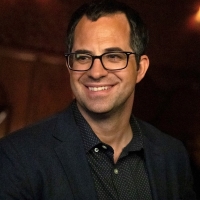 Jay Van Bavel is an associate professor of psychology and neural science at New York University, an affiliate at the Stern School of Business in Management and Organizations, and director of the Social Perception and Evaluation Lab. He completed his PhD at the University of Toronto and a postdoctoral fellowship at The Ohio State University before joining the faculty at NYU in 2010. He won the NYU Golden Dozen Teaching Award for teaching an introduction to psychology, social psychology, social neuroscience, attitudes and evaluation, intergroup relations, moral psychology, and professional development.