Introduction: Join us online on August 6th through the 8th for APA 2020 virtual. Three days of inspiring events on the psychology of racism and hate, human behavior, and leadership in a time of crisis, the psychological toll of COVID-19 and much more. You'll get access to the latest scientific research in the field and have the ability to network and make new connections. Your ticket will also give you on-demand access to hundreds of recorded sessions until August 2021. Prices start at $15, visit convention.apa.org to learn more and register or click the link in our show notes.
Kim Mills: As coronavirus cases continue to surge across the United States, parents, teachers and school officials are looking warily toward the beginning of the 2020 school year, with many openings just a few weeks away, will children return to physical classrooms or will they log into classes via Zoom, or will it be some combination of both? These questions have touched off emotional debates among parents, health officials, school systems, teachers unions, and other groups. It's become a political flashpoint too.
President Trump has threatened to withhold funding from schools that choose not to bring kids back to classrooms even as major school systems across the country are announcing plans to start the school year online. Schools must weigh the health risks of reopening buildings against the educational risks of keeping them closed. Psychological research can offer tools to help schools minimize harm and make the best decisions possible under these difficult circumstances.
Welcome to Speaking of Psychology, the flagship podcast of the American Psychological Association that explores the connections between Psychological Science and everyday life. I'm Kim Mills. Our guest today is Doctor Heidi Schweingruber, a developmental psychologist and Director of the National Academy of Sciences board on science education. She and her colleagues released a report on July 15th offering guidance on how K-12 schools can weigh the risks and benefits of reopening.
They gathered research from epidemiologists, social and behavioral scientists, and experts in public health and education. Their conclusion was that schools should prioritize reopening for students in grades K-5 and those with special needs. Welcome to speaking of psychology Dr. Heidi Schweingruber.
Dr. Heidi Schweingruber: Thank you so much. It's great to be here.
Mills: As I just said, the top-line conclusion you came to in the report is that schools should prioritize reopening for the youngest students K-5, and those with special needs. How did you come to that conclusion and what evidence did you base that conclusion on?
Schweingruber: The committee recognized that fundamentally the decision to reopen is a very complex one that involves weighing risks, and the primary sets of risks are the public health risks from the virus and exposure to the virus against the educational risks and the risks to families and communities of keeping school buildings closed. The committee actually was very careful to say school buildings closed because we made the assumption that as schools did in spring 2020, they provided virtual and distance learning options but the same will happen in the coming school year if schools don't open for in-person learning.
Essentially the risks were public health risks against the educational risks if kids aren't getting in-person instruction and if families can't benefit from the services that schools give in person. Then the question was, if kids are going to be experiencing distance learning rather than in person, which kids benefit most or least from distance learning? Who is at greatest risk when you're seeing distance learning happen over a long period of time? That required really turning to the developmental psychology literature, and what we know about kids of different ages, how they learn, and the kinds of supports that they need.
The committee looked at broadly what we know about development and what we know about academic development, cognitive development as well as socio-emotional development for kids of different ages and what we know about modes of distance learning and particularly virtual learning because we assume that's a lot of what schools are going to rely on. One of the primary things that the committee looked at was who can benefit most from distance learning and who might actually be at the largest disadvantage in the situation of distance learning?
Now, leaving aside things we know about problems of access, like broadband access and things like that but just looking developmentally at the question, the committee weighed the ways that students can engage in virtual learning as it relates to their development. Young children in particular are still in the process of developing self-regulation, executive function all the things that allow you to monitor and check on your own learning. Maintaining attention, diverting your attention back if you get distracted, things like that.
Young children are less able to do that than older children, on the whole, certainly, there's wide individual differences. We talked with Barbara Means who's at Digital Promise who's done research on education technology, and she emphasized that particularly for younger children, most often because of those developmental issues, they do better in virtual settings with adult supervision, because an adult can help guide their engagement with the technology, they can redirect them if they lose attention, and they can help them do the kinds of things like asking themselves questions about whether they really understood what just happened.
Mills: Is that somebody at home with them that's not the teacher necessarily but it's a parent who's guiding?
Schweingruber: Correct. If you're using technology in a classroom, it's a teacher, usually or a teacher's aide. If you're home, it's somebody older than the child. Maybe that's a parent or a guardian, maybe in some cases, it's an older sibling, but it's someone who can help redirect them and so the thinking was that young children, in particular, may be at risk if they're having extended distance learning because it's just harder for them to engage in a serious way over a long period of time with that medium and given that we know lots of families are going to have caregivers who have to leave the home, there may not be older children or older children may need to do their own virtual learning.
We can't assume that all young children are going to have that support and so there was a real worry about that. On top of that, there is well-established evidence that for kids in kindergarten through third grade, particularly in reading but also in mathematics, if you have delays in those early grades and for example, you don't get to a certain level in your reading proficiency, it can have long term consequences for your academic success. The turn of phrase is that up to third grade you learn to read, after third grade you read to learn.
If you haven't developed some sort of proficiency in reading by then, you tend to get further and further behind, and that sort of lack of reading ability early on is actually been linked to dropout rates and things like that. There was some real concern that one, these younger kids might not benefit from the distance learning as much, they might need adult supervision or supervision from someone older than them, that isn't available, and that the consequences for them would be bigger in terms of the long term academic outcomes. Finally, the committee then also looked at the evidence on who's most impacted?
Which of those young children are likely to have the biggest long term sort of negative consequences? There an equity issue emerged where it's pretty clear we already have some socio-economic differences between kids when they enter school with wealthier children typically coming in already with some reading skill. Schools sometimes can close that, but there was particular concern that for low-income children they might be sort of get a double hit in the very young children where they didn't have access to the distance learning to the same level and then they didn't have the adult support, and then we already know there are some lags that you were going to really create a big equity issue.
Mills: What happens around sixth grade where kids are able to engage in distance learning in an effective way? What's going on in their brains that makes it more feasible starting at that age?
Schweingruber: Well, they're actually over time, and certainly I want to emphasize again they are--
Mills: [crosstalk] It's not every kid but--
Schweingruber: Right, not every kid, but in general as you move into middle school and especially into high school, kids are developing what we call executive function, the ability to monitor their own learning, the ability to regulate their own behavior and regulate attention. It's what we might call metacognition, the ability to look at your own state of knowledge to understand your memory limitations, to know when you're attention is drifting, and have strategies for bringing it back.
That develops over time and starting in middle school and into high school kids are getting better at that. Certainly, they still have a ways to go, those of us who know middle schoolers and high schoolers know they're not all great at it, but they're certainly getting better and you see a big difference between say a seven-year-old and a 13-year-old in the ability to do those things.
Mills: You mentioned a minute ago about disparities, and what happens to children who come from families that don't have the resources to manage their education at home, and those who do, schools are forced into remote learning, what can they do to address these equity issues?
Schweingruber: Some of it is purely access which doesn't go into really the details of learning at all, but it is purely looking at, schools did a lot of this in spring 2020 with the big closures, providing devices if you knew that kids didn't have them at home, providing, in some places, school systems knew that there wasn't good broadband access, and they might have done packets instead of online. Some did mobile hotspots. I'm sure people have read about buses where they put hot spots on the bus and drove them around or people driving to parking lots next to a library where they would have. None of that is ideal, but providing good access is one of them.
Then there are other things about how you structure the learning. We didn't go as much into this in the report, we weren't asked these educational questions but we did refer, there's a nice discussion of this that the Education Trust and Digital Promise put together questions to look at and examples of how to provide more equitable digital learning. Some of those things are, for example, not assuming that all kids can do what would be called synchronous learning, where the teacher is engaging a discussion or delivering instructions, and you expect all students to be there at a certain time, but to allow for some asynchronous as well so that you can adjust to family schedules, so that if a parent has to be or a guardian has to be out of a house at a certain time, you might then allow asynchronous so that in the evening when there is an adult, that might be when they can carve out the time to do the dedicated virtual learning, allowing that flexibility.
Creating tasks that don't necessarily have to have an adult or an older sibling around to do them. Thinking about not assuming you're going to have the adult support in the background, those are just a few examples.
Mills: A lot of what children get from school, face-to-face school of course, is meeting their social and emotional needs. Some people think that children need to be in school just to be around other children, and that distance learning is just not good for their emotional and mental health. Your report didn't really get into that question. Why not? Did you consider it but just not put it in the report?
Schweingruber: Yes, it's a great question. I will say that the committee did think about even just in terms of learning, the fact that what we know from research on learning is that across all subject areas, the peer to peer learning is really important too. That's definitely the case. That's something you want to build in even if you're doing virtual. The question on the socio-emotional development and outcomes was a tricky one. The committee heard from some experts who talked about that. What became difficult was to really look broadly at the literature and get a handle on whether school was the only place where that could definitely be provided. The notion that it could be that you can support some of that social-emotional peer interaction through other community organizations, and in families and neighborhoods.
In addition, there's some important discussions in the literature on schools that indicate that schools aren't always a positive place for all kids all the time and that you do have some kids who have negative socio-emotional consequences from interactions in the school from bullying, or for black children, some of the discipline practices in some settings can be harsh and can actually lead to interactions with the criminal justice system at a higher rate than white children.
It's a very, very complicated issue to tease all of that apart and understand what are the broad socio-emotional consequences for not being in school buildings? Can you make a strong argument that closing school buildings totally eliminates, for all kids those positive socio-emotional opportunities. The committee didn't have time to go into that nuance and wasn't sure that the argument was going to be as strong as it clearly was fairly strong for the academic outcomes.
Mills: The report makes some specific suggestions about what schools can do to mitigate health risks if they reopened, including providing face masks, enforcing physical distancing, and implementing new cleaning protocols. Which of these are the most important? Are there other steps that schools can be taking?
Schweingruber: One of the real challenges for the committee, was that we don't have a robust evidence base in schools that tells us specifically the differential effectiveness of these different strategies. Based on the first principles of transmission, given that the virus is transmitted by respiratory droplets and aerosols, it's clear that masks for everyone where possible, teachers particularly but really, it's safest if everyone is wearing them. The physical distancing that we've all heard about and we've all hopefully been practicing, and then eliminating large crowds and it's easier to maintain physical distancing without those large crowds and then eliminates the number of opportunities for people to be infected in and large events of infection. Those are key.
In addition, there's growing evidence and this was a real challenge to the committee because emerging discussion that some of these droplets can become aerosolized meaning it's very, very tiny and suspended in air, that evidence was emerging as the committee was doing its work, which is a big challenge. It looks like there might be some mechanism there, which means that you do need to worry about ventilation and air filtration, so that opening doors, opening windows making sure you have circulation, giving kids time to be outside.
In some places, there was even the discussion of outdoor classrooms which we didn't go into detail in the report because there's such varying climates in the US and such varying possibility of even doing that. Those are important also. A really promising strategy is something called cohorting or podding. Pods are what they're sometimes called, where you have smaller groups of kids with a single teacher who move together during the day, eat in a room together and there are two different pieces to that.
One is that it limits the number of different people they're all exposed to. It limits the risk that way. It also means that if you do have someone in that pod getting sick, it limits the spread so that then you're not needing to close down a whole building because you've limited to that pod, it's easier to do the contact tracing. That's another promising strategy.
Mills: You must have been well into the study, in fact, probably done by the time this study came out from South Korea, finding the children younger than 10 transmit COVID to others much less often than adults do, but the risk is not zero and that those from ages 10 to 19 spread the virus at least as well as adults do. You magically hit that point by saying, K-5 you didn't have this information, but it just turns out you appear to be very prescient.
Schweingruber: Yes, we were very lucky. No, that study came out afterward and I must say I was relieved that it didn't say, for example, six-year-olds are just as contagious as the older kids for sure. There was also one that came out after our study, a study from Israel, where if I remember right, they were pointing particularly at the middle school students as being somewhat responsible for the spread. There was a partly compliance with the protocols so that the younger children who were more compliant, the older children maybe understood better why they should be doing it and the middle schoolers were the ones who they had maybe less consistent following of the protocols.
[laughter]
Mills: This might be beyond the scope of the report, but some school districts are giving parents a choice. Where I live, for example, which is Fairfax County, Virginia, they've decided to let parents select between a two day a week in-person hybrid learning model or full-time remote learning. How should parents decide? What should they take into consideration when they're looking at an option like this?*
Schweingruber: This is a really tough question. It does go beyond the report. I'm willing to make some comments on it but I have to stress, this isn't in the report itself. This is a discussion of what you might consider.
Mills: Okay, that's fair.
Schweingruber: Based on my judgment, yes. One is your own child, in many cases, you'll have had an experience with the virtual learning and spring 2020 or distance learning and you can make some judgments about how well they did. It's important to keep in mind that what happened in spring was not what any school system would plan. They got no lead time for planning. They did not have a chance to put an infrastructure in place nor do the professional development that you'd really want to do. The distance and virtual learning in the coming era will probably be quite different, but you may have gotten a sense of how well your child did and that might dictate how much you think your individual child could benefit from the face-to-face.
The other thing I would do as a parent is ask, on those two days what are the mitigation strategies you're using. Are you going to be asking everyone, where possible, to wear masks? How are you going to be implementing physical distancing? What's the ventilation like? Asking the questions about the key strategies, and we actually in Chapter five of our report, we discussed them and lay them out and there's actually a table.
Table five one that summarizes them. I might as a parent just look at that table and think, "Okay what questions do I want to ask about what's going to happen on those two days if I'm choosing to send my kids in-person?" The other thing is, there are some realities to different family situations, and it could be that both caregivers or one caregiver must work outside the home. Then there's another layer of thinking, which is how am I going to juggle this. Is it easier for me to juggle my work and whatever if the student is in the school for a couple of days, that's a reasonable factor to have to think about also. It's our reality right now.
Mills: You have epidemiologists and public health experts on your panel, but you didn't come up with a set recommendation of area caseloads for when it's safe for schools to reopen. Why did you not address that?
Schweingruber: It's a great question. It was actually raised in some of the press coverage of the report after it came out. One of the reasons is that so many of the factors that need to be taken into account in understanding what threshold makes sense are very local. For example, the strength of the healthcare infrastructure. How much bed space do you have? How vulnerable is your population? How many people do you know are working outside the home versus are going to be able to be teleworking and there won't be as much contact across the community?
There was a feeling that it was very difficult to set a single threshold that would really work across all communities. Communities might have different values and different willingness to take risks either on the public health side or on the education side. The committee really thought there was a sense that you'd need the public health and Epidemiology perspectives and science in the conversation. Considering at the same time, the values, and the needs of the community. The committee just felt that it was very difficult to set a single threshold without being able to weigh those different aspects of individual communities.
Mills: That speaks to the possibility that this might not be a one-time-only decision. Schools could reopen in one area and then decide that they have to close because of what's happening with their infection rate. Who do you think should be involved in those closing and reopening decisions and how can schools and communities prepare for that?
Schweingruber: That was actually one of the strong recommendations in the report, which was that there be some kind of coalition formed. That is part of the decision-making process that draws from a variety of stakeholders in the community. Of course key are leaders in education and leaders in public health with knowledge of infectious disease. These decisions are incredibly complex. As I mentioned, they require the weighing of risks that require expertise in public health and Epidemiology as well as expertise in education, it's unlikely that lives in one person or even one set of people in the school.
In addition, you want the community represented, the school staff, the parents potentially, community leaders and business leaders, and creating some kind of coalition or task force. Then being very clear on what those thresholds are. Even though the committee didn't necessarily say the thresholds, it's very helpful to a community if some kind of coalition can make it very clear, "Here's what we'll be looking for to decide whether schools need to close again."
Here's what our thresholds are going to be. Or, if we decide to only start with K-2, we're going to do a cautious opening and just serve the youngest children. Here's what it might need to look like if it looks like things are in the green, and we might open up more. That just needs to be very clear for a community so that they're understanding and can see how the data are indicating what decisions should be made. The committee absolutely thinks that's an iterative process because as we've already seen, you can get flare-ups on different locations and there's this really challenging calculus of we want to open up as we can, but sometimes that opening up is going to mean you see a flare, and you just want to know how you're going to respond to the changing rates.
Mills: You've offered some tips for parents in deciding whether to send their children back to in-person school or not. What's your advice for administrators and school officials for their decision? They're struggling and they don't have a lot of time to make up their minds or to put in place some of the changes that they might need that are suggested in this report. How can they move forward expeditiously but smartly?
Schweingruber: We emphasize, the committee emphasizes in the recommendations to really make sure there's a partnership with the public health experts in the area, so that the decision is informed by the best advice from public health. We actually direct states to make sure that all districts have access to their public health expertise. You might imagine there are some areas like Washington DC or Boston or San Francisco with lots of institutions in the area with a concentration of public health experts as well as the local public health offices, which often are going to be very strong.
There's other parts of the country where the public health offices in rural areas especially haven't been well funded. There may not be that kind of expertise and we direct states to make sure that districts have access to that. One would quickly get that input from the public health and infectious disease specialists so that you're making these decisions in a way that's informed by knowledge of the nature of communities spread and also they could look at the mitigation strategies that you're considering and provide some advice on.
If this is the way you're thinking of implementing physical distancing in your school does this make sense? Is this going to work based on what an infectious disease specialist has to say about transmissions? Looking at our recommendations about the suite of mitigation strategies that need to be implemented, putting the greatest weight on the set that are identified in the recommendation. There is one set of practices that the CDC does call for but there seem to be mixed evidence about its practicality and return on investment and that's the temperature screening and symptom screening, which adds a huge layer of practical challenge to bringing people into the school each morning.
It's just not clear from the evidence what the return is on doing that. Especially as it becomes more clear that there's asymptomatic transmission, which means that there could be people coming into the school without fevers, with minimal symptoms who are contagious. Definitely making sure families understand, keep kids home. If they're showing any signs or if you strongly suspect there's been exposure in your family, better to keep kids home.
Similarly, creating policies so that staff can feel okay about staying home if they are feeling sick or know there's been an exposure. We have some discussion in our Chapter five where we discuss the mitigation strategies also about the idea that creating a culture where everyone is committed to collectively protecting each other's health as part of what's important to set in a school as well. You have the procedures, but then creating ways where everyone understands them, understands why they're doing them.
It's a mutual respect in trying to keep each other safe in a positive way. Including policies around you don't get the award for perfect attendance during a pandemic because that's not actually going to send the signal that you want.
Mills: Good point. Well, this has been really interesting Dr. Schweingruber, I really appreciate your taking the time to talk to us today. Thank you.
Schweingruber: It's a pleasure. Thank you.
Mills: The American Psychological Association has resources and tip sheets available on our website for helping navigating the pandemic. Visit us at apa.org. You can also find previous episodes of Speaking of Psychology on our website at speakingofpsychology.org. You can subscribe to our podcast on Apple, Stitcher or pretty much anywhere you get your podcasts. If you have comments or ideas for future episodes, you can email us at speakingofpsychology@apa.org. That's speakingofpsychology, all one word, @apa.org. Speaking of Psychology is produced by Lea Winerman. Our sound engineer is Chris Condayan. Thank you for listening. For the American Psychological Association, I'm Kim Mills.
[music]
[00:31:16] [END OF AUDIO]
*Note: After this conversation was taped, Fairfax County Public Schools reversed course and announced that all students would start the school year virtually.


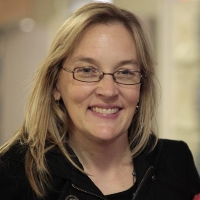 Heidi Schweingruber, PhD, is the director of the board on science education at the National Academies of Sciences, Engineering and Medicine, and an editor of the report “Reopening K-12 schools During the COVID-19 Pandemic: Prioritizing Health, Equity, and Communities.” She holds a PhD in developmental psychology and anthropology from the University of Michigan.