Kim Mills: Have you ever been conned? Or maybe you know someone who's fallen for a scam? Do you wonder why intelligent people join cults or give money to psychics or get sucked into Ponzi schemes? Have you ever gone to Las Vegas or Atlantic City and wondered what it might feel like to play poker for high stakes? Are the big winners lucky, or skillful, or both? Do you feel like your brain is too cluttered with unnecessary facts? Would you like to know how to better organize your mind? Are you wondering what on earth these questions have to do with each other?
Welcome to Speaking of Psychology, the flagship podcast of the American Psychological Association that explores the link between psychological science and everyday life. I'm Kim Mills.
At APA, we often say that psychology is relevant to every aspect of life and that studying psychology can better equip you whatever path you choose. Our guest today is a living, walking, and writing example of that. Maria Konnikova has a PhD in psychology from Columbia University, but she works primarily as a journalist, except for the many months she spent studying and playing Texas Hold'em, eventually becoming an international poker champion and winning over $300,000 in tournament earnings. She's also studied con artists—from fortune tellers to purveyors of the Nigerian prince scam to three-card monte players on the streets of New York.
She has applied her knowledge of psychology to understanding and explaining how to think like Sherlock Holmes and how not to think like Dr. Watson. Konnikova has written three best-selling books: Mastermind: How to Think Like Sherlock Holmes, The Confidence Game, and her latest, The Biggest Bluff. Her writing has been featured in Best American Science and Nature Writing and has been translated into more than 20 languages. She's also a contributing writer for The New Yorker magazine and host of the podcast series The Grift, which explores con artists and the lives they wreck.
Maria Konnikova, welcome to Speaking of Psychology.
Maria Konnikova, PhD: You so much for having me. It's a pleasure.
Mills: Just reading your biography could make anyone feel like a goldbricker, which is actually a type of work-avoiding grifter that you describe in The Confidence Game. I didn't even mention that you did your graduate work at Harvard, where you studied psychology, creative writing, and government. Were you just trying to make up your mind what to be when you grew up?
Konnikova: No, I think I always knew I wanted to be a writer. According to—well, I don't know if it's apocryphal, but I don't remember it because I was five years old or so—according to my family, I informed everyone over dinner when I was about five that I was going to be a writer when I grew up. That's all I've ever wanted to do. I just love learning and I love the human mind. I didn't know that I loved psychology until high school. We had this amazing psychology teacher, Pamela Lynn. If she happens to listen to this, she's wonderful. She taught advanced placement psychology, and she assigned Oliver Sacks's The Man Who Mistook His Wife for a Hat as summer reading. I remember reading that and just saying, “Oh my God. My mind has been blown. You can do this? You can write about this? This is ridiculously cool.”
We also read Steven Pinker’s The Language Instinct. She assigned, I think, some of the greats who both practiced and were brilliant writers. By the time I got to college, I thought, “Oh, I'm going to register—” As you mentioned, I did my undergrad at Harvard. I thought I'm going to register at MIT so that I could take a class with Steven Pinker but luckily for me, he came to Harvard so I didn't have to do a cross registration at MIT. He ended up actually becoming my undergrad advisor for my thesis, which was in government and psychology. I also did creative writing and I did fiction, because I had thought that I was going to be a novelist when I grew up. Which did not end up happening, but I still love fiction. I love reading fiction. I have, probably like a lot of writers, the novel in the drawer. I hope to one day have the time to explore that side more freely.
This was a very long way to say, I always wanted to be a writer, but I love people and how minds work and how they think. That's what excites me about writing. It's what excites me about psychology. It's why I wanted to be a fiction writer, because as I've said before in other interviews, I think that the best psychologists are the great novelists and the great poets. Because they have had to have such great insight into the human condition to write the way they do and to observe the way they do, that oftentimes they reach certain insights that experimental psychology ends up proving a hundred years later.
Mills: In your most recent book, The Biggest Bluff, you detail how you became a professional poker player. What made you decide to learn to play Texas Hold'em? I understand you didn't even have a deck of cards in your house when you were a kid. Why that game and not say another form of poker or even chess?
Konnikova: That is all because of the great John von Neumann, who was one of the great polymaths of the 20th century, the father of game theory, the father of the computer, one of the fathers of the hydrogen bomb, just an all-around genius. In the foundational text of game theory, The Theory of Games and Economic Behavior, which he co-wrote, he writes about games and talks about the fact that he was looking for a way to model complex strategic decision making, human decision making at the highest levels. Now, at this time he was also advising the security council of the United States. He was talking about all of the big security issues of the day. This was not merely academic. It turns out that game theory is based on poker and that he dismissed chess as actually being completely boring and irrelevant for human decision making, because it's a game of perfect information. It's a game where you see everything. You see the entire board, you see all the pieces and theoretically with enough computing power, you can solve it. There's always a right move.
Whereas if you look at a game like poker, that's much more true-to-life, because it's a game of incomplete information. It's a game of uncertainty. It's a game of unknowns. It's a game of people. As he wrote, and this is a quote from him, “Real life consists of bluffing, of trying to figure out what does this man think I mean to do.” That is what games are about in my theory. If you think about it, that's just this beautiful insight into psychology and into the fact that here's this mathematician who's saying math is not enough. Computation is not enough. Chess is not life. Life is like poker. Life is a game of unknowns of incomplete information where you have to make all of these deductions and you have to constantly change and adjust based on the people you're playing with. Math is not enough, you need psychology.
That's where game theory came in. He wanted to solve poker. He thought that if he could solve it, he would have the answer, the key, to strategic decision making, that he'd be able to prevent nuclear war. Really. That's not me exaggerating.
No limit hold'em is the variation of poker, that in terms of the balance of known to unknown information, best mirrors decision making in life. Because in some other variations, there's too much unknown, there are too many down cards and too much private information and it becomes too much gambling. It becomes too much like roulette. There's not quite enough to go on. In other variants of poker, there's too much information in common and it becomes too easy to solve, because there's only one hole card and everything else is visible and all the other information is in common.
No limit hold'em is this beautiful balance of knowns to unknown ,and—obviously—limit hold'em is exactly the same in the sense of knowns to unknown. But if you're talking about the game of life, it's a game of no limit. It's a game where you can always wager anything at any given point in time. It's a much better analog. When I read about this, as you said, I didn't even have a deck of cards. I didn't know how many cards were in a deck. I had zero interest in any of this, but it intrigued me. I started reading about poker and I just thought, “This is it. Why don't I learn to play this game and use it as a way of exploring the balance of skill versus chance in life and to learn to see what a decision maker I can become in this new world that I know nothing about.”
Mills: In the book you describe how you would apply psychological theories and research to your play. Yet, sometimes you acted in ways that contravened what you know as a psychologist. Could you talk about some of the ways in which psychology informed your study and playing of poker, and then maybe sometimes when you didn't follow the science and how that turned out?
Konnikova: I think that poker is a kick in the pants for any psychologist who thinks they know it all. When I was studying psychology, I didn't just study some random topic, my dissertation was on risky decision making under conditions of uncertainty. I looked at self-control and hot emotional conditions. My advisor was the late, great Walter Mischel. I was his final graduate student. We were looking at self-control in the trading environment and the stock market and how different people would make different decisions with a lot of pressure on them. If you think about poker, I didn't just have random theoretical knowledge, I had knowledge that directly talked about risky decision making and emotional decision making. I thought that I would actually be able to use that pretty well. It turns out that there's a big, big gulf between theory and practice. As Danny Kahneman has said many times, knowing about a bias doesn't mean he doesn't exhibit that exact bias.
That's what I found in my personal experience, that I'd spent years studying self-control and I'd worked with the Bing sample, which is the famous sample of marshmallow kids from the Stanford Bing Elementary School. I actually was able to work with some of those original students and learn a lot about self-control and making hot decisions. I thought that when you put me at a poker table with all this pressure and all this emotional stuff going on, that I'd have all the strategies at my fingertips. The funny thing was I did, and I could watch myself making these errors and saying, “Wait, I should be doing this. I should be doing that. Wait, I'm not distant enough. I'm actually being irrational. I'm being too emotional. I'm letting this affect me this way. This is the gambler's fallacy. Oh, this is, the hot hand fallacy.” I could just see it happening and I couldn't stop myself. Sometimes I even knew what the tools were and what techniques I should use and I couldn't implement them.
It was very interesting from a psychological standpoint, because it was like two different me’s. Maria watching Maria. One Maria saying, “What in the world are you doing?” And the other Maria saying, “I don't know, but I can't stop.” It turns out that a lot of this research is so true because it's real. When you actually put yourself in that environment, you see how these biases can occur. When it's you and you're emotionally involved and you haven't trained or prepared for this moment, it's really difficult, in the moment, to tell your higher executive functions to turn on and to actually act properly.
I ended up having to work with a mental game coach who helped train me to use what I knew as a psychologist and actually apply it to myself in the moment. That involved a lot of practice and a lot of time away from the table, basically practicing what I would do in these different situations. That also required a lot of self-reflection to try to figure out, “Okay, when am I not being rational? When do I stop thinking like a psychologist and start thinking just like a scared person who doesn't know what she's doing?”
Mills: I found it interesting that you'd already studied con artists, you'd written The Confidence Game, and yet there were still instances where people at the poker table could get you, like speaking Russian or looking like just a little old man who didn't know what he was doing. Those kinds of scenarios where you'd slip like average people, not like a psychologist.
Konnikova: Yeah, it's true. It's true. One of the things I learned from The Confidence Game is just the power of belief and how susceptible we are when we're not on alert, when we're not constantly thinking, “Oh, this person's out to get me.” We're not, because that's not the way the world works. Can you imagine going through life, every single person you meet saying, “This person is out to get me. What are they hiding? What are they trying to sell me?” It's a very miserable, difficult, and lonely way to go through life. I think our default is very different. There's a lot of work on trust that shows that actually trust is our default state. That in the absence of any evidence we trust each other. Normally, it goes over it quite well. Normally we're successful that way because most people aren't psychopaths and most people are not going to take advantage of that trust. I mean, the reason psychopaths thrive is because they're at such a lovely minority of the population that it's adaptive for them, but if there were more of them that would no longer be the case.
Mills: We'd recognize them.
Konnikova: Exactly. Exactly. I think that The Confidence Game showed me how little I could do to prepare myself, in the sense that if someone is determined and to deceive you and knows you and is good at it and can push your right buttons, it can be very difficult to see through that. It can be very difficult to avoid being conned when the con is something that meshes with your world view, meshes with how you already think things should be with what you are predisposed to believe. When I found myself in some of these situations that you refer to at the poker table, my guard was down because while poker is a game of deception, the deception is part of the rules. You're supposed to bluff people. You're supposed to do that.
Yet, I let that creep into how I thought people would play against me, given how they spoke to me. There were people who tried to manipulate me by being very nice and friendly and having an open conversation with me and showing that it was us against the world and then bluffing me relentlessly. Good for them, because that's within the rules. They weren't even conning me. That's part of the game. I was just a victim. I was a sap. I was the person who fell for it even though I should have known better. That did teach me. I think I'm a lot better at that now. Realizing that there's no such thing as friends at the poker table, is the way the saying goes. I don't think that's quite right. I think there are friends, but when you're playing against each other in that hand, you should forget whether you're friends or not and just play and play the rationally optimal game.
Mills: Is there a big difference then between the bluff and the con?
Konnikova: Oh, absolutely. It's a totally different thing. It's all a matter of intention. Con artists take advantage of people for their own personal gain and they deceive you knowingly. It's something that's nefarious in the intent. Poker, like I said, bluffing is part of the game. It's in the rules. Everyone knows it. It's not like someone is trying to break a rule by cheating. If you're bluffing, you're actually just playing the game. Everyone knows, everyone is playing by the same rules. It's very, very different because the intention is to play a game, not to take advantage of someone for your own personal ends.
If you end up cheating in poker—of course, there are con artists in poker who break the rules, people who try to mark cards or who have other ways of signaling each other, have spotters on the rail who try to look at your cards and signal to them what they should be doing. That's cheating. That's a different game now. There are con artists in every single profession. Hell, there're con artists within the psychology profession. We've caught some of them and their papers have, luckily, been all withdrawn, but I'm sure that there are some of them who falsified data who are still out there.
Mills: Did your study of con artists make you more attuned to the people who might be cheating or just the card sharps who were out there?
Konnikova: Well, I think that I saw some of the more blatant examples of this, but what you learn from con artists is the danger of thinking that you know how to spot one, because the best con artists are ones that you'll never see coming. It's incredibly difficult to know when someone is deceiving you if they're good at it. That's why lie detector tests are so notoriously unreliable, because they can capture cognitive load, but they have no idea what that cognitive load is actually signaling. Is it deception? Is it discomfort? Is it stress because of something totally unrelated? You don't really know. In poker, I think it's the same thing. The better someone is, the fewer signals there are, the less likely you are to pick up on anything.
When I was researching The Confidence Game, I actually about halfway through the research process stopped spending time with the con artists I was writing about. The reason I did that was because I had a really scary moment when I was with this lovely old man. He was a card sharp. I knew he was a con artist. He was one of the few who'd actually been in jail. He was involved with the mob and he was caught up on racketeering charges. He was now in his late seventies, I guess, when he and I spoke. I was just sitting and thoroughly enjoying our conversation and thinking, “He's not so bad.” He was like, “He had it coming.” I'm like, “Yeah, he did have it coming. Yeah. You know, this isn't so bad.” He's like, “You should come out to my house in Connecticut, I'll teach you.” I was like, “Yeah, absolutely. I want you to be my grandfather. This is great.”
Part of me after the fact was horrified and I thought, “What in the world?” He was so charismatic that he had me totally caught up in it. I didn't realize it was happening. I saw that these con artists, a lot of them, had such great charisma that I was starting to buy their side of the story. It wasn't actually helping me be a better journalist. It wasn't objective reporting because they were so good at making the narrative fit their needs. They were so good at using their charisma, using their influence, using their appeal to make you see the world from their perspective, that you stopped being objective.
That scared me because I wanted to represent the victims. I wanted to show that these were bad people because no two ways about it, every single person I write about in The Confidence Game, all of the con artists are horrible individuals who've ruined lives. This nice grandfather card sharp, he took advantage by cheating of honest people who wanted to have fun and went to a casino. This guy ran a crooked game and just took all of their money and made them go broke. These aren't people who deserve it. These are people who have lost a lot because people have been unscrupulous. That was one of the fringe examples. Other examples are much more egregious.
Mills: Are there characteristics of the people who can be conned that you saw across the many people you studied? I mean, there are a lot of folks who were otherwise incredibly smart who gave millions of dollars to Bernie Madoff, for example.
Konnikova: Oh, for sure. I think that every single person can be conned. I actually don't think that there's an exception. I'm willing to make a blanket statement like that. I don't think everyone can fall for every con artist or for every con, but I do think there's a con out there for everyone. Because everyone believes in something and everyone hopes in something and everyone sees the world subjectively. Even if you're the greatest skeptic of all time, there are still—you've got your own pet theories about the world and someone can use that. Someone who's very, very good. Maybe if you lock yourself up in a room, throw away the key and never interact with anyone or meet anyone, maybe you won't be conned, but otherwise I think everyone is susceptible.
When you start looking at characteristics originally, I thought, “Oh, maybe we'll find that people have a lower IQ or are less educated or this or that.” None of that's true. None. When you're starting to talk about individual differences like that, there's nothing that's predictive at all, but there are a few things that actually make you more susceptible. The one that I would say is the biggest factor, is not anything about personality or who you are, but where you are in life. People who are in moments of transition in their life become more susceptible to being conned. Oftentimes it's negative transitions, right? A major life change, someone died or you're going through a divorce or you've lost your job or were going through a pandemic. Something terrible has happened. Those negative life changes can be huge. But they can be also positive—maybe you got a new job and you've just moved to a new city and your sense of stability is gone because everything is new and everything is unknown. Maybe you just had a baby and once again, your world has completely changed.
When you're in a moment of life change, whether it's positive or negative, even though more often than not it's negative, you become susceptible to con artists, because you crave stability and meaning and something that makes sense. They're very good at giving that. They're very good at sense making. They're very good at providing you with something to lean with a good story, with a good support at a time when you need it most, because they can sense that. They can sense that vulnerability and they fill in the blanks that don't actually exist, but they know you want them filled. They do that for you.
A lot of con artists, actually—it's heartbreaking, but it's true—they'll stalk these groups of recent widows or groups of people who've lost their child to some specific disease. They'll join these support groups. There was one con artist who joined this war widows group. She became friends, this was a very long con, with all of these women over the course of a year, two years. Then she ended up wiping out all of their savings by individually talking to all of them and giving the sob story and they all lent her money because she was a friend. Then she disappeared.
Mills: Much of your writing has focused on risk assessment, whether that's deciding whether to bet or fold, or agreeing to give that special fortune teller another $10,000. Given your study of risk, what have you observed regarding people's risk taking and risk assessment and how is it playing out during the pandemic? Because we always have to talk about the pandemic.
Konnikova: Well, we suck at it. We're very, very bad. For the very simple reasons that human brains and statistics don't get along, never have. Even statisticians tend to be bad at applying statistics to everyday decisions, because that's where we started off this podcast. Theory versus practice. You can know it in theory but that's very, very different from actually internalizing it and feeling it and knowing what does 1% feel like? What does 10% feel like? What does 80% feel like? Which by the way, is why poker is such a great tool, because one of the reasons we're so horrible at statistics, in our everyday lives, is that the brain learns from experience and from things that have happened to you, to someone you know and not from description, not from what you read. Our experiences, statistically speaking, are skewed. They're not actually representative. We don't live in a representative distribution of events. We tend to overweight things that we might have personally experienced, underweight things that we haven't personally experienced. We end up with these skewed notions, especially when it comes to small statistics. What is 1%? What is half a percent? What is 2%?
The best example of the fact that even the best thinkers about this sometimes find it very difficult to use in their everyday life happened at the beginning of the pandemic, a few months in, when I interviewed Danny Kahneman for The New Yorker Radio Hour. Since he won a Nobel Prize for his work on risk assessments and how we think about this, I was asking about his own thoughts on the pandemic and what was happening. He told me that in the early days, back in March 2020, he was going to go to Paris for a conference that he had planned. New York was going into lockdown and he looked at the numbers and he thought, “Well, these aren't so bad. The absolute numbers aren't so bad. I'm just going to go.” He didn't cancel the trip and he started packing and was almost ready to go to the airport. He is older and he's diabetic. He has a lot of risk factors.
Then it just hit him and he thought, “Oh, my God, exponential growth. The fact that the absolute numbers are so low right now mean nothing. Let me look at what they were yesterday, the day before.” He was just deeply, personally embarrassed for himself that his risk assessment was just completely off. He thought that it wasn't so bad when really it was terrifying. Because he won the Nobel for understanding this. Now here he is making his own decision, looking at these numbers, thinking, “Ah, let's just go and do this trip. I already committed to it.” That just goes to show how difficult it is to make those sorts of decisions in everyday life based on those small numbers.
Now, a poker player actually understands statistics correctly because you've played hundreds of thousands of hands. You've sampled correctly. If you know the math, you actually know what 1% feels like. You know what 10% feels like, because you've actually sampled it over and over and over and over. When people are saying, “Oh, 1% mortality,” or something like that, I would say, “That's huge.” I would kill for 1% edge at the poker table because that means I'm going to eventually take all your money. One percent is a lot. People will study for hours and hours and hours to get an extra half a percentage edge to improve their win rate that much. You see that when you're 98.6% favorite to win a hand, you still will lose and you will lose more frequently than you think you should, because nothing's a hundred percent. You start to feel it viscerally in your gut. That helps you internalize it and make better decisions, better risk assessments in real life.
Once again, going back to the pandemic, when I'm on social media, when I'm on Twitter, I actually have my feeds broken up into different lists. I have my psychology list. I have my poker player list and my news list. It turns out that in the early days of the pandemic, the people who saw how serious it was going to be and who actually started taking the most drastic action immediately were the poker players, because they saw the numbers, they understood what they meant and they acted. Not the psychologists. The psychologists were "la di da di da." The last event I did before the lockdown was, I went to the SPSP convention because they were giving me a media award for journalism and that was during Mardi Gras when the pandemic was starting. They did not cancel that conference.
Mills: Oh, wow.
Konnikova: But no one knew back then. That was very early days. But at that stage, poker players were already turning around and I ended up leaving early and canceling. I was supposed to go straight from New Orleans to Los Angeles for a poker tournament. I ended up canceling the trip to Los Angeles and coming back to New York, and New York went into lockdown two days after I got back.
Mills: That brings me around to your book Mastermind: How to Think Like Sherlock Holmes, because I mean a lot of what you write about there has to do with keeping a lot of this information in our brains and our mental attic, the things that we keep and the things that we discard. You talk about how many of us go through life just looking like Dr. Watson, but not observing like Sherlock Holmes. It would seem that you used a lot of what you learned writing that book during your stint on the poker circuit. Do you think that you could have become a champion poker player if you hadn't already written Mastermind?
Konnikova: I have no idea. I try not to deal in counterfactuals.
Mills: Okay. Bad question, Kim.
Konnikova: No, I'm serious. I think it's a counterproductive way of thinking, so I don't know. I think that in so many different scenarios, Biggest Bluff wouldn't have been the biggest bluff and there are so many—I could have chosen a different coach. Something could have gone slightly differently and I could have learned poker just as well with the same coach. If you think about what actually turned me pro for a few years and what made this story blow up, it was the fact that I won this major international championship. I could have easily not won. In order to win a title, you have to play with a lot of skill, but you also have to get lucky.
I write about it in the book, I tried to be very careful because, I was always a researcher and a journalist first and foremost. I would write down all of my hands during the tournaments so that I could have a record of what happened. In the book, I was very careful to note that there were a few moments, in that tournament that I won, that I should have quote, unquote lost and been out of the tournament. I should have lost all my chips because I got my money in the middle, not as a favorite, but as a dog. I was the one on the bad side of the flip and I got lucky. At the final table, there was one hand that I wrote about where I had pocket sevens, I believe, and someone else had pocket aces. That should be it. I should be out of the tournament. I ended up making a straight and not being knocked out and actually doubling my chips and eventually won.
All of these moments of luck, they conspire to create what ends up being the reality. I have no idea—I think that writing Mastermind was incredibly beneficial in preparing my mind just to learn well and to learn to take in for, and to learn to pay attention. When I was researching Mastermind, that's when I started meditating. That's when I actually learned a lot about mindfulness. I do that to this day and I think that's been immensely helpful. I think that's one of the habits, sure, that did enable me to become good at poker. A lot of different pieces had to come together to make that possible.
Mills: You just answered the question I should have asked. It would've been a better question. Thank you. Are you still playing poker? Do you get out there and play? Do you have to play a lot to stay sharp or have kept all the tools handy?
Konnikova: For the first part of the pandemic, I didn't play at all because I am a live player and everything was shut down. The last place you want to be is in a casino during a pandemic. Then after I was vaccinated and pre-Delta and pre-Omicron, where things started opening up again, I actually did play and went and played in some of events and played in the first world series that took place since the pandemic. And then stopped playing again with, with all of the new variants and all of that. I think a lot of it has been informed by what was going on epidemiologically and how I felt about that. But I see myself as continuing to play, but not at the level that I was playing before.
When I was pro and was part of Team PokerStars Pro, I spent eight months of the year on the road and that's a lot. That really took its toll on me. I'm still, and always will be a writer, first and foremost. At this point I also see myself as a poker player and I hope to stay in the game and stay involved in advocating for it, being an ambassador for it. Because I think that it's such a great teaching tool. It's such a great way to learn, to make better decisions.
For women, it's such a great tool of empowerment, of learning to tap into your inner aggression and to hold your own. I think it's helped me be better and more successful in other areas of my life, be stronger, be a less socially acceptable, but more successful version of me, in a sense. I think that's wonderful and I want more women to find it. I feel very strongly about that. I will keep playing.
I am still studying and I still try to keep up on it because it does go away if you don't do it and if you don't keep abreast of all of the advances that are happening. I don't know if I will ever consider myself a professional player again, I doubt it. I think that it will always be either semi-pro or recreational, but it will always be a part of my life.
Mills: I can really relate to your wanting women to know how to play poker. When I was an undergraduate million years ago, a bunch of us got together—I went to Barnard, now part of Columbia. We formed something we called Women's Issues Poker and we taught ourselves how to play poker because we knew all men would learn how to play poker and women didn't learn how to play poker. We would never have the edge if we didn't know this game.
Konnikova: Good for you. I'm very happy to hear that.
Mills: How do you choose what you want to write about? What are you working on now?
Konnikova: I just follow my curiosity, to give you the honest answer. I never know what I'm going to write about next. I read a lot and I try to engage with the world as much as possible. I see what piques my interest and what rabbit hole I go down and which one just won't go away and will keep popping up over and over and over. Those tend to be my next project. Right now, I'm thinking about my next book, but I'm not quite ready to talk about it. But I'm working on a lot of different things. As I said, I studied fiction as an undergraduate and I'm actually flexing those muscles during the pandemic. I was able to do more exploratory writing. I ended up working on a TV show. I was in a writer's room for one year of the pandemic. That show should be out hopefully next year. I'm actually doing more screen projects and flexing those narrative muscles.
I had an Audible original that came out last month, called Migraine. It was memoiristic in the sense that it was about my personal experiences with migraine, but also about the science of it and where we are in treatment and what's going on with that. I'm actually working on another Audible original about COVID and about the COVID recovery through the lens of Las Vegas, which was the single most affected urban area in the country. The unemployment rate went up to 36%, because it's all service industry. It was just completely devastated. I ended up spending time there and getting to know some of the people who make Vegas work. I'm hoping to tell their stories as a way of understanding the human toll that the last few years have taken.
Mills: Well, Maria Konnikova, this has been just a pleasure. Thank you so much for joining me on Speaking of Psychology. I really have enjoyed talking with you.
Konnikova: Thank you so much. It's been a pleasure, Kim.
Mills: You can find previous episodes of Speaking of Psychology on our website at speakingofpsychology.org or on Apple, Stitcher, or wherever you get your podcasts. If you listen on Apple and you like what you hear, please leave us a review. If you have comments or ideas for future podcasts, you can email us speakingofpsychology@apa.org. Speaking of Psychology is produced by Lea Winerman. Our sound editor is Chris Condayan.
For the American Psychological Association, I'm Kim Mills.


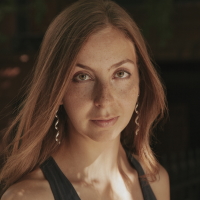 Maria Konnikova is the author, most recently, of The Biggest Bluff, a New York Times bestseller and one of the Times’s 100 Notable Books of 2020. Her previous books are the bestsellers The Confidence Game, winner of the 2016 Robert P. Balles Prize in Critical Thinking, and Mastermind: How to Think Like Sherlock Holmes, an Anthony and Agatha Award finalist. She is a regularly contributing writer for The New Yorker whose writing has won numerous awards, including the 2019 Excellence in Science Journalism Award from the Society of Personality and Social Psychology. While researching The Biggest Bluff, Maria became an international poker champion and the winner of over $300,000 in tournament earnings—and inadvertently turned into a professional poker player. Maria’s writing has been featured in Best American Science and Nature Writing and has been translated into over twenty languages. Maria also hosts the podcast The Grift from Panoply Media, a show that explores con artists and the lives they ruin. Her podcasting work earned her a National Magazine Award nomination in 2019. She graduated from Harvard University and received her PhD in psychology from Columbia University.