Kim Mills: Almost daily, the news is full of stories of high school and college seniors missing out on their graduation ceremonies and of people being unable to see and touch their loved ones who are suffering from COVID-19. Some of the more heartbreaking accounts feature families having to bury loved ones without funerals or formal mourning. The coronavirus is keeping us from experiencing some of the deepest and most meaningful rituals of our lives.
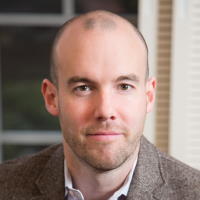
What is this doing to us psychologically? How important are rituals to our mental health and wellbeing? What new rituals might we be creating? Welcome to Speaking of Psychology, the flagship podcast of the American Psychological Association that explores the links between psychological science and everyday life. I'm Kim Mills. Our guest today is Dr. Michael I. Norton, a professor of business administration at the Harvard Business School and a member of Harvard's Behavioral Insights Group. His research covers a gamut of fascinating topics from money to daydreaming, from greed to deception, but I asked him here today to talk primarily about rituals in light of the COVID-19 pandemic. Welcome to Speaking of Psychology, Dr. Norton.
Michael Norton: Thank you so much for inviting me.
Kim: I think we probably all have an idea of what rituals are, but it always helps to have a common language. Is it, for example, a ritual to take a coffee break every day at 10:15, or is that just a habit? What are the differences between rituals and habits? Could you define for our listeners what constitutes a ritual?
Michael: They certainly lie on a continuum. There are a lot of habits that have some ritualistic elements and there are a lot of rituals that of course look a lot like habits. It's hard to differentiate them into pure, that's purely a habit and that's purely a ritual, but one way to think about that continuum is if I asked you in the morning, "Do you first brush your teeth and then take a shower, or do you first take a shower and then brush your teeth?" Crazily, when I ask that question, in countries all over the world, actually about 50% of people do it one way, and 50% of people do it the other way.
They have this thing they do every morning and they really think their way is the good way and the other way is the bad way. Now, then if I ask, "Imagine in your head," and you can do this yourself, "Imagine in your head doing them in the opposite order tomorrow morning. Really simulate that you would, instead of brushing your teeth first, you'd get in the shower first."
When I ask people that, a lot of people make a face like, "I don't like that. That feels weird to me." or "That feels wrong to me." but a lot of people say, "No problem at all. I'm happy to switch the order." We can see in there the difference between a habit and a ritual. If you like to do things a certain way, but then if I say, "Switch it." you don't mind. It's more like a habit. In the morning, you need to brush your teeth, need to take a shower. You have the habit of doing that. The order doesn't really matter, but if you're one of those who felt a little weird when you thought about doing it differently, now, that's a little bit further down the continuum toward the ritual because now, the order in which you do things really matters to you when it really shouldn't matter necessarily. It feels like it matters, and that means that it's a little bit more important to you.
Kim: Rituals seem to be ubiquitous. I can't think of a culture or a time in history when humans did not engage in rituals. They can seem trivial like buying a weekly lottery ticket, or they can be really profound like a funeral mass. My question is, are we physically hardwired to perform rituals? What does the science tell us about where this drive comes from?
Michael: One of the interesting things about studying rituals is of course that many different disciplines have tackled the topic. I'm certainly not the first person to start studying rituals. If you look in anthropology and sociology, of course in clinical psychology, which I hope we'll talk about as well, people have been looking at what rituals are and how ubiquitous they are. In fact, if you think about how we identify that some humans had some culture way back when, we often look to see if they buried their dead in a ceremonious fashion or not. If they don't, then we say maybe they didn't have culture in a sense, but when there's shells around the body, we use that to say they must have felt differently about death. They must have had beliefs about deaths. They must have wanted to honor that person as a group. Rituals, in a way, are one of the ways we identify when humans became human.
Kim: Sheltering in place and needing to keep at least six feet away from most other people are actions that have radically altered our lives and prevented us from doing so many things. What's the long-term impact of missing out on some of the rituals I mentioned earlier, especially not being able to fully grieve loved ones we've lost to the coronavirus?
Michael: I think our research would suggest that there is good news and bad news. One of the first projects that we did on rituals, I did with my colleague Francesca Gino on grieving rituals. One of the things we saw is, we thought we would be studying grief in terms of the public communal rituals. We all think of often religious rituals as well, but when we ask people, "Think of someone who you loved who passed away." and we ask them just, "What did you do after that?" Many people wrote something like there was a funeral, but then they would write something very private that they did just for that person just by themselves that often no one else even knew about.
One of the examples that always stays with me is an older woman whose husband had passed away and she wrote, "I washed his car every week as he used to." Now, that's clearly not an established public ritual that's thousands of years old. Cars don't even exist until fairly recently. We know that that woman made that ritual up herself, but as you listen to it, you can see how meaningful and important it was to her.
What we find in our research, and this is the good news, is that even those private ones that we make up ourselves, those are associated with less grief and better coping. Now, that's not to say that the communal ones aren't incredibly important because we need social support. We need all kinds of things to get through grief. That's the bad news, that losing those really does have an impact. The good news is we can have a little bit of flexibility of creating our own, and those can help too.
Kim: One of the rituals that you've studied is the simple handshake. That's something else that we can't engage in right now. Even Dr. Anthony Fauci has suggested maybe facetiously that we may never shake hands again. Do you think that's the case? Can you talk about some of the types of communication that are inherent in handshaking? Why it's so important.
Michael: In research that was led by Juliana Schroeder who's at Berkeley, we tried to look to see what really handshakes are all about. In fact, there's, I think it's apocryphal, unfortunately, but there is a story that the reason handshakes began way back when is because by shaking hands, you would dislodge any daggers from your sleeves and they'll fall on the ground so you would know you can trust the person. That's probably not true, but if you think about this psychological element there, it's really showing that you can trust me, that we can be close enough to each other to touch and nobody's going to get killed. Handshakes are a sign of trust.
Now, that's exactly what we see in our research actually, is that when people shake hands, they tend to trust each other more. The reason is that by shaking hands, I'm signaling that I care about you and that you can trust me back. That's the bad news because, as you said, we can't shake hands right now and who knows if we'll get back to that ritual, but the good news is that it's not really the handshake itself that matters, it's the ability to communicate that you care about someone else and that you trust them.
We ran a study, and this is years ago before the current crisis, where we had someone refuse to shake hands with somebody else. In general, people think the person's a jerk, but if the person says, "Hey, the reason I'm not shaking your hand is because I've had a cold." Now, suddenly the person who shakes hands is a jerk because they're giving you a cold and the person who doesn't by not shaking your hand is showing they care about you and they can trust you. Again, I think even our handshakes are so ubiquitous, we do have some flexibility in how we try to accomplish the goal that handshakes were doing. Again, we can be a little bit freelancing on to figure out how we can actually signal those things.
Kim: Quite a few athletes engage in some peculiar behaviors during or before games. For example, you noted in an article in Scientific American that Wade Boggs, the former third baseman for the Boston Red Sox woke up exactly at the same time each day, ate chicken before each game took precisely 117 ground balls in practice, took batting practice at 5:17 and ran sprints at 7:17. Is that kind of behavior a little crazy, or does it serve an important purpose?
Michael: One of my favorite things about that, I'm from Boston. Wade Boggs played for the Boston Red Sox. He also used, at every at-bat, he would write the Hebrew word for life in the dirt. The best part of that is that he wasn't Jewish. He just decided that he would adopt something from another religion that seemed to be pretty good, then bring it into his performance. We do see these performance rituals that are so ubiquitous. When athletes do them, they can be incredibly elaborate. We think that we're a little unusual, but we don't really think it's a problem.
Rafael Nadal has a very elaborate pre-serve ritual that he does every time. If you ask these players, "Why do you do it?" They'll say, "It's a ritual and it helps me perform better." They're doing it on purpose to try to accomplish this goal. Some of them, they think, "If I did one of those crazy rituals before I taught a class, I'd be fired because nobody thinks that teaching is as hard as playing tennis." We have context-specific rituals that we're allowed to do and not allowed to do.
Even for mundane things like people like us who aren't playing professional sports, but we have to teach or lead a meeting or give a presentation that we're worried about, Alison Wood Brooks, another colleague of mine at HBS lead this project on, do rituals help calm us down in those situations? The answer is that they do actually. When we're feeling anxious, the worst thing to do is tell yourself to calm down. By the way, that's the most important takeaway, maybe, of the whole thing is, never try to tell yourself just to calm down, we just can't do it. Doing a little ritual before we perform, actually can calm us down a little bit, and then help us perform a little bit better.
Kim: I've seen videos that you've done on the internet where you have people do these rituals to demonstrate group cohesion. I think you have found that they do that, but on the other hand, people who are excluded from those rituals become an out-group because they are excluded from the rituals. It's just a peculiar thing that we tend to do even without thinking. Can you talk about group cohesion and the importance of rituals, what they do for the people who are in the groups, and how they may harm the people who are out?
Michael: Yes, this is one of the paradoxes of rituals is that they're not just good. Of course, we know that because rituals taken too far can become a symptom of obsessive-compulsive disorder, which we know isn't good. We know that it's not just that more rituals is better. I would never want anyone to think that what I'm saying is more rituals is better. They have to be used when it's appropriate, but another way that they're not good for us as well as you're absolutely right they bond us together, but in the bonding us together, they can drive us apart from other people.
When I talk about this, I do have people stand up and perform a ritual in groups, and I made it up. I just say, "Here's something I made up, can we all do it together?" It's things like clapping, stomping your hands and things like that. All I say to the group is, "Go ahead." What happens is people start the ritual, and they very quickly get in sync so that everyone starts clapping at the same time and then stomping at the same time, and they really like it. They feel good about each other. They're looking around, smiling. It's like, "This is our ritual, it's great."
You also see that if someone, "messes up" meaning that I clapped instead of stomp at the wrong time, people get very angry at the person. They look at them, "What's wrong with you?" When I asked them at the end, "What did you think about those people?" They say, "He was doing it wrong." Now, remember, I told them, I just made up this ritual that they've never done before.
Kim: There's no, wrong.
Michael: There's no wrong, there's no right. I just made it up. I told them I just made it up. Yet immediately, that quickly, we can say, "This is the good way. We do it this way." If you do it the other way, I don't like you." We do see that in two separate projects, so with Tami Kim, we showed that rituals can bond us together, and with Nick Hobson, we showed actually that rituals can drive us apart in exactly this way.
Kim: Let's talk for a minute about rituals and clothing. A lot of us have spent the last almost two months in sweatpants or pajamas most of the day. A popular meme on social media asked when was the last time you wore pants with buttons? I think we know that clothing has meaning in pretty much every culture. What are some of the actual rituals surrounding clothing, and how do they affect us psychologically?
Michael: One of the very first things we did when we started studying rituals was we asked research assistants to find every grieving ritual that any human group had ever enacted in human history. That was their task, and we set them loose, and pretty much every recorded culture has a grieving ritual. It's something that often has communal elements, and we know this, whatever culture you're in, you know exactly the one in your culture.
One of the things that we found in that research is, color plays an extremely important role in grieving, but it's not very consistent from culture to culture. Many, many cultures, of course, have black as the color associated with grief. You wear black to the funeral, et cetera. Other colors, though, have white. That's the color that is associated with grief. If you wore black to that funeral, people would be furious at you. If you wore whites to a funeral where black is the appropriate color, those people would be furious at you. There's other cultures where red or green are associated with grief as well.
It's really interesting to me, in this way, because it's clear that people want to use color to help cope with their grief. They use the color of their clothing in particular, but then there's a little bit of flexibility on exactly which color you end up using. I think the good thing about wearing colors that we really lost is that we used to be able to signal to other people where we were in our process of grief. When people were black for a year, for example, you would know that they'd lost someone, and that might help you support them.
Now, of course, many cultures have gotten rid of those grieving rituals. When I meet someone, I don't know if they'd lost a loved one yesterday or the year before or never, so it changes my ability to support them. The plus side is, of course, not everyone knows my business, and I might be a private person. There's these trade-offs between giving up rituals, could get us some things, but we also often lose some things along the way.
Kim: Are still some cultures where you have to wear color, for say, a year? I know in my family, which is Italian, that you were supposed to wear black for a year if you were a widow. Is that still prevalent?
Michael: Some cultures do. Actually, speaking of professional sports, you'll see sports teams often wear a black armband for a season if someone important to the sports franchise passes away. We still see people using clothing in order to signal something important, but the variability from culture to culture, and even within culture and subculture is very wide in terms of exactly what people do to show that they're grieving over time.
Kim: Something else a lot of us are also experiencing during our physical distancing is not being able to get our hair cut, or doing it ourselves, or having someone we live with do the job. When does caring for our hair move from being just a habit, I get my hair cut every month or an actual ritual?
Michael: This is a hard one to answer because I'm bald [chuckles]. Sadly, I don't have this problem, but even here, we see, even speaking just within grief again, there, we see again that people often do something with hair when they're grieving, but it varies extremely widely, again, from culture to culture. In some cultures, you shave your head when someone passes away. In other cultures, you grow your beard when someone passes away. In other cultures, you take a snippet of the person's hair and keep it in a locket to honor them
Even within the domain of, specifically, hair, again, it seems like just with color, it seems people want to do something to honor that loss. They look around for what's available. It might be clothing, it might be their own bodies, and then they do something in order to try to enact a ritual to help them and to help others cope with that loss.
Kim: Another obsession for some of us during the pandemic lockdown is food. We're cooking at home, or a lot of people are baking, or starting sourdough starters, which brings to mind food rituals. I know you've also looked at those. I'm wondering about some rituals such as saying grace before dinner or having a sommelier go through a whole elaborate, ceremony and pouring wine. Does this make food somehow better for us?
Michael: Bizarrely enough, it seems to. In research led by Kathleen Voss, we actually look to see, does performing rituals around food actually make the food taste better? Should it taste better? Probably not. The way you prepare something doesn't necessarily mean it will taste better, but when people prepare and consume food ritualistically, we can show that they actually enjoy the experience more.
The very simplest one is we gave people free chocolate, and some people, we just said, "Go ahead and eat it." Other people, we said things like, "First break it in half, then unwrap that half, then eat that half, then unwrap the other half." Not very complicated, but still an orderly progression through eating the chocolate a little bit ritualistic. We find that people like eating the chocolate more, in part, because when you do a ritual around food, it immerses you much more in the experience.
Think typically about eating food, you might be on your phone, you might be watching TV, you might be distracted, you're not really engaged in the consumption act. Rituals seem to bring us into the act so that we end up savoring the food more. We're literally leaving the chocolate in our mouth longer and enjoying it more because it focused our attention on what we're doing.
Kim: Are there any rituals you would recommend that our listeners engage in right now so that they can feel more in control and less stressed?
Michael: In a project that we have just started since this crisis, my student, Ximena Garcia-Rada, is leading this. We've surveyed parents and asked them about-- Ximena studies decision making in couples, which is a fascinating topic in its own merit, but we looked to see what's happened to parenting during the crisis because almost everyone's parenting has changed in very different ways, but there's been change. We asked people a very simple question, "Have you created any new rituals as a parent with your kids since the crisis began?" A huge number of people have. I think 50% to 60% say that they have. Those parents tend to feel a little better about their parenting, and they're a little bit happier with their lives in general.
Now, it's obviously possible that people who are happy with their parenting have the time to create rituals, though we don't know the causal direction in this case, but it does seem as though with the world gives us uncertainty, we tend to look to rituals as a way to cope with the uncertainty. Parents are doing rituals around handwashing. They're doing rituals around wearing masks. They're helping their kids through the process of learning how to do that, just like the way we do at bedtime, or at mealtime with our kids where even we have this particular bunny, and then this story, and then we sit over there and mommy comes in. We have this whole elaborate thing for kids that we do all the time. Parents use rituals like crazy. Then, for some reason, we think when we're growing up, "Those are silly. We don't need them." Maybe if they work for kids, they might work for us, too.
Kim: We're going to be singing Happy Birthday as we wash our hands for the rest of our lives, right?
Michael: It's almost like an earworm, I bet people will have it way more in their head now as they're washing than they ever did before.
Kim: Dr. Norton, thank you so much for joining Speaking of Psychology. This has been really interesting and I hope our listeners have learned a lot from hearing about your research.
Michael: Thank you so much.
Kim: To our listeners, thank you for tuning in to our podcast. This is one of the series we have produced regarding psychology's role in helping us understand and navigate the COVID-19 pandemic. You can find other resources and tip sheets about coping through the pandemic on our website at apa.org. You can also find previous episodes of speaking of psychology on Apple, Stitcher, YouTube, or wherever you get your podcasts. All episodes are available on our website at www.speakingofpsychology.org . If you have comments or ideas for future podcasts, email us at speakingofpsychology@apa.org , that's speaking of psychology, all one word, @apa.org. Thank you for listening. For the American Psychological Association, I'm Kim Mills.
[music]
[00:22:24] [END OF AUDIO]