Kaitlin Luna: Welcome to Speaking of Psychology, a bi-weekly podcast from the American Psychological Association. I'm your host Kaitlin Luna. Discipline in K through 12 schools is not doled out equally as black students, boys and students with disabilities are suspended and expelled at much higher rates than other students. That's according to a report released last year by the Government Accountability Office. These types of harsh discipline are even occurring in preschools across America. Any kind of punishment that takes a kid out of the classroom is known as exclusionary discipline, and it can have dire consequences on a child's future, including putting him or her at higher risk of falling into the school to prison pipeline.
Also looming around this issue is the fact that the Department of Education rolled back protections intended to reduce these well-documented disparities in December 2018. To explain the current state of school discipline and what we can do to help children have a fair shot at an education, our guests for this episode are Dr. Amanda Sullivan, associate professor of educational psychology at the University of Minnesota and Dr. Ivory Toldson, professor of education at Howard University. Both are experts on discipline disparities in pre-k through 12 schools. They presented at a congressional briefing hosted by APA on a topic in June 2019. Welcome Dr. Sullivan and Dr. Toldson.
Amanda Sullivan: Thank you for having us.
Ivory Toldson: Thank you.
Kaitlin Luna: I'll start with you Dr. Sullivan. First, you know I gave a brief explanation of what the term exclusionary discipline means but it would be helpful for you to expand on that a bit more for our listeners.
Amanda Sullivan: Yeah certainly. So common practices include suspension and expulsion, which generally bar students returning to school for a specified time period and this can be anywhere from days to the remainder of a school year. But it also includes things like early dismissal, so sending a child home with their parent off the record, or extended time outs, in-school suspension, so spending the day or several days in a room, kind of like what we almost think of it's like study hall used to be. But it can also include things like using physical restraint, corporal punishment and even involving law enforcement. And like you mentioned taken together it just shares this common feature of removing students from opportunities to learn, and it's important to be aware that it happens at all age and grade levels so we see it used throughout elementary, middle and secondary school but also early childhood settings. So these practices get applied with preschoolers, toddlers and even infants to a certain extent.
Kaitlin Luna: Can you describe situations when this exclusionary discipline is used in schools?
Amanda Sullivan: Yeah. I mean I think people have a misconception that it's reserved for very severe or dangerous behaviors, but we see it used for everything from tardiness to dress code violations, very kind of ambiguous or subjective offenses like disrespect or talking out of turn. And so it really gets applied across the board as often times that kind of go-to response to any behavior that's unwanted in the school setting.
Kaitlin Luna: And these disparities show that this practice is overused in our schools in America today?
Amanda Sullivan: Yeah in, in many school systems yes.
Kaitlin Luna: And is it ever an effective way to manage disruptive students? I mean are there some people who might argue for it in certain cases.
Amanda Sullivan: I think very rarely. I mean I think the science of psychology has given us a lot of knowledge about how we respond effectively to both prevent and appropriate behaviors but to foster positive behaviors, and in general those are better options than any of these exclusionary discipline practices.
Kaitlin Luna: I want to turn to that Government Accountability Office report which found that black students comprised 15% of all public school students yet they accounted for 39% of all students suspended from school during the 2013-2014 school year. That was the most recent data GAO had access to while doing its report. Do you believe that some of these, what are some the underlying factors that are causing this Dr. Toldson?
Ivory Toldson: Well I think the main factor is that not enough people care. These statistics have been out for so long now, decades even. It's consistent across so many different data sets, so many different reports are finding the exact same thing, and there's just not enough people that, that care about the problem, or who really believe that there are unfair reasons for this happening. There's too many people out there that think that black boys just do more bad things, and that's why they're being suspended more.
But, beyond that some of the factors that's showing up in research, there's a cultural mismatch between a lot of black students and the teachers that serve them, and this isn't just based on race it is also based on socioeconomic status. A lot of children who come from poor communities, they're taught by people who don't understand them very well and who have certain stereotypes about their communities, how they grow up, their families, and these stereotypes manifest themselves in overly punitive disciplinary practices. It also leads to a lot of educators believing that the children that they're teaching are threatening. And so whereas a white girl in a suburban school, her attitude may be described as sassy, a black boy in an under-resourced school that has the same disposition would be considered thuggish, or you know those types of things. And that makes a difference on how people will view a problem.
Another issue is, one of the main factors that's associated with suspensions, is academic disengagement. So students who seem to care less about their particular school are more likely to be suspended, and you're more likely to care less if you're going to a school where you're passing through metal detectors, where you have this strict dress code policy, where you're not invited to express yourself as you go through this very important stage in your life. You're also not given a lot of agency into your own affairs, and you're not taught a curriculum that's culturally aligned to you. And so a lot of times these students will not engage as well, which leads to more punitive disciplinary policies. So those are some of the underlying issues.
Last point. Black students are more likely to be suspended in predominately black schools. They, when they, when they go to integrated schools, they still get suspended proportionally more than the white students at those schools, but they get suspended less often than the black students at predominantly black schools. So this demonstrates that a lot of times it has something to do with the culture of the school. When you have a predominantly black student body there is a certain attitude or mentality, there's something that the educators are seeing that they should not see, that's leading to these harsh policies.
Kaitlin Luna: You touched on a very important point about implicit bias, and just a brief description is that's when we have attitudes toward people or associate stereotypes of them without being consciously aware of it. So could you elaborate more about how implicit bias factors into some of these disparities?
Ivory Toldson: Sure, and implicit biases are biases that's beyond your conscious awareness. They typically manifest themselves in decisions that you make without really thinking about them. And it's important for me to point out that while implicit biases are rampant and I think that all of us have implicit biases, I think that the explicit biases, the things that a lot of these educators will actually admit to, are actually just as severe or maybe even more. So when we hear educators talk about kids from that community, when they say all of them come from single-parent households and that's why they act the way that they act, when they say that you know none of these children are reading on grade level so why do we have science at the school, or why do we have why do we even have calculus at this school. These are things I hear all the time, and I think until we deal, you know wish we had the luxury to just zero in on implicit biases, but a lot of this stuff is blatant, dare I say it, racism and racial explicit biases.
Kaitlin Luna: And these explicit biases are, you said they're playing out in schools all across America today. Do you know, can you elaborate more about why black boys would be more likely to be expelled from all-black schools, or predominantly African American schools?
Ivory Toldson: Yeah, it has to do with the way that people see the school environment. A lot of times when we think about suspensions, we think about it as on an individual level. We don't think of, think of it as a on a systemic level. And this makes us think that there's certain children that are more likely to be suspended, certain teachers who are more likely to give referrals or send children out of class, but really it's a larger structure and that's something that we have to understand.
Typically when you have a diverse school environment or have especially an environment that has a lot of affluent children, children with parents with means, the school will accommodate those students in ways that they won't accommodate poor students. And they also perceive their behaviors or they perceive the overall school environment as an environment that is conducive to learning. A lot of times we have principals that are assigned to predominately black school because the people that hired them believe that there are discipline problems. You, you rarely see a principal coming to a predominantly white school just to, just because they are good disciplinarian. They go there because they know how to make that connection between what they learned in school and going to college and different things like that.
So what we need to assert and demand is that predominately black schools need the same type of resources, the same mentality, the same care that the predominantly white schools are having. And to assign a coach to be principal of a predominantly black school because they tough talk and because they talk about putting students in line, that's, that demonstrates a bias in and of itself and it usually leads to these strict disciplinary policies that we see.
Amanda Sullivan: Yeah, we also see that behaviors are treated very differently and perceived very differently. I mean from an early childhood onward. So we can look at like research that's used eye tracking, shows that educators tend to spend more time watching the black students in a classroom so they're looking for trouble. And then when something does occur it's perceived differently, like Dr. Toldson mentioned. And so there's more, there's more observation of these students, but then regardless of what they do again anything from disobedience or speaking out of turn that kind of thing, the harsher discipline tends to get applied.
So when we look at the research that has looked at what happens to students when decisions are made, white students tend to be penalized for much more severe behaviors, whereas students of color are more likely to be penalized for things that are very much judgment calls around what's acceptable, and oftentimes things that are actually acceptable and adaptive in their communities are the things they are getting punished for in schools. And so I think a lot of things come back to misunderstandings of culture, misunderstandings of child development, behavior, learning and mental health that then we are penalizing, penalizing kids for the misunderstandings of the adults in the settings.
Kaitlin Luna: So this is a broader cultural issue, in terms of we're saying it's the culture of the school, it's the culture of the, you know, the people who are at the school. Do you have examples off the top of your head of schools that are doing this, doing this well in terms of working to reduce these disparities, anything come to mind?
Amanda Sullivan: Well I think schools where they're actually attending to it, so monitoring their data not just by race but gender, disability status. Where they are investing in staff training to develop non-biased attitudes to engage in non-discriminatory practices. We see some really nice successes with investments in positive school climate, in developing student engagement, in using school-wide positive behavioral interventions and supports, where the focus there is on teaching and reinforcing positive behaviors as opposed to just punishing and in particular sending kids out because of unwanted behaviors. So it all starts with teaching. We don't expect students to magically come to school knowing how to read, so why would we know think that they would walk into a classroom magically knowing how a teacher wants them to behave.
Ivory Toldson: And I'll add to that. It's probably more common than a lot of people think to have a school that have disciplinary policies that are fair. And a lot of times it starts with the principal. Teachers do not have the authority to suspend students, it's the assistant principal typically that makes that decision, but the teachers are the ones sending the students out. But it's really the principal that sets the tone. If the principal comes in day one and says we're gonna keep these students in our class and these are these are the resources I'm giving you this is what we're gonna do, it typically happens. And you know there are programs out there, restorative justice, and I think those programs work very well. But I think it's also a mistake that a lot of people make thinking that predominately black schools need something differently than predominately white schools.
If you look at the way that they typically handle some of the same types of issues at predominately white schools, if we just look at dress code policies. A lot of suburban and predominately white schools, their dress code policies are very loose and they would never send us a child home over dress codes. But, in a lot of the impoverished predominately black areas it's common. So just that alone will reduce suspensions, and we could just go down the list. Look at how you, you know, so my method, what I would tell people do is what would you do if that student was white, honestly, and I think we could fix a lot of things just that way.
Kaitlin Luna: I remember there was an issue a couple months ago of a school in Houston I believe, where there was a dress code for parents. And that created a lot of controversy because parents were you know dropping their children off, maybe they just gotten up in the morning or something, and the issue was that the principal did not want parents to come to school in, I guess you might call pajamas or relaxed clothing, that sort of thing. So, what kind of message would something even like that send?
Ivory Toldson: And now I'd be remiss if I'd, if I didn't say that that was a black principal. It was a predominant, predominately students of color, black and Hispanic. And they have a fair number of black teachers and a good number of black people who supported that decision. And it goes to show that even black people can be biased against other black people, particularly poor people. And I think that this idea that certain children come from certain neighborhoods that have these corrupted cultural values and somehow they need to be put in line in order for them to achieve. So you know if you were in a predominately white neighborhood, you know gentrifying neighborhood, and your parents are coming with flip-flops and they didn't dry their hair so it's wet hair that's fine. But if you have a black woman that comes in rollers, somehow they're extending this way beyond just a woman bringing her child to school and wanted her curls would be fresher when she gets to work than when she drops the kids off. So, there's this larger mentality that we have, and it's not just race, it's class that we really need to check.
Amanda Sullivan: I think it's just an extension of this notion of like respectability politics in schools, and so it's not just schools trying to control and shape the behaviors of kids but then we see it extending the parents as well.
Kaitlin Luna: I want to turn this over to boys because in the report they were particularly over-represented among students who received corporal punishment, physical punishment, by about 27 percentage points. And when I read the statistic I was quite surprised because I thought corporal punishment was a thing of the past. So how are schools able to administer a physical punishment and in what types of schools is this happening in and where are they around the country?
Amanda Sullivan: I mean it's still legal in, I want to say about 19 or 20 states, so they're not violating any laws if they use corporal punishment, it's allowed. I am fairly certain it's more common in the south, which is true for a lot of the more severe exclusionary discipline practices, we tend to see higher levels in that part of the country. But in a lot of ways it's an extension of the same way we see differences regionally and in certain groups around acceptance of corporal punishment at home. That permissiveness extends into the schools again, and so it's not uncommon to see not just acceptance but preference for that kind of response to misbehaviors in school settings. But again it's legal in many states today right now.
Kaitlin Luna: Yes I found that to be quite shocking that that was even a thing people were doing in the schools. Do you anything to add Dr. Toldson?
Ivory Toldson: No, and it's not common. It's far more common to bring police officers in the school and arrest students for very innocuous behaviors, and that's much more of an imminent threat to us. But there are these pockets out there. You know as Dr. Sullivan said there's probably about 19 states, and they're all listed online they're pretty easy to find with a Google search. A lot of the states where it's legal they still don't implement it, and a lot of times you still have to have parent's permission to do it, but as with all of the different types of exclusionary are highly overly punitive policies we see disproportionality when it comes to black students, in particular black male students.
Kaitlin Luna: Can you touch on the arrests in school you just mentioned? Like what are we seeing, you know bringing police officers to the school to remove students or if there's an in-school security officer that's involved with removing a student from a classroom, what kind of rates are we seeing this happening in?
Ivory Toldson: Very high. And you know these are some of the things that a lot of people probably don't, weren't aware of. But most school resource officers are academy trained police officers with arrest and authority, and they have no further training to work in schools than anybody out there chasing people who shoplift are who mugged somebody. A lot of times these school resource officers are assigned there because there's no other good fit for them. So they're not people who just say I love children and I want to work around kids these are people who for whatever reason, usually pretty nebulous reasons, are assigned to the school.
Another thing is that a lot of them are armed. Correctional officers in the prison don't carry guns and they're not academy trained, they're trained specifically to work with that population. The police officers in school are armed and they can make arrests. And then you have these laws, you have, you have these school conduct laws, like what happened in South Carolina where the officer body slammed a young girl and it was caught on camera. But in South Carolina, there is a law that makes discipline problematic behavior in school, and they actually use the word obnoxiously in the law. So someone who's acting obnoxiously in the school is subject to arrest. So that makes things that you can do outside the school, you know so the same black girl could go to a store and catch an attitude with a clerk, and that would not be an arrestable offense, but you do it in school and all of a sudden you have an officer body-slamming you or just arresting you.
So we've really gotten far away from where we need to go, and the irony is a lot of these laws originate from a lot of mass shootings at school. Which are more often at predominately white schools but yet the laws end up morphing and end up disproportionately affecting black students, even though the behaviors of black students wasn't necessarily the original impetus of the law. So it's a lot of things we need to think about when it comes to the way that we're using school resource officers right now. My personal opinion is that we need to do away with school resource officers altogether. That may be a radical thing for some people to hear, but if you're gonna have a school security officer they need to be trained to work in a school. And across the nation you have people who have who have no training to work in schools. I went to one school, the school resource officers they had their metal detector set up, I asked for the principal by name and the school resource officers did not know the principal's name. And this was in Brooklyn New York.
Kaitlin Luna: And even some of the language used too, like you described the word obnoxiously, I mean that leaves a lot to interpretation what that behavior means it's not very specific so it leaves a lot of room for a student to get removed from the classroom by a resource officer or calling the police. I want to turn now to students with disabilities who are also disproportionately affected, as they represent about 12% of all public school students and account for 25% or more of students referred to law enforcement, that includes being arrested for a school related incident or suspended from school. So what do you think are some of the underlying cause causes of disparities for students with disabilities?
Amanda Sullivan: Well I think again there's these broad misunderstandings of development, behavior, mental health and also just the nature of disability. And then when we pair that with insufficient use of effective, what we know our highly effective, approaches to behavior management to classroom instruction to delivering interventions to support their behavioral and social emotional development relative to those disabilities, I think it's a recipe for disaster. And that's why we see that students with disabilities across the board, but particularly students with learning and emotional disabilities, are very likely to be subject to these consequences even though they're not going to help them improve their behavior and even though in a lot of ways much of what happens is counter to the spirit of the law and the legal protections put in place to prevent their exclusion from schools. But this notion of like sending kids out is so deeply ingrained in how we think about responding to unwanted behavior. It's just the way you think about parents, when a child does something wrong at home like it's pretty, we think of like the classic that they go to your room right. And so it remains the go-to for a lot of kids but even though when we know, when we have kids who are acting out because of their disability for instance, if we have a child who's dysregulated who has a severe emotional or behavioral disorder who has a severe learning disorder that affects their ability to engage with the classroom instruction, instead of thinking about the ways to tailor what's happening in the classroom to support their learning and to support positive behavior, exclusion can be the fallback a lot of the time.
Kaitlin Luna: And you're talking more about students with learning disabilities or emotional difficulties. Do students with disabilities like physical disability or being deaf or blind or something, do they fall into this category?
Amanda Sullivan: Not the physical disabilities so much but we also see it with students with developmental disabilities. So we have folks with fairly substantial language impairments, cognitive impairments, who are also treated in a way that's just an appropriate.
Kaitlin Luna: And this report from the Government Accountability Office found that black students, boys and students with disabilities were disciplined at higher rates no matter what type of school they attended. So that was public schools, magnet schools, charter schools, alternative schools or special education. So what does this tell us?
Amanda Sullivan: I think it comes back to the insufficiency of the practices used. And the insufficiency of the policies and procedures in place to support students. Just because students are going to a charter school or private school an alternative school doesn't mean that they're going to be implementing research-based practices, even though we know a lot about how to support behavior and behavior of students with disabilities in particular really well.
Ivory Toldson: Yeah and I think it's also important to you know differentiate those categories a bit. Because black, in proportion to the students who are at that school, black students can black male students consistently are suspended more, but they're not suspended more at say a traditional school then and alternative school. Most alternative schools have very very high rates of suspension, but it's important to you know really get into the nuance of it. I remember having a conversation with an assistant principal at a mixed school, and I looked up his school stats and you know this is someone who I knew well enough to do that, but I looked up his school stats sign at the on the civil rights data collection and found that his school had disproportionality and that's him right there you know why do you think they have this disproportionality. And his explanation was that it was a suburban school that was attracting a lot of people from the city this is it was in suburban Philadelphia and a lot of parents were taking their students from the Philadelphia school sending them to this school thinking that they would get a better education, and probably in a lot of regards they are. But his theory or hypothesis was that these students were bringing some of their, some of the behaviors that they had in their inner-city schools to that school and that school just wasn't tolerating it. So we got into a larger you know deeper discussion about, you know these are students who have been uprooted by their parents who are in an environment that's much different from the one that they had who are you know maybe was in a predominately black school and all of a sudden they're minority in the school. They probably have teachers and other students who are looking at them certain types of way because they're from a different social economic status. So of course you're going to see some adjustment difficulties, and trying to deal with that strictly by suspensions is just not, you know that's only kind of further the rut that they're in. And he seemed to get that but I think is important that people know that a lot of these suspensions happen and the people who are doing them, they can offer you some pretty reasonable explanations and we all have to think a little bit deeper and get a little bit deeper into the issue beyond the surface in order to really come up with long-term solutions.
Kaitlin Luna: So a lot of this relates to just making these judgments and bringing like you said the explicit and implicit bias into the equation and really examining that, did the principal have a response to that have you brought these important points to his attention?
Ivory Toldson: He said that he would he would you know try to do something about it, and he said that he would you know bring some speakers and then I didn't you know follow up this was a very personal conversation, but he did seem to understand what I was getting at. But you know, I've never had any principal that had this type of disproportionality that wasn't able to give me a reason. So they all have their own explanations, but when you get deeper into the issue and if you could just get them to care, if you can get them to see this you know this isn't right you know and these suspensions are not going to do the work for us, then you know they can do something about it.
Amanda Sullivan: I think a lot of times the blame is placed on the students or on their families without acknowledging that administrators teachers have an important part in playing and the behaviors that occur in schools. So we know enough behaviorism from learning research about how to cultivate certain behaviors, positive or negative, and so I think if we can kind of shift the way that school leaders and teachers are envisioning their role in this, and in this particular situation I think asking why we don't explicitly teach or at the very least articulate what the behavioral expectations are, and then support the behaviors that we want as opposed to just punishing the behaviors that we don't want. Especially because we know there's enough research to show that that's not effective in cultivating change in the long run. So sending a kid home doesn't it does not improve behavior. It's the main go-to in a lot of places but it doesn't actually change anything.
Kaitlin Luna: And it seems like you're mentioning a lot of important psychological concepts and psychological research that can be brought into these schools to help deal with this issue of exclusionary discipline and fallout.
Amanda Sullivan: Yeah I mean if we just trained all administrators and teachers and special educators on effective behavior management on principles of learning, principles of behavior, I wonder how much different things would look.
Kaitlin Luna: Do you have a quick example of that? That you would say you talked about cultivating positive behaviors do you have something you can share?
Amanda Sullivan: Well I just think about, so I have a four year old and I engage with her differently say than some of her friends parents do for instance. And I know, because I'm a psychologist and trained in school psychology in particular, I know that if I spend literally 15 to 30 seconds before we go into the new a situation explaining to her what I expect her to do in the next few minutes like if we're gonna go into this setting or just when we get home I expect you to do X Y Z, it's more likely to happen than if I just walk in and then get mad when she doesn't do the thing that I told her not to do. That same principle applies with whether we're talking about 4-year olds or 14-year olds or adults. I can do the same thing with family members who are adults or friends right, if we make explicit what our expectations are we're more likely to see the behaviors that we want. And that's not, I mean that's just basic behaviorism.
Kaitlin Luna: Do you think there is the issue is surrounding support in schools? Like I know we talked about a lot of these decisions to take students out of the classroom or with administrators. Do teachers who have you've spoken with and you've in these in these areas do they feel overwhelmed do they feel like they don't know what to do in terms of like they have might have a student who's being disrupted for whatever reason they have 25 other students they need to educate and just not having those tools to address it in a better way?
Ivory Toldson: Yeah and I empathize with those teachers because a lot of these schools that have the highest rates of suspensions, they have teachers on average that have the lowest number of years in the teaching profession. They have mostly junior level teachers. A lot of them have teachers who are in certain transitions, and they for whatever reason take off a lot of time and so they end up teaching with substitutes a lot of times. And a lot of these schools have very low resources and so you know just the staff to do effective interventions it's just not there. And so in a lot of these environments it becomes you know pretty enticing to say I'm just gonna remove a child that's giving me problems just to get through the day, to be quite honest. And then you slap on certain mandates a lot of schools have that teachers have to improve test performance. And so you're giving all this slack about having students to meet certain benchmarks, and yet you have a student in your class that's just not giving it and don't really seem interested and seems to want to do anything except the work and you know that when they take that test that one student is gonna bring down the entire average of the class. It becomes you know very enticing just to say, you know I want to suspend, I want to counsel the student out of my class because now they're messing up with my future.
And all of this I believe can be dealt with on the policy level. I think that if we had better policies and if we were able to distribute the resources to the school more equitably a lot of times they have lower quality teachers are lesser experienced teachers in these schools because they pay less and so because of the way the you know a lot of the schools are funded through property tax you have some schools in affluent districts, public schools that can afford to pay their teachers 10 sometimes $20,000 more than the teachers that are teaching in the under-resourced district. So all of these things come together to create a type of perfect storm for teachers to be more punitive, and again the teachers aren't suspending they're just sending them out of their classes. But then you have you know these you know principals, administrators that will conspire with the teachers and go on to have these students out of the class.
Amanda Sullivan: Yeah and teachers aren't prepared necessarily to deal with the diversity of behaviors that students engage in in classrooms. I think teacher prep if we look at it it's disproportionately focused on the academic side even though we've known from research for longer than I've been alive that effective behavior management is a gateway to being able to have the time and space to engage in effective instruction, yet we don't see that understanding necessarily reflected in teacher preparation or the standards and policies that are applied there. And so I would actually be curious to see how many teachers have more than a chapter or part of a day in their teacher preparation programs around behavior management, around disability any of that. And the research is there, so when we ask teachers about their comfort level in differentiating instruction in managing behaviors effectively, many if not most teachers feel underprepared and so we see it then and how they respond to student behaviors and so more often than not, I think a lot of teachers rely on what they see from their supervising teachers or what they experienced and their practica or their student teaching experiences. And so if they were with a supervising teacher who had really good behavior management skills, who knew how to create a positive climate in their classroom and how to work with a variety of different students, then they can replicate that in their own practice. But if they had a supervising teacher who didn't have those skills, they're gonna replicate what they saw, and if they didn't see something that worked out well we can see that kind of ramifications for the entirety of their careers unless there's some intensive effective professional learning after the fact. But a lot of professional learning that happens is kind of a one-stop kind of like a data dump so that one hour one day training even though we know from research the type of training that actually is going to change teacher behaviors and be sustainable takes coaching and takes kind of that long-term follow-up to really change the behaviors, but a lot of it's just not happening in in-service training or pre-service training for that matter.
Kaitlin Luna: And before we get into more of like the what people can take away from this, I want to touch on a statistic I mentioned the very top and I was introducing you both is about preschools, which I found to be one of the more shocking statistics when I was researching this topic. So this is also happening in preschools where preschoolers are getting suspended and the numbers are much higher for black children and boys. APAs health disparities office reported that preschool suspensions and expulsions dwarfed those during grades K through 12 by more than three to one so what's going on?
Ivory Toldson: Well there are some districts that have made it a policy to not suspend preschoolers, and I support that policy. I think that that is one of those things where you should be able to say, you know just cut and dry, you know do not suspend them, and if it's a child that has you know certain developmental disorders and they need a special type of learning environment then you can deal with that. But to just suspend preschoolers, I think it's something that needs to be done away with. Now the reason why, and I think you know this is all speculation at this point, but it appears, and I'm gonna speak as a preschool parent also, it seems as though standards and the things that we believe certain preschoolers, that preschoolers generally should be able to do by certain ages is out of whack with reality right now. The things that people are saying about what they need to learn, what need to master before they reach the age of five, it doesn't comport with research. And you know the most rapid period of brain development is between the ages of birth and five, and students are catching on to different things at all different paces you know during that period. You know you can easily have a class where in preschool where you have a you have one student that's reading at a third grade level in preschool and you have someone else that don't know their phonics yet, and quite possibly by the time they turn seven years old it's still possible for them to be at the same level given what we know about brain development. But it doesn't really seem like schools really get that, and preschoolers they want to have fun, they want to play they don't want structure and order, and I've seen some schools that will try to make their preschoolers line up all the time and you know they're giving preschoolers homework. Like I've actually seen this, and these are schools that you know try to create this rigorous learning environment and they're really responding to this hyper testing that we're doing and they've really bought into the philosophy that if you drill things as early as four years old that you put them in a better position to pass tests. And that's just not the way that preschool was meant to be, I don't think that that's a developmentally appropriate way to run a preschool program, but I think that there is a connection between that and the suspensions that we see.
Amanda Sullivan: I think we just see large-scale misunderstanding of child development. And so I mean I think again with my own child, like we just had kindergarten testing going on, and I didn't realize but when we showed up they wanted us literally, they wanted me to just leave her at the door and that she was supposed to be fine with being in a strange situation with adults she'd never seen, and they notated and they told me this is she had difficulty separating. Whereas what I saw was very typical and it was all of a minute or two of our time, but that it was perceived as being inappropriate when I think if we understand child development and behavioral development and all that, it wouldn't be unusual but they've just decided on a fairly arbitrary basis that this is what they expect to see whether they were talking about cognitively, pre academics or developmentally. And then when we layer on racial bias and different types of biases on top of that where there's inappropriate understandings of culpability for behavior or willfulness of behavior, that's when we see students being pushed out via suspension and expulsion. Where instead if we again we just applied what are some really well-known behavioral principles and strategies for responding to behavior or creating the behavior so you want we wouldn't even have these problems in the first place. But again I asked how often are those things taught in pre-service and in-service professional development.
Ivory Toldson: Yeah, and there's something called a kindergarten readiness assessment. And I've been in two state-level meetings where this kindergarten readiness assessment was leading to all types of consternation because they're testing this district and they're finding that you know something like 50 percent of their students was kindergarten ready. And when I when I was asked basic questions about you know what is the test measuring, how long has the test been out, is there any district out there where the majority of their students are kindergarten ready? And in the last state that I looked at, more white students were kindergarten ready than Asian students but yet when you looked at their later achievement rates the Asian students were doing better. So what kind of long-term prediction are we making when the racial results don't even comport with what we see? And it was difficult for them to answer these questions but that just goes to show how someone can put a test out there, use that test to create the problem and you have policymakers scrambling around trying to figure out why their kindergartners aren't ready, when again just basic neural science tells us that their brains are still developing and if they're not ready before five years old that in no way means that they haven't learned what they need to learn during that time. And it's not even really about learning at that point, it's about experiences you know it's about you know being the child and experimenting with different things. But I think you know things like that, and there's also issues you know with a spike in psychotropic medications being prescribed to preschoolers. Somebody told me about that and I didn't even believe it.
Amanda Sullivan: And off-label use, so it's not even like they're supposed to, it's just like let's give them this cocktail and see what happens.
Kaitlin Luna: What kind of drugs are those?
Ivory Toldson: Antipsychotics, stimulants. Yeah, so you know so a four-year-old who can't sit still in in school, which is often times very developmentally appropriate, but it's perceived as a problem because there's this standard that people forget that they just made those up right. And oftentimes they're completely divorced from the research and all the theory around again human development. And then when kids can't follow the standards, it's quick to give a pill versus to teach the adults whether we're talking about parents, teachers, administrators how to support positive behavior. And so it happens a lot, and who does that happen to more, kids with disabilities, kids from low-income backgrounds because it's cheaper on the health services side of things to prescribe than to engage in family therapy or to send out a behavioral specialist to help build the parents competency to deal with behavior. We see like really high rates of this off-label prescription with kids in foster care for instance who, again their behaviors if we think again from what we know in psychology and what we know about principles of behavior, a lot of what we see is very expected given the unpredictability of their settings or the trauma they've experienced, but instead of applying the psychological treatments we know are effective a quick the quickest way to do it is to give them this kind of prescription cocktail. But that is gonna have a whole host of side effects and unwanted side effects but, it's much more common than it should be.
Kaitlin Luna: And what are the consequences of this exclusionary discipline in terms of academic achievement and future success?
Amanda Sullivan: Well there's, as far as I know there's no research to support its use in terms of reducing a likelihood of whatever the behavior was that it was applied for or in producing desired behaviors. But we do have a lot of research to show that it can undermine student's academic achievement, students who were suspended and expelled are more likely to be retained, to drop out of school, to be involved in criminal justice so we have a lot of research to suggest the negative effects that it has and very little to indicate any positive effects.
Ivory Toldson: There is research that also shows that it disconnects them from their school and that other teachers tend to treat them bad even if the problem wasn't in their class. So there's a ripple effect for them. When they come back from suspension they're already behind in their classes, but they also have this stigma of being suspended which is also problematic.
Amanda Sullivan: It's this interesting dynamic that we put some, we put a lot of emphasis in promoting attendance and in fighting truancy because we know that keeping kids in school and really strong attendance is important, and yet then when students are suspended, expelled, even in-school suspension where they're missing that instruction, it accumulates or it amounts to a lot of a missed instruction overtime. And so then it's not really surprising then if people are failing classes, being held back, not wanting to be at school because they're missing out. It may just be a few hours or a few days here and there, but it's not as if there are opportunities built in to make up that time. So they're just losing it and the kids who get exposed to it more and more then are disengaging and are more likely to leave school entirely, and again it's a fairly predictable consequence of an inappropriate practice.
Kaitlin Luna: How does this all relate to the school to prison pipeline, are students who are suspended or expelled more likely to end up in the criminal justice system?
Amanda Sullivan: Yes, and there's plenty of research to support that, especially when schools are using law enforcement, referring to law enforcement, particularly for those non dangerous offenses.
Kaitlin Luna: So what is the status of mental health services often offered in K through 12 schools? I mean we've talked a lot about teacher training that can help, but in terms of what is being offered to help students who have mental health challenges they're facing?
Ivory Toldson: Yeah well there's a survey called health behaviors on school-aged children, and they surveyed various schools about the services that's available. And one of the things, one of the things you see in that survey is that when it comes to, if someone were asked do you have mental health services at the school, it is nearly a 100 percent response rate of affirmative. But then when you get into specific things like family, especially drugs you know there's very few schools that have anything related to drug use you know to deal with that, and you know there's students who I've heard of, one student who got a 10-day suspension because they smoked the cigarette. But yet there's nobody there that really talked to them about, you know putting chemicals in your body at a younger age.
So I think that's the state of it. There's schools that believe they have mental health, but when you really open up the hood they have in the name only. And so in order for us to really get them the services that they need there needs to be a look at what people think they have in terms of mental health, and really get into these specific issues that certain students might be dealing with and make sure that they can name all of those issues and services that are available for students to work on.
Amanda Sullivan: Yeah, many schools are under-resourced on this. And so for instance the ACLU recently did an analysis of data submitted to the Office of Civil Rights under the Department of Education, and they identified some pretty substantial lack of school psychologist services, school counselor services, social worker services, some schools where none was reported. But then we also see where schools say they have mental health services oftentimes it can be an itinerant psychologist who's serving multiple school buildings so that they might be in a building for half a day a week or one day a week, and the bandwidth or somebody like that is really limited. We also see many many settings are far beyond the recommended ratio of student to provider when we look across deferment all the providers, and so they may be there but if you have one person and a half a day a week that's supposed to serve thousands of kids and families, that's just an impossible situation they've been put in. And so then it's no surprise that they can't leverage the expertise they bring to effect positive outcomes, and so I think not just making sure that they're there at all, but thinking about ratios, thinking about the composition of those mental health support, so it's not enough to just have a contract with an external provider for four hours a week services, which is another fairly common arrangement that we see but we have to invest in having people who are actually there to serve the families and then can do so in a reasonable manner.
Kaitlin Luna: I want to turn now to some of those policy issues we've been touching on a little bit throughout the show. In December 2018, the Federal Commission on School Safety recommended rescinding Obama era guidance intended to reduce discrimination in school discipline. The Department of Education promptly implemented this recommendation, so what will be the impact of this action?
Ivory Toldson: I'm not sure. The guidance documents I think was an important tool for people who wanted to do something about it, but people who were not interested in changing what they were doing, the guidance document didn't necessarily mandate them to do anything. It did point to the laws of the particular state, and it was able to show certain people that what they were doing was outside of the outside of the legal boundaries in their state. But, the states still have those laws, and so what a person was doing under the guidance documents they still should be doing because that's the laws of their state. So I think that while the guidance documents was important information, it helped people who wanted to do something more and people who didn't care about doing anything, I think they continued to you know do what they you know what they were doing.
Kaitlin Luna: So there's nothing firm putting it in place saying that you must do this, it was just guidelines for schools to use?
Ivory Toldson: Yea, you know on the contrary something else that happened during the Obama years is there was a lot more federal enforcement of where the exclusionary practices was such that the lawyers within the Office of Civil Rights was able to actually bring a case against those, and so you saw more of that happening during the Obama years. But still those, the scope of them, you know the number of districts that were being targeted by the Obama administration, you know where they that was acting and enforcement, was still too small to actually put a dent in the larger problem.
Amanda Sullivan: Yeah I mean I think those changes in how investigations happen are going to be really important because previously a complaint by a single family about a single student would trigger investigation for the entire setting or system, and now what we're gonna see is it's going to stop at that student. And so in a lot of those instances when these investigations happened, when they actually went into the records and looked at, so it's not uncommon for instance to find that on paper schools have appropriate policies in place, but then when they look at implementation of those policies, they could find different implementation depending on who the student was. And so I just did an analysis with a student who also is a lawyer, and we actually looked at for special education disproportionality what happened in those investigations at what came out of them. And so again it's not uncommon for these facially neutral, non-discriminatory policies to be in place, but then what happens in the classroom what happens in the principal's office or the assistant principal's office was different if it was a black student or an English language learner than if it was a white student or a white girl in particular. And so that became a really important lever for requiring, oftentimes the investigations resulted in a memoranda, and it required ongoing training and monitoring of what was going on, explicit policies, evaluation to not just check and make sure that policies and procedures were appropriately formulated, but also that they were being implemented fairly and so that all kids were being treated equally. And we're not going to see that happening anymore because the Department of Ed under Betsy DeVos has said that those kind of systemic investigations aren't necessary, and so I think where it, that was really important for families and communities to have that card to play so to speak and now that's going away. And so if it's not in the students file they're not going to, that individual students file, absent say a whole group of families banding together to file the complaint, we're just not going to see those types of investigations or resolutions coming out of them anymore.
Kaitlin Luna: What recommendations do you both have our federal policymakers to address exclusionary discipline?
Amanda Sullivan: I mean I think investing first and foremost in capacity-building, from investment, sustained investment in pre-service and in-service training, graduate training for mental health providers because most of them have to have, most school-based providers have to have a master's degree or doctoral degree to qualify for state certificates to be like a school psychologist or a school counselor, and we know from surveys of graduates that many times they're carrying six-figure debt and there's programs that exist particularly within different dimensions of federal policy, for instance like idea Part D supports graduate preparation for related service providers for kids with disabilities, and so maintaining those kind of investments become really important. And just investing in things that work. So investing in programs that will support positive mental health outcomes, positive behavioral outcomes, research based social-emotional supports.
Kaitlin Luna: So a few things before we wrap up. What can parents do with the information we've talked about today?
Ivory Toldson: I admittedly have difficulty responding to you know what can parents do because sometimes I believe that I'm mostly talking to parents with social capital when I respond to questions like this. And I think you know most parents they want what is in the best interest of their children, but the way that the system is set up now, a parent who is college-educated,, a parent who has certain resources, a parent who knows how to express themselves in a way that we learn to express ourselves when we go through formal education, they have the edge and that's the reality. So the parents who have that social capital, what I would implore us to do is to look out for parents who don't. Parents who are working the wage job, parents who take public transportation to get their child to school and who may more often be late because of unreliable public transportation, who have to actually lose money if they were to take off work to go to a PTA meeting or to go to a parent-teacher conference. So we need to look out for or those for those parents, and I think that you know the people who are working in this space that the advocates and the researchers like us, we need to do a better job of joining forces with other parents and speaking for them and schools need to do a better job of reaching parents that are not college educated and that are working-class. So I know that doesn't necessarily answer the question of what parents should do, but I'm thinking more about the mentality that we should have as parents when we try to work together to resolve this issue.
Amanda Sullivan: I think knowing their rights can be really important, and that's hard to do because even like even as I interact with my daughter's school I realize how knowing what I know it's still incredibly cumbersome and things are so complicated. But I think to the extent that students can or parents can find and access those resources that have been developed for them through a variety of different technical assistance mechanisms that are out there, so for parents with disabilities in particular there's a whole host of federally funded centers that have developed guidance materials specifically for families but also for teachers and school districts, there are equity assistance centers, and I'm affiliated for the one in my region, that they're primarily there as a proactive resource for schools that are going to get themselves as a way to avoid investigations with the Office of Civil Rights but a lot of them also develop information for families about what their rights are. West law is a nice resource for families, but I think just frankly you can google a lot of this stuff like what should I do if my student is expelled, what are my rights if my student is suspended. Because a lot of it's about knowing the right questions to ask, and even then they can still encounter a lot of difficulty but the first step is just knowing how to advocate effectively and luckily there's a variety of information online to help with that.
Kaitlin Luna: And what about individual school districts and teachers, are there things they can take away from what we've talked about today and see if they can improve these disparities in their schools?
Ivory Toldson: Teachers need to communicate with their students and their families a lot more. A lot of times the problematic behavior that they are confronted with, they would understand it better if they just talked to them and they would contextualize it better. I remember asking the group of teachers, I said how do you feel about students who doze off in your class and all of them you know they didn't like it they thought it was disrespectful and they used that terminology. I said well what if you talked to the student and you found out that they were dozing off because their parent had a significant other in the house, had a boyfriend the girlfriend in the house, that they were afraid of and they saw them looking at them a certain way and they were afraid that that person was gonna sneak into their bed, how would you feel about them dozing off? And then they all immediately became very sympathetic. But the reality is that a lot of times when you see things like dozing off or even you know disrespect, oppositional behavior, a lot of times it comes from a place that we might understand if we just got the details, but you have to care enough to get those details, So I would say open up the communication and you know just understand.
Teachers can also you know take their professional development very seriously, and understand that I know that they have options on what they could you know do in their PD. You know they can you know learn about this new way to teach math, or they can learn about how to develop empathy, our cultural competence and things like that, but you know they've, in their schooling, they've learned about you know all the things that they need to learn about but professional development is the only opportunity they really have to really get into these issues. And you know I'll talk about my own frustration as someone who does professional development is going into a district where I know that the teaching force is only about 20% people of color but yet in the 200 people who signed up for my workshop it's about 70% people of color and that happens a lot. So a lot of times the people that really need this information the most are not the people that's getting it. And even the white teachers who will be in the professional development, just the questions that they ask a lot of times I can tell that they have learned you know that they at least have a base knowledge of this, but there are too many educators out there who don't really see this as their issue and so they need to take that you know more seriously.
Amanda Sullivan: I think to the extent people can invest that time and energy and unlearning biases and learning cultural responsive, non-discriminatory practices. Also investing time and developing behavior management skills, so this might be through individual or classroom level positive behavior interventions or supports or ideally a school-wide a PBIS system. There are also a variety of strategies and programs available to support positive student-teacher relationships, which again the research shows that can reduce some of these behavioral challenges. Also either at the classroom level or the school-wide level investing in ways to improve school climate, so again there's programs, strategies that are there they don't have to constantly be reinventing the wheel but rather taking advantage of the knowledge and resources that are already out there.
Kaitlin Luna: Is there anything a general listener can do, can take action on?
Ivory Toldson: Yeah I mean different people are in different places in this issue. You know some of the listeners they may have their own children in schools that have these issues so there are certain things that they could do. But you know just as a general public, we can use more people speaking out against certain things. And you know there's a lot of times I'll see articles about you know suspensions you know or things that happen, you know like what happened in Montgomery County Schools recently where someone a student had to talk to police officers because he bought toy money to school and somebody said that it might be counterfeit. But a lot of times on these message boards you'll see people who have just really baked into this idea of well you know students are out of control we need to get them in line and all this kind of stuff. And you know there's this saying you know the empty wagons are usually the loudest or empty wagons are the loudest, or shallow creeks are the most noisy. And a lot of times with the general public I see people who talk the most have the most ignorant things to say about the topic. So I know that people who listen to this podcast are very smart, they are not the empty wagons or shallow creek but people who really can get into this issue. So we need them on message boards and we need them talking out when they have an opportunity. We need them to be the counterbalance to this issue so that, you know more people are aware.
Amanda Sullivan: I think this is one of those examples where that notion of like giving psychology away. I think psychology has a lot to bring to bear about how we can do this better so we see better outcomes for students and so to the extent that everybody's feels empowered to speak up so it's not just those empty wagons dominating the conversations. But just reminding people that again we know we know how to respond to this well right, so let's do that, and we're probably gonna have to advocate for it a lot and repeatedly but I think there's a lot of potential for change. Because again nobody, I suspect nobody goes into teaching or working in schools because they hate children, right, everyone I hope people who are there are there if their belief in fostering the development of future generations is part of it. And so if we can link it back to that kind of fundamental ideal hopefully we can affect change, but also just kind of give away psychology because we know so much that can help to improve this so let's help that to happen.
Kaitlin Luna: Thank you so much for joining us Dr. Sullivan, Dr. Toldson. Obviously a lot of work to do in this area, but you left us on a hopeful note, so a lot can be done in psychology and psychologists can do a lot to address this issue. Thank you so much for your time.
Amanda Sullivan: Thank you.
Kaitlin Luna: Before we go, just a reminder that you can email us your comments and ideas to speakingofpsychology@apa.org. Also please consider giving us a rating in iTunes we'd really appreciate it . Speaking of Psychology is part of the APA podcast network which includes other great podcasts like APA Journals Dialogue about new psychological research and Progress Notes about the practice of psychology. You can find all of our podcasts on iTunes, Stitcher or wherever you get your podcasts. You can also visit our website SpeakingofPsychology.org to listen to more episodes. I'm Kaitlin Luna with the American Psychological Association.


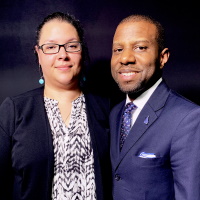 Amanda Sullivan, PhD, is an associate professor and school psychology program coordinator in the Department of Educational Psychology at the University of Minnesota. Her research focuses on identifying education and health disparities among children from culturally and linguistically diverse backgrounds, understanding equity in and effectiveness of the educational and health services they receive and how ethics and law shape practices and students' experiences. Her work also includes clarifying disparities in the educational treatment and outcomes of students with and at-risk for disabilities and identifying malleable factors related to outcomes in order to inform policy and practice to better support students’ educational needs.

