Kaitlin Luna: Hello and welcome to Speaking of Psychology, a podcast produced by the American Psychological Association. I'm your host Kaitlin Luna. I'm joined by Dr. Adam Alter, a New York Times bestselling author and psychologist. His most recent book explores the dark sides of screen time and how our devices are affecting our well-being and happiness. Dr. Alter is also an associate professor of marketing at New York University and his research is about judgment and decision-making in social psychology. Welcome, Dr. Alter.
Adam Alter: Thanks for having me.
Kaitlin Luna: Happy to have you here today. So, I watched a TED talk of yours where you were talking about between 2007 and 2017 about what all the time in our daily lives. So, taking out time for sleeping, work, commuting, eating -- that sort of thing. We have this precious few hours of our personal time and you noted that in those 10 years the amount of personal time we spend on a screen time rose exponentially. Can you explain more about that?
Adam Alter: Yeah, so we don't have that many hours in the day when we aren't doing things like working, sleeping, eating, taking care of other people -- you know, certain things that are kind of fixed and then that leaves this period of a few hours that's open to us -- it's discretionary, it's personal time and we've always spent some of that time as a population on screens because we've watched TV for many decades and so in 2007 before the introduction of the first generation of the iPhone and we spent about 30 or 40 percent of that time on TV, on screens and to some extent on computers, as well.
But, with the introduction of the iPhone in ‘07 and the iPad in 2010, there was a huge rise in the adoption of other kinds of more portable screens and as a result today there's only a very, very tiny sliver of time that's available to us when we're not in front of some form of screen and on average it's less than half an hour for most people.
So, into that half an hour now we're trying to cram face-to-face time with loved ones, with friends, exercise, any hobbies, any things that we do that make us human and individual and different from other people. And so, a lot to ask of half an hour of our day -- it's obviously about a 50th of the day. It's not a lot of time. So, since the most flexible thing in that day is the time we spend on our screens, the argument is perhaps we should try to spend a bit less of that time on screens.
Kaitlin Luna: So, why are screens so irresistible to us that we're using up all that time that we could be doing other things?
Adam Alter: Yeah, it's such a big question and it was such a big question that I ended up writing hundreds of pages on it. The simple answer is that there are a number of hooks that are embedded in the programs we use on screens that make them very difficult to resist, so the people who design these programs have access to huge amounts of data. They don't even have to be great psychologists to understand the way different features influence us because all they have to do is throw a thousand different variations on the wall and see which one sticks the best and then they use that one. If you iterate that process over and over again, as you've seen, as platforms like Facebook have evolved over the years, the version we're using today is a sort of weaponized version that has so many little hooks embedded that once we start using it it's very hard for us to stop.
So, part of what they do is at a very narrow sort of individual level as we're using them we're getting a lot of feedback cues that keep us hooked. We set up a lot of goals. For example, getting a certain number of likes or having a certain number of followers that keep us hooked, but also there's something much more macro and sociological about the experience that especially for younger people it's very different to have a full, rich social life now without being to some extent involved in the platforms that everyone else seems to be using.
So, when you combine the psychology and the sociology of the whole experience it just becomes very difficult to live a mainstream life today where you completely disengage or even spend less than a good few hours a day on your screens.
Actually, you asked the question earlier — the average is now four hours a day for the average American adult and for kids and teens who use screens, it's up to six.
Kaitlin Luna: Wow, it's very… I know myself it's challenging and so for everyone out there it is. And you, you talked in your book about how the tech giants of the world, they limit screen time for their children. So, what does that tell us?
Adam Alter: Yeah, I think that's fascinating. It's actually what got me so interested in this topic because I think whenever you see that sort of hypocrisy you've got to ask what's going on.
So, there's a process in business called dogfooding and it's basically where if you promote a product as a business person, the best way to show that you think the product is something other people should use and have is by using it yourself, by letting your kids use it — it's a sort of proof that it's a good product and in most industries there's a lot of dogfooding. If you work for Coca Cola, you drink Coca Cola, your kids drink coke, your friends drink coke and so on and that's a very basic principle of the business, but that does not happen. There's a huge violation of that a deviation in the world of springs and tech, in particular.
So, you'll find a lot of the tech titans talking in glowing terms publicly about their products, but when you actually look at the way they interact with those same products and the way their kids interact there's a huge disjunction where the kids and they themselves are not using the very same products they will get up on stage and say your kids should use this product.
I think it tells us that they, the people who know the most about these products are a little bit scared of them. They're a little bit worried about the fact that even their kids who are generally wealthy from very privileged backgrounds, who have all the advantages in the world are incapable of saying I will only use this for an hour a day. And if they're worried about that for their own kids it suggests to me that the rest of us should also be concerned and that's what pushed me to write the book.
Kaitlin Luna: And in the book you wrote about how addictions are largely produced by the environment and circumstances and at the same time we hear how genetics do play a role. So, can you explain how the environment you're in with circumstances impact and create an addiction or make it worse?
Adam Alter: Yeah, I mean, I think this is the perfect case study that illustrates the point — the fact that just such a massive part of the population today undermines its own well-being and will admit to doing that by using a product much more than intended because it's just in the moment very hard to stop.
So, there's a lot of debate over the word addiction — whether it should be used to describe this sort of phenomena and I'm agnostic about it. I'm happy to use it or not use it but I think the phenomenon itself when you describe it objectively is pretty blunt and it is that we almost all of us spend way more time than we think and when we're actually shown how much time we're shocked, but struggle to curb our use and that's true for phones and tablets and all sorts of other screens that are robbing us of a huge part of the day.
So, you know the argument, the old argument was that perhaps there was an addictive personality that some people had and they would seek out drugs or alcohol or nicotine and then they would become addicted and that there was something very low-level biological about that — that it was an individual difference characteristic and I think that overstates the role of these individual differences.
I think they're there and they're important, but I don't think they play the only role. The way we know that is because if a huge percentage of the population today feels in some way tethered to these devices in a way that they don't want to be, you can't say that everyone has the same personality defect or deficiency — that there's something wrong with all of us. What you have to start to say is obviously there's something about the situation, the circumstance, the environment that we're in. If you put the most irresistible buffet of options in front of us, especially when we're in a world where a lot of people are fairly lonely, there's a fair amount of general unhappiness, we're overwhelmed, most of us live in big cities that are fairly impersonal. If you can get some measure of connection by being on a screen that would attract you initially but once you get there if you like a rat in a cage or like a monkey — if you're in front of all of these hooks that are just perfectly designed and have evolved over time to be weaponized, they make it very hard for you to stop using those products, it's the environment that's driving you there.
I don't think there's anything special about me that means that when I checked my phone at the end of the day I have a tracking app. I'm using my phone four hours a day. I don't think that's a personality variable that's driving that sort of behavior. I think it's really just that I am now part of this particular world, this culture, this landscape where this is what people do and four hours is the average. I'm not even an outlier.
Kaitlin Luna: Yeah, absolutely. This seems like such a large chunk of time but we're always on our phones — I mean email attacks, social media or whatever, it is exactly browsing the internet, go on forever.
Adam Alter: Yeah, not all of its it's created equal, right? Obviously, using the phone as a utility, as a map, as a way to work out what the weather's doing for boarding passes when you travel, things like that, I think that's actually very enriching because it takes a mundane task and it makes it tractable and it means you spend less time on that task and that frees up other time — other chunks of time for other things, which I think it's great. And I think that's the very best use of technology like phones — a sort of digital Swiss Army knife.
Having said that, so much of what we do is not utilitarian in that sense and it is kind of hollow and when we do that for a long time and we don't feel good about ourselves most of the time.
Kaitlin Luna: You spoke about how our humanity really lives in — our humanity lives in those free hours, those free moments. What is it doing to our humanity if we're spending all our time probably doing something that's not so productive and beneficial on our screens?
Adam Alter: Yeah, I mean I think it's hard to argue that personal contact is not important. I think it obviously is very important to us. Face-to-face time is important, especially for younger people who are developing social skills. You know, if a lot of that rests on trial and error and getting feedback as you behave and seeing how people respond to you, you need to do that in real time and you need that feedback to be high fidelity across all the channels and it needs to be quick and rapid.
So, if you're a kid who's a couple of years old and you take someone else's toy, you need to know instantly that that makes that kid cry, their face scrunches up, you see tears and if you're a normal person you feel bad about that and you don't keep doing it. So, that's how kids learn. Also, if you get bopped on the head because you've done that, you learn that way, as well. But if most of your learning happens behind a screen, the feedback is very fuzzy. It takes a long time to reach you if it ever reaches you at all. That's one reason why it's so easy to bully people when they're behind a screen. You can, you just need to look at YouTube comments or comments on faceless, anonymous sites where people have usernames. It's very easy to be cruel if you don't see the effects of that cruelty and we don't have to see that if we're dealing behind screens all the time.
So, I think that's a big part of it — makes it easy to be callous so that the worst version of yourself is allowed to flourish and I think for kids that never learn to be fully adapted, fully evolved social creatures because they don't get to try these different things out, they don't get to hone their skills — well you know if you're sick from work or school for a week and you go back, that first day everything feels a little clunky, it's a little awkward and being a capable social being takes work and time and effort and feedback and we don't always notice that's going on, but it's with us all the time as we're behaving.
And so, if you remove that or you make it much fuzzier, make the feedback hard to perceive, I think you're always going to make people less capable as beings in this world.
We don't know what that actually means for young kids. So, we know that the digital natives, the true digital natives in the iPhone era are now 10 years-old, 11 years-old, they aren't even teens yet or tweens. They aren't adolescents, they don't have kids, they are not adults, they don't have jobs. We have no idea whether this generation will in some sense look different from previous generations because they've spent all this time on screens. It's something that we will know more about in the next 10, 15, 20 years. But in the meantime, I think it's worth being cautious.
Kaitlin Luna: So how do we live in this modern world and not get addicted to our screens?
Adam Alter: I think, you know, the one very extreme approach is to say well either you use them, or you don't, so let's go cold turkey. And I think that's ridiculous. I think partly because this is just very difficult. You create a very difficult life for yourself. I've had maybe five or ten people email me over the last, I guess two years and say I don't use any tech, excuse me, I don't use any form of technology.
My first response is whether you're using email to tell me that. But even if that's the only time you've used tech, their whole lives are defined by this tendency to just avoid technology altogether. I think it's a really uphill battle. So, I wouldn't say cold turkey is the way to go. I think the more important thing is to try to set up structures that limit your usage. So, one thing to do is to, for example, pick a time of day, a couple of hours in the afternoon or the evening or dinnertime or you know some sacred time in the day. I try to make Saturdays wherever possible, days where I have my phone on airplane mode, so I can use it as a camera if I'm out with the kids and my wife, but I don't use my phone as a phone. And so, it's really about setting up structures and habits that act against this tendency to just mindlessly reach for your phone.
The best thing we can do is not have to exert willpower. You know, if you have to do that afresh every time and make that new decision every time, it's exhausting. So, the better thing to do is to say, for example, I have a drawer in my room. I will put my phone in my drawer for this number of hours every single day — that'll be my habit. Once I've done that, I can't reach for my phone mindlessly because it's far away and then I get about doing whatever else I need to do in the day. And I've spoken to a lot of people have done it and it works for them. They don't feel like they have to give up using phones completely, but they know there is part of the day that is preserved and kind of sacred for time in nature, outdoors, doing all sorts of other really important things. So, it's really just a matter of being mindful about our usage and the first step for everyone, I think, is getting a tracking app to see how long you think you're spending because we're really bad at intruding that.
I've asked a lot of people this and the guy who created the tracking app I use asks a lot of people as well and people routinely underestimate by half. So, they tend to say an hour and a half maybe and the truth is for most people it's between three and six hours a day, which is staggering.
Kaitlin Luna: And lately, Facebook and social media sites and tech executives have come out to say they want to help be a part of the solution and to find ways to tell people the signal of how long they've used or maybe they're using too much. Can you talk a little bit more about that? For a business does that go against their interests to be telling people, no don't spend as much time on our screens. Like, how does the company balance that and is that going to be effective?
Adam Alter: It's a good question. I mean, I think the question of whether it's consistent with making lots and lots of money is an important one. I think for a lot of companies they need to be long-term in the way they think about that question. So today, you could make money by exploiting everyone who uses your product and making sure they use it for as long as possible, so advertising dollars just pour in.
But by five years from now there might be another product that comes out that does what you do, but it does it in a way that's actually friendly to consumers. So that's one thing is you can start to compete on that dimension. You can be the better company that actually cares about its consumers and you start to steal money away from the companies that are not caring.
Also, you know, we see this in lots of areas of business — if you think about industrial companies that would like to be able to just dump pollutants into the waters, into the waterways, into the air, its cheapest to do that, to use fuels that are cheapest, that are very dirty to dump pollutants. That's the easiest way to get rid of industrial waste. Companies can't do that anymore either because there's been a top-down influence from the government that says you can't do this anymore. It's legislated against or because there is there's enough grassroots support from people who boycott the company.
One problem with these tech companies is they are all individually monopolies in their own way where there is no true substitute for Facebook or for Instagram or for Twitter or my snapchat — they are unique in some sense and these are markets where one player wins all and they have all won in these markets — at least for now. So, if we say we won't use you they don't take that all that seriously. But if there's enough pressure as there has been, a lot of grassroots pressure and they're starting to be pressure around the world from governments, as well, these companies are forced to act in ways that are not always their best, in their best interest as businesses but that ultimately will probably ensure their preservation as organizations, companies, platforms in the longer run. So, it's a complicated, it's a complicated situation for them, but I think they've all been pushed into a situation where they have to be seen. I'm not sure they're all doing what they have to do, but they have to be seen to be responding. And there aren't many companies of the big ones now that aren't doing at least something to pay at least lip service to the idea that they need to be more thoughtful about their consumers.
If I can just give you an example though of what I mean by that because to say it's lip service is, I think fairly provocative, but I believe a lot of the companies are doing that. So, one example is so with Instagram now what they do is if you have seen all the posts that were posted by the people you follow in the last few days, a little pop-up says you have got to the end of all the posts, you basically don't need to be on Instagram right now.
The problem is if you follow hundreds or thousands of people that's thousands and thousands of posts and it becomes a goal. So, what is seen to be a stopping queue — it's a point that says you should stop using this is actually something people seek out now. So, they will spend more time on the platform trying to see everything because now they know if they don't see everything, there's a marker that will tell them when they get there and so it's sort of undermining. Basically, if you're going to stop people from using the product or encourage them to get off, don't make an unattainable goal the point at which you say okay now it's time for you to get off.
So, that's one example that I don't think is very effective.
Kaitlin Luna: Do you think businesses should take it upon themselves to tell their employees okay after 6 p.m. don't check your work email? Should companies do that?
Adam Alter: Yeah, I think so. I think this is a different case because for tech companies it might undermine their profit but for organizations that say don't use what you don't have to use or we won't send or release emails after a certain time, that's actually really good for employee productivity, for employee well-being, for long-term retention. There are companies now — there are few companies that protect people when they're on vacation from their emails, so they will suspend email accounts where you cannot possibly get any new emails and when you get back to work at the end of your vacation your inbox looks exactly the way it did when you left, which is great. People actually do go on vacation and they disconnect — and that's a huge competitive advantage for those companies. There are people who will seek out jobs at those companies over other equally good companies in other respects because they know this company cares about me and these employees tend to stick around for longer. They don't burn out as easily. So, I think there's really good reason for companies to introduce policies like these.
There are cases where it's difficult. So, if you're in a market that's run globally 24 hours a day. If you work with stock markets, for example, you can't really have people not respond, but there are still things you can do. You could at least explain to them that you recognize this as a big drain on them. Maybe say to all employees where we're giving you sort of shifts, so your shift means that you will not be getting emailed at these times and you will co-work with someone who will get the emails at that time or some structure. There's always something that can be done. It's just a matter of being driven and motivated to do it and I think a lot more organizations are starting to think about it now.
Kaitlin Luna: And what should parents do — I mean, we hear all the time how children's screen time should be limited, yet you know there's a lot of beans and things they can do on there or you know exploring the Internet or something like that. So, what advice do you have for parents?
Adam Alter: Well, parents are, you know, they teach their kids all sorts of things. They teach their kids oral hygiene, dental hygiene, they teach them how to brush their teeth. They teach them how to interact. They teach them manners. I think one of the things parents and schools should teach kids is sort of technological hygiene. How do you interact in the world with screens? How do you act in a way that is good for you, good for the people you're interacting with, that it that maintains your integrity, that means you have time for other things? That's not being taught, but I think it's a really critical new life skill that we didn't have to worry about 20 years ago.
So, part of it is actually educating kids about screens the way we do all the traditional topics that we've focused on for I don't know, hundreds of years. So, that's part of it.
But, then the question of how you actually regulate how much time parents — how much time your kids are spending on screens is a really difficult one. It's easy when they're younger or easier when they're younger. I have a two-year-old and a one-year-old and at least with my first kid, my son, because he was my only kid at that time, I could manage how much time he spent in front of screens and for 18 months he didn't see a screen.
But then my daughter came along and so now that my son watches TV, from birth she watched TV because if he's watching it, she's going to see it, as well and so it becomes very tricky. I used to be very hardline about this and I think once you start experiencing it as a parent, you realize it's much trickier than you think.
So, the issue is, I think again, it's the same that you would do for yourself, which is to say these hours are tech free and I'm always very vocal and verbal with them about the fact that this is — we're going to watch one episode of Sesame Street and then we're done and they understand that. They know they get the sort of dose — and once the dose is finished it's done for the day. So, there's that.
I think it gets much trickier when you talk about teens and adolescents and it's partly tricky because they are choosing between being isolated from their friends and engaging with their friends, because so much of what goes on socially goes on online for a lot of them. But again, it's, it's really a matter of having a conversation about, as I said before, sort of technological hygiene about balance, about the fact that we can't always eat dessert, we can't always spend our time playing and not being at school or working — the same is true with screens.
Screens are fun and you get access to your friends and that's great, but there's got to be time for other things and so it's just a matter of having this general discussion about balance and then there's a small percentage of kids for whom those measures don't work — setting boundaries doesn't work and at least the stats that I've seen suggest that between one and five percent of the population of teens has a significant enough problem that they probably need some sort of counseling or therapy about that issue. So, at that point if there's an ongoing struggle and I'm sure that number's growing now, it's probably worth talking to a therapist and a lot of psychologists and therapists now deal with this all the time whether they want to or not because it's such a huge part of what goes on.
One of my very good friends in Australia is a psychologist and he told me that a few years ago he started noticing that he would hear from — he mainly treats teens. He said he started to hear from these teens that they would describe a long conversation and it would go on for maybe half an hour and then it would suddenly dawn on him that this whole thing happened behind a screen and it was all text. But the way they described it was as though as face-to-face. So, even that means that psychologists, therapists need to now navigate a very different situation from what they had to before and to understand that it's not always clear the way people interact now whether it's through one modality or another, you actually have to establish that explicitly upfront because young people now sort of think of them as interchangeable in some sense and I also think that's also a huge problem.
Kaitlin Luna: You also talked about how we've not reached the peak of tech through new technologies, new social media outlets coming out in the future. So, how do we prepare for that? I mean, it's already our addictions are already pretty bad. It's not even the onslaught of what's coming.
Adam Alter: Yeah and I think that's why it's so important to consider this issue now before it gets worse. I think there's a tendency in pretty much any market, any landscape to believe you've reached a destination, so we think oh this is crazy, we're in this world where 15 years ago there was nothing like what we have now and Facebook and Twitter and Instagram and Snapchat and so on, feel like fixtures today, but in 10 years when we look back at them, I'm sure not all of them will exist in the form they're in today. Some of them will have been marginalized, even facebook is marginalized now by teams.
So, things are going to change a lot and there's going to be new stuff that we don't even imagine or can't even imagine yet. And one thing we can imagine is virtual and augmented reality and that's going to be a much bigger consumer product than it is now. You talk to people in that industry, the forecasts are that within ten years, an industry that is now worth about one to two billion dollars will be worth a hundred or more billion dollars and that most of us, just as we walk around with phones will have some form of gobble, very portable gobble that we'll take with us.
And so, if at any moment in time you can check out of the real world and go into this perfect virtual world that is exactly what you want. Why wouldn't you do that? As humans, we seek pleasure. That seems like a pretty good fun thing to be doing. We already do with our phones. It's going to be so much harder to resist when it's a virtual world that feels really compelling and if phones take us out of the here and now, at least we can still sort of respond to other people. But, if you're actually not in this world, you're behind a screen or behind goggles, it's going to be really hard for us to engage with each other in the real world.
Kaitlin Luna: So, like you said it's good we're having these conversations now on such a broad sense.
Adam Alter: I think so, yeah.
Kaitlin Luna: There will be a lot of more challenges coming in the future.
Adam Alter: Yeah.
Kaitlin Luna: Well, thank you so much for joining us today.
Adam Alter: Thanks for having me.
Kaitlin Luna: Thank you. Speaking of Psychology is part of the APA podcast network, which includes other great podcasts such as APA Journals Dialogue about new psychological research and Progress Notes about the practice of psychology. You can find all our podcasts on iTunes, Stitcher or wherever you get your podcasts. You can also visit SpeakingofPsychology.org to view more episodes and to find resources on the topics we discuss. I'm your host, Kaitlin Luna at the American Psychological Association.


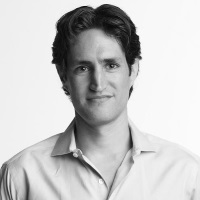 Adam Alter, PhD, is an associate professor of marketing at New York University’s Stern School of Business, with an affiliated appointment in the New York University Psychology Department. Alter is The New York Times bestselling author of two books: “Irresistible”, which considers why so many people today are addicted to so many behaviors, from incessant smart phone and internet use to video game playing and online shopping, and “Drunk Tank Pink”, which investigates how hidden forces in the world around us shape our thoughts, feelings and behaviors. Alter's academic research focuses on judgment and decision-making and social psychology, with a particular interest in the sometimes surprising effects of subtle cues in the environment on human cognition and behavior. His research has been published widely in academic journals, and featured in dozens of TV, radio and print outlets around the world. He has shared his ideas on NPR's Fresh Air, at the Cannes Lions Festival of Creativity, and with dozens of companies, including Google, Microsoft, Anheuser Busch, Prudential, and Fidelity, and with several design and ad agencies around the world.