Kaitlin Luna: Hello, and welcome to Speaking of Psychology, a bi-weekly podcast from the American Psychological Association that explores the connections between psychological science and everyday life. I'm your host, Kaitlin Luna. We're in the thick of winter here in the northern hemisphere. By now, many of you are probably tired of the short, cold days and are longing for spring and some sustained sunshine. Even though winter can be a bear, most of us just bundle up, get through it, or embrace it and find ways to get outside and stay active.
As many as six out of every 100 people in the US experience Seasonal Affective Disorder, known as SAD. It's more than just the winter blues. It can be very difficult for people who suffer from it, and this stretch of winter we're in right now tends to be the most brutal. Our guest on the show today is Dr. Kelly Rohan, a Seasonal Affective Disorder expert who is leading a five-year study on people who suffer from SAD at the University of Vermont. Welcome, Dr. Rohan.
Dr. Kelly Rohan: Thank you. My pleasure to be here.
Luna: I first want to start off with defining what Seasonal Affective Disorder. What is the definition?
Rohan: Seasonal Affective Disorder, or SAD, I think I'll just call it SAD moving forward, is a form of clinical depression that's recurrent. It's major depressive disorder that happens during certain months of the year and is offset or changes to mania or hypomania during the alternative seasons of the year. I think that surprises a lot of people to hear that Seasonal Affective Disorder, SAD, is actually a sub-type of clinical depression.
Luna: Can you explain the difference between SAD and depression in general?
Rohan: Really, the only thing that makes SAD different from garden variety depression that's not seasonal is the seasonal pattern that Seasonal Affective Disorder follows, where we have major depressive episodes recurring predictably in certain seasons of the year.
Luna: What are some of the symptoms people experience?
Rohan: We're diagnosing major depression. The criteria are pretty much the same. We're just looking for the seasonal pattern. The symptoms include things like feeling pretty persistently down or sad. Losing interest or pleasure in things that a person would normally enjoy, like their hobbies, interests, social activities. A significant change in weight, which could be a weight gain or a weight loss or a significant change in appetite, either up or down.
Sleep disturbances, which could take the form of insomnia, difficulty falling or staying asleep, or the opposite, what we call hypersomnia, sleeping too much, which could be at night and or in the form of naps that occur during the day. Feeling pretty persistently tired and fatigued. That seems to be the universal symptom of winter Seasonal Affective Disorder. I personally never met somebody with SAD who doesn't endorse that symptom of feeling this loss of energy nearly every day of the affected months.
Feeling worthless about oneself or guilty over things that have been done or not done in the past. Difficulty concentrating, clarity of mental focus, holding attention, those kinds of things being off. Then recurrent thoughts of death or suicide, we see not only in non-seasonal depression, but about 30% of people who have SAD endorse some thoughts of death or suicide.
Those are the symptoms of major depressive disorder, and we're looking for at least five of those that are throughout the day nearly every day, at least two weeks without relenting. The average SAD episode lasts for five months, so we're talking about five months of the year every year, recurrently suffering from these pretty intense debilitating symptoms.
Luna: Do the symptoms tend to start say as soon as the days get shorter, the time of year where we fall back, usually in early November and the days become shorter, it gets colder. Is that when you tend to see this begin?
Rohan: Yes. Certainly here in Vermont, where I'm located, the time change. The end of daylight savings, which takes place in early November, is a pretty big cue that seems to set off the cascade of symptoms. No two people with SAD are exactly the same in terms of the timing of the symptoms, but I would say October tends to be a window where the first early onset symptoms start occurring.
Then they pick up momentum in November, with a lot more symptoms in December. January and February tend to be the worst months. Those are the months where the largest proportion of people are going to be in a full-blown major depressive episode among those who have this seasonal pattern to their depression.
Luna: Do you think that's tied into just the end of the year, all the things going on. They might keep someone busy, maybe distracted the holidays, that sort of thing. Does that have anything to do with why it might be worse, now it's January and February?
Rohan: I think that it does. There's not a lot of research on this, but I do find that a lot of people make it through the holidays with a lot of effort, because they're typically dealing with a lot of fatigue at that time. There's so many activities that we have to be present for, during the holidays, pressure to be at social activities, work holiday party. It's those kinds of things.
From a behavioral perspective, those help to keep us a bit more engaged during December. Then after New Year, from the perspective of somebody with winter Seasonal Affective Disorder, it's like, "Well, now what? Now I just have at least three if not more months of winter weather to look forward to." That is a pretty common trajectory that we see in the SAD patients that we work with here.
Luna: Do you know what causes SAD, is that related to the study you're working on?
Rohan: We don't know what causes SAD. We've only been researching this as a recognized mental health diagnosis since the mid-1980s. It's not too surprising that we haven't figured out what causes seasonal depression yet, because we've been researching depression for a lot longer than that and we still don't know exactly what causes depression. Probably, the leading theory or best educated guess about what causes Seasonal Affective Disorder is the hypothesis that it's a slow running biological clock in response to the later dawns that occur, specifically during the winter months.
We should separate cause from trigger. We think we know what the environmental trigger is to develop winter depression, and that's a short photoperiod. photoperiod is day length, simply the number of hours and minutes between dawn and dusk, sunrise to sunset. That's of course fixed for any given location by calendar date. There are some studies that show photoperiod is the strongest, most robust environmental trigger of when the symptoms start in any given year, as well as the strongest predictor of how depressed somebody with Seasonal Affective Disorder feels on a particular day during the winter months.
We think we know what the environmental trigger is. The question is, what is it about a short photoperiod that triggers the onset of clinical depression in somebody who has a vulnerability to SAD? Again, we don't know, but there's some evidence for circadian rhythms getting out of sync during the dark days of winter. Usually in the direction of what we call a circadian phase delay where circadian rhythms are shifted later than they should be in response to a later dawn in the winter months.
It's only about a third of SAD patients. If we measure the circadian rhythm and melatonin, that are going to show that kind of a reaction in the winter as compared to the summer. It's not like that explains or is a biomarker of every single case of Seasonal Affective Disorder that's out there.
Luna: There's definitely a lot that is not understood. I did see on your lab's website that women are more likely to suffer from SAD. Do you know why that might be?
Rohan: That's the million dollar question. Pretty much every epidemiological study that's ever been conducted specifically on Seasonal Affective Disorder has found overwhelmingly more cases amongst women than men. We think that the gender difference in SAD is at least as high as the gender difference in non-seasonal depression, which is two to one to women to every male case of major depression. This is robust, it's replicated pretty much around the world, and Seasonal Affective Disorder it's believed to be at least that high, if not higher, perhaps more like four to one women to men who suffer.
It's widely reported. In terms of explaining it, I haven't really seen any research that specifically tries to address that question of why are women more vulnerable than men to seasonal depression? We know in non-seasonal depression, women tend to have a more ruminative response style, meaning when they feel sad or begin to develop depressive symptoms, they turn inwardly and repetitively think over and over again or ruminate about, why do I feel this way? How did I get to feel this way? What are the causes and consequences of my feeling this way?
There's some evidence in the field of seasonal depression that the more people ruminate in the fall, the more severe their symptoms are the next winter. There could be something to rumination contributing to the gender difference in seasonal depressive symptoms in the same way that it seems to contribute to the gender difference and non-seasonal depressive symptoms and that's just a hypothesis or educated guess on my part.
Luna: You do know that in Northern areas of the US I'm speaking specifically about the US we do have international listeners, but in the US it's more common in the Northern States, for New England where you are in Vermont. Do you see Seasonal Affective Disorder in places that don't have snow or cold weather, say like Florida or Southern California?
Rohan: Yes, it seems to exist at Southern latitudes, but not nearly at the frequency that we observe at Northern latitudes. Some of the first research on this came out of the National Institute of Health and the mid-1980s they did a telephone survey of residents ranging from Nashua, New Hampshire, which was probably in a similar latitude that I am at here in Burlington, Vermont, all the way down to Sarasota, Florida.
They found a pretty nice correlation with latitude the further away from the equator you get in the United States, the more cases of Seasonal Affective Disorder you find. The prevalence of winter sad and Nashua and New Hampshire residents was about 9.7% close to 10% or one in 10 people and in Florida, they still found a 1% prevalence. So one in 100 people in Sarasota, Florida may meet criteria for winter Seasonal Affective Disorder.
Luna: That's really interesting to think of place like Sarasota where you have definitely more sun than you do in the Northeast, warmer days, they could still affect people. I guess maybe like you said, it might have to do with just the shorter days this time of year.
Rohan: Yes, there are still our seasons somewhat, not nearly the kinds of fluctuations and photoperiod that we see at a Northern latitude, but you can find those cases. To me, it suggests there's some people who just cannot outrun their SAD no matter how far South they go. If the vulnerability is there, they may still have the depression in the winter months.
Luna: I want to talk about your discovery that a form of cognitive behavioral therapy tailored to people with SAD was highly effective. Can you explain how CBT helps people with SAD and again, how that was treated previously?
Rohan: Previously, the first-line treatments for winter Seasonal Affective Disorder included light therapy, which has been around since the early 1980s. It was developed specifically as a treatment for winter oppression to try to simulate an early dawn based on the assumption that if we do that, we're getting this assumed to be slow running circadian clock jump-started and put back into a normal phase more like it is in the wintertime. There's lots of research from around the world to show that light there be as a very effective treatment for winter depression.
About 50% of people who participated in a controlled trial of light therapy will be in remission at the conclusion of that clinical trial. The other first-line treatment previous to my research is antidepressant medications, which include drugs like the SSRIs, the selective serotonergic reuptake inhibitors, drugs like Fluoxetine brand name, Prozac, there's a large study. Canada, a placebo-controlled study of Fluoxetine that found it was superior compared to placebo for treating winter depression.
In the United States, the only, to my knowledge, FDA approved medication for prevention of winter Seasonal Affective Disorder is Bupropion XL, so that's the extended-release version of Bupropion trade name people may know this drug by the name Wellbutrin XL. There was a multisite study in the United States that found SAD patients who were started their treatment in the end of summer and followed into the fall and the winter, the ones who are getting the active drug Bupropion XL had a reduced likelihood of relapse as compared to those that got the placebo and this led to the FDA approval of Bupropion for the prevention of Seasonal Affective Disorder specifically.
Those were the two first-line treatments before my research came along, bright light therapy and antidepressant medications. Now, I think it's out there in the universe, more or less accepted that cognitive behavioral talk therapy is another effective form of treatment for winter Seasonal Affective Disorder. Cognitive Behavioral Therapy, CBT, as a tried and true psychotherapy treatment for non-seasonal depression. It's been around since the 1960s there's a lot of clinical trials from around the world to show that it's an effective treatment for depression. It seems to have lasting benefits after treatment ends in terms of keeping people well over time, reducing risk of relapse and recurrence. When I first had the idea in the mid-1990s, about applying cognitive behavioral therapy CBT to SAD I thought, "Wouldn't it be nice if we could treat these people once with a psychotherapy like CBT and they learn something that they can carry forward into future winners to fortify themselves against a relapse."
We know that this is generally true of cognitive behavioral therapy for depression so why not try it with Seasonal Affective Disorder to have an alternative out there? Again, it's about 50% of people who've remit with light therapy so the other 50% needs something and not everybody is willing or able to take a medication. Some people can't tolerate side effects. I was really interested in the idea of a non-pharmacologic alternative to light therapy.
Luna: Can you explain why light therapy works?
Rohan: It's based on the dogma that Seasonal Affective Disorder is caused by a slow running biological clock in response to later dawn's in the winter. If we give someone morning light therapy, which is the superior time to administer it in the course of a day relative to in the evening, if we give someone morning light therapy, we're doing it with the goal of simulating an early dawn. A dawn that would be more like it is in the summer, to presumably jump start a slow running circadian clock and put those circadian rhythms back into a normal phase more like they are in the summertime.
This circadian rhythms we look at most frequently because you can measure it is the circadian rhythm and the hormone of darkness melatonin. Melatonin rises at night to help us feel sleepy and it tapers off in the morning to help us wake up. The assumption is, in people with Seasonal Affective Disorder, they're in a sense of biological night, much later in the morning than they should be. Their melatonin is still being released by the pineal gland.
Even though the alarm clock is going off and they're getting these external cues, it's time to wake up, their bodies are telling them, "I should still be asleep." It's still internally night because they're still producing melatonin. The bright light therapy first thing in the morning is designed to suppress that melatonin release and jump start that slow running melatonin rhythm back into the normal phase more like it as in a summer months. This is all assumed based on theory not really demonstrated in research that that's the mechanism through which light therapy works.
Luna: That leads me to my next question about this research you're doing, this five year clinical trial. It's funded by the National Institute of Mental Health. In it, there's 160 adults with SAD, and they'll be either treated with that SAD tailored CBT or light therapy and then followed over two years. Can you talk about where you are with the study now or are you able to share some initial findings or what you're learning so far?
Rohan: Yes. Well, it's a good thing for me that I have a really high frustration tolerance and I can delay gratification because the kind of work that I do is very slow and deliberate and pace. I run randomized clinical trials comparing light therapy and CBT SAD. We treat people and then we follow them for the next two winters. At this stage of the game, we have only treated our very first cohort of participants last winter.
They're coming back for follow-up this winter and we're just now enrolling and beginning to treat our second cohort of participants. Even though we have about 90 people currently active in the study, we're so early in our data collection that we don't really know any findings that I could talk about in a meaningful way. However, the last study that we did, which was very similar to this one, enrolled 177 community adults in the greater Burlington area with winter SAD.
We treated them with light therapy or CBT SAD, and we followed them for two winters. In that study, we found both light therapy and CBT SAD were very effective treatments across six weeks in the winter. They could not be split out. If it were a horse race, it would be a dead heat. We've tried like, "What if we consider certain profiles better candidates for one versus the other." We cannot seem to split those treatments out across six weeks. When we followed people for the next two winters, we found apparent two winters later, fewer relapses and less severe symptoms in the winter and people who got the CBT intervention relative to those who got the light therapy intervention, exactly the same pattern that we observe in non-seasonal depression with CBT studies as compared to antidepressant medications. Both treatments work really great in the initial phase, but then a reduced risk of relapse and better outcomes following treatment and CBT.
Luna: Is your goal with this research to back up more thoroughly that CBT is the best course of action or the one that will have the most long-lasting benefits?
Rohan: The grant that I got that's funding the current study is called a confirmatory efficacy R01 trial in National Institute of Mental Health lingo. What that means is confirmatory advocacy that you already have quite a bit of data to show that a treatment works. This is just confirming that consistent with the doubting nature of science when you show a result once, that's great, but we always wonder, is it legitimate, so we replicated over and over again. That's the goal of this study.
In addition, we're studying some biomarkers that we think will be mechanistic of treatment outcomes in light therapy and cognitive behavioral therapy. We're basically doing a neuroscience clinical trial here. I'm doing things I never dreamed I would be doing. I have a research grade pupillometer and EEG system in the lab, and we're repeatedly measuring things like pupillary responses to light, the circadian rhythm and melatonin, pupillary responses to emotional information including seasonal or winter specific stimuli repeatedly over the course of treatment, and in our follow ups one and two years later.
What we're hoping to learn is some cause and effect relationships. Specifically, what changes in the body that precedes and predicts improvement in depression in the acute phase and what is responsible for this enduring effect that we see in CBT SAD specifically with regard to fewer relapses, and less severe symptoms and future winters.
Luna: That's really fascinating. You have one more year of this research, and then you'll be publishing I'm imagining, right?
Rohan: Actually, we have three more years of this research. It's a five-year grant, and we recruit a new cohort each year for the first three years, but then because we follow everyone for two years, it takes five years to complete the project. That's what I meant by it's a good thing I can delay gratification.
Luna: I see what you mean. I think I was a little bit confused. I was saying you follow people for two here so there's still more time on the study. That will be interesting to see what comes to light. That leads me to my next question about, when you and I spoke earlier about this topic, you were explaining how important it is that light therapy be done under supervision. That people not run out and go buy a lamp. Can you explain why it's important for something like light therapy to be done under supervision?
Rohan: Light therapy is very interesting to me and that it is not FDA regulated. It's a cottage industry. It's really hard for a layperson to navigate all of the products that are on the market. You don't need a prescription to buy a lightbox. Technically, anybody could go online and acquire a device without any prescription. That doesn't mean that you should because first of all, you want to make sure that you're getting a device that meets the specifications of those that have been tested in the randomized clinical trials.
Generally, that means 10,000 lux intensity with a UV filter, so you're not going to burn your skin or your retinas. Bigger is better. A lot of these tiny devices that are on the market, those of us in the field worry, are they really effective because it seems like very minor movements of the head may no longer get the 10,000 lux to the retina. Whereas, the big ones that have been tested in clinical trials if you're in front of it, facing it, you're probably going to get that full dose of light to the retina.
That's the first thing. Navigating the industry, finding a product that could be truly effective. Then secondly, is dosing. There is no one size fits all prescription to light therapy, despite what any instructions might say that come with a device. By dosing, I mean, how many minutes per day does this individual need to use it and at what specific time or times of day does this person need to use it? We initiate light therapy at 30 minutes in the morning first thing upon waking in my clinical trials. Just like dosing a medication, that's a starting dose. We always start at the floor. That's the minimal dose that it would take for somebody to benefit and we work from there. We titrate up and the third thing is side effects. Light therapy can have side effects. Usually, these include things like headaches, eye strain, feeling a little wired up. The more rare but serious side effects light therapy can contribute to some pretty significant insomnia because it is assumed to shift circadian rhythms around including the circadian rhythm and melatonin but there's also a circadian rhythm in sleep. In addition, the rare but serious side effect that I think it would be very dangerous for a layperson to encounter without anyone monitoring them is the possibility of mania or hypomania. The elevated mood states usually associated with bipolar disorder, what we used to call manic depression. We see it sometimes in light therapy. It's rare but certainly serious.
Luna: Yes. You told me earlier as well that one-third of people with SAD may have a bipolar presentation. That means, they go to the opposite under the spectrum during warmer months where they have active thoughts, high energy, fast thoughts, talking fast, very little need for sleep. Why do you think that is?
Rohan: The National Institute of Mental Health which was the pioneering group under Norman Rosenthal, MD psychiatrist who coined the term Seasonal Affective Disorder did the original studies to develop the diagnostic criteria, surveillance and so on, found that in over 800 people that came through their seasonal studies program, it was 60% that had a unipolar presentation, meaning it was major depressive disorder in a fall and the winter and then a fall remission or change to normal mood in the spring and the summer. For the remaining 40%, about 35% of those individuals had a bipolar two presentation which means they were depressed in the fall and the winter, but their mood changed to hypomania.
The less severe variant of mania in the spring and the summer and about 5% had a Bipolar I presentation where they had full-blown manic symptoms in the spring and the summer. Seasonality, we tend to associate it with depression predominantly. However, it is a transdiagnostic construct. There are seasonal cases that have been reported at least in the form of case studies for anxiety disorders, panic disorders specifically, eating disorders, particularly bulimia nervosa but now that Binge Eating Disorder is a recognized category.
We're finding that that's a pretty significant comorbidity as well. A lot of our SAD patients have that and people with Binge Eating Disorder can have a seasonal pattern to their binge eating and also substance use disorders that's been reported that they can have a seasonal component as well. I think seasonality is really a transdiagnostic construct. We tend to think of it as a course specifier for mood disorders, but other psychopathologies can have a seasonal pattern as well.
Luna: I've also read that people can get seasonal depression in the summer. Do you know why someone would get Seasonal Affective Disorder in the summer? The days are longer, the weather's warmer or the sun's out.
Rohan: We've really been focusing our conversation on winter SAD and I've even used the term SAD generically to refer to winter SAD throughout our conversation today but it's important to note that the diagnostic criteria are actually silent in terms of what the seasonal pattern needs to look like. As long as we have major depression that recurs specifically in certain seasons of the year, we can consider it SAD. We do see epidemiological studies or surveillance studies, a minority of SAD cases have a summer presentation where they have the major depressive symptoms and the summer months, and these people actually feel they're very best in the fall and the winter months.
At the National Institute of Mental Health, they did a little bit of research, very small studies, very small sample sizes and predominantly, by the way, with individuals who had bipolar type Seasonal Affective Disorder. What those patients reported was they felt that their trigger was more related to heat and humidity or perhaps too much light in the spring and the summer. That would usually trip them in terms of a sudden mood change in the spring or the summer months.
We think the trigger is very different for one thing heat and humidity and summer SAD and short photoperiod or light deprivation and winter SAD. The treatments that they experimented with at the NIMH were thermoregulatory treatments having these individuals take cold showers frequently throughout the day, confine themselves to air conditioning. It seemed to be helpful but again, it's a such a small level this research small sample sizes. I hesitate to make any definitive conclusions or put any treatment recommendations out there.
Luna: If someone does experience this, what's the best course of action?
Rohan: If somebody experiences summer SAD?
Luna: Yes.
Rohan: Probably find a provider who's experienced in dealing with SAD in general because they could help make sure once and for all that this is really a definitive diagnosis try to rule out any psychosocial stressors that could be responsible that are not related to an environmental trigger. Clinically, I think people are likely to use antidepressant medications. Potentially, CBT was some of the same focus that we do with winter, Seasonal Affective Disorder, behavioral activation, identifying challenging and changing negative thoughts.
In this case, I guess it would be negative thoughts about the summer. I'm so used to dealing with the negative thoughts about the winter. I don't think there's a case for light therapy because we have plenty of light. There's more light in the summer so I can't imagine a scenario for light therapy being effective for summer SAD. Antidepressants, psychotherapy, perhaps CBT specifically, and potentially some of these thermoregulatory treatments that were experimented with by Norman Rosenthal, Thomas Wehr and colleagues at the National Institute of Mental Health.
Luna: A great deal of your professional life as we've been talking about is studying SAD and yet there are some people out there, including mental health professionals who don't believe there's a variation in depressive symptoms based on the seasons. What do you say to that?
Rohan: I wonder if they've ever lived in Vermont.
[laughter]
Come to Vermont where on the winter solstice are photoperiod from sunrise to sunset is about eight hours. I think anybody with a clinical practice that services a lot of mood disorders, patients at a more northern location would probably appreciate the seasonality that they see in their patients. There's a large research base here. I don't quite understand that way of thinking of doubting the validity of seasonal depression. Certainly, the construct of depression it seems quite global and robust over time.
It's widely recognized that that's a legitimate mental health problem. We think that about 10% to 20% of recurrent mood disorders have at least some seasonal component. We have theories that are unique to explaining at least potentially some of the mechanisms linking low light availability to depression. We have a treatment light therapy that was designed specifically for this population with good efficacy. I think we need to let the data speak that it looks like. There is a subset of individuals out there that have a seasonal pattern to their depression. If you take a look at the literature, there's quite a body of work that's been done to support that.
Luna: In addition to my hosting duties here on Speaking of Psychology, I also work in APA's public affairs office where I field media inquiries. This time of year, we get a lot of media inquiries about Seasonal Affective Disorder, for obvious reasons. Do you think Seasonal Affective Disorder is well understood by the general public and what are some misconceptions do you think there are about it out there?
Rohan: I think that the general public is aware of it and fascinated by it. It's certainly a topic that lay people can relate to. It's a disorder that in my opinion happens on a continuum, where Seasonal Affective Disorder is the extreme variant clinical depression that's fully impairing. Most people at a high latitude are going to have some symptoms. It's just a question of how many and how bad, how impairing are those symptoms?
There is data to show seasonality is normally distributed at higher latitudes.
I say this all the time here when I do community talks, most people at a high latitude like we have here at 45 degrees North Burlington, Vermont, are going to sleep a bit more in the winter, feel a bit more fatigued, have some appetite changes preferences towards carbohydrate enriched foods. That's all normal. That's normal seasonality. People with no seasonality are really the other extreme variant people that literally feel the same year-round. That would be quite rare at a northern latitude like this. I think the fascination by the public and by the media is that people recognize this, and they relate to it. I think that light therapy as a treatment, that is disseminated people are widely aware of light therapy as an effective treatment option.
Luna: There's still a lot out there that we're learning. I'm really interested to learn the results of your study. One quick question before we wrap up is say, you don't have Seasonal Affective Disorder, but you might get some winter blues. Like you said, most people experienced some symptoms of not feeling their best during the winter or sleeping more or eating more and whatnot. What are some tips listeners can take away to keep their spirits up until spring?
Rohan: If it's just mild winter blues, which I think is very relatable at a high latitude and not actually clinical depression in the winter, I think some of the principles from the behavioral side of cognitive behavioral therapy could help people cope what we call behavioral activation which is the idea of staying active and engaged during the winter. If you like winter sports, great. That's a really good way to approach winter. Get some physical activity. Get a sense of enjoyment but you can think outside of the box. Skiing, snowboarding, ice skating, snowshoeing, those aren't the only things that you can do in the winter. There's nothing wrong with indoor activities.
Take a class, stay active in a group, see people. Do things that you like to do. Stay in your routines. Don't make it so that when end of daylight savings rolls around, you come out of work that first Monday and it's dark, which was not the case the Friday before that you go home, get on the couch under a blanket and go into a hibernation state, that's generally not very effective.
The more that you can stay active, engaged and keep doing the very same things that you were doing the Friday before the time change. Stay in your routines. Yes, you'll have to fight a little bit of fatigue but it's so important to stay active, engaged, keep doing fun things in the winter and not go into hibernation mode.
Luna: Thank you so much for joining us on the show today, Dr. Rohan. This has been a really great conversation that I think will be helpful to hear this time of year and I appreciate those tips on, on what to do if it's not something so extreme as a Seasonal Affective Disorder. Just one tip for people who do feel they might fall into the category of suffering from Seasonal Affective Disorder. What suggestions do you have?
Rohan: I would strongly recommend to consult with a mental health professional to have a diagnostic interview and make sure that it really is SAD, then work from there to navigate what would be an effective treatment plan for you. It could be a psychologist, psychiatrist, community mental health provider. If you're not sure how to get started, ask your primary care provider to make a referral.
Luna: Well, thank you so much for your time. We really appreciate it.
Rohan: You're welcome. My pleasure.
Luna: Before we go, just a reminder that we want to hear from you. You can email your comments and ideas to speakingofpsychology@apa.org. That's speakingofpsychology, all one word, .org. Please give us a rating in iTunes. We'd really appreciate it. You can find previous episodes of Speaking of Psychology, on Apple, Stitcher, Spotify or wherever you get your podcasts. You can also go to our website speakingofpsychology.org. I'm Kaitlin Luna with the American Psychological Association. Thanks for listening.


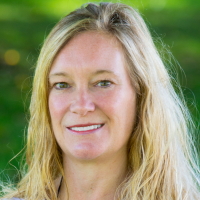 Kelly Rohan, PhD, completed her undergraduate studies at Saint Bonaventure University and did her graduate work at the University of Maine where she earned a PhD in clinical psychology. She completed her residency and a two-year postdoctoral fellowship at the University of Mississippi Medical School/Jackson Veterans Affairs Medical Center Consortium. From 2000 to 2005, Rohan was on the faculty of the Uniformed Services University of the Health Sciences as an assistant professor in the Department of Medical and Clinical Psychology. She joined the faculty of the Psychological Science Department at the University of Vermont in the fall of 2005 where she is now a professor of psychological science and director of the graduate program in clinical psychology. She is also a licensed psychologist in Vermont. Rohan’s area of interest is the mood disorders with specialization in Seasonal Affective Disorder (SAD) and cognitive-behavioral treatments.

