Kim Mills: Sesame Street, the show that has entertained and educated generations of children, is now in its 54th season. The program has kept pace with the times. Once primarily known for focusing on ABCs and 123s, Sesame Street has turned its attention over the years to many other topics that touch on children’s lives, from grief to race and racism to COVID-19.
Last year, Sesame Workshop announced a new focus on the emotional well-being of young children and their families. Since then, they’ve been working with APA and other partners to develop materials to teach young kids about how to understand and manage their feelings. Today we’re going to talk with a psychologist who’s worked at Sesame Street for decades about why a focus on young kids’ emotional well-being is needed right now, how the show translates complicated concepts into stories that young kids can connect with, the research that underpins all the content on Sesame Street, and what’s behind the program’s enduring success.
Welcome to Speaking of Psychology, the flagship podcast of the American Psychological Association that examines the links between psychological science and everyday life. I’m Kim Mills.
My guest today is Dr. Rosemarie Truglio, a developmental and child psychologist and senior vice president of curriculum and content at Sesame Workshop, where she has worked since 1997. She oversees all content and curriculum development for Sesame Street and other shows produced by Sesame Workshop. Dr. Truglio has written numerous articles published in child and developmental psychology journals and presented her work at national and international conferences. She’s author of the book Ready for School, A Parent’s Guide to Playful Learning for Children Ages 2 to 5 and coeditor of G is for Growing: 30 Years of Research on Children and Sesame Street. She has appeared on television and radio programs, including The Today Show, Good Morning America, NPR’s Life Kit for Parents and All Things Considered, talking about Sesame Street and offering research-based advice on children and parenting.
Dr. Truglio, thank you for joining me today.
Rosemarie Truglio, PhD: Oh, thank you, Kim. It’s a pleasure to be talking with you today.
Mills: I mentioned in the intro that Sesame Workshop announced a multiyear commitment to focusing on children’s emotional well-being last year. Why did you decide that this was such an important topic to focus on right now?
Truglio: It’s a very important topic because we have a global mental health crisis, and Sesame from its inception has always been there to help children and the caregivers and adults in their lives, to help them build what we call these foundational skills, to get them ready for school and to get them ready for life. So Sesame Street is driven by what we call a whole child curriculum. So we’re dealing with all aspects of child development, their academic skills, their social emotional skills, their health needs, and we are very much in tune to what is going on in terms of the latest research, the best practices, as well as what’s going on in our society.
So when it was announced that there’s a global health crisis, which was there before the pandemic, but just got exacerbated with the pandemic that we decided—because we always have a curriculum focus every year—and we decided that we can make a difference and provide foundational information to help build the foundation of what we’re calling emotional well-being.
Mills: How do you teach young children about a complicated topic like emotional well-being? How is it different from developing content for older children or adults?
Truglio: Well, we have to keep in mind that we’re talking to an audience that ranges from age 2 to age 5, and we need to make sure that the content is meaningful and relevant to them as well as engaging for them, because we know that those are critical factors to keep children paying attention to the messages. But also when they’re engaged with content, it helps with the comprehension. So we make sure that our goals are developmentally appropriate, but we never ever talk down to children. So we want to make sure that the stories have meaning in their lives and we give them what we call the vocabulary—so we focused a lot on the vocabulary for emotional awareness because we know with really young children, they have a range of big feelings, but they don’t have the words to express these feelings.
And the adults in their lives also have to remind them of the nuances in terms of the vocabulary. So angry versus frustrated versus disappointed, and not be afraid to use these big words, but to define them in the moment of the scenario that they’re feeling so they have an understanding of the meaningfulness of that word. And when you’re dealing with audiovisual content to make sure that—there’s a term that we use is “say and see,” make sure that the visuals are in tune to what they’re hearing. And gestures. Gestures are really important in terms of comprehension. So as you could hear me saying, we do a lot of research, we are culling from the academic research that’s from coming from the learning sciences, and we also engage in our own what we call formative research because even though I have a doctorate in developmental psychology, I’m constantly learning from children. They’re the real experts. I may think this is going to work, but then we show children and they’re telling us what’s working for them.
Mills: Right. One of your newest videos is about “feelings helpers.” It’s a way of introducing children to the idea of therapy and mental health professionals.
[Sophia and Elmo, two Muppets on Sesame Street, discuss what a feelings helper is:]
Sophia: I’m a special helper too.
Elmo: Sophia, that is really cool. But where’s your costume?
Sophia: This is my costume. This is what I wear when I do my job. I am a therapist, a counselor. I’m a feelings helper.
Mills: Can you tell us about that? How did you come up with the idea of feelings helpers?
Truglio: I’m really glad you asked me that question. When we start a new initiative for a new season of content, both show content and also we have a tremendous amount of content—free resources—on our website. So sesamestreet.org. In this particular initiative, it’s mental health and these resources are there for parents and caregivers and educators to use. But we always start with what we call an advisory curriculum seminar, and that’s where we bring in the experts to help us figure out what goals should we focus on and then how to move forward in terms of content creation. So as I said, we have a mental health crisis, and for the most part we’re just focusing on emotional well-being, which are these foundational skills. So that is emotional awareness, social connections, mind-body connections, and compassionate mindset. We could talk about these four domains later.
But on the website, we also wanted to bring attention, to destigmatize mental health in terms of—there are times in children’s lives that these basic foundational skills aren’t enough, that their big feelings are impeding with their everyday moments or things that they want to do, such as anxiety.
We want parents and caregivers and educators to know that it is okay to then get additional help. Now, children are used to going to the pediatrician, they go to the doctor, but what do you call the person who is helping them with their big feelings? And one of the advisors said, We don’t want to call them therapists or counselors. What does that mean for a child? So we’re going to call them feelings helpers. These are special people who help us have a better understanding of what the emotions that are overwhelming and taking over, and more importantly, what are the strategies to help be with those big feelings when they come up? And it’s really important sometimes to talk to someone who is skilled in helping them, and they are your counselors and your mental health professionals, but for children, they’re feelings helpers.
Mills: Can you tell us a little bit more about your role at Sesame Workshop? What do you do as the vice president of curriculum and content? Are you convening these groups or reviewing the science or a little of everything?
Truglio: Okay. So as the senior vice president for curriculum and content, it’s my responsibility to help our organization figure out what are we going to focus on. So yes, we are a school readiness—we’re all based on a school readiness curriculum, but then sometimes we have to home in and put a spotlight on what’s going on and being in tune to what’s going on in our society. So when we decided that we were going to focus on emotional well-being, I then have a convening and I have a colleague who’s also a senior vice president who oversees our U.S. social impact work, and that’s the work that you’re going to find on the website, so sesamestreet.org/mentalhealth [sesameworkshop.org/topics/mentalhealth/]. And so I help her with her convening. She helps me with my convening. They’re very different audiences.
So for me, my responsibility is for what we call mass media. So helping the content creators who are writing for the show, who are writing for digital, who are overseeing our publishing department, our licensing department. So messages that are going out there that are directed to children. So child facing messages, with the hope that the adults are going to be coengaged with them through reading a book or watching the show or playing a digital game or listening to a podcast. My colleague, Dr. Jeanette Bettencourt, her focus is the website. And so that’s more adult facing with the understanding that for some content you want to be able to, an adult may want to bring the child and watch and to engage in the video, and there’s lots of child-facing content, printables and storybooks that are child facing, but then there’s also adult-directed information for the adults in their lives to help them with some of these learning goals.
Mills: Now, I also mentioned in the intro that you were the coeditor of G is for Growing: 30 years of Research on Children and Sesame Street. And I’m going to guess that a lot of our listeners have no idea that there’s been so much research into Sesame Street and its viewers, and your book was really the first time that this research was examined holistically. Now, I know this was a weighty and serious tome, but could you summarize some of the key findings?
Truglio: Oh, wow. That’s great. And so that book that brings us up to season 1 to season 29, and I want to mention another book that was coedited by colleagues called The Sesame Effect. And that book also shows all of the research on our international productions—because we are a global educational media company. And in The Sesame Effect, there is a chapter that starts with season 30’s educational impact to about season 50. So we’re probably the best-kept secret. What I mean by that is that a lot of people don’t realize the amount of learning science that goes into the creation of our content, the formative research. So as I said earlier, that for us, children are the best experts. So we want to make sure for child-facing content that we’re out there talking to, showing and talking to children on the website content. We want to make sure that the content works for caregivers and educators.
So formative research is being done with those target audiences. This is a key component of Sesame Workshops content creation, but it doesn’t stop there. So we want to make sure the inputs are great for putting out best foot forward in terms of getting an educational impact. But then we got to do the summative research, the impact research. And so both books are summaries of the educational impact that we’ve had both in the areas of academic skills, so literacy and language development, math and science, social emotional skills and development and health. There’s a lot of emphasis placed on our physical health. And so both books show you the breadth of the content that we’re addressing, but most importantly, the educational impact that we’re having. And most recently, which I believe has been released, is that we have done a lot of work in the Middle East with a new coproduction called Ahlan Simsim, and that is to focus on the Syrian refugee crisis. And that work really did focus a lot on emotional well-being.
Mills: So looking at this research over such a long period of time, have you found that kids who grew up on Sesame Street were better in school, grew up healthier, were better adjusted, all of those things that you might want to be able to measure?
Truglio: Yes. So there were a couple of seminal pieces of research that were longitudinal research studies, which is really hard to do now, these were conducted in the early '90s, but it showed that children who watched Sesame Street during the preschool years did significantly better in high school. They were able to recontact those children, children living in Springfield, Massachusetts, and Topeka, Kansas. So that’s called the recontact study, which is in the summarized in the G is for Growing book. What we found with Ahlan Simsim recently is that because as we were doing this research, there was a pandemic. And so some of the work had to be moved to digital, through a digital device, and they found that the content that was consumed over a, I don’t know, maybe a 6- or 7-week period, the learning impact was the equivalent of going to school, a physical building for a whole year. So just think about the power of that to deliver our content through a digital device reaching children. This is true for the world in terms of trying to get to remote areas where children may not be able to get to preschool. So we’re very pleased by the results of that study, and it shows the power of our educational content.
Mills: How do you identify the needs in kids so that you can tailor the right messages at the right time?
Truglio: Well, we’re very much connected to the academic community, so I’ll give you an example of that. In the early 2000s when all of the focus was on brain development, we learned a lot as developmental psychologists. And so there was a lot of talk about self-regulation and executive function skills. Well, that was never a part of our school readiness curriculum. And so we’ve learned from the learning sciences that, wow, we need to start focusing more on those process skills. How do children learn content, right? We’ve been focusing on the content skills, as you said, letters and numbers and identifying feelings and maybe talk about healthy foods and the importance of exercise, but what are those skills that are the true school readiness skills? And we’ve learned through the research that it is those executive function skills, the ability to pay attention, the ability to focus your attention, but also be able to shift your attention and have flexible thinking, the ability to control your emotions that might be interfering with your ability to pay attention. So we revised our whole child curriculum based on those research findings and put those executive functions because at the core of academic learning, social emotional learning and health behaviors. Another example is when there was all this focus on STEM education, and a lot of people said, Well, Sesame Street can’t focus on STEM. You’re talking to—
Mills: Little kids.
Truglio: —Preschoolers. Yeah, little kids, and that’s in high school, maybe middle school. And was like, no, no, no, no, no. Preschoolers are natural STEM-ists—they’re scientists, they’re technologists, they’re engineers, and they’re mathematicians. And so once again, we focused on those process skills, the power of investigation, power of observation, the power of analyzing, because they’re doing that all the time as they’re trying to figure out the world around them. And so we created a STEM curriculum and we have our characters solving everyday problems using these process skills. And then at the end of the solving of the problem, they’re learning a science fact or a math fact or an engineering fact. So those are two examples.
Mills: It sounds like the researchers are learning as much from the kids as the kids are learning from watching the shows. Is that true?
Truglio: Absolutely. And I think that’s why I’ve been here for multiple decades, because I’m constantly learning.
Mills: I have to ask you about Elmo’s viral moment on social media. A few months ago, Elmo posted a question on X, formerly Twitter. He said, “Elmo is just checking in. How is everybody doing?” And he was inundated with replies about people’s mental and emotional states, and some people even called it trauma dumping. Were you and the other people at Sesame Street surprised by this moment?
Truglio: We were surprised by the large number of people writing in—that was surprising—but not 100% surprised because we know that we are dealing with a mental health crisis. And not surprised by adults' connection with our characters. And I think that is the power of our Sesame Street brand, is that multiple generations now have grown up on Sesame Street, and these characters have meaning in our lives.
And so also learning from the developmental psychology research is that when you’re a child and you are connected to a character, you develop what we call a parasocial relationship. Elmo is talking to me. Elmo is my friend. I can talk to Elmo. Elmo cares about me, and Elmo loves me. So think about the people who are on X and social media. They’re adults, but they have these emotional connections to Elmo and by Elmo reaching out, how are you doing? They then revealed how they were doing. And what was wonderful is that we also, because that was a year into our initiative, we now had resources to say, go to sesamestreet.org. We are there for you. You are not alone. We are here for you and we will always be here for you.
Mills: I have to ask a question about the early days of Sesame Street. I grew up when educational TV was just beginning and it was awful. It was like a teacher standing in a classroom, and the only difference was you were watching on a screen instead of in reality, and it was in black and white. I’m really dating myself here. But then in 1969, Sesame Street came on television and it was completely revolutionary. Kids loved it, and they learned things. What was different about Sesame Street and why do you think it’s persisted for all these decades?
Truglio: A tremendous amount of research went into the design and the making of Sesame Street. First, let’s start with our cofounder, Joan Ganz Cooney, who knew that—at the time, she was a documentary producer and focused on what’s going on in terms of the educational needs of children. She wanted to make sure that by creating a television show that we could reach children, in particular children who didn’t have access to preschool education, so the disadvantaged children, and to make sure that giving them an even start to get them ready for school. But because she came from television as a producer, she noticed that young children watching TV—the vast wasteland—were able to recite jingles from commercials.
And she’s like, Wow, if we could teach them commercial jingles, think about how we could teach them school readiness skills in little pieces of television. So that was her premise, but she had no idea if this was going to work. And so she got a grant to say, All right, this is an experiment. No one’s ever tried this, give it a shot. And so she’s the one who created this model. We got to think out of the box, as you said, we just can’t have a classroom that is just being filmed. We’ve got to get their attention just like a commercial gets their attention. So she assembled the developmental psychologists. She assembled the early childhood educators who know how to create curriculum, and she brought in Jim Henson, right?
She wanted to make sure that the street was going to be grounded in reality. It’s a real street. We’re going to have a human cast, a diverse and inclusive human cast. She wants to make sure that she’s reaching all children, but she also wanted to bring in that fantasy, and that’s where Jim and his characters came about. So Sesame Street is grounded in reality, which is really important for us to hold onto. It remains a live-action show. And because it’s live action, we can always create content to meet the current needs of children. So we’re constantly evolving and very dynamic. So we’re always making show changes. And so get back to your question is like, why are we surviving? Because the show that we created in 1969 is not the show that’s currently airing in 2024, season 54, because we’re creating a show that meets the needs of today’s children. And I think that’s what makes us unique and special.
Mills: Have kids’ needs changed over time? I mean, some things are very fundamental and must be the same from generation to generation, but what’s new with today’s kids?
Truglio: Well, I think there are different things going on in today’s world. I think really focusing on emotional well-being is something that’s very important. We know that these executive function skills, which children struggle with, we know that these are learned skills. So that was a big change in our curriculum, focus on physical health. Children don’t understand what it means to be healthy. That means I’m not sick, but how do you give them these, what we call healthy habits for life?
And in terms of academic skills, we’re constantly learning about what are best practices. So for instance, there was a lot of emphasis placed on vocabulary development. Remember the 30 million, 30 million word gap? 30 million word gap. So we learned a lot about that, that it’s not just showing the letter—what the letter sounds like. So that’s phonemic awareness. But also building vocabulary. And that was important lesson to us too when we were focusing on math, that children, while they may have an understanding of math concepts, they may not have the math language. And so there was a big focus on math literacy, and that came out at the academic research.
Mills: In addition to the show itself, Sesame Workshop has a lot of other avenues to get resources out to caregivers and children. Can you tell our listeners some more about the other resources that are available to help kids learn about emotional well-being?
Truglio: Yeah, so as I mentioned on our website, sesamestreet.org/mentalhealth [sesameworkshop.org/topics/mentalhealth/], there’s a lot of information that we released and are continuing to release. And so there will be new information coming up in early May, so definitely check back.
Mills: Yeah, I think by the time we post this, some of that should be up.
Truglio: So keep that in mind. We also have partnerships. So we partnered with Headspace, and I think this is an important partnership because it also extends the learning on emotional well-being. We have this wonderful podcast called Goodnight World. We also partnered with Dr. Laurie Santos on her Happiness Lab podcast. And so there are three episodes there, and there are other resources in terms of the books that we publish. And we also on our kid-facing sesamestreet.org, there’s lots of digital games and printables and storybooks that I think are also not only resources for mental health, but across that whole child curriculum. Our mission at Sesame Workshop is by helping kids grow smarter—so those are those processing skills plus the content skills stronger, those are the self-regulation and physical health—and kinder, and we all need to be kinder in today’s world.
Mills: Definitely. Now, you’ve said in other interviews that young children’s mental health is sometimes overlooked in discussions about the youth mental health crisis. Why do you think that is? And why is it important to add that perspective to the conversation?
Truglio: Yeah, I think that adults need some guidance in able to pick up on what is going on with their children. So noticing how their children’s big feelings might be interfering with their everyday life, or there’s regression in terms of regression in potty training, or they may not be interested in eating their favorite foods anymore. So what are those signs or even other signs, because parents may not always realize that they could be struggling with some mental health issue. And that’s why we really wanted to get this next batch of content out about these feelings helpers, that there are professionals who could help you.
And we need to destigmatize this idea that my child needs to see a therapist, right? A therapist is there to help, not to label, but to help you and the family work together to help the child with the resources to have a better understanding. For instance, let’s talk about anxiety, right? So children who are so anxious that they don’t want to go to school or so anxious that they don’t want to go to a friend’s birthday party or they may not want to go to day camp—this is an example of you want to be able to help your child, so they’re not missing out on these wonderful experiences, but they may need some extra help and guidance.
Mills: So what’s the critical takeaway you want parents and other caregivers of young children to get from the materials that you’re producing right now?
Truglio: Well, I want them to understand that there are a range of emotions, and to give children the labels for these emotions to be able to distinguish—it’s not just happy, angry, sad, right? There are other emotion words like disappointed and frustrated and jealous. That’s an interesting one. Jealous. What’s jealous? But to connect with your child. So observe these physical expressions of an emotion. Give the child a label, but validate the emotion. I understand you are jealous because you are wanting something that your friend has. Jealous. What’s jealous? And so now you have an opportunity to talk about the feeling like you think you’re mad, but or angry, but you’re really jealous.
But then come up with a strategy. How do I be with this emotion? Because all emotions are okay, we all have these feelings, but how do I get beyond? I’m not going to talk to my friend Susie anymore because she’s got the sparkly coat that I want. So what’s a strategy? And that’s where these mindfulness strategies come in, and that’s where Sesame Workshop comes in, because we are not there to tell the parents what you need to do. We’re here to give them the language and the strategies to build our emotional well-being toolbox. So we’re there for the how-tos. I often get so upset when people say, Oh, parents need to do this, and they need to do that. Well, show me how. Tell me. And that’s where our videos and our resources come in. We’re showing and telling how.
Mills: Well, Dr. Truglio, I want to thank you for joining me today and also want to thank Sesame Workshop for collaborating with us. We have a great partnership and I know it’s going to continue.
Truglio: And thank you for this partnership because we learned so much from all of your experts. And thank you, Kim, for having this wonderful chat today. Really enjoyed it.
Mills: It’s been great. You can find previous episodes of Speaking of Psychology on our website at www.speakingofpsychology.org or on Apple, Spotify, YouTube, or wherever you get your podcasts. And if you like what you’ve heard, please subscribe and leave us a review. If you have comments or ideas for future podcasts, you can email us at speakingofpsychology@apa.org. Speaking of Psychology is produced by Lea Winerman. Our sound editor is Chris Condayan.
Thank you for listening. For the American Psychological Association, I’m Kim Mills.


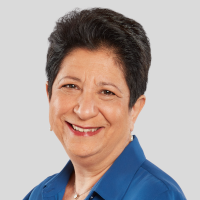 Rosemarie Truglio, PhD, is the senior vice president of curriculum and content at Sesame Workshop, where she is responsible for the development of the interdisciplinary curriculum on which Sesame Street is based and oversees content development across all platforms. Truglio is a developmental psychologist and has written numerous articles in child and developmental psychology journals and presented her work at national and international conferences. Her most recent book is Ready for School! A Parent’s Guide to Playful Learning for Children Ages 2 to 5, published by Running Press (2019). Truglio has appeared on many network, cable, and radio programs including The Today Show, Good Morning America, CNN town halls, NPR’s Life Kit for Parents, Morning Edition, and All Things Considered.

