Kim Mills: Many of us go through our days surrounded by other people, yet we often keep to ourselves. We sit next to someone on a train heading to work, but keep our earbuds in and spend the ride scrolling on our phone. Or we engage in some chit chat with a colleague or a new acquaintance, but stop short of a real conversation. These moments may seem small, but they matter more than you think. Psychologists’ research shows that even brief social interactions—talking to a stranger, passing on a compliment—can boost our mood and enrich our life in significant ways. And yet we hesitate. We assume that other people aren’t interested in talking, that a deeper conversation would feel awkward, or that our kind words won’t matter.
So why are we so often unsocial, avoiding connections that could make us happier? What gets in the way of reaching out to others? And what happens when we do? How accurate are our assumptions of how other people will respond to us? And as we’re increasingly communicating through screens, what kinds of interactions actually help us feel less alone?
Welcome to Speaking of Psychology, the flagship podcast of the American Psychological Association that examines the links between psychological science and everyday life. I’m Kim Mills.
My guest today is Dr. Nicholas Epley, the John Templeton Keller distinguished service professor of behavioral science at the University of Chicago Booth School of Business. He studies social cognition and why people so routinely misunderstand each other. His research has been published in more than two dozen academic journals and has been featured in The New York Times, The Wall Street Journal, CNN, and NPR, among many other outlets. His new book, published in May, is called A Little More Social: How Small Choices Can Create Unexpected Happiness, Health, and Connection.
Dr. Epley, thank you for joining me today.
Nicholas Epley, PhD: Thank you so much, Kim. That was a fabulous introduction. I appreciate that.
Mills: Speaking of introductions—in your book introduction, you wrote that a simple moment that most of us have probably experienced—deciding whether to talk to a stranger on a train—sparked this entire line of research for you. Tell us that story.
Epley: So one of the great things about being a psychologist is we get to look outside the window and notice what’s happening in the world, wonder what the heck is going on, and try to actually answer the question scientifically. And I had one of those moments one morning when I was commuting into the University of Chicago, which I do every day and have done for the last 20 years. We live on the far south side of Chicago. The University of Chicago’s in Hyde Park. And I sat down that morning. I was writing a chapter from my first book, Mindwise, at the time, so that was all going through my head. I was writing the chapter on how we’re highly social creatures, made happier and healthier by reaching out and connecting with each other. And I had this sort of eureka moment just minutes after I’d sat down on the train that here we all were, highly social creatures, now sitting hip to hip with another highly social creature, and none of us said a word. I mean, you could have heard a pin drop. It was totally silent.
And a woman sat down next to me that morning, who I’ll never forget. I was about 35 at the time, I’m betting she was probably about 50, African-American woman dressed professionally for work wearing just this killer red hat. And I decided that I’m going to put myself in an experiment this morning. I’m going to try something different and just see what happens. So I kind of worked up my courage a little bit because I had this voice shouting at me that this is going to be weird and awkward and she’ll think I’m a creep or whatever, all these reasons not to connect. And instead I turned to her and I said, “Hi, my name’s Nick. I love your hat. I have one just like it.” And she laughed kind of like you did, Kim. She turned to me and then we just started talking and the next 30 minutes unfolded really easily. I mean, we went from one topic to another. We found things we had in common I wouldn’t have guessed. She had kids, I had kids. Talking about our families, both kind of encountering some challenges with the kids of different varieties. And she was talking about what she wanted out of her future and her job. She was feeling kind of stuck at the moment. And the time just went by really quickly. When I got up to leave, she kind of held my wrist just briefly and she said, “Thank you so much for taking the time to talk with me this morning.”
And all the details by this point have kind of faded out of my mind of exactly what we talked about, but it left me with such a distinct feeling, not just that that was good, but that it was surprisingly good. In my entire career up to that point, I’d been misunderstanding or I’d been studying rather, how people misunderstand each other’s minds, how we make mistaken inferences about what’s going on between our ears. And it struck me that this moment right here might be precisely one of those moments. And if I wasn’t the only one on that train who was thinking this conversation would be more awkward and weird and less pleasant than it actually was, then we’re kind of all making a mistake on that train. And if it’s not just happening there but in lots of other places, then that would change how I live my life. A single anecdote is not data, it’s just an experience, right? So we’re going to get a little serious with this. We’re going to run an actual experiment. So that’s what we did. But that morning fundamentally changed my career, put it on a different trajectory than I had been on before.
Mills: So to broaden out this whole concept, the central finding of your research is that people systematically underestimate how much they’re going to enjoy all different kinds of social interactions. Why do we so consistently get this wrong?
Epley: There are surely lots of things. These effects are often very, very large. Our typical effect sizes in psychology that we deal with are on the order of a third of a standard deviation between the means of two conditions. These are often two to three standard deviations difference between the means. These are huge effects. So there are lots of things going on and I won’t suggest we’ve understood them all comprehensively, but we’ve pursued at least three that I think are important.
One is that we have two minds here and if I am evaluating the situation differently from the person I’m reaching out to, then I run the risk of misunderstanding how somebody would respond to me. So that morning on the train, for instance, I was all worried about what am I going to say to this person? I don’t even have an opening line to start with that’s any good. And that is pretty characteristic of how we think about ourselves, which is in terms of our competency. We’re agents, we’re doing stuff. We’ve got to figure out, what am I going to do to be successful in this thing? And so we think a lot about our competency. When you enter into conversation, you sit down to write somebody a gratitude letter, you think about giving somebody a compliment, you contemplate being open and honest in your relationship in some conversation. All these opportunities we have to reach out and connect, you’re thinking about, am I going to be able to do this well?
The person you’re reaching out to though is much more interested in how nice are you? How kind are you? How trustworthy, honest are you? Are you somebody who is friendly or are you a scary person I should avoid? They’re interested in your warmth, which is another fundamental dimension we evaluate people on. And other people just care more about our warmth. And so if we reach out to somebody in a warm, friendly, kind way, but we’re worried about our competence, we’re likely to underestimate how positively the other person’s going to respond right away. That’s one.
The other thing is, a second thing is that social interaction is dynamic. It goes back and forth. There’s reciprocity and responsiveness, right? It doesn’t just go anywhere. It mostly goes in one direction and social interactions have some magnetic qualities to them that pull us together. Reciprocity is a big one. If I reach out and say hello to you, Kim, what do you normally do back to me? You say hi, right? I smile at you. You normally smile back at me. I reach out to you in a positive way to start a friendly conversation, typically, that’s the direction the conversation goes. There’s reciprocity.
And so when we enter a conversation or we enter an interaction, we kind of imagine that the things could go kind of any direction, right? Negative, positive. Real social interaction though is constrained. And in our research, we find over and over again that people don’t really take those dynamic properties of social interaction into account. They’re very hard to simulate in our minds, how a conversation’s going to go back or forth, how you’re going to be responsive to what I’m saying, how you’re going to reciprocate an action. And as a result, we tend to think that more outcomes are possible than actually are and underestimate on average how well these things will go.
And if we have those two seeds of pessimism already planted in our minds that nudge us in a direction that might make us overly negative, then this third one I think will help maintain it. Pessimism it turns out is self-fulfilling in a way that optimism isn’t. So if I’m doubtful about how, whether you want to talk to me or how positively you’ll respond if I pass along a compliment or I express my gratitude to you or ask for help from you, any of these phenomena that we’ve studied, if I’m somewhat pessimistic, then I probably won’t try. I won’t start a conversation. I won’t ask you something meaningful about yourself. I won’t ask for help when I need it and in turn, I won’t find out that I might be wrong. Optimism gets calibrated. Pessimism just doesn’t.
And I think those three things together, that’s probably not going to explain all of our over-reluctance to reach out and engage with other people, but I think it explains a big chunk because it plants doubts in our mind and it’s those doubts that drive our choices.
Mills: What are some other examples of the different kinds of interactions you’ve studied where participants have thought, I’m not going to enjoy that, or, That’s going to be really awkward. But then they found it more rewarding than they expected.
Epley: So the clearest example of this goes beyond just conversations with random people to get to know them a little bit, but conversations that really connect us with other people, the kinds of conversations we often want to be having in our lives, deep and meaningful conversations. And so this is something I’ve now done with almost 5,000 people. All of our incoming MBA students do this at the University of Chicago now. When I’m out doing public speaking, I do this. You throw a birthday party. I’m going to run your folks through it, Kim. That’s what I’m going to do. What I’ll do is I’ll put up a series of questions that are deep and meaningful. Fans of psychology will recognize these questions as questions that come from Art and Elaine Aron’s fast friends procedure. They’re on the deep end of the spectrum questions like, “What are you most grateful for in your life? Please tell me about it. “ Or, “Can you tell me about one of the last times you cried in front of another person?”
And when I put these questions up on the screen, you can kind of see a pall just cast over the audience. Everybody sort of feels a sense of dread that they came to this session today. They kind of look at the door, wonder if they can escape quickly, but there they are. And so I have them go and fill out a survey, tell me how they think this conversation’s going to make them feel in a bunch of ways. They then go off and start having the conversation. And once they’re started, the problem I have is getting them to come back. That’s a problem because they don’t want to stop talking at that point. Then when they come back, I ask them to tell me how the conversation actually felt. And the gaps between their beliefs beforehand, how awkward, how much they’re going to like their partner, how much of a connection they’re going to feel with this person, how much they’re going to enjoy the person. The gap between their expectations about those items and their actual experiences are just massive. I mean, they’re just enormous.
And that’s a very big one. And that’s one we can also implement many different ways in our own lives, taking a real interest in another person and asking them meaningful things about themselves and being willing to share something meaningful about yourself. Beyond that, there are lots of different kinds of opportunities we have to connect that we’ve studied. How we connect with somebody, whether we’re typing, leaning back and typing, keeping our social distance or leaning in and talking to somebody, talking’s better, but people don’t tend to realize that in our data.
We look at opportunities we have to reach out and lift somebody up, do acts of kindness for them. People underestimate how positively others will respond to acts of kindness, how positive they’ll respond when you open up and are honest in your relationship, when you express gratitude, when you ask people for help. Over and over again we see this misplaced pessimism.
Mills: Is being outgoing and social equally good for everyone? I mean, what about people who are really fundamentally introverted? Do they benefit as much as extroverts do?
Epley: First off, we all vary in lots and lots of different ways and for sure some people have an easier time interacting with others than some people do and the kinds of social behaviors we’re talking about vary quite a lot too. However, let’s just take introversion and extroversion and just focus on that. And there, I think the data are actually pretty crystal clear that introversion and extroversion tends to predict not so much people’s experiences once they’re in an interaction, it predicts the choices they make beforehand and the expectations that they have going into these interactions, if anything, a little better than their actual experiences.
So extroverts tend to choose to reach out and engage with other people a little more often. They’re a little more, choose to be a little more assertive in their lives, whereas introverts tend to hold back a little more, keep to themselves a little bit more. The data suggests that that has meaningful effects on how happy we report being in our daily lives, how satisfied we are with our lives. Extroverts tend to report being happier than introverts do. The effects aren’t small, they’re big. Correlation between extroversion and happiness around the world is in the ballpark of a correlation of 0.5, which is about as big as the correlation between the heights of fathers and sons. So that’s huge. Correlation with satisfaction with life is a little smaller, but still positive, 0.3. And when psychologists ask people or they measure over the course of their day even, times when we spend with other people or the times we report feeling more positive than times we spend alone, that’s true for extroverts and introverts alike.
And when psychologists ask people to spend a half hour in an experiment or a day of their life or a week of their life or 2 weeks of their lives—there’s now a cottage industry of these kinds of experiments. When psychologists ask people to do this, what they generally find is that asking people to act more extroverted lifts people’s moods, makes people feel more positive regardless of how extroverted or introverted you are—as long as you are actually doing it. There’s some experiments that find that not everybody follows through on the request to act more extroverted. Introverts might not choose to do that and then they don’t get the mood boost that they would if they actually did those things, in the same way that exercise won’t make you healthier if you don’t do it. It’s sort of similar to that. But I think at least when it comes to happiness and positive affect, introverts as well as extroverts can find opportunities to reach out and connect with people that will be surprisingly uplifting for them.
Mills: Fundamentally, why are we so reluctant to talk to strangers? I mean, is it something that’s almost genetic that in order to survive we have to be wary of people we don’t know?
Epley: There may be something to that. I just can’t really test that in my experiments. I don’t really have any—I mean, I can wave my hands at that kind of story. I could also wave my hands at a story where those of us who were the most socially capable were also the most successful. And that actually looks to be the history of human evolution. It’s not avoiding strangers that was our superpower. It was our ability to connect with strangers and bind them to us in ways that enabled cooperation that pushed our species forward. It’s the reason why our cerebral cortex is three times larger than our nearest primate relatives, as chimpanzees, because we are built for social stuff. I don’t think it’s wariness that was pushing us evolutionarily. I think it was sociality that was.
But what I can say is that in any given moment, there are lots of things happening in that moment, the way you interpret that situation, the way you think about how somebody else is going to respond, that can explain a lot of our reluctance to do it and can also then predict variability in your willingness to reach out. So if you think somebody else wants to connect with you, you’re much more willing to do this. People don’t have any reluctance talking to friends—it’s strangers, because they’re uncertain of how that person will respond. That’s it. But if you know that person will respond nicely to you, you’ve heard they’re a nice person, you know they have some connection with you so you have some reason to think they’ll be interested in talking to you, you’ll happily talk to them.
Or if you think about being warm and friendly, you’re more willing to reach out and engage with other people than if you sit and focus on your competence. If you know you’ll have something to talk about with somebody, you’re more likely to reach out. So there’s a lot of uncertainty that comes from what we talked about before, failing to realize kind of the responsiveness that happens in interaction that pulls us together and excessive focus on our competency rather than on how we’ll be received if we just reach out to other people in friendly ways that I think can explain an awful lot of this variability day to day.
And then there’s also a lot of individual learning. So not everybody is as miscalibrated as others. People who spend a lot of time talking to people don’t get this wrong. It’s avoidance that creates the mistakes.
Mills: Now you’ve also looked at the difference between small talk and deep talk and people will say that they hate small talk and that they’re hesitant to talk about deeper subjects, especially with people they don’t know well. Why is this and what have you found as you’ve looked at this?
Epley: So it’s a similar phenomenon that we see in talking with strangers or reaching out to express gratitude is you’re uncertain about how the other person will respond. You’re not sure that they will respond positively and as a result, you’re reluctant to reach out and engage with them out of some fear that they might not want to talk about this or might not respond back to you in as honest a way as you open up to them.
In our data, in our experiments, like our deep conversations that I described earlier, we find that people think that they’re more interested in the content of what they’re going to share than the other person will be. So that’s one. If I’m going to tell you about this thing that’s really meaningful, but I think you’re not really going to care about it, that’s going to be hard conversation.
After the conversation, what people find is that once they were in the conversation, the other person was interested in it because that’s the way conversation generally works. But that doubt about how social the other person will be, will they respond positively back to me? That’s what creates the barrier to those deep conversations.
Mills: A few years ago, then Surgeon General Vivek Murthy said that Americans are experiencing an epidemic of loneliness. Do you agree with that? And if so, how might your research be related to that belief?
Epley: Whether you call it an epidemic or not is a little bit about semantics. There is no doubt that loneliness has been on the rise for decades now. So on the gold standard measure of social isolation or loneliness, the UCLA loneliness scale, which is a 21-item scale that psychologists have been using back to 1974, which was the year I was born, I’m 51 years old. If you look at that measure, it has been increasing scores among college students have been increasing steadily since 1974. There’s not a hockey stick upturn in recent years. You do see that in some other data, but on this gold standard you don’t. But on this UCLA loneliness scale, research shows it’s gone up by about half a standard deviation—and that’s a big effect. So the way I write about it in a little more social is as I translate that into another variable that you might be able to understand like the height of men. So turns out a half standard deviation increase in the height of men would account to about three inches—at least in the United States it’d be about a three-inch increase, which would mean that kids born today would on average be three inches taller than I am, which you would—Kids born the year that I was in 1974. You would notice that. You would notice that kids these days seem awful darn tall.
Mills: Right.
Epley: Yeah. You would get that. And so that is big. And I do think our research is very relevant to this because data clearly suggests that we are avoiding other people more now than we have in the past. Some of it, I think for most of human history, social connection wasn’t as much of a choice you made. You were around other people, you had to interact with them because you had to get things done, you didn’t really have much other choice. Now the thoughts we have about how somebody might respond to us, those expectations that can cause us to choose to reach out or not, those matter more because we can make the choice to avoid people in a way that maybe we never have before in human history. At least we’re increasingly able to avoid people. You can get up, Kim, on any given morning, order your breakfast online, have it delivered to your door, get your groceries for lunch and work on your computer all day, be very productive, get your dinner at night from some door delivery service, never have to talk to anybody. Pull up your Netflix and chill all through the evening and never see a soul, right? Never see a single person. And you could do that for day after day after day if you wanted to.
There was a recent paper released by Matthias Mehl who’s at the University of Arizona who has been for decades now monitoring how much people talk in their daily lives. And he just released a paper where he found if you just looked at how much people were speaking, they’re speaking on average 300 fewer words a day, 338 on average a day in 2019 than they were in 2007, right? You see that decrease in the amount of time we spend with other people in the American Time Use Survey too. We’re spending more time alone in front of the TV by ourselves. And I think a lot of that does come from these moment to moment choices we make to avoid other people—and you could choose differently moment to moment.
Mills: Do we know that this is happening in other countries as well? I mean, we’re very privileged in this country and we can build our McMansions and have a gym and the big screen TV and all the reasons why we wouldn’t go out. But a lot of other places, folks don’t have that.
Epley: No, a lot of other places do not. Absolutely. And in fact, my colleague here at the University of Chicago, Thomas Talhelm is a cross-cultural psychologist and he studies sociality around the world measuring individualism and collectivism. But one of the things that he’s focused on in his measures is how often people talk to strangers just routinely or how willing they are to talk to strangers. And there’s meaningful variability around the world in this. The U.S, is kind of in the middle on this. There’s some places that are much more social, some places that are much less social, at least in the talking to strangers part. We don’t actually know where all of this comes from. At least I will say, I don’t know, and I looked at this very, very hard where all of this variability comes from. I think a lot of it comes from our expectations about how other people will respond.
In Finland, for instance, people don’t talk to each other a lot there unless they’re nude with each other once a week at a sauna on a Friday, which is a thing in Finland. They love their saunas and there they have really deep and meaningful conversations once a week or however often they get together in their communities to do this. It’s a great thing, but outside of that, it’s impolite or rude to talk to folks. We have some of that here in the U.S. too. One of the reasons when we ran experiments on the trains, buses and cabs here in Chicago that people didn’t want to talk to a stranger was because they thought the other person didn’t want to talk to them, so it would be rude to try that. But there are other places you go in the world if you’re on a train in Spain, you’re going to have a hard time not talking to folks there.
And my belief is that this comes from differences on our expectations about how others will respond and what’s appropriate in these contexts, not from actual differences and experiences of social connection. I think everyone around the world values love and connection and having friends in their lives and people who they feel like they can trust and feel connected to, but we do not yet know where variability in these expectations comes from around the world other than from just the fact of avoidance and we don’t necessarily know where that comes. That is the next 15 years of my work, Kim, and that will be my next book set, to hit the stands in 2041.
Mills: Well, let me ask you more about our modern life, different forms of communications that we’re engaging in now, whether that’s Zoom or texting. How does that compare to face-to-face communications in terms of the quality of connection that gets created? I mean, a lot of people, maybe you talk to your mom once a week on the phone. If you’re texting your mother, are you getting the same jolt of whatever goodness that you would be getting if you spoke face-to-face?
Epley: Yeah, probably not. Although we haven’t studied moms. So that’s maybe an important caveat here, but we do know that when people reach out and reconnect with old friends, they feel more connected when they talk than when they type. We know that when people talk to strangers, they feel more connected when they talk to the stranger than when they type to the stranger. The voice, it turns out, carries a lot of cues that reveal your thoughts, your feelings, your emotions that you are a thinking person. The act of conversation itself, live vocal conversation itself, tends to pull people together in ways that monotone text does not. Those are pretty sizable effects.
And yet we find in our research that when people anticipate how they’ll feel at the end of a conversation, they don’t anticipate differences between talking and typing unless they compare the two directly against each other. Then they often recognize that talking will feel better than typing. But in one experiment where we did this, Amit Kumar, who’s now at the University of Delaware, and I found that when they were reaching back to old friends, they recognized they’d feel more connected if they talked than if they typed to their old friend, but they also thought it would be more awkward if they talked than if they typed. So when we asked people to choose, how would you like to reconnect, most people, two thirds of people said, I’d rather type than talk. But when we actually then had them do this, it turns out they did feel more connected when they talked, but they did not feel any more awkward. So this cue that people were using to avoid a voice conversation was misleading and it would’ve led a lot of people to avoid what was otherwise a more satisfying verbal conversation.
So when you’ve got a chance, pick up a phone and actually talk using your face parts, using your actual mouth parts rather than your thumbs, it’ll be a better conversation.
Mills: What I see is a lot of people, they’ll send you a text saying, Can you talk now? I mean, back in the day before you could text, you’d just pick up the phone and call somebody and either they answered or they didn’t. But is everybody doing this now? Is this—we have to make sure that somebody’s willing to talk to us?
Epley: Well, you don’t have to. You don’t have to. I’m not sure. I think ultimately if it ends up in a phone call, I don’t want to be overly negative about modern technology. It allows us to do amazing things. It’s an awesome tool. I was flying home from New York City this morning. I was sitting on the airplane. I got to see my 10-year-old daughter that morning for a quick FaceTime call and that was lovely before we took off. And I could text my wife when I got in and just landed, send her some emoji kisses and feel connected to her in that moment when I couldn’t talk to her. I don’t want to be overly negative about text, but I will say when you can do either easily, pick up the phone. It’ll be better. And so when there’s no additional cost to it, give it a try.
And if somebody can’t answer, of course they don’t have to, but I don’t see that—the texting can be a very good way to establish a connection. It’s not necessarily the best way to create the optimal connection, but if you use it a place to start, that’s okay.
Mills: How has your research changed the way you live your own life?
Epley: It has been foundational. I really remember when I got off the train that morning when I talked to the woman in the red hat, I thought I do this a lot. I would never have called myself a horribly introverted person, but I was horribly terrified at stage fright when I was younger, when I was in grad school, terrified of public speaking then, nervous at conferences to talk with people. I had my head down when I was walking around a lot. I was a college football player—in a division III college—football player at St. Olaf. And so I was kind of rough and kind of quiet. I would say at times I could be avoidant. I like to spend a lot of time in the woods. And this has really changed the way I live my life kind of top to bottom.
And a few fundamental things. One is I take an interest in other people in a way I never did before and to a degree I never did before because I know how interesting anybody can be. Bill Nye, famous science guy, Cornell grad—I got my PhD from there, go Big Red. Bill Nye once famously said, “Everyone you ever meet knows something you don’t.” He’s right about that. I also have learned from our data that people are exceptionally kind, can be very kind if you reach out and give them the opportunity to. So I give people the opportunity to do that.
It’s made a difference in how I interact with strangers. My train rides are almost never silent anymore. I’ve turned tons of strangers into acquaintances, even if just for a moment, just for a little bit, made those moments better. My friendships have gotten stronger because I’m more open. I think about others more, I reach out a little more often. When I know somebody is in need of support, I don’t think I’ve got to fix something. I reach out and tell them, I’m thinking about you. I care about you and I will reach out again tomorrow and connect with you then and I’ll stop by and take them down to coffee, whatever. I reach out more often.
In my marriage, I would say I’m more open and honest. I’m less defensive in conversation. Reach out and I think have better conversations with my wife. It’s even affected some major decisions that I’ve been involved with in our lives. We lost a baby 10 years ago this year, July 11th, 2016, 6 months into my wife’s pregnancy. Our daughter, who we’d named Sophie, had Down Syndrome. We were prepared to go forward. We’re very excited for this baby. We’d already had four other children, adopted two over the years, but this was going to be a whole new adventure in our lives. When we lost her was super painful. It was about a year after that when Jen, my wife, she was sitting in the sunroom one morning and I asked her if she might consider adopting a child again because we were ready to go. We could maybe do this again. She asked me, “It turns out we can adopt a child with Down Syndrome. Would you be willing to do that? Could we consider adopting a child with Down Syndrome?” And my head was not in that place at that time. It’s not where my mind was.
But at that time, as every researcher who listens to your podcast can attest, their data enters into their thinking at times. And this comes up for me all the time. It lives in my head all the time. And right there I felt it was just clear to me, my wife was giving me the choice we all have to reach out and engage with somebody or to hold back and avoid them. And I’d seen thousands and thousands and thousands of data points of people being overly pessimistic about how well it would go when they reached out to connect with another person. And I realized that in that moment I was doing exactly the same thing. And it gave me some courage to say, “Yeah, we can do this. We can do this.“ And because Jen and I were in such a good place and she was on board, we were on board with this together, it gave me the courage to go forward. We brought Lindsay our amazing 10-year-old daughter home 8 years ago now. We adopted her in 2018 from China and she is just all shades of fabulous. Not always easy. It’s hard raising a child at times, of course, one with intellectual disabilities too. But holy cow, has she blessed our lives in ways that I just never could have imagined. So it has profoundly changed my life in ways both moment to moment, day to day and massive.
Mills: That’s a great story. Well, let me close by asking you what you’re working on now. I mean, what are the big questions that you’re trying to answer today?
Epley: So I’m interested in one, why is it we don’t learn this? Why don’t we figure this out over time? Avoidance is one, but Stav Atir, one of my wonderful postdocs who’s now at the University of Wisconsin-Madison and I learned recently, we just published a paper in APA’s Journal of Personality and Social Psychology. We learned that even after people have a conversation that goes well, an interaction that goes well, they do learn from that. They think another conversation would be great, but a couple weeks after that, when they go back to have another conversation, all of the learning that they had 2 weeks ago is gone and now they’re right back where they were. So the misunderstanding seems persistent and that’s interesting to me.
I’m also interested in the question we talked about before, which is variability around the world. Sociality looks different around the world in lots of ways. I think the effects we’re documenting have a fundamental quality to them. Everywhere on the planet, it’s possible for people to be overly pessimistic about how their interactions will go. To the extent that varies around the world, I don’t know. To the extent that matters in explaining differences in sociality, I’m not sure yet. We’re just starting on that. We certainly have looked at variance and expectations within cultures, people who are more pessimistic are actually more mistaken. And my bet is that’s going on around the world too, but we don’t know yet. So that’s the other place that I’m going. And so I would say those are the two big things.
And then we’ve also gotten interested thirdly in how costly this might be. How much time are we actually choosing not to spend with other people that we could? How much different could our lives actually be if we were calibrated about how others would respond when we reached out to them? So we’re starting to think about this in more practical terms in that way. And what I’m confident about though is that new ideas will keep coming up about this because they do almost every week in conversations with my grad students.
Mills: Dr. Epley, I want to thank you for joining me today. I hope we have encouraged our listeners to maybe reach out and talk to a stranger.
Epley: Thank you, Kim. I hope so too.
Mills: You can find previous episodes of Speaking of Psychology on our website at speakingofpsychology.org or on Apple, Spotify, YouTube, or wherever you get your podcasts. And if you like what you've heard, please subscribe and leave a review. If you have comments or ideas for future episodes, you can email us at speakingofpsychology@apa.org Speaking of Psychology is produced by Lea Winerman.
Thank you for listening. For the American Psychological Association, I’m Kim Mills.


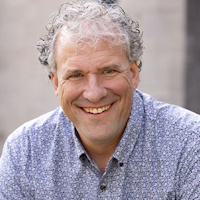 Nicholas Epley, PhD, is the John Templeton Keller distinguished service professor of behavioral science, and director of the Roman Family Center for Decision Research, at the University of Chicago Booth School of Business. He studies social cognition—how thinking people think about other thinking people—to understand why smart people so routinely misunderstand each other. He is the author of A Little More Social: How Small Choices Create Unexpected Happiness, Health, and Connection.