Kaitlin Luna: Hi, everyone. It's Kaitlin Luna, host of Speaking of Psychology. This episode was recorded during APA's Technology Mind and Society conference held on October 2019 in Washington DC. I was on maternity leave during that time, so my colleague Kim Mills was the guest host. We hope you enjoy this episode.
Kim Mills: Hello, and welcome to Speaking of Psychology. A biweekly podcast from the American Psychological Association that explores the role of psychology in everyday life. I'm your host, Kim Mills. My guest today is Dr. Gregory Kratzig an adjunct professor of psychology at the University of Regina in Saskatchewan, Canada and a global expert in simulation-based training. Particularly in the world of law enforcement.
He has used virtual reality to train first responders to drive emergency vehicles and to help police officers make the best decisions when they're faced with choosing whether to use force. I don't think it's a stretch to say that virtual reality is revolutionizing how we train people in law enforcement as well as in other fields such as aviation and medicine. Thank you for joining us today, Dr. Kratzig.
Kratzig: Thank you very much for having me.
Mills: Let's start by having you tell our listeners a little about the research you've conducted, specifically training law enforcement officers. How are you using simulations? Why are they well suited to training police?
Kratzig: We've been using simulation technology in the use of force area. The video-based-technology, law enforcements have been using that for about three decades now. It's evolved over time. It's getting much better, but more recently we're now using simulation for firearms training and driving simulation. What that provides us is an opportunity to train both police recruits as well as existing police officers in an environment that's safe.
What I mean by that is we can't teach emergency response driving. Clearing intersections, driving lights and sirens through the city streets in our city or in any other city but we can do that using simulation. We can introduce opposing traffic, pedestrians, animals, anything that we want to. When something happens, that's a teaching moment. We can talk to the recruit, what they did right, what they did wrong, why certain things happened to cause the collision.
Then we hit the reset and we allow them to do it again. Something that you absolutely can't do in the real world. Firearms is another area. It also allows us to train our recruits in a very safe environment, so they don't have to-- When you hold a live weapon, there's a certain anxiety that comes along with it. It takes away from building of the skill itself of learning how to shoot a gun.
We can remove that, focus on the actual skill acquisition and then introduce the live-fire later on. That anxiety seems to really dissipate.
Mills: I understand that there's some resistance to this marksmanship training. Is that coming from gun manufacturers? Is it coming from police departments? What's behind that?
Kratzig: It's definitely coming from the end-user, for sure. There's this long-held belief that a bullet needs to come out of a gun and needs to recoil, you need to smell the cordite in order to learn how to shoot, but if you learn all the skills the way you need to learn them, if you do that correctly, the bullet's going to go where you want it to go all the time anyways. Everything happens before the bullet comes out of the gun itself.
The resistance is coming from those in the field that really are resistant of changing something that really hasn't changed how we teach firearms training for the past 100 years.
Mills: Do people become more adept at marksmanship by going through it virtually first? Can you demonstrate that there's a good reason for doing this in addition to what you've just described?
Kratzig: Absolutely. We've conducted a number of studies with the RCMP. It has been replicated down here in the United States and with another agency in Canada. We have removed all of the live-fire practice from our training program for this research only and demonstrated that the skills are required, that the skills transfer from the simulator to the live-fire environment. We have evidence that actually shows that the retention of skill is nominally better than if they were trained in a fully traditional live-fire setting.
Mills: One of the factors that you also study is physiological arousal and how it affects decision making in law enforcement situations. I think it's pretty well understood that policing can be a very hazardous line of work, which means that police officers may experience hypervigilance and other forms of physiological arousal. When is this a good thing and when is this bad for an officer in the field?
Kratzig: Oh, that's a really good question. It's quite complicated. What we've done over the last-- I'm just going to say the last 10 years. We've developed different scenarios both in the simulator and live in our police defensive tactics that try and replicate what could actually happen in the real world. Trying to stop a threat of some sort, whether you're going to arrest them or if it's an active shooter situation.
We build these scenarios and we believe that they are complicated for that particular recruit at a point in time and training. We also then believe that they are eliciting emotional responses and cognitive demand on our recruits, but we really don't have the evidence to suggest that that's actually the case. One of the reasons why we want to use the physiological equipment is to actually look at that. Are we getting the type of output that we believe that we are- when we designed the scenario that we're supposed to get?
That's one. The second thing that we want to make sure that we're doing is that if there is a high level of emotional arousal and if we can demonstrate with the equipment that there is a large cognitive demand that we can then incorporate additional tools in the training program for them to be able to work through that emotional arousal and to be able to resolve whatever's in front of them in a better way. In a quicker, safer way for both the police officer and the suspect that they're dealing with.
Those are a couple of things. We also know that when you are talking about PTSD or other occupational stress injuries, that it's not just one traumatic event that necessarily causes that. It could be this notion of a thousand or several hundred different traumatic events that are smaller in nature, but it's just, all of a sudden, it's that one that actually becomes that trigger.
The other thing that we want to do is to try and provide them with the tools to manage those stresses as they go through their career in an effort to try and mitigate the effects of PTSD.
Mills: What are some of those tools? Is it cognitive behavioral therapy? What are you giving to police officers?
Kratzig: We are trying some mindfulness training with some cadets. We're doing a research project with them right now. We are also looking at doing augmented training with a number of cadets starting next year. It's a program that was developed out of Harvard and Boston University. We're looking at incorporating that into our program.
Think about cognitive behavioral therapy, you're absolutely right, but instead of giving CBT and these tools to a person after they're injured, let's give it to them before they're injured to be some sort of a preventative mitigating instrument to manage those stresses.
Mills: Body cameras and dashboard cameras have been very much in the news lately. I'm just wondering, are these included in your training and if so, how?
Kratzig: No, they're not. We do not- have not used body-worn cameras at all in my agency and we're 25,000 police officers. To date, we've made a decision not to use them. We're still examining it but as of right now, we don't use body-worn cameras. I haven't worked with-- [crosstalk]
Mills: Is that less prevalent in Canada than it is in the US, do you think?
Kratzig: Yes, it is.
Mills: It's pretty becoming very widely used here in this country.
Kratzig: Yes. There's still lots of agencies that don't use it.
Mills: What the reason, do you know?
Kratzig: I think there's a number of them, I think privacy's one for sure. Cost is another one. Storage of the videos is tremendously expensive and cataloging, so there's a number of different factors that have to be considered.
Mills: Can you give a description of how you use simulators to train police and first responders how to drive. What's different about driving when you're a cop?
Kratzig: We take the skills assuming that a recruit is coming into the Academy with some sort of civilian driving skills. We take those skills and then build upon that. We introduce a police driving. What that basically is, is giving them the tools in which to do this environmental scan. They're always supposed to be scanning the environment, looking for things that are out of place.
They don't have to be in a pursuit drive. They don't have to be going to emergency call. They just need to be aware of their environment, scanning back and forth and back and forth looking for those things that are out of place. So those are what we're trying to do. As a civilian driver, we don't do that. We're just focusing on what's in front of us more or less, going from point A to point B, and it's a very unconscious drive.
Think about when you go to the grocery store, you don't really remember the journey to get there. You just remember getting there. For a police officer, they are needing to look at the entire environment always, looking for those things, someone who may need help or anything that's out of place. Those are the kind of skills that we're trying to give them. While they're doing that, we also need to make sure that they also have the proper vehicle position.
As they're driving, they don't want to get boxed in behind a car, just in case they need to go respond to emergency. Vehicle positioning, being aware of where the traffic is and always allowing themselves a way out of a situation so they can get to the respondent's call. That's kind of in a nutshell, what we're trying to teach the cadets.
Mills: It's a lot to be thinking about all at once. It's a kind of multitasking.
Kratzig: Absolutely. Then you throw a dispatcher on there. They throw in a license plate that, "Can you do a check on this," and while they're still scanning back and forth, trying to understand where their vehicle is in the traffic and then they got their computer on their side and that's going off. Those are lots of things, that lots of cognitive demands on a police officer for sure.
We're trying to introduce those skills slowly in a simulator, do the confirmation in a live environment, come back, introduce another skill. We kind of go back and forth, kind of think of scaffolding. We're just kind of building and building on those skills. Even though we haven't researched this anecdotally from our instructors, they're telling us that those cadets are coming into their respective parts of the program, much better equipped after they come into the simulator. It's allowing us to introduce a certain set of skills.
Mills: That's a lot to be thinking about, though. It's almost like you're having to learn how to effectively text and drive. It sounds like it's very dangerous really.
Kratzig: Absolutely. There's lots of discussion about distracted driving. Yet we're telling our police officers you need to do distracted drive, but there's also a method to that. When they're on the radio, there's certain points on a drive, especially when they're driving lights and sirens somewhere when you don't use your radio. Don't use it when you're just going into an intersection. If a dispatcher calls you, they don't know exactly where you are. Go on the radio as soon as you exit that intersection and go into the main way because- and that's safer, there's a lot going on at that intersection.
When you're going through red light, all the civilian traffic, they have the right of way going green. If there's a collision, the police officer is the one that created that collision, not the civilian population. They have to then deal with that situation. The dispatcher just give them two or three seconds, then get back on the radio and then respond to the dispatcher. We also teach them that, "Yes, there's lots of things going on, but take a break, get through safely and then go on the radio."
Mills: Any other findings in your work that you want to discuss or that you've been talking about here at the APA conference?
Kratzig: We've also been doing quite a bit of work with virtual reality. We really believe that virtual reality is definitely the way of the future for police training. We're part of a larger working group, international group, UK, US, and Australia and us working on virtual reality as a training tool. We all have a little bit of expertise. Nobody has everything. Then we partner with academia to help us out build virtual reality scenarios, mostly right now for beta testing. We're hoping to get them into the program by the end of the year, so that we could do some actual empirical studies on virtual reality.
When you think about simulation, these driving simulators are massive pieces of technology. They're very expensive. You should be able to do the same thing in a virtual world for a fraction of the cost but it's much, much more immersive. That's where we want to end up is creating something as realistic as we can, what they might experience in the real world. We're putting a lot of energy into virtual reality right now.
Mills: What are some of the other scenarios? It's not always a shoot, don't shoot situation. It could be, I don't know, you're making a call for domestic violence.
Kratzig: Absolutely. We're doing domestic violence, we've replicated a drug house in virtual reality, a mental health scenario where a person who is in crisis and we're interacting with that individual to calm them down and get them the help that they need. It's not just shoot, don't shoot. Very few of our scenarios are that, most of ours are de-escalation.
Virtually all of our calls for service are not violent in nature. They're really easily de-escalated, and they usually resolve without incidence. That's what we're really focusing on, the de-escalation part. Especially with the mental health, that's one area that we're putting more time in. I think virtual reality is going to really help us with that.
Mills: Now, that's a place where psychology can really, really play a role. Do you think that it's getting better? I know that it's been problematic for years with police not being able to effectively determine whether a person in crisis is going to be violent or there's a way to talk to a person who's got some kind of a mental issue or mental illness?
Kratzig: Well, I think that's a larger social issue. I think we've put a lot on police officers. They're a first responder but they're responding not only to crimes, but they're responding to all of these mental health. We're expecting them to be able to diagnose somebody almost as soon as they get on the scene, "Oh, yes, you must have schizophrenia, you have bipolar disorder." They're not trained for that.
We need to help give them some tools to be able to identify someone who might be in mental health crisis or substance abuse or whatever it might be so that they can get that person to help. We're just asking our police to do more and more and more and more, and they're really not equipped. I think they do a fine job. They do a great job with the tools they have. We need to find a way to give them more tools, better tools to be able to do their job.
Mills: Is what you're doing then being shared with the training academies?
Kratzig: Yes. Everything that-- I belong to a couple of different groups, international groups and all of our information is disseminated during some of those meetings, as well as the senior leadership within our organization. They meet with senior leaders throughout the world on a regular basis. That information is also shared at the very top level.
There's lots of opportunities to disseminate this information and we do. As soon as it becomes available, we absolutely. Then we also take in information from our partners as well on the work that they're doing and see if we can apply to our own agency.
Mills: This is all really interesting and very important work. Thank you and thanks for joining us today.
Kratzig: Great. Thank you very much for having me and thank you very much for your interest.
Mills: I just want to remind our listeners that we at Speaking of Psychology want to hear from you. You can email your comments and ideas for future episodes to speakingofpsychology@apa.org. Please give us a rating in iTunes. It's really helpful.
Speaking of Psychology as part of the APA Podcast Network, which includes other informative podcasts such as APA Journals Dialogue about new psychological research, and Progress Notes about the practice of psychology. You can find all our podcasts on Apple, Stitcher, or wherever you get your podcasts. You can also go to our website, SpeakingofPsychology.org and listen to more episodes. I'm Kim Mills with the American Psychological Association.


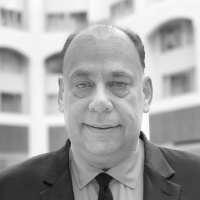 In his position as director of research and strategic partnerships at Depot Division, the Royal Canadian Mounted Police’s Training Academy in Regina, Saskatchewan, Canada, Kratzig designed and developed a comprehensive research program and a sophisticated simulation lab that attracts interest from academic researchers and police agencies nationally and internationally. The simulated firearms research he developed has been adopted by the U.S. Federal Law Enforcement Training Center (which handles 70,000 trainees annually) and by the police force in Singapore. Kratzig has earned an international reputation for cutting edge research that is helping first responders worldwide prepare better for volatile and dangerous situations.