Kim Mills: Think about the last thing you shared online or via email with someone else: a funny video on TikTok, a news story you thought your friends would enjoy, or a new phrase you’ve been hearing everywhere. Chances are you didn’t share it randomly. Something about it grabbed you and made you think, I have to pass this along.
Every day we’re bombarded with information, stories, ideas and words, but we only feel compelled to share a fraction of that. Why do some things catch on—traveling through networks of conversations, texts and social media—while others disappear? And what can psychology tell us about why we share what we do? Do we share things differently online and in person? How are the changing social media landscape and artificial intelligence affecting how ideas spread?
Welcome to Speaking of Psychology, the flagship podcast of the American Psychological Association that examines the links between psychological science and everyday life. I’m Kim Mills.
My guest today is Dr. Jonah Berger, a professor at the Wharton School of the University of Pennsylvania and a leading researcher on word of mouth, social influence, and how ideas spread. He’s the author of four books, including Magic Words: What to Say to Get Your Way and Contagious: Why Things Catch On. He’s published more than 80 articles in academic journals, and his research has been covered widely in mainstream media. His work looks at the psychological principles that help explain why certain products, messages, and ideas become popular and how those same principles show up in our everyday conversations.
Dr. Berger, thank you for joining me today.
Jonah Berger, PhD: Thanks so much for having me.
Mills: So I talked a moment ago about viral trends. A lot of people think that going viral is just due to chance or luck, but you’ve discovered there are patterns to what takes off. So more broadly, how does psychology drive what we share?
Berger: It’s so interesting because we’ve all seen examples of things that catch on, whether they be products at the grocery store, videos on social media apps that everyone’s telling us to download. But we often think it’s random luck or chance why they became popular—that you just have to catch lightning in a bottle or something along those lines. But it turns out there’s actually really a science behind it.
We’ve analyzed thousands of pieces of online content, tens of thousands of brands and millions of purchases both around the United States and around the world. And again and again, we see the same science coming up, the same six factors driving things to catch on and be shared. And so at the core, it’s really about the psychology of social transmission. Why do we talk about certain things rather than others? Why do we share what we’re doing this weekend or not talk about something that happened last weekend? And what about that science can help us understand why things become popular?
Mills: And you’ve explained this in something you’ve called the STEPPS framework, these six psychological reasons that people share things. Can you talk about what those steps are?
Berger: Sure. So STEPPS is an acronym, and there’s kind of six key dimensions there. The first S stands for social currency. The T stands for triggers. The E stands for emotion. The first P is public. The second P is practical value. And the last S is stories. And each of those is a psychological driver of why people talk and why they share. It’s not about certain products versus ideas versus services. It’s not about business-to-consumer versus business-to-business. It’s not about expensive things versus cheap things. It’s really about the science of why things get passed on. Why do we talk about some things that happened to us last weekend and not others? Why do we talk about certain trips or vacations we took years ago, but not other ones? And how does all this help us understand why things catch on?
Mills: The first reason you site is social currency, the idea that people share things that make them look good or smart or knowledgeable. Why is social currency such a powerful driver of what we share?
Berger: Sure. Is it right if I tell a story for a minute?
Mills: Absolutely.
Berger: Yeah. So there’s this place in New York City, and I’m sure some of your listeners are from New York City, but many other folks have been there before. And so imagine you’re walking around in the lower East side of New York City, your stomach is rumbling. You got to get a bite to eat when you notice a big hot dog-shaped sign out in front of a restaurant with the words "Eat Me" written on it, it would look like mustard. Say, I haven’t had a hot dog in a while. I’ll check this place out. So you walk down a flight of stairs into a restaurant called Crif Dogs. And this place has an amazing range of hot dogs, right? It has a good morning hot dog with bacon, eggs and cheese, a hot dog, green onion and pineapple, traditional New York style hot dog. So every hot dog that you can imagine, but if you finish eating your hot dog, you might notice in the corner of the room is a phone booth, one of those old things that Clark Kent might jump into to change into Superman.
And so you walk into the phone booth, slide open that door and walk inside. And on the wall you’ll see something you probably haven’t seen in like 30 or 40 years. It’s a rotary phone. One of those phones you have to stick your finger into and go around in a circle. And so just for fun, stick your finger and say the number 3, go around in a circle and hold the receiver up to your ear. Well, the phone will actually ring. It’ll go ring, ring, and then someone will pick up the other line and they’ll ask you whether you have a reservation. And I remember the first time I heard this story, I said, I’m sitting in a phone booth inside of a hot dog restaurant. What can we possibly have a reservation for? But if you’re lucky and they happen to have space or a friend of yours happen to make a reservation, the back of that phone booth will open and you’ll be led into a secret bar called Please Don’t Tell.
Now, Please Don’t Tell has violated all the traditional laws of marketing and communications. No sign on the street, no sign inside the restaurant. They’ve done everything they can to make themselves difficult to find, and yet every day they’re full. At 3 p.m. phone lines open up by 3:30, all the seats are usually gone. You have to redial again and again trying to get through. I actually went and visited Please Don’t Tell. Took me a couple weeks to get in and I got on a Tuesday night at 6 p.m.—not the most popular time. And you might say, Well, maybe they’re popular because it’s lack of competition, but look around, that’s not the case. And so what did Please Don’t Tell do to cut through the clutter? And if you think about it, they did something really interesting. They made themselves a secret. And let me tell you a little secret about secrets.
Think about the last time that someone told you something and they told you not to tell anyone else. And if you think about it, what’s the first thing you did with that information? Well, you probably told someone. Why? Because having access to information that not everyone else has makes you look smart and makes you look in the know. It gives you what I’ll call social currency.
So it’s not just secrets, right? So you might say, Okay, well I get it. People like sharing secrets, but there’s something much more fundamental there, which is people like sharing things that make them look good, right? The better something makes people look, the more likely they are to share it. And the worse something makes people look, the less likely they’re to share it. If you think about it, right? Your kid gets an A in school, they might be very happy to tell everyone. If they get a B minus or a C, they might be less likely to talk about it. You do really well playing a round of golf, you talk about it, but you do badly, maybe you’re less likely to talk about it. You get some limited edition product that nobody else has or everybody else wants, maybe you talk about it, you don’t get a promotion at the office, maybe you’re less likely to talk about it. And so we pick and choose among the things that happen to us, sharing the ones that make us look good and avoiding sharing the ones that make us look bad.
If you look online, most posts on social media tend to be positive. Hey, look at me. I’m at a celebrity. Look at me. I got a new car. Look at me. I’m on vacation. Very few people post photos saying, Hey, look at me. I’m at the office working on Excel spreadsheet, check out column C. Most of us spend a lot more time working on an Excel spreadsheet at the office than we do on vacation, yet we share the vacation photos and not the Excel spreadsheet stuff. It makes us look better. And so in some sense, we pick and choose among the set of options that is our life.
And one reason we share things is because it makes us look good. If something makes us look better, we share it. If it makes us look less good, we don’t. And so it’s really interesting to think about the range of things that impacts. So think about frequent flyer status and—people love bragging about that. Think about a new artist has a music album out and people love talking about it. Think about information that people might have, whether it’s about an impending snowstorm or access to product that not everyone else does. The more we have access to something, it makes us look smart, special, in the know, that not everyone else has—the more likely we are to talk about and share it, whether it’s a secret, whether it’s just a cool product or an interesting idea.
People love being ahead of the curve, but status is only good in some sense if other people know that you have it. And so one way to get status is to talk about something, right? People don’t care about the airline that gives them frequent flyer status, but the only way to talk about their status is to mention the airline, and that gets to come along for the ride. And so whether it’s smart brands and organizations or smart people who want to get others to talk about ideas, one really powerful question is, well, how can we make that audience feel like insiders? Often we think a lot about—ourselves, even as researchers, we publish some great research and we want to put it out there. We think a lot about—how’s it going to make me look when it shows up on LinkedIn? But we think a lot less about, well, how’s it going to make someone who reads about it look if they talk about it to someone else? Because the better it’s going to make them look, the more likely they’re going to be to pass it on.
Mills: One other part of why we share things is that there’s a story we want people to be emotionally involved in the thing that we’re sharing with them because we are. And I’m just wondering what makes stories such a powerful vehicle?
Berger: Yeah, you mentioned two words there. You talked both about emotion, the E in the framework, and the last S, the stories. And so maybe what we’ll take them in turn. In terms of emotion, I think we’ve all seen examples of content that goes viral online or stories people share offline that have a lot of emotion. You look at YouTube for example, you might say, Wow, there’s lots of funny videos on YouTube. And you look at angry political rants on social media and you might say there’s a lot of things there as well. And so you might say, Well, hey, maybe any emotion gets shared. The more people care, the more they share. And indeed there is some data suggesting that emotions drive sharing—that any emotion can increase the chance that people share. There’s some very nice old work showing that people share many of the emotional things that happen to them on a daily basis, whether it’s to build bonds with social others or whether it’s to vent about something they’re upset about or whether it’s to help sort of figure out what they’re feeling – are they sad or are they angry. And so sharing those emotions can help people themselves figure out what it is they’re feeling.
But we wondered, okay, well are all emotions equally likely to get shared or are some emotions more likely to be shared than others? And you might say, Well, maybe people share positive emotions and they avoid sharing negative ones, and that intuitively makes sense. But as we’ve just talked about, there are good examples of negative stuff being shared. You look at negative angry political rants or there’s a website called Dell Hell where people shared negative customer service experiences with Dell. And so there’s certainly some negative things that also get a lot of attention. And so do all emotions get shared or some shared more than others?
And so we actually examined this question empirically. A few years ago, Katie Milkman and I did a paper where we looked at basically 6 months of New York Times articles, everything written over that period by the paper, everything from front-page news and sports to style and political stuff, thousands of articles in the newspaper. Some of those articles make what’s called the most emailed list, which is the list of articles that are highly shared, and most don’t. And so one question is why? What about some articles made them to be more likely to make the most emailed list?
And let’s be careful, right? One reason could just be they’re featured. An article that appears on the top of the homepage, for example, probably gets read by more people than one that appears on the bottom of the homepage potentially. And so maybe it’s just the articles that are featured, and so we controlled for that. You might also say, Well, maybe it’s how famous the author is, right? Maybe if a really famous politician or musician writes an article that gets shared a lot, and if regular Joes and Janes write articles, it doesn’t. So we controlled for that. It might be that certain sections of the paper get shared more than others, read more or because people pay more attention to them, and we controlled for that as well.
But what we were really interested in is that question we started with, which is emotion. And so we took all these articles and first we measured the amount of emotion they evoked—did they evoke more emotion or less emotion? We also examined whether they evoked positive emotions or negative emotions, using Jamie Pennebaker’s great linguistic inquiry and word count measuring the positivity or the negativity of those articles. And sure enough, by the way, we found that more emotional content was more likely to make the most emailed list. It turned out, consistent with what we kind of talked about already, that positive emotion was shared more than negative emotion. But we didn’t stop there. We dug into specific emotions as well, right? Both sadness and anger are negative emotions, but we wondered if there might be some differences in how likely those emotions are to be shared. And sure enough, when we looked at the data, we found something interesting. It wasn’t that all negative emotions decreased sharing. In fact, while some negative emotions like sadness decreased sharing, other negative emotions like anger had the exact opposite effect, right? Anger actually increased the likelihood that articles were to make the most emailed list. And so one question we already started asking ourselves is why? What separates anger and sadness and how might that differentiate sharing?
We weren’t sure right away, and then we noticed something kind of surprising in the content, which is that science articles were actually doing pretty well. And as a scientist myself, I found that pretty heartening. They’re not always the broadest pieces, right? So a question about deer vision and how camouflage clothes can be made so that deer can’t see them or the deepest recesses of our, the universe and whether there are additional planets and stars—kind of things that are niche in some ways, but were getting a lot of attention. And we wondered why. And what we realized is that many of these articles evoked an emotion people often describe as awe, right? This notion of inspiration, kind of widening one’s perspective. And we said, Okay, interesting. So we clue it all into the model. Sure enough, the more awe that content evoked, the more likely it was be to be shared.
But that still didn’t explain the difference between anger and sadness. And so we were trying to say, Okay, well what does awe have in common that increases sharing with anger. In some ways they’re pretty different, right? Awe is a positive emotion, anger is a negative emotion. But even though they’re different in their valence, they actually have a lot in common on another different underlying dimension, which is the amount of physiological arousal they evoke. Think about if you’re camping in the woods and you hear a noise, your fight or flight response goes off, you’re ready to run away from whatever it might be. Or think about what happens when your team loses a big game—you’re angry, you want to throw something. Emotions are often characterized by physiological arousal, whether you’re fired up and ready to take action or whether you’re powered down and deactivated. And what we found is it’s not just about whether emotions are positive or negative. Any high arousal motion, whether positive or negative, increased sharing
Anger fires us up to take action, and one of those actions we can take is sharing. Sadness powers us down. We don’t want to do very much. When you think about being sad, you want to eat a big bowl of macaroni and cheese or ice cream depending on your preferences, put on a sweatshirt and sort of be cozy. You don’t want to do very much. And so it turns out any of these emotions that fire us up to take action encourage us to share. Which is actually pretty interesting if you think about it because you might say, Well, okay, funny YouTube videos are completely different than angry political rants. And in some ways they are completely different. One is a positive emotion, one is a negative emotion. One makes us laugh, one makes us frustrated. But they actually have a lot in common, which is that both of those things are high arousal, humor is a high arousal emotion and anger is a high arousal emotion.
And I think this has some pretty important takeaways for individuals that are interested in getting ideas to catch on, or products or services. Often we think about, okay, as long as we make people feel good, happy, positive, they’ll pass stuff on. But it’s not enough, right? Contentment is a positive emotion. It feels pretty good to be content, but when you walk out of an exercise class or a yoga class, you feel pretty good, but you don’t want to do very much. You’re not going to share something, you’re not going to pass it on—because you feel deactivated rather than activated. And so on the positive side, it’s not just enough to make people feel good. We’ve got to make them feel that high arousal. We’ve got to fire them up to take action to want to pass something on. And on the negative side, sure, we don’t want to make people feel negative emotions, but taking advantage of the negative emotions they may already feel can be a great way to encourage them to share, whether it’s related to a political cause or an issue they have in a certain space, a problem they wish was different.
By understanding those negative emotions, they’re already feeling those high arousal negative emotions they’re already feeling, we can encourage them to pass all sorts of things on.
Mills: Out of the six reasons that people share things, the STEPPS as you call them, are they all of equal value or does one hold sway over another?
Berger: It really depends on the situation to some degree. And if you look at things that often get a lot of attention, go viral around the web, often they have at least one ingredient that they do very well on, one of the six. But it’s not necessary to have all six, rarely do things have all six. We did an analysis for example, of online versus offline word of mouth, looking at brands that consumers would describe as more interesting and products and services and brands that people would describe as less interesting. So no offense to, I don’t know, let’s say eraser companies, but erasers probably aren’t the most interesting product and service people think of, whereas high tech products tend to be a little bit more interesting. And so we looked at whether interesting products and brands and services get talked about more than boring ones. And what we found actually surprised us a little bit.
So there’s data both on online and offline, word of mouth. And we found that sure enough, if you look online, interesting stuff tends to get talked about more than boring stuff. Interesting products and services on average tend to get talked about more than boring products and services on average. And so we did that same analysis though offline, looking at offline word of mouth. And there we found there was actually no effect. Interesting products or services didn’t get talked about more than less interesting ones. And when we thought about it, we realized there’s a sort of difference between online and offline sharing. So online sharing is often you have a choice, do I want to share something or not? Or I’m talking about something—I could share anything. What am I going to pick to share about? And so often the question is not, do I want to share something, but is it above a threshold? Is it good enough to share? And so in those situations I might say, Well, let me talk about the really interesting thing I did and not the boring one.
Offline word of mouth on the other hand is often much more synchronous. Someone asks us a question and we have to fill in that conversational space. We have to say something and we have to say something relatively quickly. And so we don’t necessarily have time to think about, well, what’s the most interesting thing I could talk about or share? It tends to be a little bit more about what’s top of mind? What am I thinking about right now? When you ask a question or when I’m having a conversation, what’s the most relevant thing I can think of? Let me talk about that. And that really gets into less the S, that social currency and more the T, the triggers, right?
So triggers is all about top of mind means tip of tongue. The more likely we are to be thinking about something, the more likely we are to talk about and share it. If you look, for example, many people talk about the weather and you might say—winter weather aside, which is obviously very important if schools are closing and the like—but why do people talk so often about the weather? It’s not the most interesting thing that happens to us, but it is top of mind. It is something that’s around us all the time. And so the question isn’t just, do we like something? Does it make us look good or does it evoke high arousal emotions? But are we thinking about it? If we’re not thinking about something, it’s really unlikely that we’ll talk about it. And so this also I think has some interesting implications.
If you think about what a trigger is, it’s in some sense a reminder in the environment to think about something, a cue in the environment that makes us think about something we weren’t thinking about already. So if I said peanut butter, and for example, many of your listeners would probably think of jelly, or if I said rum and they might think of Coke, in some sense, they’re environmental reminders that encourage us to think about something. And so the more we want someone to talk about or share something that relates to us, our product, our service or idea, the more we need to think about, well, what are those triggers or cues in the environment that are going to make them talk about it?
There’s a famous campaign from the candy bar, Kit Kat, for example, that did a great job of boosting sales, not because it changed how much people like the brand, but it just made them think about it more often. It linked Kit Kat and coffee, having a coffee break, have a Kit Kat thinking about coffee, think about Kit Kat Coffee and Kit Kat, Kit Kat and coffee, best friends forever. That campaign made people think more often about Kit Kats because lots of people drink coffee and they drink it really frequently. And so now coffee became a trigger to bring the brand to mind, and the more it was top of mind, the more it was tip of tongue.
Mills: If I could switch gears for a minute and talk about the book Contagious that you wrote more than a decade ago, which I think was in many ways very almost prescient. This has taken off in ways that we could never have imagined. I’m just wondering though, that the social media landscape has changed since then and there are more platforms and we’ve got these AI algorithms that are pushing all kinds of things to us. Has that changed the types of information that we’re sharing?
Berger: Yeah, it’s a great question, and I think it’s important though when thinking about that question to not just look at the now, but look at the past as well. So first, it’s easy when we think about word of mouth and things going viral per se, to think online, to think about social media, and indeed in today’s day and age, social media drives a good bit of sharing. But much—word of mouth by some estimates, it’s not even potentially—most word of mouth is still offline. It’s still face-to-face. And further, the first example of word of mouth didn’t happen when social media came around. It was when people started communicating, it was one caveman probably or one cave woman telling another, don’t eat that. It’s poisonous. Word of mouth has been around forever.
Has social media changed word of mouth? Yes, in some ways it’s made it faster and easier to share things with more people more quickly. It used to be that if you told your neighbor something and they told another person, they told another person, it would take a while for it to diffuse. In today’s day and age, if you broadcast something on social media, lots of people can see it very quickly, even across different geographies. And so it has the opportunity to spread more broadly, more quickly. But that’s not the only way that things get shared. I actually, it’s funny enough, some people say, Oh, you must have gotten started studying this by studying social media. I actually got started in this area by studying rumors and urban legends. So I was an undergraduate at Stanford University. I read this book, my grandmother recommended it, called The Tipping Point, which some of you may remember, great book. And I decided I was interested in studying that sort of stuff, and I was looking for an advisor to work with.
And there was this guy who had just joined Stanford in the business school. His name was Chip Heath, and he was interested in what makes urban legends get shared. And it’s hard to remember now, but back in the late 1990s, early 2000, nobody was interested in rumors, in urban legends, everyone was like, oh, rumor, urban legends are kids stuff, who cares? Nobody shares false information. I was the worst person to have at a party. Someone would share an urban legend and I’d say, No, no, it’s not real. That’s this thing that often circulates. But it turns out the drivers that shape rumors and urban legends getting shared are the same things that shape whether we talk about products or services or other sorts of ideas. And so sure, is social media on the margins changing sharing? In some ways it is, but the platforms come and go, right?
If we looked in the early 2000s, right, you might’ve said, What drives sharing MySpace? It’s all about MySpace. And then it was Foursquare, and then it was Facebook. And the list goes on and on of new technologies that pop up that take a chunk of the online sharing, and they still do and they will in the future, but I think much if not most of sharing is still offline. And the psychological drivers of why we share aren’t necessarily different. In the 1950s and '60s, people still cared about looking good to others. The way they shared might’ve been different. There was no social media, and so it was in the boardroom or at a dinner party or on the phone, but that underlying motivation was the same. Similarly, that idea of triggers, top of mind, tip of tongue, that’s not new. Accessibility, the psychology of cognitive accessibility, it’s been studied for decades at this point.
And so all we’re doing here is we’re saying, Well, hey, this really drives sharing this domain that hasn’t been thought about as much. And so sure on the margins, does social change sharing? Sure, it shifts things a little bit. And sure there are differences between online and offline sharing. Just like by the way, there are differences between sharing on different platforms based on the rules and approaches of those platforms. But I think the more we understand the psychology rather than just focusing on the technology, the more insightful and correct we can be, right? Even think about sharing on social media, there are different ways to do it. I can broadcast something to all my followers or I can choose to narrow cast it to just one or a couple of people. And we’ve done work that finds, for example, that that difference, both of them are online, both are in some sense sharing on social media, but that shapes the kind of things that we share When we share to a broad group. When we broadcast, we tend to focus on ourselves, whereas when we narrow cast, we’re more likely to think about our audience, we’re less likely to be egocentric, and so we’re more likely to share things that are useful or valuable to them. And so that’s less about the technology per se and more about the psychology of social transmission.
Mills: Does your research offer any ideas on how to fight viral misinformation?
Berger: Yeah, this is a question I’ve thought about a lot. It’s disheartening to see how much misinformation goes around. I often work with nonprofits. Organizations think, why doesn’t our good valuable stuff get shared as much as the false stuff? And I often bring up an analogy where I talk about Brussels sprouts. If you ask people, which is tastier, Brussels sprouts or a cheeseburger. Everyone will pick the cheeseburger. And it’s not that the Brussels sprouts aren’t good for you, it’s just the way cheeseburgers are designed fits better with the way your tongue and stomach are designed, right? It makes your brain light up. It does all these things. It’s just plain tastier. And so organizations want people to eat healthier. They say, Hey, eat your fruits and vegetables, but the cheeseburger is alluring when it’s late at night when we’re on the road and the cheeseburger beckons. And so what can we do if we’re the Brussels sprouts?
And the answer is not, I’m not saying be the cheeseburger, but what I am saying is think about how you cook the Brussels sprouts. When I was growing up, Brussels sprouts, like the worst thing my parents could cook, they would steam them, and I don’t know about you, but steamed Brussels sprouts are not particularly good. And so there was a whole decade of my life where I basically boycotted Brussels sprouts and then I moved to Philadelphia and I went to a new American restaurant and they had roasted Brussels sprouts or whatever. It was, a little bit of olive oil and a little bit of salt. And someone at the table ordered them and I thought they’d be terrible. And I tried one and they were delicious. And then I started eating a bunch more Brussels sprouts. And so it wasn’t about, Hey, taking the nutritious stuff and make it a cheeseburger, it was cooking it different in a way that was easier for people to digest.
And I think that’s the important way to think about it, right? If we’ve got true, if we’ve got valuable, if we’ve got useful information, we can’t just sit there and say, I wish it were different, right? People are wrong, they’re biased. We have to say, Well, hold on. People are going to share what people are going to share. By understanding why people share things, can I engineer my good, my truthful, my valuable stuff so it’s more likely to be shared? Most people who are sharing misinformation, aren’t sharing it because they know it’s misinformation or they want to diffuse misinformation. They’re sharing it for the same reasons we already talked about. It evokes social currency. It makes them look good. It’s surprising, it’s novel. It makes them look like an insider. It evokes high arousal emotion, that E in the steps framework. It makes them angry, it makes them excited, it inspires them.
And so they pass it on, not thinking about the fact that it might not be real. It’s top of mind, right? Top of mind more likely to be tip of tongue. That triggers idea. The more they’re thinking about it, the more likely they are to pass it on. And so to fight misinformation, it’s not about saying, Oh, I wish things were different. It’s about saying, How can I take that good stuff—that Brussels sprouts, those nutritious valuable information—and cook it in a way that’s easier to understand, that’s easier to digest and that’s easier to transmit? I think unfortunately, both scientists and nonprofits have this thing often in common, which is they just assume, look, if this stuff is good enough, it’ll win. Right? We assume that we just have good enough research if we are a good enough cause that it will win. And unfortunately, good stuff isn’t always enough. There’s so many pieces of interesting research, there’s so many good causes out there that people can’t necessarily give their attention or their money or their shares to all of them. And so the stuff that wins is going to be the stuff that fits best with people. If we understand that science of social transmission, we can help the good, the valuable and the truthful stuff get out.
Mills: What about the role of repetition? I mean, the fact that something, it’s repeated over and over again to a point where people can’t tell anymore whether it’s true or not. Do you look at that?
Berger: Yeah, I haven’t looked a lot at that specifically. There’s certainly research that suggests that repetition can make some information more believable. There’s also research on repetition and advertising that shows that if you hear something too many times it gets annoying or you get bored of it or you dislike it in certain ways. And so I think there’s lots of interesting research going on trying to encourage people to be smarter consumers of information, to think twice when they read something or come across something. But I think the biggest thing for me is to stop treating false information and true information as completely different classes of things. To most people, it’s just information. And so the question is what drives people to share information in the first place? And that’s where the STEPPS can be really helpful.
Mills: How is technology changing the way you do your research and the kinds of things that you’re looking at?
Berger: That’s a great question. And one of my first forays in this space was this old article at this point on what makes online content viral, where we used a very basic natural language processing tool, basically a dictionary that counted the number of positive words and negative words. And in some ways when I look back at that, it was very rudimentary, right? Given the technology that’s out there now, machine learning, natural language processing tools that are available that we’ve used in lots of follow-up projects. In some ways it was very rudimentary, but it was also very powerful. And so I think we’ve been so lucky to have tools like Linguistic Inquiry and word count to build on now. Now there are more sophisticated things out there, but that was, and still is a great tool to begin to introduce people to these areas. But we’ve used lots of different tools.
We’ve done topic modeling, for example, which extracts the main topic or themes of songs to look at what makes songs successful. And we found that songs whose lyrics are more atypical from their genre tend to be more popular, tend to rise higher on the Billboard charts. So think about Lil Nas X and his song Old Town Road. It wasn’t completely country and it wasn’t completely hip hop. It was sort of this weird mix of the two, and it was one of the most successful songs on Billboard ever because it was different than its genres.
We’ve also looked at starting to look at not just language, but also vocal features or audio features or visual features. We recently did a project looking at hand gestures. One of my colleagues is Italian, and people say, Oh, Italians, they always talk with their hands. And so he was saying, Well, is that actually true? And is talking with your hands useful? And so we analyzed thousands, hundreds if not thousands of TED talks and the amount of engagement they received, and specifically looked at how much the speakers moved their hands. And we found that when speakers moved their hands more, their talks received more engagement. But it wasn’t just that any hand movements were beneficial, certain types of hand movements were more beneficial than others. Certain types of movements illustrate what we’re saying. If I—say I caught a really big fish—and you can’t see my hands right now, but imagine I’m putting my hands sort of wide to show how big the fish is—or really these are the steps to success, and I move my hands in a stepwise motion, that visual illustration of what I’m talking about, can the audience understand what we’re saying? Whereas just scratching my nose or clapping my hands may get attention, but it’s not as likely to lead to understanding. And so really these tools are unlocking a variety of sources of data, whether it be textual linguistic data, whether it be audio features and how quickly we speak or whether we pause in between utterances, or visual features—things like the way we move our hands or facial expressions or body language. All of these things can really help us understand how to communicate more effectively and why products, services and ideas catch on.
Mills: So to wrap up, what are you working on now? What are the big questions are you still trying to answer?
Berger: I think similar to what we just talked about, a lot of these automated content analysis tools to understand why things catch on, we’re beginning to look at how things combine. So obviously it’s not just the words that someone uses, it’s the way they use those words and in combination with the audio features they utter and the visual features if they’re there. If you look at livestream influencers—live streams, for example, where they sell products—it’s about how they combine all these different modalities together. We have a project, for example, looking at how influencers convey empathy, both using their language, but also their body language and also their audio. The way they utter those words combines to think about impact. And so doing a lot of work on multimodal communication. Also thinking a lot about a very fundamental marketing question, but one I find very interesting, which is what are we selling and how is—whether we’re communicators, individuals, companies, organizations, we more effectively get our messages and ideas out there by understanding our audience and really thinking about what is that thing that we’re selling and how do we add value for them? I think I used the phrase before, good stuff isn’t enough, but I find that very challenging. I consult with lots of companies and organizations and often, whether it’s an entrepreneur or a social cause, often there are really good products, services and ideas that don’t take off. And so I think a lot about how to help both individuals and organizations make that good stuff spread more effectively.
Mills: Well, Dr. Berger, I want to thank you for joining me today. This has been really interesting, I think, and explains a lot for our audience.
Berger: Thanks so much for having me.
Mills: You can find previous episodes of Speaking of Psychology on our website at speakingofpsychology.org or on Apple, Spotify, YouTube, or wherever you get your podcasts. And if you like what you've heard, please subscribe and leave a review. If you have comments or ideas for future episodes, you can email us at speakingofpsychology@apa.org Speaking of Psychology is produced by Lea Winerman.
Thank you for listening. For the American Psychological Association, I’m Kim Mills.


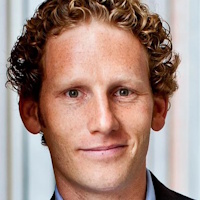 Jonah Berger, PhD, is an associate professor of marketing at the Wharton School of the University of Pennsylvania. He is an expert on word of mouth, influence, consumer behavior, and why things catch on.