Kaitlin Luna: Hi, everyone. It's Kaitlin Luna, host of Speaking of Psychology. This episode was recorded during APA's Technology, Mind and Society Conference held, in October 2019 in Washington D.C. I was on maternity leave during that time. My colleague, Kim Mills, was a guest host. We hope you enjoy this episode.
Kim Mills: Hello, and welcome to Speaking of Psychology, a biweekly podcast from the American Psychological Association, that explores the breadth and depth of psychological science. I'm your host, Kim Mills, and I'm speaking to you from APA's annual Technology, Mind and Society Conference in Washington DC across disciplinary meeting to discuss psychology's role in developing and advancing everything from virtual reality to artificial intelligence to robotics to the internet of things.
My guest today is Dr. Susan Persky, a psychologist who works at the National Human Genome Research Institute at the National Institutes of Health. She is an associate investigator and head of the Immersive Virtual Environment Testing Unit where she directs the Immersive Virtual Environment Testing area within the social and behavioral research branch, which sounds intimidating, but what she does on a day to day basis is apply virtual reality to biomedical research.
She also covers NIH research into communication and decision making in patients as they react to simulations of environments that might trigger healthy or unhealthy behaviors.
Welcome to Speaking of Psychology, Dr. Persky.
Dr. Susan Persky: Thanks for having me.
Mills: Let's start by talking about the work that you presented at APA's annual Technology, Mind and Society Conference. It involves using a virtual reality buffet to measure and understand how parents teach their children about food and eating. Can you tell us a little more about the project?
Persky: Yes, absolutely. The genesis of the buffet was really back when a colleague and I were doing a study where we were trying to understand how talking to parents about genetics, genomic-based risk for a child might influence that parent's feeding behavior. The choices that a parent would make for a child, once they sort of learned about this genomic risk information.
Traditionally, we might use a questionnaire to assess that behavior, or the gold standard might be to go in a real feeding environment and assess behavior, but given all the potential downsides of the existing measures, we decided that creating a virtual reality-based buffet would be a really good way to go in terms of measuring parent feeding behavior in the lab.
The work that I presented is really focused on how that buffet came to be, how we validated the buffet, and then some of the work that we've done subsequently to that where we've used it to measure parents' responses to genomic information and other elements of parent feeding behavior.
Mills: As I understand that in addition to the virtual buffet, you also have parents serve kids real food, and that when they do that, they tend to serve, I think, more of the real food to their kids in the virtual food. Do you have any idea why they do this?
Persky: Right. We did a validation study of our virtual buffet where we worked with the metabolic kitchen in NIH clinical center. It was a really interesting process. We made a bowl, a serving bowl of pasta with tomato sauce that was basically identical to our virtual reality-based pasta. That way we could compare how much parents served for their child, for lunch from the real pasta versus from the virtual pasta. What we found was a really good correlation. What we really care about is that the parents who are the sort of the low servers in terms of the amount of pasta in VR, are also the low servers in reality, and the highest servers are the highest servers, because we're always comparing different experimental conditions, we're always comparing parents within a study to each other. We care much more about the correlation.
In terms of the actual amount of pasta served, we do definitely find that, at least in that study, parents served more real pasta than virtual pasta. I would speculate that that might be because the serving amounts that you're able to choose in the virtual reality buffet are relatively small, and we did that on purpose because we wanted to make the measure very sensitive. Every time a parent goes and chooses a serving of virtual pasta, you get six noodles or a huge scoop of noodles that really limits the variability and the measure, because then the parents might choose two scoops of pasta or four, but they're not going to go between 4 and 12. We really cut down on the amount of pasta you get per serving in VR.
In the real world, we used a small serving spoon. Again, the serving sizes would be small, but parents could really try to heat more pasta onto that serving instead. A lot of them really did that. I think it was actually just by virtue of some characteristics of the VR environment that we created for a purpose but it may hamper a little bit, the ability to say if a parent serves 300 calories of pasta in the real world, they'll serve 300 calories of pasta in VR, which isn't something we really feel like we need to be able to say to have it be a valid measure for our purposes.
Mills: You found parents serve different amounts of food to boys than to girls. I'm just wondering why they do that. Are parents unconsciously trying to keep their girls thinner because of the stereotype that girls have to be thin in our society to be beautiful? Does that play any role?
Persky: A really interesting thing that I didn't know before we did this study is that, it's actually recommended that you serve more calories to boys than girls, if you go and look at the calorie serving recommendations for children. One might say, "Well, maybe moms are just following dietary guidelines." We think that's really unlikely to be the case. What we found in the research we did there is that when we look at the factors that predict how much food the moms are serving to their boys versus their girls, we see a lot of psychological predictors that can tell us something about what they're choosing for their girls, such as they're concerned about weight, such as their reported restriction. There are a lot of things that are going into that serving behavior.
For boys, we found very, very little that predicted moms' serving behavior for the boys. We think that the moms are just thinking a little bit harder about what they're serving their girls. It is probably a lot of those societal expectations that are feeding into that more considered behavior when choosing for girls.
Mills: You had both parents, moms and dads, serving kids, right?
Persky: In the particular study that we're talking about now, it was only mothers. That's where we started. We've done subsequently a lot of research where we've also included fathers. It turns out that recruiting fathers, just lone fathers to do research of this type is a really difficult endeavor. We've had a lot of trouble getting dads into our lab. We're actually going to publish some work we've done looking at how to recruit fathers for this kind of research, but some of my work has shown that we do see different feeding patterns between mothers and fathers. It is really, really important that we look at fathers.
Mills: Well, we should tell our listeners if there are some dads out there in the DC area who maybe want to volunteer to come to your clinic, how do they reach you?
Persky: Absolutely. Well, we're at the Genome Institute, and we're on the website. Please send me an email, because we're always looking for fathers to participate in our research.
Mills: Have you looked at whether the virtual buffet has an impact on the parents' eating habits as well?
Persky: We haven't. I think anecdotally, using the virtual buffet probably would have an impact, only because we spend a lot of time with the virtual buffet when we're preparing studies, or right now we're in the midst of developing a new version of the VR buffet. When we're done with our VR buffet, we crave all the foods that look delicious on that buffet. We had a running joke where someone would just have to run down to the coffee shop and buy chocolate chip cookies when we spend a long time with the buffet. I think exposure to delicious looking food cues will have an influence on a lot of people, but in terms of differences in what we show them on the buffet, and that's work that I think would be really interesting but work that hasn't been done yet.
Mills: You talked about the buffet being very tantalizing, you work with it all day and then you need to have something to eat. What does this buffet look like?
Persky: We've basically developed it to be basically a buffet restaurant. If you think about going into an all-you-can-eat buffet, we give parents a virtual tray and a virtual plate, and we created it to have foods that are very palatable to children, foods that children eat, but also to have a good variety of calorie and nutrient densities. They basically have their virtual tray; they walk around on each side of the parent. There are buffet tables that have things like chicken nuggets, grilled chicken, grapes, and steamed carrots and black beans and apple sauce, and there's a huge variety of foods that parents can choose from to make a plate for their child. Parents walk around with a virtual reality controller, and they're able to select different foods and put small servings of those foods on the plate. Then, they can keep selecting to make bigger servings of the foods.
Mills: There's no limit, they can make the plate as big as they want?
Persky: There is a technical limit to how much food can end up on the plate. That's actually something we're working on with a new version, is making that technical limit larger, because parents are choosing more food in some cases than we expected, especially for older children, but they can actually put food back, which is not something I recommend in a real buffet, but in the virtual buffet it's fine. It's actually something that we measure.
Then they choose a drink size and they choose from a variety of drinks like soda and milk and juice and water. Then they select a cash register to indicate that they're finished choosing food for their child. We then have information about the process through which they've chosen all those foods, the timing, the order where they've walked. Then we also, of course, have information about everything that ends up on the plate, and we've calculated calories, fat, all the nutrient content that you would want to based on the servings that they've chosen.
Mills: Are you using smells, food smells in association with the virtual buffet?
Persky: We are. In the very last study we did with the virtual buffet, we actually pumped in French fries smell to the room. We felt like it was low hanging fruit and something that would be fairly easy for us to do and might make people feel more present in the buffet environment. Interestingly, very few of our participants actually noticed it. My research assistants were basically choking on this stuff. They were complaining, "Can we turn it down?" "I don't really know. I think we better leave it up", but really our participants rarely smelled it. Now, those who did smell it could tell you exactly what it was. They knew they smell French fries, but most people didn't smell it. We're actually doing some follow-up experiments now to learn more about why didn't people smell it. Are there different sense that might work better? That's something we're actually working on right now, is how to best integrate smell into these virtual reality environments.
Mills: We were talking about the influence of genomics. That might be a term that some of our listeners don't fully understand. Can you explain what that means and how that relates to what you've been doing?
Persky: Absolutely. Most listeners will be familiar with genetics, which we use to talk about individual genes. If we think about the BRCA gene, which a lot of people are familiar with. That's one gene, and [crosstalk] about one gene.
Mills: Which is around breast cancer.
Persky: Right. Yes, it's around breast cancer risk. That's genetics. Genomics is really all of the genes taken together. One's entire genome, all of your DNA and the way that it interacts with the environment. That's what we consider to be genomics. When you talk about obesity risk, eating behavior, these sorts of things, we are really talking about genomics because there isn't one gene that influences one type of eating behavior, or one gene that influences risk of obesity later in life to any great extent. It's really about all of the genes working together. Small effects of a lot of genes that are going to influence these things. For that reason, we tend to talk a lot more about overall risk or overall patterns and the way people's genetics and genomics influence risk, because we know that things like obesity risk have a lot of genomic elements in it. We know that bodyweight is very highly inherited from parent to child, but we don't know all of the particular genes that influence it.
Mills: Then what's the application after all of this? Does the parent get some a readout of, "This is what you did and you're feeding your kid too much of this and not enough of that.”? Maybe they'll go home, and they'll behave differently?
Persky: No, we haven't done that. We're not being prescriptive in this. We're really using it as a research measure to look at how the messages or the information that we've given the parent might influence their behavior. Though using it maybe as an intervention tool or an educational tool is definitely something that we've talked about and considered. We have a limited amount of time and energy on our part, but what we're doing right now is developing a new version of the buffet that will be a little bit easier for us to share with other researchers in the hopes that some other labs might take up the mantle and do some of the more interventional work that you're talking about.
Mills: Then what is the actual application?
Persky: The actual application is as a behavioral measure. Then when we give parents information, randomize them to condition, say some parents don't receive personalized obesity risk for their child, some receive different kinds of personalized risk. Then we can look at how that message leads to differences in feeding behavior. Following a study we'll say, "Okay, well, parents in this condition fed fewer calories than parents in that condition, or chose more sugar-sweetened beverages, or other outcomes like that." We're able to actually look at how are the information that we might give parent's results in differences in feeding behavior.
Mills: Some of your other work involves applying genomics to weight management and primary care. Can you talk a little bit about what that means exactly?
Persky: Sure. Some of my other work uses virtual reality as a rough clinical simulation to look at how giving information about genomics and weight might influence patients.
Sometimes we flip it on its head, and we look at how giving information about genetics and weight to, say, a medical student might influence the way that that medical student talks to or treats a patient. When we're interested in studying, medical students or doctors, we use a virtual reality human for the patient. When we're interested in studying patients, we use a virtual reality human for the doctor. The doctor might come in and one condition might say, "You may not be aware of how much your weight is influenced by your genes." Give some general information about heritability of weight, and how some people have a harder road to go when it comes to weight management and weight loss because of their genetics. Looking at how a message like that might influence a patient, in terms of health behavior, is certainly one thing. There have been concerns which I think have been largely overblown, but there are some areas where they are concerns that people will say, "Oh, well, it's my genetics. Nothing I can do." Whereas other people might say, "Okay, well, this might explain some things I've experienced, but I may just need to work harder than other people." There are definitely different ways that people can understand that information and use that.
One of the other things we look at is weight stigma and the clinical encounter, which is a huge issue in this country. If a doctor talks about genetic factors in weight, does that influence how patients feel about the doctor and feel about what the doctor is saying. What we're finding is that it definitely can make the patient feel less stigmatized in the encounter and trust the doctor more if a doctor brings in issues around genetics and weight.
Mills: I don't know if this is anecdotal, or probably it is, because I'm going to tell you an anecdote. I was just talking to somebody recently about how a lot of people don't want to go to their doctors because they feel like they are overweight, and they don't want to get a lecture from the doctor. Is that the sort of thing that you find is happening and that perhaps some of what you're working on, could change that dialogue?
Persky: Yes. I think it is related, because oftentimes, in our other condition in that study, is all about diet and exercise, which is the standard information. People know that. If you go into the doctor, and you get a lecture that maybe you should eat less and live more, is that helpful? It may be helpful for some people, but for other people, it won't feel good, because, yes, of course, I know that. For a lot of people, they feel like they're doing that, or they've tried that. It is legitimately very hard to maintain weight loss.
We feel like by talking about the genetic factors and bringing that to light, we don't see evidence that people are discouraged by it. Instead, we see evidence that people may actually feel better in the doctor patient interaction, and thereby maybe more likely to take the other information that comes with it a little bit better.
Mills : Where do you think this field is going in the next 5 to 10 years?
Persky: Genomics or virtual reality?
Mills : Well, both together, since that's what you're doing.
Persky: I think what is common to genomics and the virtual reality, is that they both tend to move very fast. I think we're in an area now where a lot of what we study with genomics, the reason we're studying it, and virtual reality, is because it's not happening clinically. We're not going into the doctor and getting information about our genetic risk for overweight and obesity, for good reason. The science isn't there. There is a lot of movement around pathogenic risk scores. This is the idea that you take a lot of genes and you take them all together and use that to determine some manner of risk.
Well, some people who have very, very high poly genetic risk scores are at increased risk for obesity. This is already starting to work its way into clinic. After I've seen maybe a year of research on this. It happened so quickly that we're really trying to figure out best practices for communication before these things are widespread. I think that's also true for virtual reality. We're trying to figure out, what are the best ways to use virtual reality as a tool. Some of my work also looks at best practices around privacy, around validation and evaluation of virtual reality applications, trying to kind of get these things set before virtual reality really takes off in the clinical space. There are definitely projections, at least economically, that virtual reality is poised to be a huge player in the health care market. Well, virtual and augmented reality, other types of extended reality or especial computing, as people are calling them, are poised to be a really big player.
There are a lot of issues that we want to get to on the ground floor before both of these things become very, very widespread.
I would say both of these things are poised for you to see them a lot more in the coming 5 to 10 years. A lot of what we're working on is trying to figure out what's the best way to present them.
Mills: You piqued my interest, you mentioned privacy. What's the work that you're doing around privacy and VR?
Persky: A lot of the work that we do really focuses on behavioral movement or behavior in VR as an outcome measure. As a researcher, that is incredibly powerful. I can look at how somebody walks around the VR buffet choosing foods, and that tells me something about their psychological state. Something we're finding is that when the parents move more around the virtual buffet, they feel less guilty afterwards. We think they felt like they tried harder. They tried harder to pick a healthy meal for their child, and therefore they don't feel as much guilt about feeding practices and so on.
If we, as a researcher, can use these tools to find out things about people's psychological states or their health, there's research showing that the way people move around a virtual reality environment can tell you something about potentially cognitive decline, other health conditions. There are a lot of researchers who think that biometric data coming out of virtual reality is health data. There are concerns about what our company is going to do with the data. For us, we're bound by an IRB. We're going to use the data responsibly, but that's not necessarily the case for everybody who might have access to similar data.
Mills: Well, that's really interesting. What you're doing is very important work, especially because as we know, we're dealing with an obesity epidemic in our country, and anything that you can do to help mitigate that, of course, is going to be very, very welcome. I appreciate your talking to us today.
Persky: Thank you.
Mills: Before we sign off here, I just want to remind our listeners that we, at Speaking of Psychology, want to hear from you. You can email your comments and ideas to speakingofpsychology@apa.org. That's speakingofpsychology, all one word, .org. Please give us a rating in iTunes. We would appreciate that.
Speaking of Psychology is part of the APA podcast network, which includes the other informative podcasts, APA Journals Dialogue about new psychological research and Progress Notes about the practice of psychology. You can find all our podcasts on Apple, Stitcher, or wherever you get your favorite podcasts. You can also go to our website, SpeakingofPsychology.org and listen to more episodes.
Thank you for listening. I'm Kim Mills with the American Psychological Association.


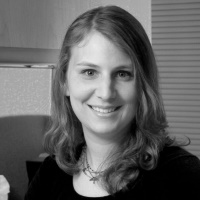 Susan Persky, PhD, is an associate investigator and head of the Immersive Virtual Environment Testing Unit where she directs the Immersive Virtual Environment Testing Area (IVETA) within in the Social and Behavioral Research Branch, National Human Genome Research Institute at the National Institutes of Health. Persky splits her effort between providing leadership for the IVETA and conducting her programmatic research. Her work investigates the function of new genomic knowledge about common health conditions like obesity and diabetes in interactions between health care providers and patients and in public and online discourse. Persky has published extensively in the areas of health communication, genomics and virtual reality methods and has presented her work in venues such as the Smithsonian Institution and the National Academies of Sciences, Engineering and Medicine. She is a member of the World Economic Forum Global Future Council on Virtual and Augmented Reality.