Kim Mills : Over the past several weeks, protests against racial injustice have made headlines around the United States and the world. People of diverse backgrounds are turning out in large numbers, in small towns and big cities , incensed by recent high-profile instances where police have killed unarmed black people. For some white Americans, this movement may be prompting them to consider—some for the first time—the white privilege they've benefited from all their lives.
What can psychologists' research tell us about how and why white Americans have long been able to ignore and even deny the advantages they enjoy merely for being white? How do white people distance themselves from their privilege in order to preserve it? And do they realize it when they do so? Welcome to Speaking of Psychology, the flagship podcast of the American Psychological Association that explores the connections between psychological science and everyday lives. I'm Kim Mills.
Our guest today is Dr. Brian Lowery, a senior associate dean and professor of organizational behavior at Stanford University's Graduate School of Business. Dr. Lowery has studied the psychology of racial privilege in the U.S., including why White Americans are often blind to their privilege and how they react when it's brought to their attention. Recently, he published an op-ed in the Washington Post describing his own experiences of racial discrimination and calling on white Americans to support policies that advance racial justice. Welcome to Speaking of Psychology, Dr. Lowery.
Dr. Brian Lowery: Hi Kim. Thanks for having me.
Mills : In your op-ed you discuss the racism you've experienced, including being targeted with racial slurs as a child and being unjustly stopped and searched by police as a teen. You connect those experiences with your research on racial privilege. Why did you feel it was important to write this op-ed now and have this conversation?
Lowery : That's a great question, Kim. I wanted people to realize that this is just how common it is. And I think the recent videos and people's ability to see what's happening in real time has increased that awareness, but I don't know that people will have understood just until recently just how common these kinds of experiences are. And I wanted to turn the focus from what's happening to Black people in this country, to what that means about the experiences of white people in this country. And so that's really why I thought it was important to write it at this time.
Mills: Much of your research has been on how white people make sense of the unfair advantages that our society confers on them. In one paper, you talked about the three D's: deny, distance and dismantle--strategies that white people use to cope when confronted with evidence of white privilege. Can you talk a little bit more about those three D's and the psychology behind each of those behaviors?
Lowery: Of course. So the first thing is that I think the psychology that drives it is a desire to feel like a good, moral person. And in the context of a society that explains our outcomes as a function of deservingness, of meritocracy, it challenges our sense of self to believe that we might have benefited from unearned advantages. And in the case of race, the idea that being white has conferred unfair advantages can be incredibly uncomfortable. So I think that's the psychology that drives what we talk about and the deny, distance and dismantle. And so what actually happens, how that's managed, it can vary. One thing that white people do is to deny that they personally benefit from white advantage or white privilege. And this is done in multiple ways.
One common way is to highlight hardships they faced. And while we think those hardships are legitimate, that everyone faces legitimate, serious hardships, hardships don't somehow absolve people of privileges or negate the existence of privileges. So that denial is an interesting strategy, because it's as if, if you've gone through something hard in your life, that being white therefore doesn't confer advantages or privileges. Or it's the idea that privileges or advantages means that life is always easy for you, where that's not at all the case. That's not the claim that we make. So that's the denial side.
And the distance one is interesting because the distance allows for the existence of privilege, but simply says that I--I don't benefit from it, right? So it doesn't deny that privilege exists. It doesn't deny that it could exist for other people, but you really kind of separate yourself from other white people and say, I don't personally benefit. Whereas denial is a way of sometimes denying the full existence of privilege.
Mills: Meaning that nobody has white privilege.
Lowery: Right. So when I, the example I gave was really personal, but you can also see this denial in the way where you see some people focusing on very successful Black people, right? As a way of saying, look, they made it, therefore there isn't racial inequality. So there are other ways to get at that denial of privilege--that it doesn't exist at all in this country. And so I think very recently, whites were claiming that they were at least a great a target of discrimination as Black Americans are. So there's a lot of evidence that whites are uncomfortable with the possibility that white privilege exists at all. And then further that they personally benefit from it.
Mills: You've done research on how the way that you frame a discussion of racial inequality and privilege affects people's reactions to them. Are there strategies to talk about racial privilege in a way that leads people to have a dismantle reaction rather than a denial or a distancing reaction?
Lowery: That's a good question. When people are willing to accept that privilege exists, there's reason to believe that they might actually support policies that dismantle it or work against it. And it looks like when they don't, when people feel more affirmed in their self, when they feel better about themselves, it's easier to acknowledge the existence of privilege. So that's what we do in a number of our papers. We show that when you affirm people's sense of self, when you give them the opportunity to talk about what they value, what's important to them, that they have an easier time acknowledging the possibility that privilege exists and that they might benefit from it. And once people acknowledge the existence of privilege, if you can get people to see that it exists, then there's a greater likelihood and more, I wouldn't say comfort, but a greater willingness to support policies that dismantle that privilege.
Mills: Let's talk for a moment about the invisibility of white privilege. In a recent research article, you wrote that white people in the United States often don't even need to resort to the denial and distancing strategies we've talked about because of something you call herd invisibility. What does that mean? And how does herd invisibility happen?
Lowery: I think it happens in part because the society is structured in a way to hide the privilege that people benefit from. So you can see this in obvious ways, for example, segregation. Very few white folks in America actually have black friends. And many fewer live in circumstances where they see the disadvantages or the racial inequity in our system. So that segregation allows for people to be remain blind to their own advantages because they don't see the disadvantages that exist. They don't see the racial inequities. They blind themselves to the racial inequities simply by the way they go about their daily lives. They don't have to make a conscious choice to ignore it so much as it's hidden from them by the way the society is set up. So that's one way that you get herd invisibility. And then each individual act that white people engage in to deny or distance actually serves the broader white community, in that if I deny it exists and I create a narrative that it doesn't exist, then that serves you, even if you aren't actively denying it yourself.
Mills: And these are some of the cloaking strategies that you described that people use to address some of the discomfort that they feel.
Lowery: Yes. So again, going back to the underlying psychology, I think when I talk about, when we talk about invisibility, it's an interesting and ironic way to talk about it because in reality, you have to be willfully ignorant not to see racial inequalities in our society. So the cloaking is a way of suggesting that what's happening, it is willful, but it doesn't require each individual person to participate at all times, right? So that's the herd immunity part, herd invisibility part rather. If enough people engage in it, it hides it, it allows an act of hiding from everyone. This is what's I think often hard to convey, that it really is an act of hiding. It's not that it can't be seen, because the water we swim in and that's sometimes how it's talked about.
From my perspective, the disparities are so great, so stark and so easily accessible, that there really has to be some process in place to allow us to not see it. We have to engage in some psychological gymnastics as a society to deny its existence. And I think that's probably, for white people, there's discomfort when they're not allowed to do that. And for Black people and other people of color it can be enraging to see people engage in these mental gymnastics in a way that allows them to ignore the pain of say the Black community or other communities of color.
Mills: Is the fact that so many white people are joining the protests evidence that at least some white Americans are engaged in dismantling, even if they don't know that's what they're doing?
Lowery: I certainly hope so. I would just say that I don't personally tend toward optimism. And some of that I think is realism. The history of the United States is littered with movements that in the moment seemed like they were gaining traction, but there's inevitably been a backlash to those movements. And that backlash tends to come when you move beyond simply the sense of moral benefit that people have from pointing out the pain that other people experience, to the necessary work of actually changing the system, which comes at a personal cost. So the question will be, when it comes at a personal costs, will the energy that we see now in the streets remain?
Mills: And those personal costs mean giving up some of the privilege, right? I mean, you have to share some of the pie.
Lowery: Yes. But I think that it may be hard for white people to fully understand the benefits of being white in this society. They can see, it's easier to see the pain that people of color experience, and Black folks in particular right now, experience. I think it's harder to internalize and accept the degree of privileges that are enjoyed as a function of the system. And the question I think will be, when we really move towards trying to produce equity, are people going to be willing to give up those privileges? My sense, and in some of my research, I find that people can both acknowledge the existence of inequity, see that a particular policy would reduce the differences that are associated with that inequity, and honestly feel as if it's unjust to support those policies. In part, because people separate the disadvantages that some groups face, like the disadvantages that Black people endure, and the advantages enjoyed by whites. They separate those things. And they say, let's just eliminate those disadvantages. But when they start to experience a cost themselves, they find that unfair, unjust, they don't understand why they should have to pay a price for the elimination of someone else's disadvantages.
Mills: So in concrete terms, what is it that white people need to do to fully dismantle white privilege?
Lowery: That's a really good question. Some of it is supporting policies that actually redistribute resources, that would be a big one. It would be accepting that the system of, say, education in this country is fundamentally, I personally believe fundamentally unjust, and working on policies that push back against things like funding schools through property taxes. Which would have an effect on people's property values, perhaps short term. I think just those two things alone, I would say let's start there and see how it goes.
I would be also thinking about understanding that diversifying organizations is not letting in unqualified applicants, but in fact is--when you have the kind of privileges that we've had now, when you've not really allowed the full pool of people to have access to opportunities, then the people who are really benefiting from affirmative action are the people in the jobs right now. Understanding that and accepting that as a possibility. I mean, these are things that I think are going to be really tough and time will tell whether people are really going to be willing to go there, after the energy of the outrage over the deaths of Black people at the hands of police passes.
Mills: The U.S. Census Bureau has projected that America's white population will drop below 50% in 2045, and that the nation will reach majority minority status. In your view, will that have any impact on the notion of white privilege?
Lowery: Oh, that's a good question. Well, it already, those projections already do, right? So there's research done by Jennifer Richardson, an incredible social psychologist at Yale, that shows that when you present people with that information, whites often become threatened and respond in a way to try to maintain the privilege that they have. When that actually comes to pass, I think if we haven't rectified the deep inequalities in society right now, we're going to be in a really tough situation where you will have the vast majority of the political and economic power in the hands of a minority. And it's not as if that doesn't exist in other places, but I think it, that is a dangerous place to be. And I think it's possible. There's nothing to suggest that simply the shift in the demographics of the country will necessarily eliminate the privileges associated with race. If anything people will, I anticipate people will try to hold on to their advantages, and maybe even more tightly as they start to see them challenged.
Mills: Is the tide toward pulling down Confederate monuments and renaming places that were named for Confederate generals. Is that helpful in the scheme of things or is that just something that people are doing to feel good?
Lowery: It's a good question. What do I think about that? I think that for people of color it's important symbolically, it's important in terms of people's sense of comfort in their own physical space. I think that that symbolism for white folks is also important by itself. Does it change much? I don't think so. But I don't know that I would label it just a feel good action. I think the symbolism can be important and is meaningful and I think that pulling down icons of what I would call white superiority, because a lot of those monuments were put up decades after the civil war, as a way of reasserting white superiority, pulling that down is symbolic and important, but that's not going to create racial equity.
Mills: The American Psychological Association just released a poll that found a large majority of Americans, 72%, believe our country is at the lowest point they have ever observed. It also found that 71% said police violence toward minorities is a significant source of stress that they're feeling. At the same time just over two-thirds said the current movement against systemic racism and police brutality is going to lead to meaningful change in America. Given the work that you've done, looking at white privilege and racism, how much credence do you give to those numbers?
Lowery: Meaning, do I take seriously that people are concerned about the state of the country right now?
Mills: And that they really feel that this is going to lead to meaningful change?
Lowery: I think that people are concerned right now. I think when you see the disruption in systems that causes legitimate concern. I think that people are, I think that people really do believe things are going to change. I think that there's likely to be at some point the declaration of victory. Do I think that victory will be real? That's harder to say, I'm less optimistic about that. So I believe the numbers in terms of people reporting honestly their experience right now. I think that the mechanisms in this country that are designed to maintain the status quo are incredibly powerful. And I think that people can engage in behaviors that maintain the status quo and actually feel moral while doing it right. I think--who doesn't want to take care of their child, who doesn't want to give their child all the advantages they can? And if we just do that, we'll maintain the status quo. So I think that the amount of work it will take to radically shift the racial hierarchy in this country is vast. And while I am heartened by the demonstrations and protests, my sense of how much further we would need to go is such that any optimism I have is incredibly guarded right now.
Mills: What further research are you planning on the topic of white privilege? What do we still need to learn?
Lowery: Oh, I think we need to learn quite a bit. I, right now, my research is moving a little bit. So I'm really interested in how existential concerns, how we understand ourselves and how we understand ourselves socially in groups, drives our behavior. And that includes the intergroup behavior. What it means to be a Black person or a white person, what it means to be American, how that drives our, or creates our sense of self, and a desire to jealously guard that self, how that basic existential need is driving many of our behaviors, that's kind of where I am now. I have a number of students who continue to work on white privilege in particular. But honestly my interests are now moving more towards how our deep existential needs are driving our intergroup behavior.
Mills: How does this topic go over with students? Do you find a lot of resistance when you talk about it in the classroom?
Lowery: That's a good question. I don't talk about this often in the classroom, honestly. So when I'm in the classroom, what I do is work on leadership. And now as a senior associate dean, I spend even less time in the classroom. So I do often stand in front of students and talk about their responsibilities. So working at Stanford, our students are both incredibly talented and also incredibly privileged, as am I and everyone else associated with Stanford as an academic institution, and many other really elite and high status academic institutions. And in front of those groups what I say is that when we behave, the decisions we make affect many other people. And it's very easy to focus on how our decisions affect our outcomes, what it means about our career, what it means about our family, and lose sight of the fact that from our perch, those decisions actually affect many people's lives.
And so I don't talk in particular about race, but what I try to impress upon people in positions of power is that if we lose sight of the consequences of our behavior on other people, we will likely end up supporting existing inequities, right? Exacerbating existing inequities. It doesn't require us to be bad people or racist. It just requires us to continue to go along with the system as it is, and to continue to try to maximize our own outcomes. And that I think it's incumbent upon us to do more than that. So when I talk with students, that's the message that I give them. And I don't find a lot of resistance to that, because again, people want to see themselves as good and moral people. So I think it's important to convey to them what that actually requires of them.
And I think often we don't do that. We focus so much on the individual--individual racism or individual advancement or whatever--that we lose sight of the collective and our collective responsibility in the system. And also, this is what ends up going back to the Washington post piece. If you are part of a corrupt system, you yourself are going to be corrupted, right? So if you want to maintain or elevate yourself, then it's incumbent upon you to push against the corruption of the system you live in.
Mills: I think you've given us a lot to think about Dr. Lowery. Thank you for joining us today.
Lowery: Thank you for having me. I appreciate it.
Mills: The American Psychological Association has resources available on our website on race, racism and the fight for racial justice. Visit us at apa.org. You can also find previous episodes of Speaking of Psychology on our website at speakingofpsychology.org . And you can subscribe to our podcast on Apple, Stitcher, or wherever you get your podcasts. For more information on Dr. Lowery's work, visit the Stanford University Graduate School of Business website. You can also follow him on Twitter at Brian Lowery, PhD. If you have comments or ideas for future podcasts, email us at speakingofpsychology@apa.org . That's speakingofpsychology, all one word, at apa.org. Speaking of Psychology is produced by Lea Winerman. The editor and sound engineer is Chris Condayan. Thank you for listening. For the American Psychological Association, I'm Kim Mills.


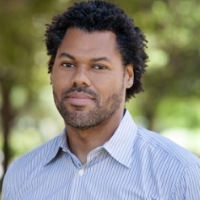 Brian Lowery is the Walter Kenneth Kilpatrick professor of organizational behavior and senior associate dean for academic affairs at the Stanford Graduate School of Business. A social psychologist by training, he studies how individuals perceive inequality and the steps they take, if any, to reduce it.