skip to main content

Women say they’re stressed, misunderstood, and alone

APA’s 2023 Stress in America survey finds women continue to report higher stress levels than men and could have used more support.

APA Style leaf logo Cite This Article in APA Style
Medaris, A. (2023, November 1). Women say they’re stressed, misunderstood, and alone. https://www.apa.org/topics/stress/women-stress

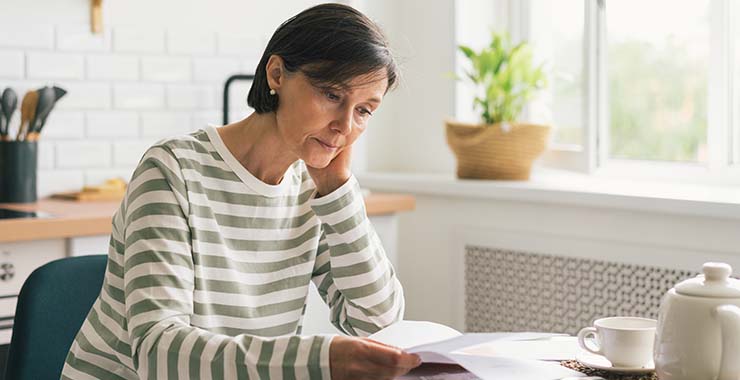
worried woman looking at paperwork

Women in America are stressed—and psychologists aren’t surprised.

In fact, over the decades that clinical psychologist Rosalind S. Dorlen, PsyD, ABPP, has been chronicling women’s stress, women have almost always reported feeling more burdened than men.

“While the causes of stress have certainly changed, women seem to experience it more clearly or acknowledge it more readily,” said Dorlen, a private practitioner who’s also on staff at Overlook Medical Center in Summit, New Jersey.

Specifically, in APA’s October 2023 Stress in America survey, which included a nationally representative sample of more than 3,000 adults, women reported a higher average level of stress than men (5.3 versus 4.8 out of 10) and were more likely to rate their stress levels between an 8 and a 10 than men (27% versus 21%).

What’s more, women were more likely to say they “strongly agree” that no one understands how stressed they are and were less likely to report that they can quickly get over stress.

“Men experience the stress differently,” Dorlen said. “They are much more able to dissociate.” Indeed, some research suggests women are more likely to internalize stressopens in new window—leading more readily to both physical and mental disorders—while men tend to externalize it in the form of aggression or impulsivity.

While psychologists are not surprised by women’s enduring sense of being overwhelmed, they are deeply concerned and view the survey results as a call to action.

“This data underscores the overwhelming evidence supporting the need for tailored wellness interventions for targeted demographics,” said licensed psychologist Taisha Caldwell-Harvey, PhD, founder of a virtual therapy practice called The Black Girl Doctoropens in new window. “A one-size-fits-all approach to mental health care and wellness is ineffective because our experiences of stress and its triggers vary significantly based on our individual identities.”


Sources of stress among women

This year, people of all genders reported that health and finances were top sources of stress. But women were more likely than men to report feeling “consumed” by money woes (50% versus 44%), including those related to both essential and unexpected costs.

Women were also more likely than men to cite family responsibilities (58% versus 52%) and relationships (49% versus 44%) as key stressors in their lives.

That rings true to Caldwell-Harvey, whose practice specializes in providing therapy to professional Black women.

One of her patients’ top complaints is “the overwhelming sense of being burdened by the responsibilities of home life while trying to advance—and often just maintain a standard of excellence—in their career,” she said. “Additionally, many report feeling that their male partners are not shouldering an equal share of these responsibilities, which exacerbates their frustration, stress levels, and overall well-being, significantly impacting their mental health.”

And society isn’t picking up the slack. In APA’s survey, just 22% of all respondents said women’s rights were getting better in the United States. They felt similarly dismal about societal advances for other and overlapping groups, like people with disabilities, LGBTQIA+ people, and non-White populations.

“Despite the fluctuations in the news cycle regarding race relations, in clinical practice, Black women continue to report the same complaints related to discrimination, racial trauma, and oppression as they always have,” Caldwell-Harvey said.

Coping with stress

Connection is a key antidote to stress, with research showing a strong network can buffer against the physical and mental health consequences of stress.

But both men and women can be reluctant to reach out for social support. While women more readily than men acknowledge that they could have used more support (68% versus 63%), they’re also more likely to have canceled social plans in the last month (27% versus 22%).

While that could be because they’re more likely to have social plans to begin with, retreating is rarely the solution to stress, Dorlen said. “What helps women more than anything appears to be a sense of community,” she said.

The good news is that the stigma of seeking professional mental health help seems to be receding for some populations. While Dorlen’s practice used to be over 99% women, she said, now it’s closer to 50/50. Caldwell-Harvey said Black women are also seeking therapy in increasing numbers.

She encourages them, as well as women of all races and ethnicities, to embrace rest as a “profoundly productive use” of time and to understand their perceptions of stress are real. “The demands placed upon your life are undeniably unrealistic, and your experiences are not imagined,” Caldwell-Harvey said. “The constant struggle to balance it all serves as undeniable proof of your authenticity.”

Recommended Reading

Speaking of Psychology

Subscribe to APA’s audio podcast series highlighting some of the most important and relevant psychological research being conducted today.

Subscribe to Speaking of Psychology and download via:

Appleopens in new window
Apple podcast logo

Spotifyopens in new window
Spotify logo

You may also like