skip to main content

Scientist Spotlight: Q&A with Deanna Barch

The Gregory B. Couch Professor of Psychiatry talks about her latest research on cognitive control and what she wished someone told her when she was starting off as a new PhD

APA Style leaf logo Cite This Article in APA Style
American Psychological Association. (2022, June 21). Scientist Spotlight: Q&A with Deanna Barch. https://www.apa.org/news/science-spotlight/deanna-barch

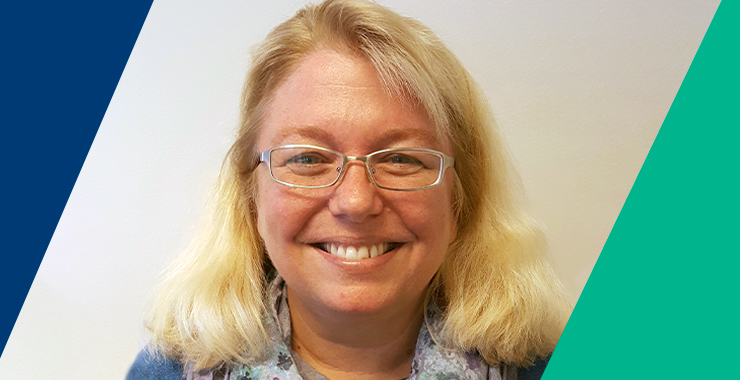
Deanna Barch

In lay-friendly terms, what’s the big question your work is addressing?

People who experience mental health challenges such as schizophrenia often have difficulties with being able to pursue work, school, and/or social relationships components of their lives. Such difficulties can have a very negative impact on quality of life and are often one of the things that individuals with schizophrenia would like to enhance about their lives. Thus, we are trying to identify what psychological and neural processes might be contributing to these difficulties so that we can design more effective ways to improve these aspects of their lives.


What scholars’ work, recent papers, or recent discoveries have recently gotten you most excited?

I have been particularly excited about the more recent work in decision-making that has focused on the “cost of cognitive control” such as the work of Dr. Amitai Shenhav at Brown University, among others. This work is integrating research on cognitive function–particularly how we “control” our thoughts and behaviors—with work on how we make decisions about how much effort to allocate to obtain outcomes (work, school, social, etc.) that we might find rewarding. It is helping me to think about how challenges with the ability to use what we call cognitive control mechanisms might link to ability to exert effort to obtain rewarding outcomes.

What question do you wish more people were asking/working on in your area/sub-discipline?

I wish more people were doing work that allowed us to translate our work in the laboratory setting into the real world. There is a growing use of tools like ecological momentary assessment and passive sensing (i.e. watches and cell-phones that measure sleep and activity, etc.) that are helping to measure behavior in people’s everyday lives, which is a really important direction for the field. However, we need to do more to determine whether what we measure in our “controlled” laboratory settings fits with how people behavior and think in their day-to-day actions and experiences.

What are you working on now?

I am working to determine whether challenges with the ability to use “cognitive control” functions, either in terms of psychological and brain processes, contribute to difficulties deciding when to allocate effort to obtain positive outcomes at work, school, or in social interactions among people who experience mental health challenges such as schizophrenia, bipolar disorder, and depression. If so, then we want to use this information to design novel interventions that might make it easier for people with these mental health challenges to make such decisions and to be able to improve their quality of life.

What do you wish you knew when you were first starting off as a new PhD?

I wish it had been clearer to me that I did not have to pick something that I would study for the rest of my life when I first started–and that you would be able to change and expand your research interests as your career evolves and you learn new things. I think it would have taken the pressure off “choosing” what I wanted to study, allowing us to think it about it more as what I want to study now rather than forever.

Recommended Reading

You may also like