skip to main content

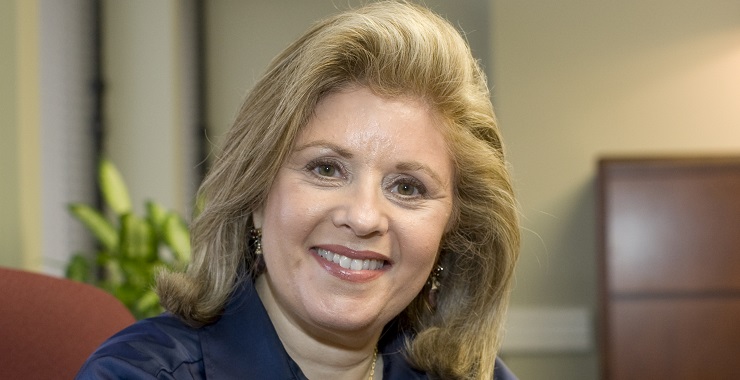
Scientist Spotlight: Q&A with Lauren B. Alloy, PhD

Alloy discusses the importance of persistence and resilience in research.

APA Style leaf logo Cite This Article in APA Style
American Psychological Association. (2022, April 13). Scientist Spotlight: Q&A with Lauren B. Alloy, PhD. https://www.apa.org/news/science-spotlight/lauren-alloy

Lauren B. Alloy, PhD

In lay-friendly terms, what’s the big question your work is addressing?

Imagine two people who experience similar stressful experiences (e.g., being terminated from one’s job or the break-up of a serious romantic relationship). Following this event, the first individual becomes hopeless and seriously depressed for many months, whereas the second person becomes discouraged for a few days and recovers quickly. The big question that my work has addressed throughout my career is: Why are some people vulnerable to depression (or other forms of psychopathology), whereas others don’t become depressed or suffer only mild dysphoria (or mild other forms of distress)? My research has sought to investigate the cognitive, affective, social, developmental, and neurobiological mechanisms that influence individual differences in vulnerability to depression and bipolar disorder, as well as the contextual factors that affect the impact of environmental stressors on individuals’ vulnerability to mood disorders.

What scholars’ work, recent papers, or recent discoveries have recently gotten you most excited?

I have been very excited by the initial development and subsequent improvement of ecological momentary assessment methods and, more recently, passive sensing methods via smartphones for collecting behavioral and physiological data in real time from individuals. These methods allow psychologists to better understand psychological processes that may contribute to symptoms and maladaptive behaviors as they occur in people’s everyday lives, as well as to develop targeted interventions that can be applied with precise timing just as they are needed. My lab has been using some of these methods and I look forward to a future time when it also may be possible to collect neural data on brain responses in real time in ambulatory individuals in their everyday environments to accompany the behavioral data.

What question do you wish more people were asking/working on in your area/sub-discipline?

This is quite specific to my area, but I wish more people would work on solving the puzzle of mixed mood episodes. Are mixed episodes really instances of depressive and manic symptoms occurring simultaneously or are they instances of rapid switching between depressive and manic symptoms? And, in either case, what mechanisms can explain these opposite mood, behavioral, and neural states occurring either simultaneously or in rapid succession?

What are you working on now?

Along with long-term colleagues and students, currently I am employing multimethod approaches to test two integrative models of vulnerability to first lifetime onset of major depressive disorder and bipolar spectrum disorders in adolescence. First, I am examining the joint influence of blunted reward responsiveness and elevated inflammatory signaling as further moderated by a history of early adversity and mediated by diet, sleep, substance use, and stress generation, in vulnerability to first onset of major depression following relevant stressors in adolescence. Second, I also am investigating the joint influence of elevated reward responsiveness and social and circadian rhythm dysregulation as further moderated by a history of early adversity in vulnerability to first onset of bipolar spectrum disorder following relevant stressors in adolescence.

What do you wish you knew when you were first starting off as a new PhD?

When I was a new PhD, I already knew about the importance of persistence and resilience. But these characteristics turn out to be even more important than I realized then. However, I did not fully appreciate the possible benefits of failure or less than desired outcomes. I wish I knew then that having a paper get rejected or a grant proposal not funded or not getting a desired job offer could be a blessing in disguise, as long as you don’t give up and persist. Some negative outcomes I’ve experienced along the way ultimately led to better research products and even to a much better career trajectory than I probably otherwise would have had. Thus, I would want new PhDs to know that they should not be afraid of failures and setbacks and should be willing to take some risks. I would also want them to know about the great joy awaiting them in mentoring their own students, helping them develop their own voice, their own impactful lines of research, and their own successful careers.

Recommended Reading

You may also like