skip to main content

Scientist Spotlight: Q&A with Mahzarin R. Banaji, PhD

Banaji discusses her research on implicit bias and directions she’d like her discipline to go.

APA Style leaf logo Cite This Article in APA Style
American Psychological Association. (2022, March 14). Scientist Spotlight: Q&A with Mahzarin R. Banaji, PhD. https://www.apa.org/news/science-spotlight/mahzarin-banaji

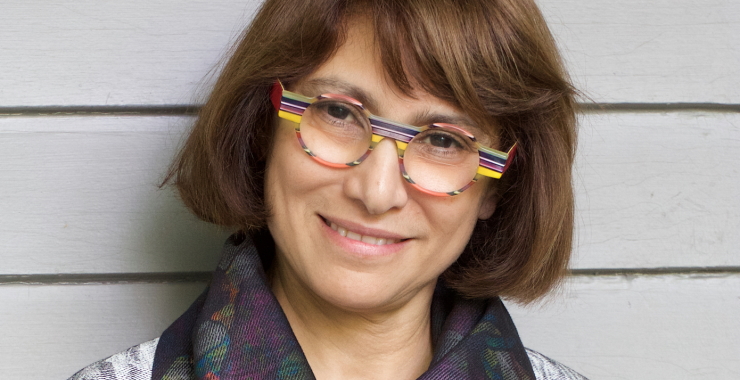
Mahzarin R. Banaji, PhD

In lay-friendly terms, what’s the big question your work is designed to answer?

Human beings intend well. Doctors do their best to serve their patients. Teachers devote themselves to making their students reach their highest potential. Public defenders represent those most ignored by society. Every day, in every profession, managers try to recruit, select, and promote the best people. And yet, study after study shows that treatment is unequal. Decisions assumed to be free of bias are simply not so, and one source of bias emerges from the social group to which a person belongs (e.g., gender identity, sexuality, race, ethnicity, social class, age, etc.). Psychologically, this is perplexing, because to be biased isn’t what the decision-maker intends. In the early 1990s, colleagues and I began to use the term “implicit stereotypes” and “implicit bias” to refer to the hidden ways in which our biases enter into behavior. If you are interested in the basic ideas, see Blindspot: Hidden Biases of Good People.

What scholars’ work or recent papers have you most excited?

I am intrigued by work being done by a number of young psychologists who take data on implicit bias using the Implicit Association Test (freely available from Project Implicit) and correlate it with their variable of interest. These studies show that the degree of implicit bias aggregated by geographic region (a zip code, metropolitan area, county, or state) predicts many socially consequential outcomes: lethal use of force by police, mortality rates, upward mobility, performance on standardized math tests, etc. I would not have expected to see such strong correlations between bias in the minds of individuals (aggregated by region) and these outcomes.

What question do you wish more people were asking/working on in your sub-discipline?

I wish people were working on developing new methods to detect implicit cognition. We have worked with the Implicit Association Test since the mid-1990s, and although it is widely used to study behavior in many domains such as clinical science, political science, economics, and social science, and has seen applications to domains of business, law, education, and healthcare, I would have expected to see better measures by now. That hasn’t happened and I look forward to seeing that development.

What are you working on now?

My students and I are using a new method, word embeddings, to look at patterns of bias as they are reflected in our language. Using the simple idea that a word is understood by the company it keeps, machine learning approaches applied to large language corpora (800+ billion words) can reveal the semantic context of words. We use this approach to look at bias associated with social groups, both advantaged and disadvantaged in our culture; specifically, to look at the valence of words associated with each group. Because some corpora like Google Books go back to 1800 they allow us to look at historical trends.

What do you wish you knew when you were first starting off as a new PhD?

I assumed that there was a secret quality to becoming a good scientist, a je ne sais quoi that only some people possessed. I didn’t realize until later that something more graspable, like “time on task,” is what it takes. I wish I knew about Anders Ericsson’s 10-year rule; that one needs 10,000 hours of deliberate practice and experience to acquire expertise. I wish I had recognized that even Mozart, who produced a great piece of work at age 13, had been at it since he was 3.

Recommended Reading

You may also like