skip to main content

Scientist Spotlight: Q+A with Megan Gunnar, PhD

New research into the transition from childhood and translating the science of child development for the public and policy makers to benefit families.

APA Style leaf logo Cite This Article in APA Style
American Psychological Association. (2022, December 9). Scientist Spotlight: Q+A with Megan Gunnar, PhD. https://www.apa.org/news/science-spotlight/megan-gunnar

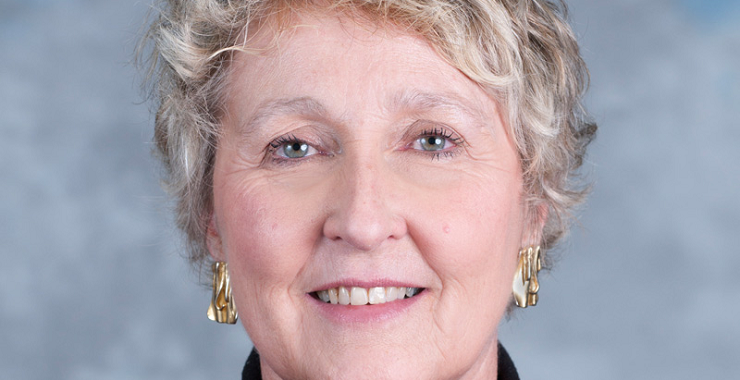
Megan Gunnar, PhD

In lay-friendly terms, what’s the big question your work is addressing?

The mammalian stress response system promotes survival and adaptation, but at a cost. I have spent my career studying how this system develops and is regulated. Relationships, as it turns out, are our most powerful sources of stress and our most significant sources of stress buffering. Understanding the psychosocial processes involved in relationship-related activation and regulation of stress and the impact of deficiencies in early relationship regulation (e.g., neglect, maltreatment, institutional care) is what drives my research.


What scholars’ work, recent papers, or recent discoveries have recently gotten you most excited?

I am awed by Ruth Feldman’s research. Two of her recent papers are a must read for anyone interested in the psychobiology of socioemotional development: Social behavior as a transdiagnostic marker of resilience (PDF, 1MB)opens in new window and What is resilience: an affiliative neuroscience approachopens in new window. 

I have also been struck by the work of Patricia Silviera, who has advanced a method of creating biologically-informed polygenic risk scores that appears to be much more effective than the dust-bowl empirical Manhattan plot method at identifying the gene networks and polymorphisms involved in the regulation of critical neurobiological processes underlying behavior and behavior problems.

Finally, I find the work of the Frankenhuis and Ellis group searching for “hidden talents” developed in the context of harsh developmental environments fascinating, even though as yet the work is more theoretical than empirical. However, the recent paper first authored by Ethan Young with Frankenhuis and Ellis on the theory and measurement of unpredictability (2020, Evolution and Human Behavior) may provide a nice model for increasing the empirical base for the hidden talent perspective.

What question do you wish more people were asking/working on in your area/sub-discipline?

We need to better understand the mechanisms linking prospective vs retrospective measures of early childhood adversity to physical and mental health outcomes. The work of Andrea Danese and colleagues clearly shows that prospective and retrospective measures are poorly correlated and predict different outcomes. Furthermore, increasingly it looks like prospective measures are more aligned with what we have called the biological embedding of early adversity. However, the retrospective reports appear to be more closely related to psychopathology. This paper is really an important one in teeing up this problem: Gehred et al., (2021). Long-term neural embedding of childhood adversity… Biological Psychiatry

What are you working on now?

We have found that parents cease to be a powerful source of hormonal stress buffering around the mid-point of puberty. We are conducting several imaging studies to try to understand what might be changing that, in a sense, “boots the parent out of the child’s biology” with the transition from childhood to sexual maturity. I am also involved in several studies of the role of early adversity (orphanage rearing, low income) on cardiometabolic health in adolescence and emerging adulthood. I also spend a lot of my time now working on translating the science of child development for the public and policy makers, advising policy makers, and serving on the boards of non-profits who work for the benefit of young children and their families.

What do you wish you knew when you were first starting off as a new PhD?

Actually, I am glad I was pretty naïve. I had no idea that I needed a “tenure worthy idea” so I just studied what interested me. I had no idea that I should try to figure out where the funding support was so I just wrote grants for work I was interested in. I accepted the job where I felt at home even though the pay was less. I guess I was probably lucky that my naivete did not get me into trouble. I was curious about what ended being on the cutting-edge and I rode the wave to a wonderful career: The Institute of Child Developmentopens in new window has been a fabulously supportive place to work and grow.

Recommended Reading

You may also like