

Nancy A. Pachana, PhD
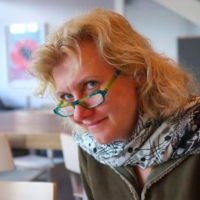 Work as a director of clinical training, academician, and researcher
Nancy A. Pachana, PhD found her niche overseas at the School of Psychology, University of Queensland in Brisbane, Australia.
Why did you choose a career in aging?
When I was in training in the late 1980's, clinical geropsychology was not really something I had heard a lot about. But on my internship year, I was influenced by the wonderful geriatric psychologists and psychiatrists on a gero rotation to specialize. But what made me choose gero? I actually think clinical geropsychology chose me–it has certainly been a most rewarding career path! I was intrigued by the need for so many professional skills–in-depth knowledge of assessment techniques, diagnostic skills, and intervention approaches ranging across medicine, psychology, and beyond, with a real need for interprofessional relationships and competencies. I loved interacting with older people, amazed at their life experience, and life experiences. And I really found geriatric specialists across disciplines so fun to work with. I also found myself never bored (and I bore easily!). And I liked the range of professional situations I could work across in what was clearly a growth area – academia, nursing homes, clinical training programs, policy and professional organizational positions. As they say in Australia, my home for 20+ years, I wear a lot of hats–and I'm a girl that loves her hats!
Can you describe your career path?
I majored in psychology at Princeton University as an undergraduate, with Joel Cooper as my honors thesis supervisor (and he and I are currently doing a bit of applied social psychology research together, over 30 years after I graduated!). The ever-patient Betsy Short was my PhD thesis supervisor at Case Western Reserve University. My main mentors on internship at the Sepulveda VAMC in Los Angeles were Steve Ganzell (geropsychologist) and Randy Mervis (geropsychiatrist)–two huge role models for doing your best work with the person in front of you. I continued a streak of excellent mentors on a one-year postdoctoral fellowship in clinical geropsychology at the Palo Alto VAMC (Dolores Gallagher Thompson and many others!) followed by a two-year postdoctoral fellowship in clinical geriatric neuropsychology (with Jeffrey Cummings and Wilfred van Gorp) at the Neuropsychiatric Institute at UCLA–all of them passionate clinical researchers with a strong focus on policy and service innovation.
My interactions with my mentors instilled in me a strong desire to seek out new horizons and new challenges. Moving to New Zealand (and later Australia) turned out to be both an awesome adventure and the beginning of my involvement with clinical geropsychology research and practice on an international stage.
In what areas of aging work are you currently involved (research, teaching, clinical, leadership etc.)?
In my role as a senior academic and director of clinical training (DCT) in the school of psychology at The University of Queensland (UQ) in Brisbane, Australia, I have established geropsychology courses and degree tracks, and advocated for the necessity of geropsychology within the curriculum as the leader of the revisions to the national accreditation guidelines in Australia. During a 12-year stint as the National Convener of the Australian Psychological Society's Psychology and Ageing Interest Group, and with some national funding, I and others helped revitalize geropsychology training and placement opportunities in a number of regions in Australia.
Now, aside from continuing clinical supervision, I am taking a step back from professional and clinical training and teaching endeavors to focus on two areas. My research remains a priority: examining late-life anxiety, particularly using the Geriatric Anxiety Inventory, developed with my good colleague Gerard Byrne, and a newer interest in animal-focused interventions. The other half of my time is the opportunity to lead my university to become an Age Friendly Universityopens in new window, the first in the Southern Hemisphere, joining an esteemed company of universities that have put older adults and aging issues as a priority in teaching, research and external engagement.
What do you love about your job?
The thing I love most about my job is how it allows me to concentrate on initiatives that promote aging issues to a larger audience, and the support for international initiatives. At UQ, having an international profile is required for promotion, and the university tracks international research links and has formal links to Universities and research corsortia on all 7 continents, including an all-female environmental science team in Antarctica. UQ has celebrated and supported my international research on aging as well as my advocacy for more emphasis on older adults in our training of health care professionals. I've been freed of teaching and administration responsibilities to embed age friendly practices and policies across all levels of the university. I feel really lucky to be so well supported in my professional environment. I have also really loved engaging with students, whether they are discovering work with older adults during the course of their education, or chasing a long-held goal of research or practice with an older population. The students keep me on my toes, and I in turn have tried to broaden their opportunities by helping them network internationally.
What is challenging about your job?
I think one of the things that attracts me to working with older adults and doing research on aging is the complexity of the field, which is mirrored in older adults. Aging itself is full of pleasures and losses. But often in my professional life the inability to embrace complexity, and the need to divide people or things into categories, has been challenging. I said I liked to wear many hats, but it gets old (no pun intended) to constantly be asked if I am a clinician or researcher, if my supervision hour “counts” for clinical psychology or neuropsychology, if my reminder of aging's positive aspects reflects my forgetting its negative aspects.
I know from my various mentors that it is possible to wear many hats, to have a multifaceted job, and to age with grace while being allowed to bemoan days where you feel every day of your chronological age. As a profession, psychology is dazzling in its diversity yet can drift into divisive stances across specialties. Accreditation and training guidelines can encourage exploration or stifle innovation and curtail opportunities. Navigating these pseudo-polarities has been a challenge, but has also often led to creative dialogues, solutions and alliances!
What will the future be like in your area of work?
In moving abroad, I learned about so many amazing research and clinical initiatives all over the world, and this confirmed my belief that we must have an international perspective and outreach if we are to make a difference in the lives of older adults. This is what I believe that the future holds for psychology as a whole, and for clinical geropsychology in particular. But, having been born and educated in the USA, which is itself a vast and complex nation, it can sometimes be hard to look beyond national borders. But this is a stance worth correcting, as lack of a global perspective risks reinventing wheels and hampering the forward progress of research and best practice in an increasingly interconnected world.
On a broader stage, I think that the coming to older age of the baby boomer generation will concentrate the minds of policy makers, service providers, and educational and government institutions. The assumptions and expectations of previous generations in terms of work, retirement, health, and influence will be upended, and it is happening already, in my view.
What resources (including people, books, web sites, etc.) have been the most useful in developing your career, and why?
The most important resource in my professional career is membership in APA's Divs. 12/2, the Society for Clinical Geropsychology (SCG) and access to its listserv. The listserv has allowed me to keep in touch with colleagues, to use postings as resources for students, and to post myself to find answers or collaborators. The people who belong to SCG are my tribe, and this connection has been a constant in my career. Membership in the wider world of gerontology and geriatrics (APA's Div., the International Psychiatric Association) has been a source of interprofessional collaborations and important networking.
My favorite books to read are invariably anthologies (science fiction and short stories mostly). My favorite resources in the field are its numerous handbooks and encyclopedias, where the sheer breadth of scholarship on aging is pretty cool. Increasingly, we have web-based repositories for everything from syllabi for courses on aging to job resources for emerging professionals. Two such resources of note are Gero-Central and Council of Professional Geropschology Training Programs (CoPGTP)–both are brimming with resources as well as opportunities to connect with important geropsychology initiatives. See below for links of note:
- SCGopens in new window
- Div. 20 Syllabi Repository
- International Psychogeriatric Associationopens in new window: https://www.ipa-online.org/
- GeroCentraopens in new windowl
- CoPGTPopens in new window
What advice do you have for others considering a career in aging?
Ageing is a field with ever-expanding opportunities in research, teaching, professional practice and service opportunities at local to international levels. I would advise emerging professionals to keep options open, to look at international connections and opportunities, and to read and network broadly within and across disciplines. Maintaining links to professional groups within and beyond your particular specialty, and attending conferences both local and international, are in my view very important for professional development. Finding a series of mentors to offer instrumental and emotional support is another key to career success over the long haul.
Take the opportunity to consult, collaborate and hang out with older persons, whether they are the professor next door or volunteers at the local animal shelter – my best ideas for research and co-creation of projects have come from such sources. As a clinician in the field of ageing I see many older persons in my practice, but I am quick to tell students that seeing only this slice of the aging population can distort perceptions and reinforce biases.
Finally, I would say carpe diemi–seize the day–in all aspects of your career, to maintain balance and keep your inner age comfortably below your chronological one.