

skip to main content
Public Interest
An occasional series of articles spotlighting individual members of the Health Equity Ambassadors Program, and the work they do to reduce health disparities.

Shondolyn D. Sanders, MS, CRC

Shondolyn Sanders Health equity ambassador Shondolyn D. Sanders, MS, CRC, is a doctoral student at the University of Memphisopens in new window. Her research areas of interest include rehabilitation psychology and the transitioning of children with intellectual and physical disabilities to adulthood, as well as health disparities specific to ethnic/racial minority individuals.

Sanders is the assistant director of research and assessment for the TigerLIFEopens in new window program in the University of Memphis Institute on Disabilityopens in new window which is partially funded by a grant from the U.S. Department of Education. TigerLIFE is a 2-year transition program for young adults (aged 18-29) with intellectual disabilities. Participants engage in a series of activities on campus, including coursework in self-advocacy, independent living skills, functional literacy and job placement. According to Sanders, the goal of the program is to move participants “from dependence to independence.” TigerLIFE’s model uses the systems approach to placement, which involves an assessment instrument to develop a specialized program that best fits the unique skills, abilities, and needs of each student admitted into the program.  Participants in the program also receive job training — for instance, some current students are being trained to operate a forklift. TigerLIFE has a 100 percent job placement to date of participants who have successfully graduated from the program. 
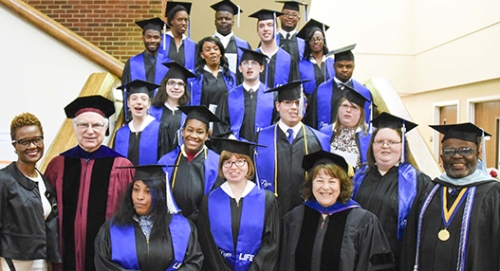
May 2016 Graduates

The photo from the TigerLIFEopens in new window website, shows the 2016 class of graduates. 

The research team Sanders is part of is currently working on data comparing the placement of TigerLIFE participants with other persons with disabilities on a state and national basis. Data will also be presented on their personal improvement as students and workers and how they think and feel about work. If you would like more information on the TigerLIFEopens in new window program, you can email Sanders.

Shalena Heard, PhD

Shalena Heard Health equity ambassador Shalena Heard, PhD, of The Child & Family Centeropens in new window on Maryland’s Eastern Shore, is an early-career psychologist with specialized training in cognitive-behavioral therapy and positive discipline parent training. She provides comprehensive diagnostic and psycho-educational evaluations that can be used to inform treatment and educational planning. The Eastern Shore is primarily a rural area, so many of her patients travel long distances to receive treatment. 

Heard’s education at historically black colleges and universities (Spelman College in Atlanta and Howard University in Washington, D.C.) was empowering to her as a young woman of color, and helped shape her passion for working with health priority populations. Her doctoral training at Lehigh University followed receipt of a BA in psychology from Spelman College — where she focused her research and clinical work on juvenile incarceration and high-risk communities — and master’s level training at Howard University, where she studied and treated children and adolescents with a variety of academic, emotional and behavioral difficulties. 

It was a graduate program professor who recommended that she apply to APA’s Div. 51 (Society for the Psychology of Men and Masculinities)opens in new window fellowship program, which resulted in Heard becoming the first Research to Practice and Policy Leadership Development Institute Fellow. In that role, Heard is part of the Racial/Ethnic Minority Special Interest Group, which is currently finalizing a document intended to offer information on the current state of black boys and men in the U.S., and strategies, interventions and resources for psychologists and policy makers who work with this population. 

Heard is also a volunteer and executive board member of a program started by some of her colleagues at The Child & Family Center, called One Year to Empowermentopens in new window. This program, funded through private donations, promotes the empowerment of teenaged girls on the Eastern Shore. One activity the girls participated in during the past year involved the participants attempting to buy cigarettes at local shops to see if they were asked for ID (as required by law), and reminding shop owners and staff when they failed to do so. For more information on the One Year to Empowerment program, or about Div. 51 activities, please contact Heard by email.

Kathleen H. Canul, PhD

Kathleen Canul Health equity ambassador Kathleen H. Canul, PhD, is the director of Ombuds Services for the University of California, Los Angelesopens in new window (UCLA), where she manages alternative dispute resolution services.  As an ombudsperson and mediator, she helps parties resolve the differences that may arise between and among faculty, staff and students — including concerns related to conflict and/or perceived injustice — in a neutral, confidential and informal setting. Campus diversity issues are a significant area of interest for Canul as well. 

Canul’s work led her to a deep reading of the existing literature on bullying and perceived discrimination in the workplace, particularly as experienced by racial/ethnic minorities, sexual minorities and women. The research showed that workplace bullying and discriminatory behavior has real-life consequences, affecting workers’ physical and mental health, as well as impacting their ability to do their jobs. Canul recently presented the results of her literature search at Georgia State University’s 7th Biennial Cultural Competency Conferenceopens in new window. She found that “patterns of bullying vary by gender, race and ethnicity, as well as sexual orientation, with women, ethnic minorities and LGBTQ employees reporting higher rates of bullying in the workplace (Hoel, et al., 2001; Hoel and Cooper, 2001; Rankin et al., 2010).”  She also noted that “The nature of bullying on ethnic minorities often includes prejudicial and racist content. LGBTQ employees, while bullied, face harsh treatment in the workplace directly related to their sexual orientation.”

Surprisingly, Canul found that workplace bullying rates were greater in higher education than in the corporate world. This is where utilizing the expertise of academic Ombuds Services offices can have great effect. Beyond acting as mediators, staff can also recommend resources for workers experiencing bullying, sexual harassment, and both explicit and perceived discrimination. Likening her position to that of a “traffic cop,” Canul directs people to the resources that will best help them including, for example, physicians, counselors or legal resources. Another resource is the recently created Equity, Diversity and Inclusion Officeopens in new window which was designed to be at the forefront of addressing diversity and discrimination issues at UCLA. Other ambassadors who are in academic settings may want to research what their own ombudsperson offices offer. If you would like to contact Canul, she can be reached by email.

Franklyn M. Malone, CMFT, CACII, LSWA, LEM

Franklyn Malone Health equity ambassador Franklyn M. Malone, CMFT, CACII, LSWA, LEM, is the CEO and founder of 100 Fathers Inc. in Washington, D.C. This organization focuses on finding solutions to problems facing men and boys on issues related to fatherhood, health, employment, violence prevention and rites of passage. The 100 Fathers organization has helped thousands of fathers, men and boys, by offering an evidence-based curriculum of transformational training. It is one of few Fatherhood and Rites of Passage/Boyhood-to-Manhood Certified and Licensed nonprofits, and has earned numerous awards, including one from the White House’s My Brother’s Keeper initiative, for its work. Malone and 100 Fathers also advocate for men and boys, working toward passage of fatherhood legislation in Maryland, and providing expert testimony at the White House. 
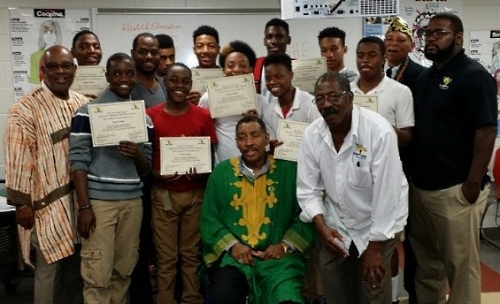
Malone currently sits as a fatherhood expert and faculty member on The Fathers and Families Coalition of Americaopens in new window and the National Partnership for Community Leadership. Most recently, Malone was sworn in as a commissioner on the newly-established Commission on Fathers, Men and Boys in Washington, D.C., which will address the inequities experienced by Fathers, men and boys in health, education, employment and family relationships.

After attending the APA’s 2015 conference on men and boys of color, Malone became a health equity ambassador, and was later awarded funding to conduct a smoking workshop at Phelps Engineering and Construction High School. This event used 100 Fathers’ patented “Values Voting Power-shop” interactive process, where students were (1) asked tough smoking questions, (2) invited to stand in pre-marked locations labeled “Agree”, “Not Sure” or “Disagree”, and (3) asked to explain the reasoning behind their choices. Facilitators (licensed adult trainers and non-smoking student peers) emphasized that there were no wrong answers, but these were opinions. Although the students thought they knew about the effects of nicotine they were extremely surprised about its addictive nature, the number of poisons it possesses, how it destroys our body and the effects of secondhand smoke. In addition, one adult facilitator who was a life-long smoker quit smoking after that workshop.

100 fathers group shot

100 Fathers, Inc. works in partnership with the National Partnership for Community Leadership, a preeminent fatherhood and family training and consulting nonprofit, which will sponsor its 18th annual International Fatherhood Conference in Kansas City, Mont., on June 14-17, 2016.

Jill Lee-Barber, PhD

Health equity ambassador Jill Lee-Barber, PhD, is the director of psychological and health services at Georgia State Universityopens in new window in Atlanta. Her responsibilities include leadership of Integrated Health including: The Counseling & Testing Center; Student Health Clinic; Student Health Promotion and Victim Assistance Services. The CTC provides a wide range of counseling, testing, psychiatric and holistic health services to support students as they work to reach their educational goals. The Student Health Clinic provides primary and urgent care to a population of over 50,000 students. Additionally, Student Health Promotion provides preventative and educative services in critical areas such as violence prevention, substance use risk reduction, tobacco cessation and nutrition. Victim Assistance Services provides direct advocacy for students who have experience a crime, specifically focused upon sexual assault, intimate partner violence and stalking. 

Cultural Competency Conference

We would like to spotlight The 7th Biennial Cultural Competency Conference Counseling & Testing Center hosts in collaboration with other campus stakeholders. The conference provides two days of continuing education opportunities in ongoing cultural competency development for psychologists, social workers, counselors and health care professionals including Georgia State University (GSU) students. Past keynote speakers have included Nikki Giovanni, Deepak Chopra and Alice Walker.

The 2016 conference (April 7-8, in Atlanta, GA) featured David Satcher, PhD, and Iyanla Vanzant, PhD, who addressed the theme of the conference, “Cultivating a Culture of Health: Clinical and Community Innovations”.  APA Director of Health Disparities Lula Beatty, PhD, will be conducted a continuing education session on advancing health equity, “Paying Attention to Smoking.”

Jael Amador, PhD, a post-doctoral fellow working with Lee-Barber, PhD, received an Ambassador Smoking Dissemination Award. Amador and Lee-Barber held a campus event at GSU that disseminated information on smoking cessation to GSU students, who are primarily from racial/ethnic minority populations. Lee-Barber hopes to be able to offer another post-doctoral fellowship focused on addressing health equity in the 2016-2017 academic year.

Date created: 2016