

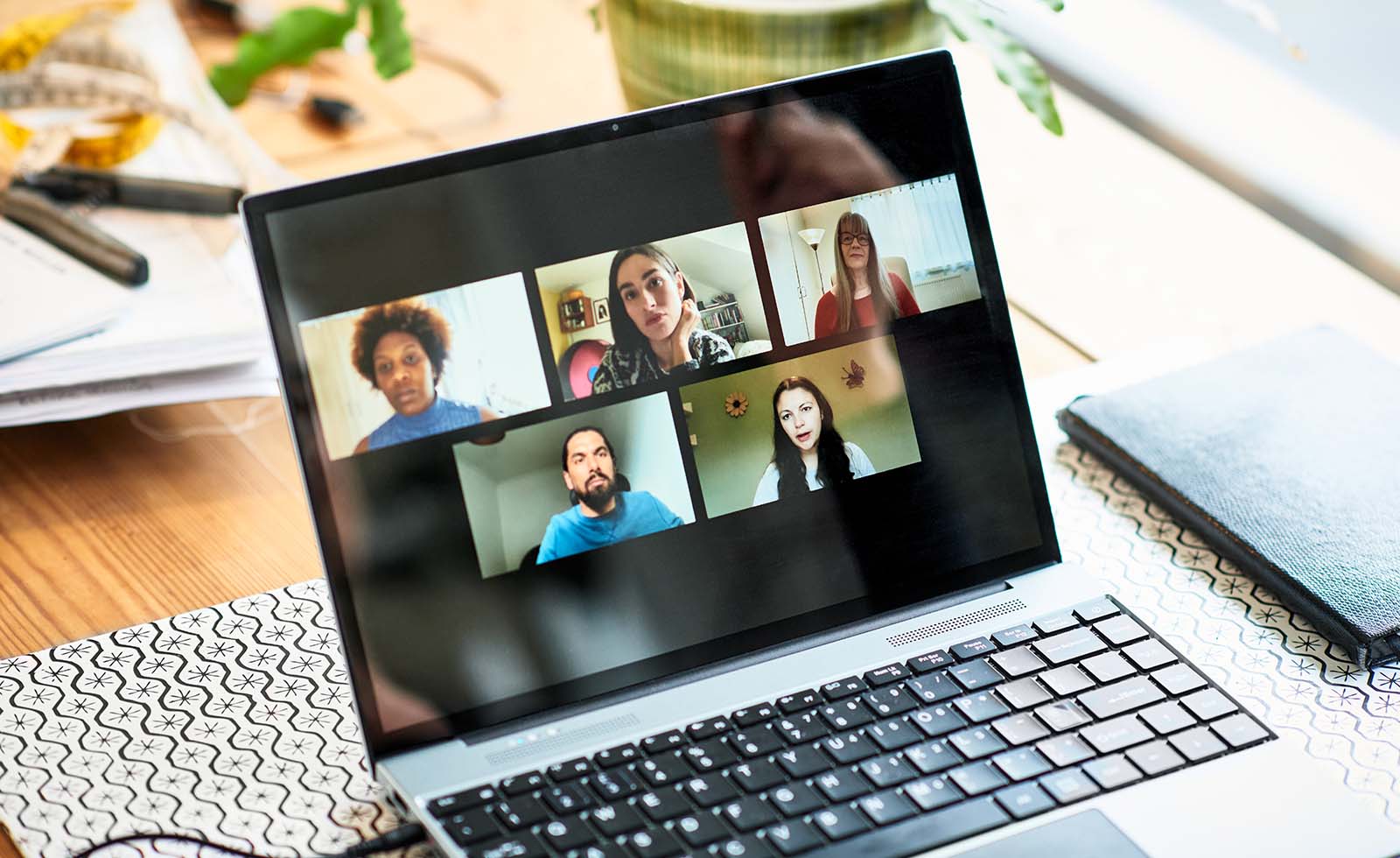
Working virtually during the pandemic has given rise to many new challenges, in particular microaggressions in the workplace. Microaggressions affect equity issues across race, gender, socioeconomic status, and more. This resource addresses the following questions:
- How do microaggressions appear or manifest in virtual work? Do they look different from in-person work, and how?
- How does virtual work contribute to biases, stigma, and discrimination? How are these displayed? What are the impacts?
- How does virtual work exacerbate certain “-isms” in the workplace?
- How does virtual work create inequities inside an organization?
- What are some best practices, if any, offered by those analyzing these issues?
Facts about virtual working
- Due to COVID-19, there has been a 35.2% increase in individuals who formerly commuted and are now working from home (Brynjolfson et al., 2020).
- In a survey of 133 executives and 1200 office workers, PricewaterhouseCoopers gathered responses on how company culture has transitioned to a virtual office environment for 2020 and 2021. Less than 20% of executives say they want to return to office (PwC, 2021). 13% of executives want to let go of the in-person office experience for good, and 55% of employees want to work at least three days a week remotely. Employees with 0-5 years of work experience report wanting to work in the office more than senior employees.
- Communities of color and women are disproportionately more affected by possible microaggressions that may appear in the new virtual work environment. One in 4 technology workers say they experience more gender-based harassment according to National Public Radio (Bond, 2021). That number increases upon a closer look of gender and racial data (39% Asian women, 38% Latinx women, and 42% transgender people). Software tools used in the remote work environment such as Zoom and other chat features are not built to deal with reporting harassment.
Microaggressions in virtual work
Micromanaging, camera-on requirements, and unintentionally insensitive icebreakers are all examples of microaggressions in the virtual work environment. Making many calls, messages, and emails in a single day with staff because management cannot “visually see” workers is a microaggression that hurts rather than helps productivity in the workplace. Mandating camera presence removes one’s ability to keep their socioeconomic status and home environment. Many messages are conveyed when colleagues can see one’s at-home office space, and details discovered while in a camera-on virtual meeting can give people leeway to target individuals for their background. In addition, despite the advantages of telework, remember that employees are suffering from real illness, grief, and trauma during the pandemic. Supervisors and coworkers should keep in mind that icebreakers intended to build a sense of camaraderie in virtual meetings may be experienced as insensitive by employees who are coping with significant personal stress or trauma as well (Allen-Kyle, 2020).
Without coworkers physically nearby to potentially overhear harassment, there has been increased aggression, hostility and harassment in the form of repeated questions and comments about appearance, dismissive attitudes, and teasing and chastising of workers, particularly women of color (Project Include, 2021).
Microaggressions are categorized into three groups (Cuncic, 2021)
- Microassault: Epithets or explicit verbal put-downs based on one’s identity or background (name calling); overt discrimination based on one’s identity group.
- Microinsult: Rude, demeaning or subtly offensive communication about a person’s identity (e.g.., race, gender, sexual orientation, ability, age, sexual orientation); often unintentional—“a backhanded compliment”.
- Microinvalidation: Communication that minimizes or denies someone’s experiences with prejudice or bigotry and its harmful effects; “It was just a joke. You are being too sensitive.”
Virtual work inequity
The ability to work from home and subsequently avoid exposure to COVID-19 differs drastically across urban-rural, socioeconomic, racial and age groups, with the more disadvantaged groups being less likely to be offered the chance to work remotely (Edwards, 2020).
At the height of COVID-19, the economic impact led to an overall reduction in jobs, as well as the closing of schools and daycare facilities, leading to an increase in caretaking responsibilities that has predominantly fallen on women, who already reported strain from being the ones predominantly responsible for domestic “chores” (Warrell, 2021). This has led to women disproportionately leaving the workforce, feeling stress from a need to hide caregiving struggles from their remote colleagues, and more women reporting remote work has hurt their productivity and careers in general (Edwards, 2020).
Virtual work-friendly fields — consulting and technology, for example — are already disproportionally White, Asian, and higher educated, which could lead to less diversity in these fields than already exists by alienation of minority groups already within or looking to enter these fields (Greenfield, 2021).
Virtual work discrimination
Ableism
People with disabilities can often benefit from remote and flexible work. This enables them to manage their healthcare, treatments, energy, pain levels, and exposure to communicable illnesses. Remote and flexible work was a frequent request by disabled people long before the pandemic, yet these requests were frequently denied due to perceptions of lack of competence, productivity, or commitment. Switching to remote work during the pandemic has the potential to show that remote work is feasible. However, people with disabilities are more likely to be unemployed, underemployed, or in low paying jobs, and thus may be disproportionately less likely to have remote work options. Additionally, people with disabilities who were given remote work options during the pandemic may see those options being reduced or revoked, despite sustained or increased productivity during remote work.
Ageism
The move towards remote work can be particularly damaging to older workers, as they are often less exposed to new technologies than their younger coworkers. With the adoption of new virtual work technologies, older adults who do not have a strong capability or motivation to learn new skills may experience less success and more stress. In addition, older workers with decades of experience physically compartmentalizing work life and home life may find it more difficult to adjust to an environment that marries both worlds and setting the appropriate boundaries and new routines. This can in turn lead to their team becoming frustrated, and increased ageism occurring within their team (Kanfer et al., 2020).
Workers ages 55 and older were 17% more likely to lose their jobs in the first six months of the pandemic compared to younger people (U.S. Bureau of Labor Statistics, 2021). However, that does not stop discrimination of both age groups. In fact, more young people are more likely to report workplace discrimination than older adults. This effect is known as “reverse ageism” (Schawbel, 2021).
Racism
Black Americans who engage in code-switching and active hiding of their cultural identities to appear more aligned with White middle and upper classed standards of professionalism, are more likely to be hired than those who do not alter their presentation. By code-switching, many Black workers feel they can safely approach interracial professional work, while maintaining a separate, authentic life at home, at the cost of additional mental stress and potential negative regard from other members of the Black community (Roberts & McCluney, 2020). However, with remote work, co-workers now have a glimpse into the “cultural signals”, their economic status, and the personal identity of their colleagues, causing the place they once felt they could be authentic, now becoming a place of judgement. (Roberts & McCluney, 2020).
Sexism
Prior to the pandemic, individuals who asked for remote work situations were penalized, as they were perceived as “caregivers,” and not able to fully commit themselves to their job (Greenfield, 2021). This judgment of caregivers is exacerbated by remote work, where children can be seen more often and their needs may interfere with virtual conferences. Women in particular disproportionally bear the caretaking burden and are more susceptible to stereotypes and perceptions of them being “less committed” to their workplace if they have simultaneous caregiving responsibilities (Greenfield, 2021).
Best practices
Overhaul initiatives and trainings to combat microaggressions and evaluate human resources efforts and approaches for effectiveness. Many employees, particularly those of color, women, and older age, and those with disabilities feel uncomfortable reporting abuse due to perceptions about a lack of action by Human Resources, or potential retaliation against them. In cases like these, a total overhaul of Human Resources might be necessary to regain employee trust, and diversity of this team is of utmost importance to ensure employees feel represented when coming forward to report harassment or abuse (Project Include, 2021). Employees should be educated on how to be empathetic and inclusive on their chat and email interactions, to prevent microaggressions and create a more welcoming virtual workplace. (Project Include, 2021). Human Resources should also educate employees on how to identify and address microaggressions when they see it, which would include assessing the situation, deciding what they want to achieve by responding, addressing the behavior with the individual involved directly, and moving on (Morgan, 2020).
Rethink traditional expectations of workplace etiquette. Expectations for meeting attendance, participation as well as attire need to be modified from their traditional, non-remote status. The home situations of individuals vary greatly, including caretaking, homemaking and access to a reliable computer and internet connection. Rather than assuming individuals aren’t invested in their organization if they opt to not have a camera on, managers should consider and respect individuals unique circumstances and work with employees to find mediums of communication that meet their comfort and accessibility levels (Roberts & McCluney, 2020). More opportunities for casual, inclusive, non-mandatory social interaction should be worked into remote employee schedules to foster feeling of connectedness, alleviate feelings of isolation and alienation and provide opportunities for employees to make connections. (Project Include, 2021).
Acknowledge the stress of this new work environment. The stressors of COVID-19 and remote work have led to a significant decrease in worker wellbeing across the board, with 56% of adults expressing new, stress-related symptoms (Kirzinger et al., 2020). Since this shift to remote work has affected every individual and community differently, performance reviews should take this into account and managers should adapt their expectations to this new environment (Sahidi, 2020).
References
Allen-Kyle, P. (2020). “Preventing microaggressions in the virtual workplace.” Medium.
Bond, S. (2021). “Remote work is leading to more gender and racial harassment, say tech
workers.” National Public Radio. https://www.npr.org/2021/03/30/982449551/remote- work-is-leading-to-more-gender-and-racial-harassment-say-tech-workersopens in new window
Brynjolfson, E., Horton, J.J., Ozimek, A., Rock, D., Sharma, G., TuYe, H. (2020). Covid-19 and Remote Work: An Early Look at US Data (NBER Working Paper No. 27344). National Bureau of Economic Research. https://www.nber.org/papers/w27344opens in new window
Cuncic, A. (2021). What are microggressions? https://www.verywellmind.com/what-are-microaggressions-4843519
Edwards, K.A. (2020). “Women are leaving the labor force in record numbers.” The Rand Blog.
Greenfield, R. (2021). “Work from home has the power to advance equality – or set it back.” Bloomberg Businessweek.
Kanfer, R., Lyndgaard, S.F., & Tatel, C.E. (2020). “For whom the pandemic tolls: a person-centric analysis of older workers.” Work Aging Retire. DOI: 10.1093/workar/waaa014opens in new window
Kirzinger, A., Hamel, L., Munana, C., Kearney, A., & Brodie, M. (2020). “KFF health tracking poll – late April 2020: coronavirus, social distancing, and contact tracing. KFF.org.
Lorenz, T., & Alba, D. (2020). “'Zoombombing' becomes a dangerous organized effort.” The New York Times.
Morgan, S. (2020). “How microaggressions look differently when we’re working remotely.” Fast Company.
Project Include. (2021). “Remote work since Covid-18 is exacerbating harm: what companies need to do.” Project Include. https://projectinclude.org/remote-work-report/.
PwC. (2021). “It’s time to reimagine where and how work will get done: PwC remote work survey.” PwC.
Roberts, L.M. & McCluney, C.L. (2020). “Working from home while black.” Harvard Business Review.
Sahidi, J. (2020). “Sheryl Sandberg: women are burning out more than ever. Employers must do more to help.” CNN Business. https://www.cnn.com/2020/05/07/success/sheryl-sanderg- coronavirus-women-burnout/index.htmlopens in new window
Schawbel, D. (2021). “Why employers must address ageism in the hybrid workplace.” Workplace Intelligence Insider.
U.S. Bureau of Labor Statistics. (2022, February 24). Persons with a disability: Labor force characteristics summary - 2021 A01 results. U.S. Bureau of Labor Statistics. https://www.bls.gov/news.release/disabl.nr0.htm opens in new window
Warrell, M. (2021). “Women are quitting: how we can curb the ‘she-cession’ and support working women.” Forbes.