

Asian-Americans tend be held to high expectations in the U.S. Terms such as “Asian advantage” and “model minority” are the cultural expectations placed on Asian-Americans as a group that each individual will be highly intelligent, wealthy, self-reliant and obedient, and live the “American dream.” Not living up to these stereotypes and expectations places a great burden on the individual and often makes her/him feel inadequate. Perceived racial discrimination has been associated with several negative mental health outcomes, including higher psychological distress, suicidal ideation, state anxiety, trait anxiety and depression. The facts are that Asian-Americans are a diverse group of individuals, with diverse experiences.
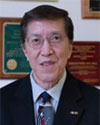 In honor of Asian-American Heritage Month, the Ethnicity and Health in America Series is raising awareness about the physiological and psychological impact of microaggressions and the model minority myth. We are featuring the work of Derald Sue, PhD, the most cited multicultural scholar today, with over 150 publications under his belt. Sue obtained his PhD in counseling psychology from the University of Oregon. In 1972, Sue co-founded the Asian American Psychological Association with his brother Stanley Sue, PhD. Currently, Sue is a professor of psychology at Teachers College, Columbia University.
 We are also featuring the work of Kevin Nadal, PhD, who received his doctorate in counseling psychology from Columbia University. Nadal is one of the leading researchers in understanding the impacts of microaggressions on the mental and physical health of people of color; lesbian, gay, bisexual, transgender and queer (LGBTQ) people; and other marginalized groups. Currently, he is the Executive Director of the The Center for LGBTQ Studies at the Graduate Center (GC) at the City University of New York (CUNY), as well as an Associate Professor of psychology at both John Jay College of Criminal Justice and GC-CUNY.