

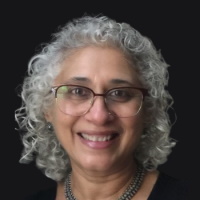
 Arpana Inman, PhD
Associate Dean for Academic Affairs, Ohio State University
Arpana Inman
I am Psyched! Vignette Series
1. How has your view of the field (psychology) changed from when you first joined?
Psychology is a broad and vast field with many disciplines. So, it is hard to speak to the entire field of psychology. However, when I came here as an international student from India in the late 80’s, I saw much of the field of psychology as being based and taught from a US/Western perspective. Multiculturalism was additive rather than integrated. There were few role models who looked like me or engaged in the work that I was interested in (i.e., experiences of the Asian Indian diaspora). I see a shift in some disciplines of psychology where there is a growing number of psychologists of color engaged in research, teaching, and public interest. But this growth is still in its infancy. The attention to mental health disparities, and role of racism in various structures and systems in recent years has shifted the focus to consider the role of psychology. In some areas of psychology, there is a greater social justice lens with greater advocacy engagement. What has been important is to see scholars in the field challenging us to do more, engage more, and deconstruct the white supremacy influence and racism that pervades all that we do and walk the talk. However, this is only happening in some areas of psychology and we need to do more.
2. How did you learn to embrace failure?
I think here, my spirituality and upbringing has played a big role. Growing up, I often heard stories from Hindu mythology. These stories often spoke of challenges and failures as part of life and the importance of embracing these experiences. It taught me the importance of experiencing failures in order for us to grow. When we don’t capitalize on our mistakes or challenges, it’s a missed opportunity to learn. Failures have often been a transition or a turning point for me. Failures have made me humble, self-reflective, patient, given me insight for new ways of thinking and engaging, open to new possibilities, and allowed me to persist in achieving my dreams.
3. How has a mentor impacted your life, your career?
Mentorship has been very important to me throughout my life and career. As I have journeyed through my career, I have realized that one mentor does not meet all my needs and have been fortunate to have multiple mentors, both White and People of Color who have supported me. Each of them played a role, whether in sparking my interest in the field, helping me “keep the faith” in my journey, creating access to networks and opportunities, validating my experience as an Asian India minority student, helping me understand the power of agency and influence I can have within the different roles that I hold, and to pay forward.
4. What words of wisdom did your mother/grandmothers/aunts share with you?
I have had many strong female and feminist role models in my family of origin and adopted family in the US. They have taught me: To believe in myself. To have ambition. To aspire to dream. To trust that I can achieve regardless of my gender and other positionalities. To embrace all of who I am. To stay engaged even when things are difficult. To persist. To appreciate and embrace all aspects of my multifaceted identity.
5. What struggles have you seen within your community, in the past year and a half, and how has/how can psychology help?
We are seeing the dark underbelly of the United States in its racist engagement with minoritized communities – Black, Asian, Latinx, LGBT, Indigenous folx. As an immigrant and a person of South Asian descent, it’s been personally challenging. But it has also been difficult to hear of the fear and pain that this has been caused not only within my community but also in the larger communities of color. Racism is clearly a public health crisis through its traumatizing effects. People feel embolden to engage in racist and discriminatory acts without censure or consequence. But even more, people do not realize that white supremacy ideology and racism hurts all members of the community through its internalization, externalization, silencing, invisibling, and privileging actions. As psychologists, we need to step up in advocacy and action, in our research and practice. We need to examine our own institutions and organizations and address the anti-(add minority group) policies or practices – covert or overt. We need to speak out and challenge our own field in its complicity in hiding behind words and how we make decisions. We need to move beyond allyship and be co-conspirators in our engagement. This is particularly true when we see other marginalized communities being traumatized.
Date created: May 2021