

Eboni Winford,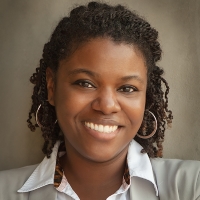 PhD, MPH
Director of Research and Health Equity, Licensed Psychologist and Behavioral Health Consultant
Cherokee Health Systems
Eboni Winford, PhD, MPH
I am Psyched! Vignette Series
1. In your work with students, what is a piece of advice you often share with them?
You are a human first! I don’t care how much reading you’ve been assigned or how many pages you have to write, if you do not take care of yourself as a person, you will not be able to be your full authentic self in the spaces you occupy. It’s ok to reframe our thoughts about “laziness” as rest. It’s ok that attention to what our body, mind, and spirit needs takes precedence over what assignment is due today. Because I did not always receive (or listen to) this message consistently, I make a conscious effort to ensure that anyone I teach, supervise, or coach knows that they are humans who need and are deserving of care, peace, and rest.
2. In your opinion, what is the biggest challenge the field of psychology is currently facing?
Representation. As a Black woman who is a psychologist, I am often the only one who looks like me in the spaces I occupy. Of all the psychologists in the U.S., only 4% of us are Black. In times when racial violence is rampant and the risk of developing symptoms of depression and anxiety are increasing, it is disheartening that we do not have more licensed psychologists who look like the individuals who have been harmed. This results from systemic oppression and ongoing barriers including microaggressions, limited funding opportunities, or limited perceived support for minoritized students in graduate training programs. Ensuring equitable training opportunities for minoritized psychology students may help facilitate the increase in minoritized licensed clinicians.
3. Throughout your personal and professional trajectory, which leadership skills were the most difficult to develop?
Asking for help and delegating. I am a proud Black woman who has received several implicit and explicit messages from multiple sources about what it means to be successful. Often, these messages imply that asking for help means that we are not good enough to succeed. I internalized these messages and found (still find) it difficult to ask others to help. I have come to learn that there is so much freedom in asking for help and releasing burdens/stressors from myself. Doing so allows me to refill my own cup.
4. Do you have a mentor? How have they influenced you?
I have several mentors! They are each Black women who have achieved significant goals in their careers. These mentors range from psychologists, medical physicians, and public health professionals. I learned how to ask for help from them. I learned how to assert my boundaries from them. I learned how to claim my power from them, and I learned how important it is to feel confident saying “no.” Each of my mentors has taught me the value of my position—as one of the few Black women who hold a doctorate that I know and the privilege it is to mentor and coach others along the road. I strongly believe that I am my ancestors’ wildest dreams and that I stand on the shoulders of giants. These mentors that walk alongside me now show me how these sayings manifest through action.
5. Do you have any books that you would suggest your students to read?
I am such an avid reader. My goal is to try to read at least one book a week. Now, that may be audiobook, e-book, or paperback but reading is a must for me. Here are some of my favorites: "The Body is Not an Apology" by Sonya Renee Taylor," Flatlining" by Adia Harvey Wingfield, "I’m Lying but I’m Telling the Truth" by Bassey Ikpi, "White Tears/Brown Scars" by Ruby Hamad, and "Medical Apartheid" by Harriet Washington.
Date created: July 2021