

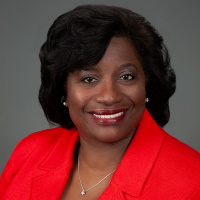
 Jennifer F. Kelly, PhD
2021 APA President
1. What kind of child were you growing up (shy, quiet, adventurous, etc.)?
My family of origin was quite large, relatively speaking. There were 10 of us, five females and five males. Even if I wanted to be shy, it would have been quite difficult to do so in that household. Being the next to the youngest, my siblings nurtured me and encouraged me to take risks—to love life, seek adventures and never settle. I would say that I continue to subscribe to those views.
2. What made you choose psychology for your career path? Was there a specific experience that led you to become interested in becoming a psychologist?
During my introduction to psychology course, I became fascinated with the power of the brain and mind. That was during my first semester of college, at age 17, and I have continued to remain fascinated. Even at that age I knew that psychology could have a major impact in changing society and people’s lives, and I wanted to be a part of that movement. At that time, I did not consider how long it would take for me to become a psychologist, but I persevered—and here I am!
3. Who (or what) has inspired you? Who were/are your role models and why?
When I think of leaders throughout my life, there are so many who have had a major influence and impact on my life and career. We have been so fortunate to have leaders emerge in our time of crisis and transition. If I have to look at the entire period of my life, I have to say Martin Luther King, Jr. was a major inspiration. Without a doubt I know that I would not be where I am today without his courage, perseverance, and faith. He risked it all so that we could be free. I hope one day his dream will be realized. If I could possess a fraction of his courage, I know that I could make a significant difference in this society.
In thinking of the person who had a strong influence on my life, my role model is my mother, Corine Wallace Kelly. She was born and raised in rural Mississippi. She really understood the value of education and made sure that her children had the opportunity to achieve to their potential. I think she sees her success through my achievements. To this day she remains my best friend and I cherish every moment I spend with her.
4. Discuss the importance of mentorship and how to select a mentor.
There are times when we turn to a trusted friend, family member, or advisor for support and advice. The importance of such connections is undeniable. Having a mentor is beneficial in helping shape present situations and preparing the person in addressing future opportunities and challenges. Mentors also serve as a support system and can provide encouragement to take risks and believe in yourself.
I believe it is our obligation as leaders to be mentors to others. To my delight, I have seen my colleagues in leadership roles serve as mentors to others. When selecting a mentor, one should make sure the person is willing to serve as a mentor. Also, the person looking for a mentor should not be boxed in, as I believe we can learn so much from others, who may not initially seem to be aligned with the person’s goals. Also, it is ok to have more than one mentor, as we can learn so much from others.
5. Research on people from marginalize communities or with stigmatized identities has increasingly focused on stress and its effects on health and well-being. As a psychologist with multiple marginalized identities, please talk about some of your own challenges and adversity and your strategies for self-care and managing stress.
My area of focus throughout my professional life has been clinical health. I understand the role of stress in the development and exacerbation of physical challenges. It has been especially noteworthy for people of color. There are health disparities that impact on the BIPOC community that we as psychologists must address. Environmental, social and behavioral factors— all areas of psychology’s expertise— contribute to health disparities in interacting ways. Psychology must position itself as a force for achieving health equity by finding ways to make concrete improvements in overall health of populations affected by disparities.
My presidential initiative is health equity. Members of the task force have expertise in relevant areas (e.g., health disparities in different BIPOC populations, effects of built and social environment on health, psychological research on racism, public policy and advocacy). Based on a review of relevant research, community-based initiatives, and policy work, the charge of the task force will be to produce a comprehensive report articulating a vision for the role of psychology in advancing health equity.
Specific recommendations to promote innovative approaches for psychological science, education and training, psychological practice, public policy, and legislative advocacy will be provided. This will include recommendations for the corresponding APA organizational units. If the task force’s review indicates a need for a formal APA policy on psychology and health equity, the task force’s charge will also include developing a policy for consideration and approval by the APA Council of Representatives