expand all
Chair: David Cooper, PsyD, Global Mental Health
 David Cooper, PsyD, is a versatile leader with over 10 years of experience in digital health, digital therapeutics, and digital medicine. With a strong background in clinical psychology, Cooper has led the development, management, and implementation of digital health solutions, focusing on strategic business planning, new business development, and stakeholder engagement. His achievements include launching a global mental health product for Teladoc, standardizing processes, developing strategic partnerships for Xealth, and managing a $2.5 million portfolio of mobile applications for the Defense Health Agency. Cooper holds a PsyD from Argosy University and a BA from the University of Florida.
Victoria Bangieva, PhD, Digital Medicine Society
 Victoria Bangieva, PhD, is a licensed clinical psychologist who works at the intersection of clinical science and technology to advance health care through the integration of digital health solutions. She has over 8 years of experience in the digital health industry designing, developing, and disseminating digital measures and therapeutics to increase access to evidence-based tools and improve health outcomes. Through these efforts, Bangieva is dedicated to increasing integration of digital health solutions in routine care and research. Outside her work in digital health, Bangieva maintains a small independent clinical practice and is involved in advocacy to increase utilization of digital health tools among health care professionals.
Ashley Batastini, PhD, Swineburne University of Technology
 Ashley Batastini, PhD, is an associate professor of forensic psychology in the Centre for Forensic Behavioural Science at Swinburne University of Technology. Her research emphasis is broadly at the intersection between the mental health and criminal legal systems, with particular focus on novel intervention strategies for high-risk populations and ways to improve access to appropriate services at all levels of legal involvement. She has been conducting work related to telepsychology since 2013, culminating in numerous first- and coauthored book chapters, refereed articles, conference presentations, invited talks, and both internal and external funding on the topic. From 2020 to 2023, Batastini served as cochair of the Division 41 (the American Psychology-Law Society [AP-LS]) Telepsychology Taskforce, which led to the creation of recommendations for psychology-law practice and research. In 2019, Batastini received the Early Career Achievement Award given by APA Division 18 (Psychologists in Public Service), and in 2022, she received the Saleem Shah Early Career Achievement Award jointly given by the AP-LS and the American Academy of Forensic Psychology. Batastini is also a licensed psychologist in Mississippi and Tennessee.
Tim Campellone, PhD, Rula
 Tim Campellone , PhD, is the director of clinical product at Rula. He holds a PhD in clinical science from the University of California, Berkeley, and completed his clinical training within the Veterans Affairs (VA) health care system. Campellone has extensive experience at the intersection of clinical and product development, having previously driven product development at Pear Therapeutics and held leadership roles as the vice president of clinical science at Click Therapeutics and vice president of translational science at Woebot Health. Before joining Rula, he worked at Apple on clinical health product development.
Faith Dyson-Washington, PhD, MBA, Maximal Living, LLC
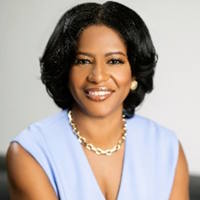 Faith Dyson-Washington, PhD, MBA, is a licensed clinical psychologist and health care administrator with expertise in Medicaid managed care, behavioral health system transformation, and digital mental health. A lifelong technology enthusiast, she previously served as chief executive officer of Community Behavioral Health in Philadelphia, where she led early governance and assessment efforts to modernize the organization’s technology environment and strengthen the foundation for future population health analytics. She also led system-wide telehealth policies and workflows for behavioral health clinicians during the Covid-19 pandemic while at Public Health Management Corporation.
Most recently a principal at Health Management Associates, Dyson-Washington was a founding member of the firm’s Digital Mental Health Technology Workgroup and contributed to the development of its Digital Mental Health Technology Readiness Suite. She is the founder of Maximal Living, LLC, where she provides executive coaching and strategic consulting at the intersection of behavioral health, leadership, and technology. She earned her PhD and MBA from Drexel University and holds graduate and undergraduate degrees from Temple University.
Karen Fortuna, PhD, LICSW, Dartmouth College School of Medicine
 Karen Fortuna, PhD, is an assistant professor of psychiatry at Dartmouth College and cofounder of Collaborative Design for Recovery and Healthopens in new window. As an international collaborative of patients, peer support specialists, caregivers, policymakers, and payer systems, the Collaborative uses community-based participatory research to facilitate the development, evaluation, and implementation of digital tools that leverage mobile health to address needs identified by community members from vulnerable populations.
Fortuna has approximately 100 peer-reviewed publications coauthored with patient partners, and averages 1–2 invited presentations per month (and over 100 presentations) at both national and international scientific meetings (including invited presentations at SAMHSA, NASMHPD, and many other organizations). Fortuna has received funding from the Patient-Centered Outcomes Research Institute (PCORI); National Institute of Mental Health; American Federation of Aging, Brain, and Behavior Foundation; Japan Agency for Medical Research and Development; and the New York Academy of Sciences. Overall, she has been responsible for conducting or collaborating on more than 30 research projects including topics such as self-management, patient engagement in digital technologies, user-centered design, and community-engaged research, and has pioneered a new field of study—“digital peer support.”
Fortuna is chair of the Patient Engagement National Advisory Council to PCORI, in which she is currently coleading a project to update the community engagement standards and integrate these updates to the PCORI Engagement Matrix. Fortuna is an invited member to PCORI’s Patient-Centered Approach Methods Committee, American Psychiatric Association’s Smartphone App Advisory Panel, Foundation for Opioid Response Efforts Advisory Panel, and Ludwig Boltzmann Gesellschaft Research Group Die Offene Tür’s Open Innovation international advisory panel. She is also a member of the Digital Health Measurement Collaborative Community, in which she is working with the Digital Medicine Society and the Food and Drug Administration to develop best practices in diversity, equity, and inclusion in digital health measurement.
Fortuna was the recipient of the Japanese Agency for Medical Research and Development Research Proposal of the year, Ally of the Year Award from the Western Mass Peer Network, Alvin R. Tarlov and John E. Ware Jr. Award in Patient Reported Outcomes, and the Faculty Achievement Award from the National Association for Gerontology Education in Social Work.
Ashleigh Golden, PsyD, MSCP, RPsych, HSPP, ACT, Stanford University School of Medicine
 Golden is a clinical psychologist licensed in California and Missouri and registered in British Columbia, Canada. She serves as chief clinical officer at Wayhaven, where she leads well-being product and content strategy and development for a genAI-powered mental wellness platform. Her work integrates cutting-edge behavioral science with AI advancements to create accessible, engaging, evidence-based tools for higher education and broader, diverse populations.
Golden has held senior roles at Woebot Health, Lark Health, Brightside Health, YouTube, and Google’s national employee assistance program. She has contributed her behavioral health expertise to Meta and consulted extensively with health tech companies, including Grow Therapy, Meru Health, BeMe, OxfordVR, and Healthline Media. A recognized leader in ethical and responsible mental health AI, Golden has coauthored publications that have shaped industry standards. She serves as adjunct clinical assistant professor at Stanford University School of Medicine’s Department of Psychiatry and Behavioral Sciences and cochair of the Association for Behavioral and Cognitive Therapies’ Subcommittee on AI. Her contributions have earned her honors, including Emerging Digital Health Leader by Digital Health Canada and Health care Innovator by Forbes. She is also a founding member of Therapists in Tech.
Golden’s expertise spans translational science, conversational design, user experience research, and prompt engineering, with a focus on optimizing genAI tools for meaningful engagement, outcomes, and clinical fidelity. She holds advanced certifications, including in prompt engineering for ChatGPT from Vanderbilt University, and an advanced professional certificate in behavioral insights from the University of British Columbia’s Sauder School of Business. As part of the first cohort of primary care psychologists in British Columbia and pursuing a postdoctoral master’s in clinical psychopharmacology, she continues to pioneer innovative roles at the intersection of health and technology.
A graduate of the Stanford-PGSP PsyD Consortium, Golden’s clinical expertise lies in severe, comorbid anxiety and obsessive-compulsive spectrum disorders, with advanced training in CBT and ERP. She completed a 2-year postdoctoral fellowship at the Center for OCD and Anxiety-Related Disorders at the Saint Louis Behavioral Medicine Institute, where she developed a subspecialty in addressing treatment reluctance and nonadherence—expertise that she continues to leverage through her academic and consulting roles.
Nina Horne, MPP, Alden Global
 Nina Horne, MPP, is a policy leader and product executive with more than two decades of experience advancing evidence-based mental health, youth development, and science policy initiatives across federal, international, and local systems. She is chief product officer and cofounder of Alden Global, where she leads the development and governance of a global mental health marketplace designed to expand access to high-quality, affordable care.
Previously, Horne founded and led Samara Family Services, creating an innovative wrap-around model for adolescents and young adults with complex behavioral health needs. Earlier in her career, she served as a senior policy consultant to the White House Office of Science and Technology Policy, U.S. Department of State, National Science Foundation, Environmental Protection Agency, U.S. Trade Representative, International Standards Organization, and the United Nations, and was appointed to the U.S. Delegation to the OECD, contributing to multinational regulatory and standards-development efforts. Prior, she led science-publishing initiatives within multibillion-dollar global publishing organizations, managing multimillion-dollar portfolios, publishing leading scientific educators—including Nobel laureates—and directing the development of more than 100 educational and training products.
Horne also chaired the Oakland Fund for Children and Youth, overseeing more than $150 million in investments and leading major evaluation and policy reforms. She is a coauthor of multiple peer-reviewed publications on governance, environmental risk, and regulatory policy. Horne holds an MPP with an emphasis in science and technology policy from UC Berkeley.
Charmain Jackman, PhD, Innovative Psychological Services
 Charmain F. Jackman, PhD, is a licensed psychologist of Barbadian heritage and the founder and CEO of InnoPsych, Inc. Growing up in a culture where the stigma of mental health was pervasive, but images of therapists of color were not, she decided that she was going to change that. Jackman has spent the last 20 years working with people of color in hospitals, clinics, courts, and schools, and one consistent point that she has observed is that people of color long for therapists who look like them—who understand them and who will do right by them. That knowledge has inspired Jackman to make it easier for people of color to find therapists of color. She also wants to change the negative views of therapy and to educate people of color about the necessity of taking care of their mental health, and to empower communities to heal.
Soonyoung Kim, MS, Auburn University
 Soonyoung Kim is pursuing her PhD in industrial-organizational psychology with research focuses encompassing emotional intelligence, machine learning, and personnel selection. Kim holds an MS in psychology from Auburn University, where she is studying her PhD, and a BS in psychology and minor in professional and technical writing from Virginia Tech. Kim has worked in different industries, including academic research, publishing, government, and the automotive industry. As an I-O psychology apprentice, Kim would like to understand how to bring the advanced practices to support mental health technology, and she has been making efforts to acquire such practices through her PhD pursuit. Kim is also serving on the Committee for Professional Practice and Standards for APA.
Eric Kuhn, PhD, National Center for PTSD Dissemination and Training Division
 Eric Kuhn received a PhD in clinical psychology from the University at Albany, State University of New York and completed a postdoctoral research fellowship at the VA Palo Alto Mental Illness Research Education and Clinical Center and Stanford University School of Medicine. He currently serves as a clinical psychologist at the Dissemination and Training Division of the National Center for PTSD (NCPTSD) and associate professor at Stanford University School of Medicine where he coleads the Stanford Mental Health Technology and Innovation Hub (the Tech Hub). Kuhn is a founder of and leader in NCPTSD’s Mobile Mental Health Program, which has developed a suite of mobile apps designed to address PTSD and related comorbidities and currently directs VA’s Center for Mobile Apps Research Resources and Services. Kuhn has federally funded programs of research focusing on using technology, both web and mobile, to increase access to and engagement in PTSD and related mental health care and to make care more patient centered, efficient, and effective.
Kay Nikiforova, PhD, Violet
 Kay Nikiforova’s (they/them) work focuses on the intersection of psychology and technology, and they have spent close to a decade involved in the mental health tech industry, including advising startups and nonprofits, ideating on and building new technology aimed at addressing health inequity and barriers to accessing care, and working to create technology-powered care models. Most recently as head of clinical and research at Violet, they developed a cultural competence benchmarking system and education framework, and currently conduct research on clinician and patient outcomes and create data models to identify quality care and health disparities. Nikiforova holds a PhD from St. John's University.
Marie M. Onakomaiya, PhD, MPH, Metric Health
 Marie M. Onakomaiya, PhD, MPH, is a neuroscientist, clinical epidemiologist, and health technology executive with nearly 15 years of experience across academia, government, and industry. She is currently CEO of Metric Health, where she leads the development of an AI-powered cognitive and behavioral assessment and monitoring platform to improve follow-up care for people with brain injuries and related neurobehavioral conditions.
Before founding Metric Health, Onakomaiya was the chief scientific officer at a clinical research technology company, where she directed behavioral science strategy, clinical validation, and regulatory compliance for industry-sponsored clinical trials deploying digital tools for patient engagement and real-world data generation. Earlier in her career, as a clinical epidemiologist at the New York City Department of Health and Mental Hygiene, she led community-based evaluation studies to strengthen mental health and chronic disease programs in underresourced communities.
Onakomaiya holds a PhD in experimental and molecular medicine (neurosciences) from Dartmouth College and an MPH from Columbia University. She completed her postdoctoral research at Walter Reed National Military Medical Center, using virtual reality and clinical data to improve functional assessment for service members with traumatic brain injury and comorbid mental health symptoms. As a member of APA’s Mental Health Technology Advisory Committee, she applies this cross-sector experience to support APA’s efforts to guide the responsible integration of emerging technologies into mental health practice.
Dylan Ross, PhD, LMFT, LPCC, Psych Hub
 Dylan Ross, PhD, LMFT, LPCC, is a nationally recognized leader in behavioral health, clinical innovation, and measurement-based care. As chief clinical and strategy officer at Psych Hub, he drives clinical excellence and system-level impact across the behavioral health ecosystem. Previously, he served as head of clinical at Blueprint, helping design and scale AI-enabled solutions that enhance care delivery. An organizational psychologist and dual-licensed clinician, he has held senior roles at Rogers Behavioral Health, Optum, and Kaiser Permanente.
Shufang Sun, PhD, Brown University
 Shufang Sun, PhD, is an associate professor of behavioral and social sciences and associate professor of psychiatry and human behavior at Brown University. Trained as a counseling psychologist, Sun’s work is dedicated to improving the mental health of youth and vulnerable populations affected by early life adversity, including trauma, war/conflict, discrimination, and marginalization, across the globe (US, China, Ukraine). Her scholarship focuses on understanding how stress, trauma, and systemic inequalities contribute to health disparities, as well as developing and evaluating community-centered, mindfulness-based, and technology-mediated solutions for health promotion in resource-limited settings, including what ethical technology/AI means for youth and youth-engaged research and intervention development. Her work has been supported by numerous NIH grants and other funding sources, and she has been a recipient of numerous teaching and research awards from the university and professional societies.
Hilary Weingarden, PhD, HabitAware, Inc.
 Hilary Weingarden, PhD, is the clinical research director at HabitAware and a psychologist in independent practice specializing in evidence-based treatments for obsessive compulsive (OCD) and related disorders. Prior to her current role, Weingarden was an assistant professor at Harvard Medical School, assistant director of the Massachusetts General Hospital (MGH) Center for Digital Mental Health, and psychologist at the MGH Center for OCD and Related Disorders. She conducts research focused on leveraging technology to enhance the assessment and treatment of psychiatric illnesses, including work to enhance detection of psychiatric risk using smartphone sensor data and development and testing of smartphone-delivered cognitive behavioral therapy. Her digital mental health research has been funded by the National Institute of Mental Health (principal investigator) and through investigator-initiated industry collaborations (coinvestigator). Alongside her research and practice, Weingarden participates on the conference planning committee for the Society of Digital Mental Health and consults for mental health tech startups.