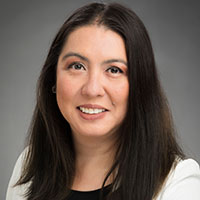
 Madore is a clinical assistant professor in the Department of Psychiatry and Behavioral Sciences at Stanford University School of Medicine.
Michelle R. Madore, PhD
Asian American Journal of Psychology
Background
Tell us a bit about your background: What is your area of research? What is your most recent journal-editing experience?
I am a clinical neuropsychologist with academic affiliation at Stanford University School of Medicine. My research lab is located within the Mental Illness Research Education and Clinical Center in the VA Palo Alto Health Care System. I have conducted research exploring culturally responsive neuropsychology; environmental and biological influences on brain functioning; and the implementation of technology in the assessment and treatment of brain disorders, specifically the use of transcranial magnetic stimulation and other neuromodulation techniques as treatment modalities. I am dedicated to upholding the highest standards of academic excellence while supporting research that is both impactful and mindful of knowledge gaps due to the historical marginalization of various groups, concepts, and communities.
Specifically regarding my editorial experience, I have served as a reviewer for more than a dozen different journals over the past 9 years, and I previously served on the editorial board of the Asian American Journal of Psychology (AAJP) as a consulting editor. I also have experience reviewing book chapters, grants, and applications for various awards through the many leadership roles I have served in over the years. As someone who remotely mentors trainees from across the globe, I have a special appreciation for the importance of thorough and constructive peer review in maintaining the quality of scholarly publications and other academic work. Working across multiple time zones can be challenging, but detailed and helpful feedback is the best way to move projects forward while maintaining their scientific integrity. My strong interpersonal and communication skills enable me to work well with others while nurturing a collaborative and transparent environment.
Priorities
Briefly, what are your main priorities? For example, how will you grow readership, what type of scholarship would you like to see in the journal, and what kind of content are you hoping to attract?
The landscape of the field of Asian American psychology is quite broad and is reflected in the journal’s mission, which is to publish articles focused on research, practice, advocacy, education, and policy within Asian American psychology. It is important for the journal to reflect how the science of Asian American psychology spans multiple areas, both within and outside of psychology in general. Specifically, I would like to have a special issue focused on aging Asian Americans, given the limited amount of literature focused on Asian American elders.
Relevance
Why is this journal important for the field? What is its relevance to society/public health? What are the hot issues in your area right now?
This journal is important to the field for many reasons, but I must highlight a very important issue within public health: The leading cause of death for Asian American youths is suicide (Reyes et al., 2024). The trends in the data are staggering. This steady increase in suicide rates has coincided with increases in xenophobia, anti-Asian hate, and violence against Asian Americans (Bui & Lau, 2024; Keum et al., 2024). Understanding the factors that contribute to the underlying causes affecting Asian American youths is crucial, because this population faces unique challenges that often go unaddressed. These challenges—from the pressures of cultural expectations and the model minority myth to experiences of racism, mental health struggles, and identity conflicts—can profoundly affect Asian American youths’ well-being and development. When educators, policymakers, and communities deeply comprehend these contributing factors, they can create more supportive environments that foster resilience, inclusivity, and empowerment for Asian American youths.
Challenges
What challenges, if any, lie ahead for the field?
One of the ongoing challenges is that although many phenomena and psychological constructs already have a large literature established, less is available about the application of this knowledge to various groups. That is, the Asian American community is very diverse, and psychologists need to find ways to increase the knowledge base with appropriate disaggregation of group-level data. Studies assessing disaggregated groups often suffer from low statistical power due to low numbers. Regardless of the potential for low statistical power, alternative statistical approaches should be utilized rather than not conducting or publishing the work.
Plans
Do you have plans for a special issue or changes to the editorial process? Have you introduced or are you planning to introduce any changes?
Reviewing a manuscript is time-consuming work. I would like to implement some strategies to help reduce the time commitment of the reviewers. For example, manuscript changes should be clearly marked in revised submissions. Not only will this ease the time burden on reviewers who are volunteering their time, but it will decrease the total time from manuscript submission to publication.
I would also like to establish a manuscript reviewer “boot camp” and a junior editorial fellowship. The manuscript reviewer boot camp would allow interested individuals (e.g., more clinically focused folks, early career folks, and trainees) to learn how to mentor less experienced reviewers in reviewing a manuscript. If implemented, the boot camp could grow the potential pool of reviewers for the journal. The junior editorial fellowship would be an opportunity to mentor early career individuals about editorial leadership to increase the future pool of leaders for the journal.
Another vision I had was to publish the conference abstracts for the Asian American Psychological Association (AAPA) Convention. This would provide an additional peer-reviewed publication for members of our community and have several subsequent positive effects on AAPA and AAJP. First, it can potentially increase the number of conference submissions, thereby generating revenue for AAPA. Second, it can potentially increase the number of manuscript submissions to AAJP, should folks want to further their work and convert their abstracts to manuscripts. Many logistics would be involved in such an endeavor, but this is an idea that I believe has significant potential and mutual benefits for all involved.
Citations
Bui, A. L., & Lau, A. S. (2024). Suicide rates among Asian American and Pacific Islander youths—A cause for alarm. JAMA Network Open, 7(7), Article e2422694. https://doi.org/10.1001/jamanetworkopen.2024.22694opens in new window
Keum, B. T., Oh, S., & Sheftall, A. H. (2024). National trends in suicide among Asian American or Pacific Islander youth. JAMA Network Open, 7(7), Article e2422744. https://doi.org/10.1001/jamanetworkopen.2024.22744opens in new window
Reyes, M. P., Song, I., & Bhatt, A. (2024). Breaking the silence: An epidemiological report on Asian American and Pacific Islander youth mental health and suicide (1999–2021). Child and Adolescent Mental Health, 29(2), 136–144. https://doi.org/10.1111/camh.12708opens in new window
Date created: January 2025