 Belfi is an associate professor in the Department of Psychological Science at the Missouri University of Science and Technology.
Amy Belfi, PhD, and Selcuk Acar, PhD
Psychology of Aesthetics, Creativity, and the Arts
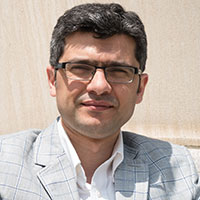 Acar is a professor of educational psychology at the University of North Texas.
Background
Tell us a bit about your background: What is your area of research? What is your most recent journal editing experience?
Amy: I have been co-editor of Psychology of Aesthetics, Creativity, and the Arts (PACA) since August 2023 and was associate editor from 2022 to 2023. Previously, new PACA co-editors began their terms at the same time. However, Oshin Vartanian and Thalia Goldstein wisely decided that staggering the co-editor terms would be more advantageous than having complete editorial turnover all at once. Therefore, I was hired as co-editor for the last two years of Thalia’s term, creating the opportunity to pass along the journal’s institutional knowledge. When Thalia’s term ended, Selcuk was hired as a co-editor. Selcuk and I will serve together until 2029, when my term ends.
PACA publishes two main fields of research: creativity and aesthetics. Therefore, co-editorship is essential to serve both research communities effectively, and having co-editors with complementary expertise is critical. My main area of research is music cognition. I study the relationships among music, memory, and emotion, as well as musical aesthetics and preferences. I have also done work on aesthetic responses to poetry and visual arts, along with comparisons across artistic modalities.
Selcuk: Like Amy, before beginning my tenure as co-editor in August 2025, I was associate editor from 2022 to 2025. I also previously served as associate editor for the Journal of Creativity (2021–22). My expertise lies in creativity research, with an emphasis on creativity assessment and divergent thinking (DT). Trained as an educational psychologist, I also focus on creative teaching and learning, as well as gifted-and-talented education. I have conducted several meta-analyses on creativity and DT, which align with the types of scholarship I most often handle as a co-editor.
Consistent with my background as an educational psychologist, I also view PACA’s tradition of supporting emerging scholars through constructive feedback and opportunities for growth as central to my editorial work. I oversee manuscripts focused on creativity, while Amy takes the lead on aesthetics-related submissions. Our complementary areas of expertise ensure that we can effectively serve both research communities while collaborating to maintain the journal’s quality and scope.
Priorities
Briefly, what are your main priorities? For example, how will you grow readership, what type of scholarship would you like to see in the journal, and what kind of content are you hoping to attract?
Amy: When I became co-editor in 2023, one goal was to bridge the gap between the aesthetics research community and the broader music cognition research community. Music cognition has become a robust area of research, with several journals in that area. I wanted to raise awareness in that community of PACA as another excellent option for music scholars to publish their work.
I have worked to achieve this goal by inviting new reviewers to review manuscripts and join our editorial board. During my first two years as an associate editor and then as co-editor, I frequently added reviewers to our pool who had never reviewed for or published in our journal. We are now seeing increased submissions on music-related topics, and our reputation in that field has grown.
Amy and Selcuk: Another goal is to continue PACA’s recent growth. Our journal has increased dramatically in both issues and number of pages in the past five years, which indicates increasing interest in our journal and our field more broadly. With this, however, has come a backlog in getting papers from online first to published in a print issue. Having an increased number of pages per issue will allow us to work through this backlog, reducing the time between online and print publication.
An additional priority is to continue to highlight best practices in psychology, including initiatives that promote open science and replicability. For example, we recently started accepting Registered Reports, and we hope that authors continue to utilize this option.
Selcuk: Our editorial team has observed clear shifts in submissions following advances in generative artificial intelligence (AI). On the one hand, we are receiving more papers that examine the intersection of AI and aesthetics, creativity, or the arts, which is an exciting and timely area of research that we expect will continue to grow. On the other hand, we have seen an increase in manuscripts that misuse AI tools in their preparation. A key editorial priority is to encourage rigorous and innovative scholarship that advances understanding in creativity and aesthetics while also protecting PACA from inauthentic or improperly generated submissions.
Advice
What advice would you offer new authors hoping to publish in the journal? What are you looking for in a manuscript?
Amy and Selcuk: Papers need to address topics related to the psychologyof aesthetics, creativity, and the arts. That is, papers must be both psychological (in methods, theories, or both) and related to one of the journal’s three main domains (aesthetics, creativity, or the arts). Sometimes, for example, we receive papers that are about art and aesthetics but do not address psychological topics or use psychological methods. For example, case studies of the work of a specific artist would not be appropriate for PACA. In addition, we receive studies that are psychological but do not comment on aesthetics, creativity, or the arts. Also, while we do not typically publish qualitative work, we will consider high-quality qualitative studies. We also rarely publish review articles unless they make a major novel contribution to the field; however, systematic reviews and meta-analyses are welcome.
We suggest that new authors read recent articles published in PACA to get a sense of the work we are seeking. Overall, we are looking for high-quality empirical work that is adequately powered, rigorously designed, and theoretically justified and that contributes to our knowledge of the psychology of aesthetics, creativity, and the arts.
Challenges
What issues do you see as important for the field to address more broadly, such as replicability, publishing concerns, communicating science to the public, and translating psychological findings to policy change?
Selcuk and Amy: As co-editors, our responsibility is to promote and uphold the best practices in the field. One pressing issue is the establishment of clear standards for DT measurement, a widely used tool in creativity research. DT tasks remain popular, yet they are administered and scored differently, reflecting the very definition of DT, and this variability can undermine replicability and comparability of findings.
PACA has published work examining the impact of these varied practices and has offered preliminary guidelines, but a more coordinated effort is needed. To that end, we are interested in joining a consortium of editors from leading creativity journals (including Journal of Creative Behavior, Creativity Research Journal, Thinking Skills & Creativity, and Creativity: Theories – Research – Applications) to advance the reporting standards for DT research. We aim to adopt and reinforce these standards in our editorial process, with the expectation that authors align their work accordingly. By supporting this initiative, we hope to contribute to a field that is more methodologically rigorous, replicable, and capable of informing both policy and practice.
APA experience
Please describe your experience with APA Publishing. Has your experience with APA as a nonprofit scholarly publisher differed from other publishers?
Amy and Selcuk: PACA is supported by APA Division 10, the Society for the Psychology of Aesthetics, Creativity, and the Arts. Working with a nonprofit scholarly organization such as APA provides a uniquely rewarding experience, as contributions to the journal directly support the broader field through initiatives such as conferences and research grants organized and administered by Division 10. Therefore, the time and effort of reviewers and editors are transformed into service that not only benefits the journal but also advances the professional development of reviewers, authors, and their colleagues. Thus, PACA serves as a platform for scholars to support one another, emphasizing service and the advancement of the field over other competing motivations common in the commercial publishing industry.
Date created: October 2025